


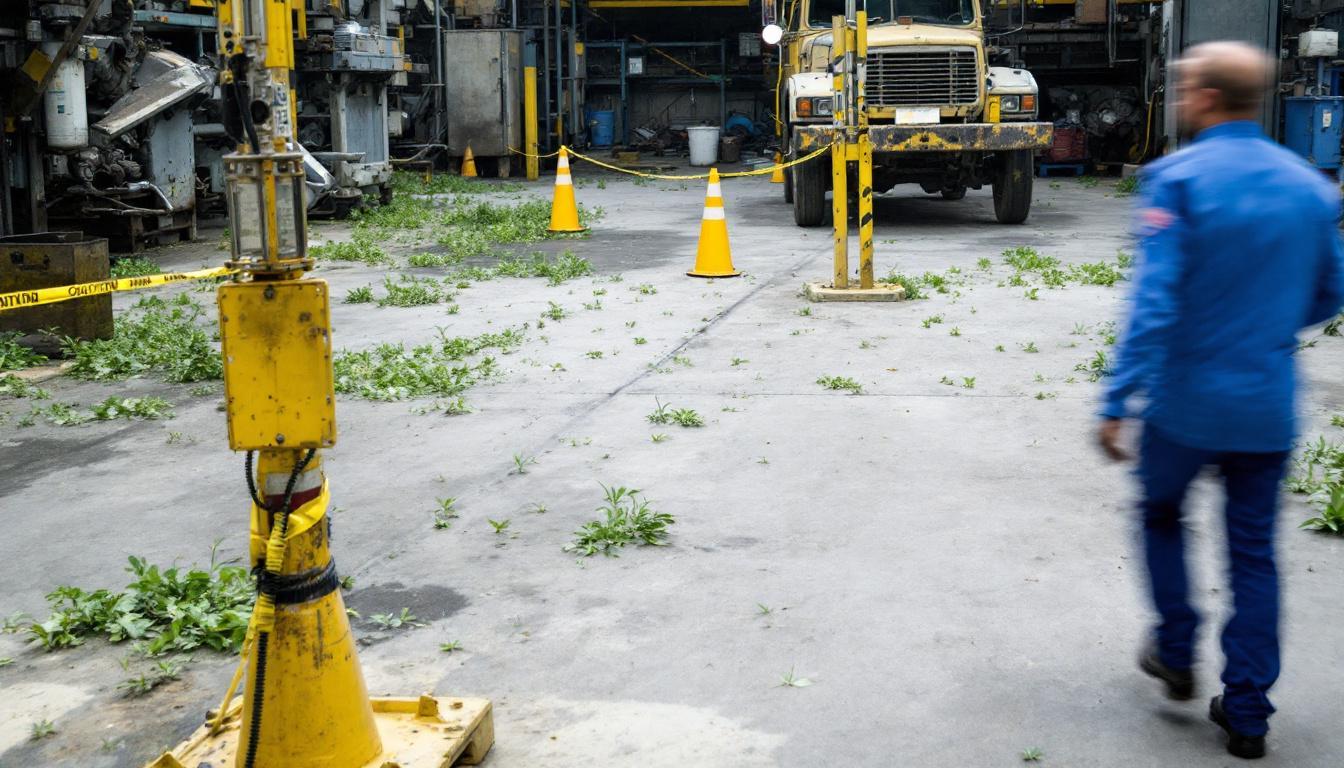
A new ABB report reveals that despite widespread commitments to energy efficiency, the food and drink manufacturing sector faces significant implementation challenges, risking profitability and sustainability goals without scale-up and organisational alignment.
New research from ABB underscores a widening implementation shortfall in industrial energy management that risks eroding margins across the food and drink sector. Drawing on a global survey of 2,700 senior industrial decision‑makers in 15 countries, ABB reports that while a large majority have signalled intent to act on efficiency, translating plans into sustained, system‑wide delivery remains the critical obstacle.
ABB’s study found 63% of respondents have already put energy‑efficiency measures in place and a further 29% plan to do so within the next year, yet the company cautions that progress is often piecemeal rather than enterprise‑scale. Energy still represents a substantial cost exposure: respondents estimate it accounts for roughly a quarter of manufacturing operating expenditure, and nearly six in ten said recent price increases threaten profitability. According to ABB, “Energy efficiency has become a foundation for business continuity, compliance, and long‑term value creation. It’s a condition for market access,” said Erich Labuda, president of ABB’s Motion Services division. “Today, leaders care about optimising energy use. What they struggle with is deployment, at scale, and over time.”
The survey highlights a growing digital footprint, two‑thirds of companies describe themselves as digitally ready and are using or preparing to deploy energy‑management software, but also exposes governance and decision‑making gaps. Only 37% routinely apply total cost of ownership when evaluating purchases, despite 81% agreeing that TCO should guide procurement. Responsibility for efficiency is frequently dispersed across operations, sustainability, finance and maintenance functions, leaving no single team accountable. “Cost is no longer the main blocker. What’s holding companies back now are organisational silos, skills gaps and a lack of usable data,” Labuda added.
Independent industry and government sources underline the strategic importance of closing that execution gap. The U.S. Department of Energy’s Industrial Technologies Office notes that food and beverage manufacturing is energy‑intensive, accounting for about 6% of total industrial energy use in the United States, and stresses opportunities in process‑heating, steam systems, waste‑heat recovery and electrification. The U.S. Energy Information Administration has also modelled a persistent “efficiency gap” in food processing, indicating scope to improve competitiveness through better uptake of proven technologies.
Country and sector guides reinforce the commercial case. The Australian Government’s sector guidance estimates energy constitutes at least 15% of operational costs in food and beverage plants, and points to metering, monitoring and targeted upgrades as high‑value measures to cut consumption, boost reliability and protect product quality. Trade coverage from Food Industry Executive shows similar momentum: a 2025 industry survey cited there found just over 62% of food manufacturers reported measurable energy improvements in the previous two years, while roughly one‑third of leaders place cutting consumption among their top priorities. However, that same coverage flags persistent barriers including constrained capital and the difficulty of retrofitting legacy assets.
A further risk flagged by ABB is what it calls “post‑renewables complacency”: some companies that have contracted renewable power show reduced focus on consumption reduction. ABB and other experts stress that lower carbon intensity from renewables does not substitute for lower total energy use, particularly where margins and supply‑price volatility remain central concerns for processors.
Practical joint initiatives point to scalable pathways. ABB and Tetra Pak’s digital energy assessment programme, piloted in the Americas, combines plant‑wide diagnostics with tailored measures and produced estimated energy and carbon reductions in the order of 15–25%, according to the partners. ABB’s product and services portfolio for the food and beverage industry promotes motor‑driven system modernisation, digital optimisation and lifecycle support as levers to sustain savings and reduce unplanned downtime.
For industrial decarbonisation professionals the policy and commercial signals are clear: ambitions must be backed by operating models that assign clear ownership, embed TCO thinking into procurement, and invest in upskilling and data platforms that turn analytics into action. Industry data and government guidance both point to high‑payback interventions, metering and monitoring, process‑heating optimisation, waste‑heat recovery and motor system upgrades, that can be bundled with digital services to scale results across lines and sites.
As manufacturers wrestle with raw material and energy market volatility, the next competitive frontier will likely be the ability to convert diagnostic insight into repeatable, lifecycle improvements. According to ABB, companies that stitch together diagnostics, control‑layer optimisation, modernised motor‑driven equipment and ongoing lifecycle services will be best positioned to protect margins, reduce exposure to price swings and meet regulatory and customer expectations on sustainability.
- https://www.foodanddrinktechnology.com/news/65024/energy-efficiency-gap-puts-manufacturers-at-risk-abb-warns/ – Please view link – unable to able to access data
- https://www.energy.gov/eere/ito/food-and-beverage-products – The U.S. Department of Energy’s Industrial Technologies Office provides an overview of the food and beverage manufacturing sector, highlighting its energy-intensive nature, accounting for 6% of total industrial energy use. The sector encompasses over 30,000 facilities involved in various processes such as drying, refrigeration, baking, and cooking. The department emphasizes the importance of energy efficiency in this sector and outlines several technologies to enhance process heating efficiency, including innovations in steam generation, advanced combustion processes, waste heat recovery, and electrified process heating.
- https://www.abb.com/global/en/industries/food-beverage – ABB offers comprehensive solutions for the food and beverage industry, addressing challenges like increasing consumer demands and sustainability. Their expertise spans various segments, from agriculture to bottling. ABB’s approach involves close collaboration with clients to design tailored solutions that meet specific needs, aiming to optimize processes, enhance efficiency, and support long-term success. The company highlights the importance of energy efficiency in food production and offers technologies to improve plant uptime, process reliability, and overall efficiency.
- https://foodindustryexecutive.com/2025/07/energy-efficiency-the-sustainability-sweet-spot-for-food-manufacturers/ – An article from Food Industry Executive discusses the growing emphasis on energy efficiency within the food manufacturing sector. It cites a 2025 report indicating that 62.1% of food manufacturers have made measurable progress in improving energy use over the past two years. The article highlights that nearly one-third of surveyed leaders have prioritized reducing energy consumption, with energy conservation solutions being among the most popular sustainability investments. It also addresses challenges such as financial constraints and legacy system integration that hinder further progress.
- https://www.energy.gov.au/business/sector-guides/manufacturing/food-and-beverage – The Australian Government’s Department of Industry, Science, Energy and Resources provides a sector guide on food and beverage manufacturing. It notes that energy use accounts for at least 15% of the total operational costs in this industry. The guide emphasizes the role of energy efficiency in supporting profitability, reliability, enhanced yield, and quality. It outlines various energy efficiency opportunities, including metering and monitoring, which help operators understand energy and material flows, identify excess energy use, and evaluate potential upgrades.
- https://www.eia.gov/analysis/studies/efficiency/food_processing/ – The U.S. Energy Information Administration’s report examines the energy efficiency gap and energy price responsiveness in food processing. It highlights that while food processing is less energy-intensive than sectors like steel or cement, it still consumes a significant amount of energy. The report discusses the National Energy Modeling System’s approach to modeling the food processing industry and emphasizes the importance of addressing the energy efficiency gap to improve competitiveness and reduce operational costs in the sector.
- https://www.tetrapak.com/about-us/news-and-events/newsarchive/digital-energy-assessment-programme – Tetra Pak and ABB have developed a digital energy assessment programme aimed at helping food and beverage producers reduce their environmental impact and cut costs. The programme provides a comprehensive assessment of the entire plant, offering recommendations to minimize energy consumption and make informed decisions about resource use. Based on pilot projects in the Americas, the programme has the potential to reduce carbon emissions and energy costs by between 15% and 25%, showcasing a collaborative effort to enhance energy efficiency in the food and beverage manufacturing sector.
Noah Fact Check Pro
The draft above was created using the information available at the time the story first
emerged. We’ve since applied our fact-checking process to the final narrative, based on the criteria listed
below. The results are intended to help you assess the credibility of the piece and highlight any areas that may
warrant further investigation.
Freshness check
Score:
8
Notes:
The article was published on 10 March 2026, making it current. However, similar themes have been reported in previous ABB studies, such as the “Resource scarcity squeezes 93% of food and beverage businesses” report from January 2024 ([foodanddrinktechnology.com](https://www.foodanddrinktechnology.com/news/51148/resource-scarcity-squeezes-93-of-food-and-beverage-businesses-reveals-abb-report/?utm_source=openai)). This suggests that while the specific data is new, the underlying issues have been previously highlighted.
Quotes check
Score:
7
Notes:
The quote from Erich Labuda, president of ABB’s Motion Services division, is consistent with his previous statements in ABB’s reports. However, without direct access to the full report, it’s challenging to verify the exact wording and context of the quotes.
Source reliability
Score:
9
Notes:
The article originates from Food and Drink Technology, a reputable industry publication. The information is attributed to ABB, a well-established company in the field. However, the article is based on ABB’s own survey, which may introduce bias. Cross-referencing with independent sources would strengthen the reliability.
Plausibility check
Score:
8
Notes:
The claims about energy efficiency challenges in the food and drink sector align with known industry trends. However, the specific figures and findings should be cross-verified with independent sources to confirm their accuracy.
Overall assessment
Verdict (FAIL, OPEN, PASS): PASS
Confidence (LOW, MEDIUM, HIGH): MEDIUM
Summary:
The article presents current findings from ABB’s recent survey on energy efficiency challenges in the food and drink sector. While the data is recent and the source is reputable, the reliance on ABB’s own survey data introduces potential bias. Cross-referencing with independent sources is recommended to confirm the findings.
