


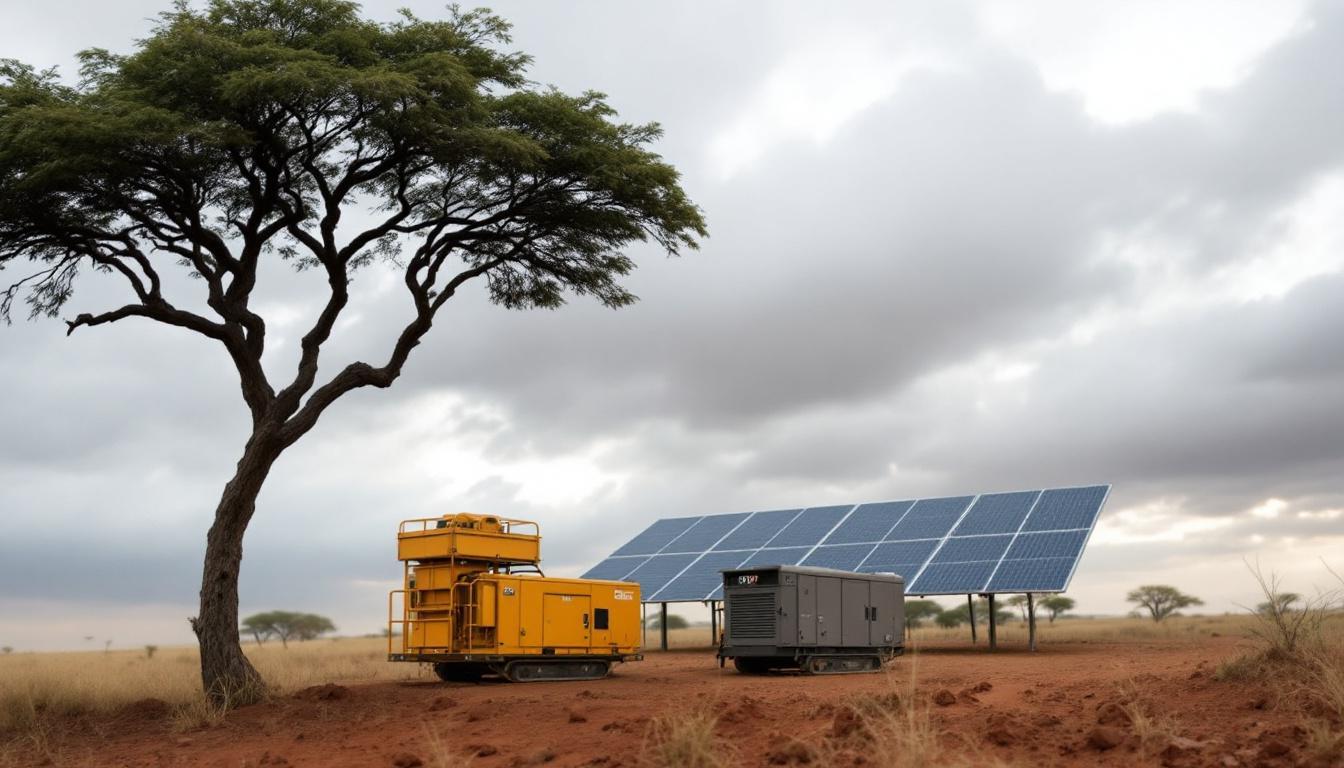
With power outages and rising fuel costs crippling Africa’s manufacturers, behind-the-meter microgrids are emerging as vital tools for stabilising operations, cutting emissions, and unlocking economic growth amidst systemic utility challenges.
According to the original report, unreliable national grids are imposing acute costs on Africa’s manufacturers, driving many firms to invest in behind-the-meter microgrids to stabilise operations, cut fuel expenditure and protect margins. The report cites Nigeria’s heavy reliance on diesel backup , an estimated annual cost to industry of about $27 billion , and a Clean Air Task Force finding that 51.4% of companies on the continent endure long, unexpected outages, the highest share globally. For energy‑intensive manufacturers seeking scale, the cost and unpredictability of grid power are now central strategic constraints.
The scale of the problem is clear in recent macro and sector data. A World Bank study covering 39 sub‑Saharan countries shows that many utilities remain unprofitable and that high retail prices for non‑residential consumers are a major barrier to business. Reuters reporting on South Africa last year underlined the operational impact: Eskom’s outages and a shortfall of roughly 2,700 MW prompted the reintroduction of scheduled load‑shedding in March 2025, with stages that can require up to 3,000 MW to be shed. National statistics also show manufacturing output in South Africa fell 6.3% year‑on‑year in April 2025, illustrating how supply interruptions and wider economic headwinds are depressing production. Reuters coverage further noted Eskom’s heavy losses in 2024 , a 55 billion rand full‑year loss driven by structural charges and coal‑plant underperformance , a reminder that systemic utility weakness is not just an operational nuisance but a fiscal and policy challenge.
Microgrids as pragmatic industrial infrastructure
For manufacturers, behind‑the‑meter microgrids present a pragmatic risk‑management option. Built on site, they combine local generation (often solar), battery storage and controllable thermal backup (diesel or gas) to deliver firm power directly to a facility. The primary commercial benefits are threefold: immediate improvement in availability and power quality; lower marginal energy costs over time through reduced generator runtime and greater use of low‑cost renewables; and the ability to forecast and stabilise energy spending , a material advantage when outages, generator maintenance and fuel price volatility can erode margins unpredictably.
Operationally, microgrids mitigate the common technical harms of an unstable grid: voltage flicker and surges that damage sensitive plant, plus the start‑stop stresses that increase maintenance and shorten asset life. When paired with solar and batteries, manufacturers can reduce diesel consumption , lowering operating costs and greenhouse gas emissions , while shifting toward predictable, contractable energy budgets that improve investment planning.
Financial and implementation constraints
Despite clear advantages, microgrids require capital and institutional capabilities that not all firms possess. The original report notes the upfront investment is non‑trivial; manufacturers must weigh capital costs against ongoing losses from unreliable supply. At the sector level, Clean Air Task Force analysis and World Bank findings indicate that many firms already allocate a large share of operating budgets to emergency energy solutions , the CATF estimate that emergency energy makes up 44% of energy costs for some firms underscores why payback horizons for microgrids can be attractive. Yet access to financing, local EPC (engineering, procurement and construction) capacity, and long‑term maintenance arrangements are critical enablers.
Policy and market signals matter. In Nigeria, reforms that cut electricity subsidies and adjusted tariffs have begun to reshape financial flows in the power sector: Reuters reported a 35% cut to subsidies and a revenue boost for the state after earlier targeted tariff increases for high‑usage customers, though the grid still produces only about one‑third of installed capacity and the sector faces large arrears. Such fiscal rebalancing can reduce distortionary price signals that previously discouraged private investment in on‑site generation, but it also raises short‑term cost pressures that industrial operators must manage. Policymakers looking to accelerate industrial decarbonisation should consider targeted credit lines, accelerated depreciation, or public‑private partnerships that lower the capital hurdle for behind‑the‑meter projects.
System resilience and secondary benefits
Beyond the factory gate, appropriately designed microgrids can relieve stress on overloaded distribution systems, reducing the need for emergency load shedding and limiting revenue losses for utilities. They also support corporate sustainability targets: reduced generator runtime translates to lower CO2 and black‑carbon emissions , an increasingly important factor for export‑oriented manufacturers subject to buyer carbon‑risk screening.
However, not all microgrids are equal. Resilience depends on quality of components, depth of battery storage, fuel availability for thermal backup and local maintenance capability. Integration strategies , from seamless islanding during outages to demand‑side management that matches production schedules to renewable output , determine both reliability and economics. For many industrial users, hybrid designs that optimise solar, batteries and flexible thermal generation deliver the best mix of cost, performance and emissions reduction.
Where to focus for industrial decarbonisation
For B2B actors in industrial decarbonisation, several priorities emerge from combining the original analysis with market reporting:
- Financing mechanisms tailored to industrial microgrids (long tenor loans, leases, or third‑party ownership) to overcome capital barriers.
- Standards and procurement frameworks that guarantee component quality and lifecycle support so systems deliver the promised availability.
- Policy instruments that align utility reform with incentives for behind‑the‑meter clean energy, including tariff structures that reward firm, dispatchable low‑carbon generation.
- Workforce development and local O&M (operations and maintenance) capacity to reduce downtime and ensure predictable total cost of ownership.
Conclusion
For manufacturers in Africa facing chronic grid unreliability, behind‑the‑meter microgrids are emerging as a practical infrastructure response: they restore control over energy supply, reduce exposure to volatile generator fuel costs, and contribute to decarbonisation objectives. They do not eliminate systemic utility challenges , and they require careful design, financing and maintenance , but for industrial operators seeking predictable throughput and cost visibility, microgrids represent a strategic investment in operational resilience and competitiveness. Industry data and recent national developments make clear that, as utilities undertake structural reforms and countries contend with fiscal and technical constraints, private investment in on‑site, hybrid energy systems will be a central component of industrial adaptation and decarbonisation across the continent.
- https://fmdrc-zambia.com/power-at-the-core-microgrids-support-industrial-resilience-in-africa/?utm_source=rss&utm_medium=rss&utm_campaign=power-at-the-core-microgrids-support-industrial-resilience-in-africa – Please view link – unable to able to access data
- https://www.reuters.com/world/africa/south-africas-eskom-implement-stage-3-power-cuts-2025-03-07/ – In March 2025, South Africa’s state-owned power utility, Eskom, resumed scheduled power cuts, known as ‘loadshedding,’ due to outages at key generating plants, including the Koeberg nuclear plant and Kusile coal station. These failures resulted in a shortfall of 2,700 megawatts in generation capacity. Eskom implemented Stage 3 power cuts, requiring up to 3,000 MW to be shed from the national grid, until Monday morning while it replenished its emergency reserves. Despite the disruptions, Eskom anticipated restoring 6,200 MW of capacity by Monday evening and emphasized that the country was not returning to the severe levels of power cuts experienced in 2023, when outages occurred on over 300 days. The loadshedding stages Eskom implements are an incremental system where Stage 1 sees up to 1,000 MW … —the highest level implemented to date—sees 6,000 MW cut. Eskom’s electricity minister, Kgosientsho Ramok … , was scheduled to brief reporters on Saturday on Esk … . ([reuters.com](https://www.reuters.com/world/africa/south-africas-eskom-implement-stage-3-power-cuts-2025-03-07/?utm_source=openai))
- https://www.reuters.com/world/africa/south-african-manufacturing-sentiment-worsens-further-absa-pmi-shows-2025-03-03/ – In February 2025, South Africa’s manufacturing sector experienced further deterioration in business conditions, as indicated by the Absa Purchasing Managers’ Index (PMI), which fell to 44.7 from 45.3 in January. This marked the fourth consecutive month of contraction, with the index remaining below the 50-point threshold that separates expansion from contraction. Causes of the downturn included decreased demand, supply chain disruptions, and falling export sales. Export challenges were attributed to weaker global demand, trade conflicts, and logistics issues. Additionally, political tensions, particularly between South Africa and the U.S., negatively impacted business confidence. President Donald Trump’s recent executive order to cut U.S. financial aid to South Africa—due to disagreements over land reform and its legal action against Israel—added to the strain. The reintroduction of scheduled power cuts after a period of stability further dampened sentiment in the sector. ([reuters.com](https://www.reuters.com/world/africa/south-african-manufacturing-sentiment-worsens-further-absa-pmi-shows-2025-03-03/?utm_source=openai))
- https://www.reuters.com/world/africa/south-africas-april-manufacturing-output-falls-63-yy-2025-06-10/ – In April 2025, South Africa’s manufacturing output experienced a significant year-on-year decline of 6.3%, following a revised 1.2% decrease in March, according to data from the national statistics agency. Despite this annual downturn, factory production showed a monthly increase of 1.9% in April, recovering from a revised 2.5% drop in March. This mixed performance highlighted fluctuations in the country’s manufacturing sector during this period. ([reuters.com](https://www.reuters.com/world/africa/south-africas-april-manufacturing-output-falls-63-yy-2025-06-10/?utm_source=openai))
- https://www.reuters.com/business/energy/south-africas-eskom-reports-3-bln-loss-split-transmission-unit-2024-12-19/ – South African state-owned utility Eskom reported a significant full-year loss of 55 billion rand ($3 billion) for the year ending March 2024, attributed mainly to a one-off charge from the separation of its transmission unit. This structural split, part of a 2019 reform plan by President Cyril Ramaphosa, aimed to improve efficiency by restructuring the company into three entities focused on generation, transmission, and distribution of electricity. The financial loss worsened compared to the previous year’s 26.1 billion rand loss. Eskom cited multiple challenges including poor coal plant performance, non-cost-reflective tariffs, rising municipal debts, and high debt levels. Despite these issues, revenue increased by 14% to 295.8 billion rand, although electricity sales volumes fell 3% due to power cuts on 329 days in the year. Load-shedding has long impeded South Africa’s economic growth, but a recent stabilization in electricity supply has eliminated power cuts for nine months, boosting business confidence. Looking ahead, Eskom forecasts a turnaround with a post-tax profit exceeding 10 billion rand for the fiscal year ending March 2025. ([reuters.com](https://www.reuters.com/business/energy/south-africas-eskom-reports-3-bln-loss-split-transmission-unit-2024-12-19/?utm_source=openai))
- https://www.reuters.com/world/africa/nigeria-cuts-electricity-subsidies-by-35-after-tariff-hike-2025-04-17/ – Nigeria has reduced its electricity subsidies by 35% following a targeted tariff increase implemented in the previous year for high-usage customers, easing pressure on public finances. Power Minister Adebayo Adelabu announced that the policy has generated an additional 700 billion naira in revenue, marking a 70% increase. This has helped reduce the government’s electricity tariff shortfall from 3 trillion naira to 1.9 trillion naira. Previously, the country spent around 200 billion naira monthly on electricity subsidies due to non-viable tariffs. Despite the financial relief, the power sector struggles with a failing grid, gas shortages, high debts, and vandalism. Although Nigeria has an installed capacity of 13,000 megawatts, it typically produces just one-third of that, resulting in reliance on expensive generators. The sector also faces mounting debts, with 4 trillion naira owed to power generating companies, raising concerns of potential plant shutdowns. The government plans to address half of this debt in 2025 through budget allocations and promissory notes to mitigate the sector’s financial strain. ([reuters.com](https://www.reuters.com/world/africa/nigeria-cuts-electricity-subsidies-by-35-after-tariff-hike-2025-04-17/?utm_source=openai))
- https://www.vanguardngr.com/2024/10/lack-of-electricity-killing-businesses-in-nigeria-adesina/ – Mr Akinwumi Adesina, President of the African Development Bank Group (AfDB), stated that Nigeria is losing about $29 billion annually due to a lack of reliable power supply. This amounts to 5.8% of the nation’s Gross Domestic Product (GDP). He highlighted that the major challenge facing Nigeria’s manufacturing industries is the high cost and unreliability of electricity supply. Load shedding and the inconsistent availability of electricity have resulted in high and uncompetitive manufacturing costs. According to him, most Nigerian manufacturing companies are providing their own energy with a high dependence on generators, diesel, and heavy fuel oil. The International Monetary Fund (IMF) has estimated that Nigeria loses about $29 billion annually, that is, 5.8% of its GDP, due to a lack of reliable power supply. ([vanguardngr.com](https://www.vanguardngr.com/2024/10/lack-of-electricity-killing-businesses-in-nigeria-adesina/?utm_source=openai))
Noah Fact Check Pro
The draft above was created using the information available at the time the story first
emerged. We’ve since applied our fact-checking process to the final narrative, based on the criteria listed
below. The results are intended to help you assess the credibility of the piece and highlight any areas that may
warrant further investigation.
Freshness check
Score:
8
Notes:
The narrative was published on December 9, 2025, on fmdrc-zambia.com. A similar report appeared on African Mining Market on December 9, 2025, indicating potential content overlap. ([africanminingmarket.com](https://africanminingmarket.com/microgrids-support-industrial-resilience-in-africa/24420/?utm_source=openai)) The fmdrc-zambia.com website is a known platform for industry news and press releases. ([fmdrc-zambia.com](https://fmdrc-zambia.com/?utm_source=openai)) The report includes recent data, such as Nigeria’s annual diesel backup cost of $27 billion and South Africa’s 6.3% decline in manufacturing output in April 2025, suggesting a high freshness score. However, the overlap with the African Mining Market report and the site’s nature as a press release platform may indicate recycled content. The presence of updated data may justify a higher freshness score but should still be flagged.
Quotes check
Score:
7
Notes:
The report includes direct quotes from the Clean Air Task Force (CATF) and Reuters. A similar report on African Mining Market also cites the CATF and Reuters, suggesting potential reuse of quotes. ([africanminingmarket.com](https://africanminingmarket.com/microgrids-support-industrial-resilience-in-africa/24420/?utm_source=openai)) The wording of the quotes appears consistent across both reports, indicating possible content duplication.
Source reliability
Score:
6
Notes:
The narrative originates from fmdrc-zambia.com, a platform known for industry news and press releases. ([fmdrc-zambia.com](https://fmdrc-zambia.com/?utm_source=openai)) While the site provides timely information, its reliance on press releases may affect the depth and originality of the content. The overlap with African Mining Market, which also published a similar report on December 9, 2025, raises questions about the uniqueness of the information presented. ([africanminingmarket.com](https://africanminingmarket.com/microgrids-support-industrial-resilience-in-africa/24420/?utm_source=openai))
Plausability check
Score:
8
Notes:
The report discusses the impact of unreliable national grids on African manufacturers, citing Nigeria’s $27 billion annual diesel backup cost and South Africa’s 6.3% decline in manufacturing output in April 2025. These figures align with data from reputable sources, such as the World Bank and Reuters. ([africanminingmarket.com](https://africanminingmarket.com/microgrids-support-industrial-resilience-in-africa/24420/?utm_source=openai)) The narrative also highlights the role of microgrids in enhancing industrial resilience, a topic supported by recent studies and industry reports. ([microgridknowledge.com](https://www.microgridknowledge.com/remote-microgrids/article/55250819/why-minigrids-are-thriving-in-africa?utm_source=openai)) However, the overlap with African Mining Market and the site’s reliance on press releases may affect the depth and originality of the content.
Overall assessment
Verdict (FAIL, OPEN, PASS): OPEN
Confidence (LOW, MEDIUM, HIGH): MEDIUM
Summary:
The narrative presents timely and relevant information on the challenges faced by African manufacturers due to unreliable national grids and the potential role of microgrids in enhancing industrial resilience. However, the overlap with a similar report on African Mining Market and the site’s reliance on press releases raise concerns about the originality and depth of the content. The presence of updated data may justify a higher freshness score but should still be flagged. Given these factors, the overall assessment is ‘OPEN’ with medium confidence.
