


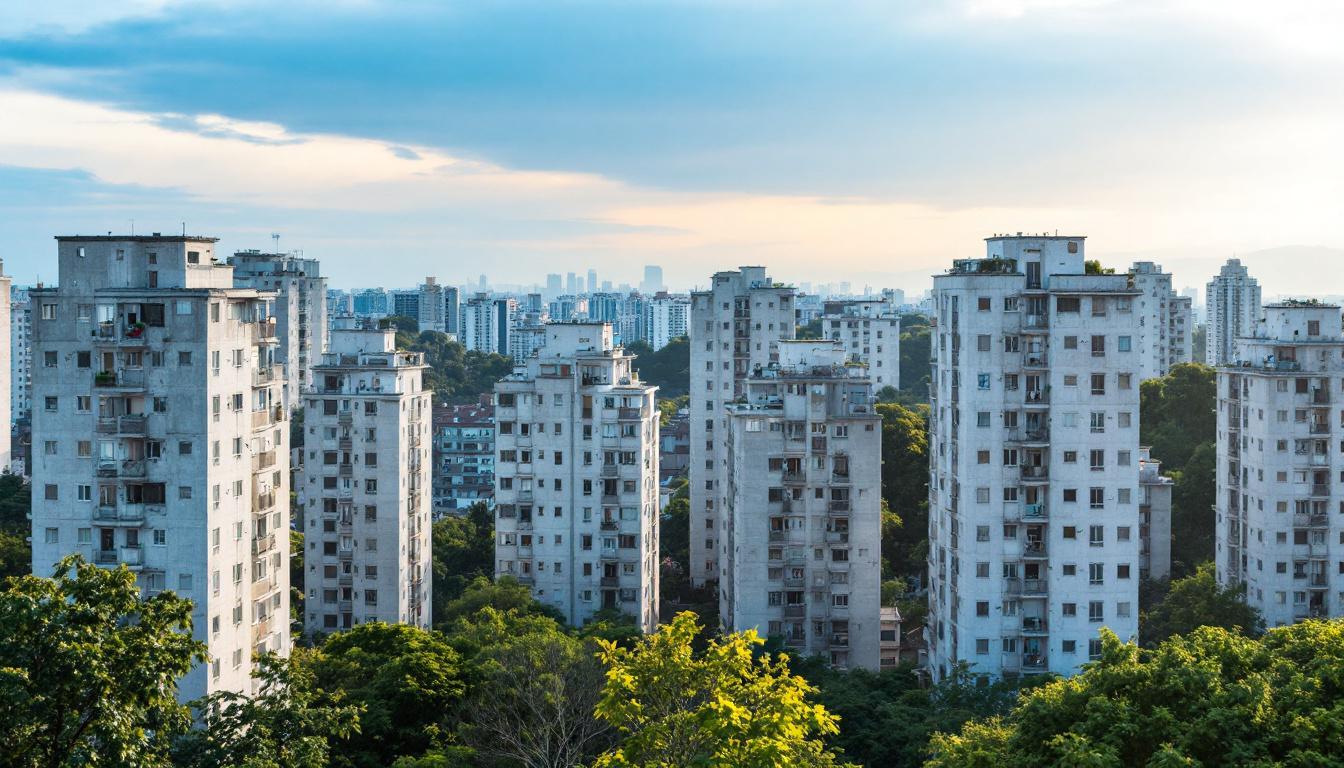
Emerging high-resolution pollution models are transforming how cities evaluate environmental impacts, influencing road design, project approval, and investment decisions through improved source attribution and predictive accuracy.
Air quality has moved from the margins of environmental policy into the centre of infrastructure decision making, with direct consequences for how roads are designed, funded and approved. According to the report by Highways Today, new hybrid modelling approaches are reframing pollution as an operational parameter for transport and urban projects rather than a separate public-health issue.
The health burden is substantial. According to the World Health Organization, ambient outdoor air pollution causes an estimated 4.2 million premature deaths worldwide each year, principally through cardiovascular and respiratory diseases. European data underlines the regional scale: the European Environment Agency estimates that air pollution led to hundreds of thousands of premature deaths across the EU in 2020 and remains a leading cause of chronic disease and developmental harm. These figures help explain why air quality now influences eligibility for investment and the legal viability of major construction programmes.
Traditional monitoring networks provide reliable concentration records but offer limited insight into source responsibility and spatial exposure. The Warsaw research highlighted by Highways Today illustrates how combining localised dispersion models with regional atmospheric chemistry yields far richer intelligence. The study linked a street-level dispersion tool, ATMO Street, with the GEM AQ atmospheric chemistry model to capture both canyon-scale trapping and citywide chemical transport. Outputs were validated against nine monitoring sites across the city, including a kerbside traffic station.
Integrating street canyon dynamics and road dust resuspension materially improved predictive skill. The Warsaw analysis found modelled fine particulate matter (PM2.5) accuracy rose by about 34 percent and coarse particulate matter (PM10) by about 55 percent versus older approaches. Crucially, source apportionment at the traffic station shifted markedly: transport was estimated to contribute 41 percent of PM2.5 and 42 percent of PM10, representing increases of roughly 188 percent and 63 percent respectively compared with prior models; vehicles accounted for 84 percent of nitrogen dioxide at that location. Those results suggest earlier assessments in similar urban settings may have underplayed the role of traffic in street-level exposure.
For engineers and project sponsors the implications are practical and immediate. More precise attribution allows interventions to be tailored to the dominant sources: altering junction geometry and building setbacks to improve ventilation; selecting pavements and cleaning regimes to reduce resuspension; and focusing traffic-management measures where they will most reduce exposure rather than applying broad-brush restrictions that carry high economic cost. In short, air quality is migrating from a regulatory constraint to an explicit design criterion, akin to drainage or structural loading.
Policy frameworks are adapting. The Ambient Air Quality Directive obliges EU cities to monitor and improve local pollution levels, and the EU’s zero pollution ambition for 2050 formalises air quality as a measurable policy outcome. But measurement alone will not satisfy regulators or financiers. The Warsaw study demonstrates that sensor networks deliver far more value when embedded in predictive modelling systems that can test policies virtually before costly physical alterations are implemented.
There are caveats. The Warsaw validation relied on a limited number of traffic-facing monitors and model performance depends on assumptions about emissions, surface properties and meteorology. The researchers themselves call for denser monitoring and further model coupling to strengthen confidence. Nonetheless, the trend is clear: environmental digital twins that couple traffic simulation with atmospheric chemistry will become normal practice for appraisal and permitting.
For Central and Eastern European contexts, where residential heating continues to contribute significantly alongside transport emissions, accurate separation of sources is essential. According to the World Health Organization, interventions that target only one sector risk under-delivering on health gains. Integrated planning that combines building retrofit, cleaner energy for heating and targeted transport measures is therefore necessary to achieve both public-health and infrastructure goals.
Ultimately, the new modelling paradigm changes the calculus for transport investment. Projects that reduce travel time but worsen local dispersion risk legal challenges, delayed approvals and retrofit costs. Conversely, designs informed by high-resolution, source-aware models can unlock funding, speed approvals and reduce long-term operational constraints. For professionals engaged in industrial decarbonisation and urban infrastructure, treating air quality as a core performance metric will be essential to delivering resilient, financeable assets.
- https://highways.today/2026/02/22/smarter-air-quality-modelling/ – Please view link – unable to able to access data
- https://www.who.int/news-room/fact-sheets/detail/ambient-%28outdoor%29-air-quality-and-health – The World Health Organization (WHO) reports that ambient (outdoor) air pollution is a major environmental health problem, causing an estimated 4.2 million premature deaths worldwide annually. Exposure to fine particulate matter leads to cardiovascular and respiratory diseases, as well as cancers. The highest burden is in low- and middle-income countries, particularly in the WHO South-East Asia and Western Pacific Regions. Policies supporting cleaner transport, energy-efficient homes, and better waste management can reduce key sources of outdoor air pollution.
- https://www.who.int/teams/environment-climate-change-and-health/air-quality-and-health/health-impacts/exposure-air-pollution/worldwide-ambient-air-pollution-accounts-for-43 – WHO estimates that ambient air pollution accounts for approximately 4.2 million premature deaths globally each year, primarily due to heart disease, stroke, chronic obstructive pulmonary disease, lung cancer, and acute respiratory infections. Combined with household air pollution, the total reaches about 7 million premature deaths annually. Addressing air pollution is crucial for protecting public health, as it is the second-highest risk factor for noncommunicable diseases.
- https://www.airclim.org/acidnews/biggest-environmental-cause-mortality – Air pollution is the leading environmental cause of mortality, with concentrations in some cities, particularly in Asia, far exceeding WHO air quality guidelines. Projections indicate that premature deaths from exposure to particulate matter (PM) could more than double worldwide by 2050, with most deaths occurring in China and India. Elevated concentrations of ground-level ozone are also expected to cause a significant increase in premature deaths, especially in Asia.
- https://www.eea.europa.eu/en/analysis/publications/zero-pollution/health/air-pollution-and-health – In 2020, exposure to air pollution in the EU-27 led to 238,000 premature deaths due to fine particulate matter, 49,000 deaths from nitrogen dioxide, and 24,000 deaths from acute exposure to ozone. Air pollution is a leading cause of chronic diseases, including stroke, cancer, and diabetes. Vulnerable groups, such as children, are particularly affected, with negative impacts on neural development and cognitive capacities.
- https://www.who.int/news-room/fact-sheets/detail/ambient-%28outdoor%29-air-quality-and-health – The World Health Organization (WHO) reports that ambient (outdoor) air pollution is a major environmental health problem, causing an estimated 4.2 million premature deaths worldwide annually. Exposure to fine particulate matter leads to cardiovascular and respiratory diseases, as well as cancers. The highest burden is in low- and middle-income countries, particularly in the WHO South-East Asia and Western Pacific Regions. Policies supporting cleaner transport, energy-efficient homes, and better waste management can reduce key sources of outdoor air pollution.
- https://www.who.int/teams/environment-climate-change-and-health/air-quality-and-health/health-impacts/exposure-air-pollution/worldwide-ambient-air-pollution-accounts-for-43 – WHO estimates that ambient air pollution accounts for approximately 4.2 million premature deaths globally each year, primarily due to heart disease, stroke, chronic obstructive pulmonary disease, lung cancer, and acute respiratory infections. Combined with household air pollution, the total reaches about 7 million premature deaths annually. Addressing air pollution is crucial for protecting public health, as it is the second-highest risk factor for noncommunicable diseases.
Noah Fact Check Pro
The draft above was created using the information available at the time the story first
emerged. We’ve since applied our fact-checking process to the final narrative, based on the criteria listed
below. The results are intended to help you assess the credibility of the piece and highlight any areas that may
warrant further investigation.
Freshness check
Score:
8
Notes:
The article was published on 22 February 2026, which is recent. However, the content references a study published in September 2025, which may indicate recycled information. The Highways Today article provides a summary of the study, but the original research was published several months prior. This suggests that the article is not presenting entirely new information.
Quotes check
Score:
7
Notes:
The article includes specific figures and findings from the Warsaw study, such as the contributions of transport to PM2.5 and PM10 levels. These figures are consistent with the original study published in September 2025. However, the exact wording of the quotes in the article cannot be independently verified, as they are not direct citations from the original study.
Source reliability
Score:
6
Notes:
Highways Today is a niche publication focusing on construction and infrastructure news. While it provides industry-specific information, it may not be as widely recognised or authoritative as major news organisations. The article summarises a study from the European Commission’s Science for Environment Policy news service, which is a reputable source. However, the reliance on a single source for the study’s findings raises concerns about the independence of the information presented.
Plausibility check
Score:
9
Notes:
The claims made in the article align with existing research on urban air quality modelling and the impact of transport emissions. The integration of street canyon effects and road dust resuspension into air quality models is a plausible and recognised approach in environmental science. The findings regarding the significant contribution of transport to urban air pollution are consistent with previous studies.
Overall assessment
Verdict (FAIL, OPEN, PASS): FAIL
Confidence (LOW, MEDIUM, HIGH): MEDIUM
Summary:
The article presents a summary of a study on urban air quality modelling, referencing findings from a September 2025 study. While the claims are plausible and align with existing research, the reliance on a single source for the study’s findings and the inability to independently verify the exact wording of the quotes raise concerns about the article’s reliability. The lack of direct access to the original study further complicates independent verification, leading to a ‘FAIL’ verdict with medium confidence.
