


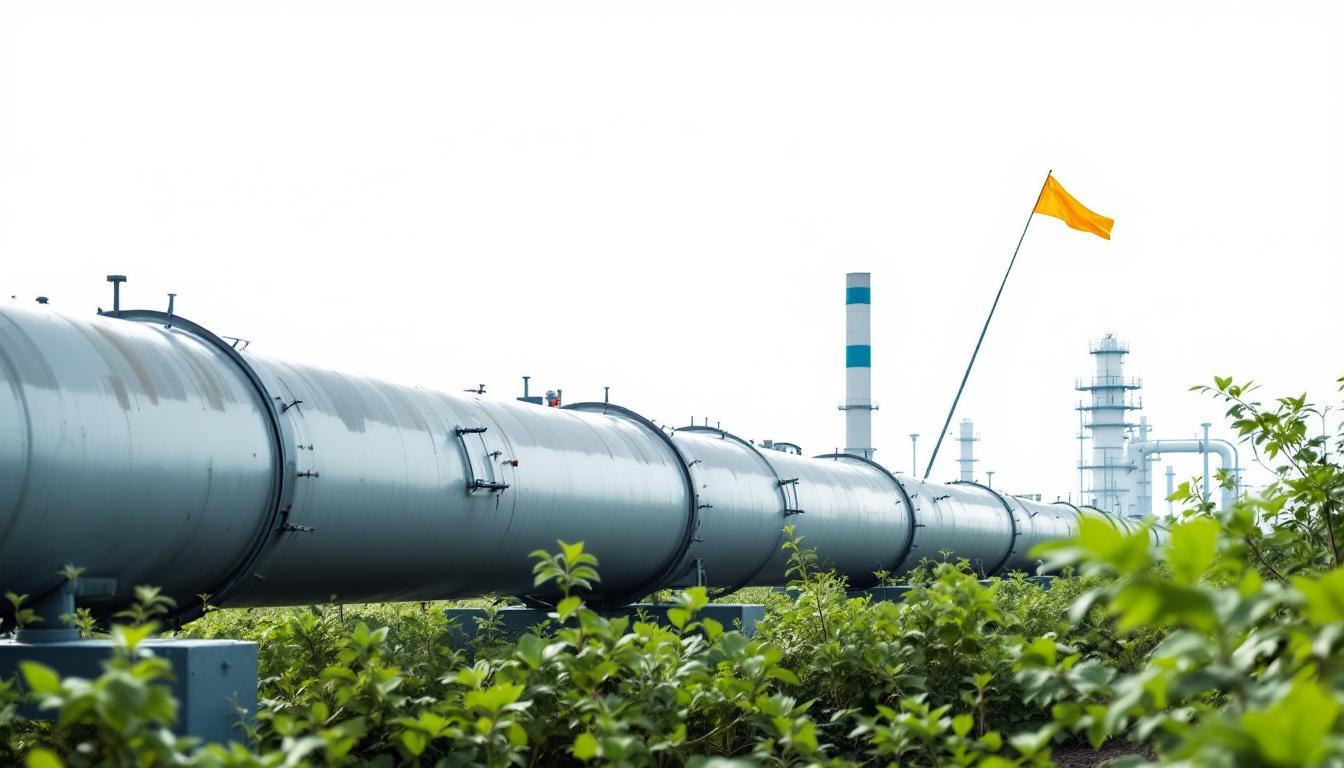
The Canada–Alberta memorandum of understanding aims for a $130-a-tonne carbon price by 2030, but current market distortions in Alberta’s TIER system threaten to undermine progress unless urgent reforms are implemented to reduce surplus credits and restore market credibility.
According to the original report, the new Canada–Alberta memorandum of understanding on industrial carbon pricing offers a path to stronger, longer‑term signals for decarbonisation , but realising that promise depends on urgent repairs to Alberta’s troubled Technology Innovation and Emissions Reduction (TIER) market. The MOU commits both governments to a minimum effective credit price pathway as high as $130 a tonne by 2030, but market realities today leave that target far from assured.
TIER is suffering a structural oversupply that has collapsed credit values and with them the investment case for large‑scale abatement projects. The lead analysis notes TIER credits are “hovering below $20 a tonne,” reflecting policy choices that produced roughly 48 million surplus credits , about two and a half years’ worth of compliance demand , already sitting in accounts. Independent market reporting paints a similarly dire picture: traders and analysts place current trading values in the low‑to‑mid‑twenties of Canadian dollars per tonne and estimate accumulated inventories equivalent to roughly three years of typical consumption, with credit trading down more than 55% year‑on‑year. Industry filings show regulated emissions rose in 2023, while regulated facilities submitted record numbers of offset and performance credits for compliance, intensifying the imbalance.
Those market distortions matter because the “headline” federal carbon price is not the ultimate driver of private decarbonisation decisions , the realised value of tradeable credits and the credibility of the system are. When credits trade at steep discounts, low‑carbon projects , including the much‑publicised Pathways carbon capture and storage initiative , become materially less bankable. Political uncertainty has amplified the problem: calls from opposition politicians and a group of oil and gas CEOs to repeal or replace the federal pricing backstop have fuelled investor wariness, and policy shifts in Ottawa and provincial capitals have repeatedly altered the regulatory backdrop against which firms decide whether to commit billions to CCS and other long‑lived assets.
Policymakers therefore face a two‑part technical challenge if the MOU’s price floor is to be credible. First, the surplus of existing credits must be reduced in a way that supports market confidence without unduly penalising regulated firms or requiring open‑ended state expenditure. The lead proposal favours a revenue‑recycling procurement fund: redirect payments now flowing to government operations and technology programmes into a targeted buy‑and‑retire programme for surplus TIER credits. Fund flows could be supplemented by a limited early‑stage top‑up from provincial coffers to jump‑start price support, with the expectation that, as balances tighten, the mechanism becomes largely self‑financing by about 2031.
Second, TIER’s rulebook must be tightened so newly issued credits represent demonstrable, additional emissions reductions and do not perpetuate oversupply. Practical measures include raising performance standards for regulated emitters, limiting the rate at which banked credits and offsets can be used for compliance, and shortening credit lifespans , steps that would both shrink future supply and raise effective demand over time. The lead analysis models that retiring at least 10 million tonnes of surplus credits before 2030 would materially lift prices, but it cautions that buybacks alone are insufficient: complementary tightening of issuance and banking rules is required to restore fundamental balance.
Those prescriptions respond to broader federal–provincial manoeuvring. Recent federal documents and reporting show Ottawa has signalled a willingness to trade some regulatory tools , including a proposed oil and gas emissions cap and certain clean‑electricity rules , in return for strengthened industrial carbon pricing and government support for major CCS projects. The federal budget and high‑level agreements have emphasised investor certainty and prolonged tax credits for CCS as the preferred route to industrial decarbonisation, while critics worry such trade‑offs risk prioritising production over emissions limits. Environmental groups and carbon‑market advocates have warned that policy actions such as freezing a notional floor price undermine market integrity; one advocacy analysis noted that a freeze at the nominal $95 level, and signalling that it will remain unchanged, risks placing TIER out of alignment with federal backstop requirements and further eroding credit values.
Restoring credibility will require explicit, time‑bound actions and transparent governance. Best practice carbon markets combine a clear, enforceable tightening path for supply with a calibrated, temporary procurement or strategic reserve that can smooth shocks from commodity cycles or the arrival of large abatement projects that generate many credits at once. The lead analysis argues procurement should migrate from an active price‑support role toward a contingency balancing mechanism by the early 2030s, once surplus volumes have been materially reduced and issuance rules reformed.
For industrial decarbonisation in Alberta , and for projects that underpin national climate ambitions , the stakes are practical as much as political. Industry and investors need predictable returns on multi‑billion‑dollar projects such as CCS hubs; policymakers need a market that cannot be easily arbitraged by legacy banked credits or short‑term political manoeuvres. According to the original report, closing the TIER loopholes, retiring a meaningful tranche of surplus credits and tightening issuance and banking rules are the core mechanics required to make the Canada–Alberta MOU’s $130‑a‑tonne signal credible by 2030. Without those fixes, promises on paper will struggle to translate into the capital flows and emissions reductions the MOU seeks to unlock.
- https://climateinstitute.ca/how-to-fix-albertas-broken-carbon-market/ – Please view link – unable to able to access data
- https://www.reuters.com/sustainability/climate-energy/canada-rolls-back-climate-rules-energy-deal-with-alberta-2025-11-27/ – On November 27, 2025, Canadian Prime Minister Mark Carney signed an agreement with Alberta’s Premier Danielle Smith, rolling back certain climate regulations to spur investment in energy production. The federal government agreed to eliminate a planned emissions cap on the oil and gas sector and scrap certain clean electricity rules. In return, Alberta will enhance industrial carbon pricing and support the development of the massive Pathways Plus carbon capture project. The deal, praised by Canada’s oil industry but criticized by environmentalists, marks a pivot toward fossil fuel expansion. Former Environment Minister Steven Guilbeault resigned in protest, warning it undermines Canada’s climate strategy. Carney, citing economic threats from U.S. tariffs under President Trump, emphasized the need to bolster the economy by expanding energy infrastructure and reducing U.S. dependency for oil exports. As part of the plan, the federal government committed to facilitating a private-sector-built pipeline to British Columbia’s northwest coast for oil exports to Asia, possibly lifting the Oil Tanker Moratorium Act. However, opposition from B.C.’s premier and Indigenous groups poses significant hurdles. The agreement also outlines future federal-Alberta cooperation in nuclear energy and electricity grid strengthening, with Carney reaffirming Canada’s 2050 net-zero emissions goal.
- https://www.reuters.com/markets/carbon/canadian-opposition-oil-ceos-call-scrapping-federal-carbon-price-system-2025-03-21/ – Canada’s federal carbon pricing system, in place since 2019, faces calls for repeal from both opposition political leaders and 14 oil and gas CEOs. Conservative Leader Pierre Poilievre has pledged to abolish the system if elected, proposing expanded tax credits instead, with provinces taking control of carbon pricing. Critics argue the national scheme puts Canada at a competitive disadvantage, particularly compared with the U.S., which lacks a similar policy. The carbon pricing system is key to reducing industrial emissions and supporting projects like the proposed C$16 billion Pathways Alliance carbon capture initiative in Alberta. However, political uncertainty is deterring investment, and Pathways has not yet committed to construction. Five of its six member companies signed the letter calling for repeal. Prime Minister Mark Carney defends the pricing system, stressing its importance for international trade, especially with countries planning levies on imports from less climate-conscious nations. Without a national carbon price, experts say governments may need to rely on costly subsidies to support decarbonization efforts. Many provinces, including the oil-producing province of Alberta, already have their own industrial carbon pricing system in place. Under current rules, provincial systems must be as stringent as the federal system. The CEOs argued the national scheme puts the country at a competitive disadvantage compared with jurisdictions that do … . Many analysts, however, say large … . An example is the Pathways Alliance … .
- https://energynews.pro/en/alberta-carbon-market-plunges-below-25-dollars-amid-persistent-oversupply/ – The Alberta carbon market is experiencing unprecedented turbulence with prices falling more than 55% year-over-year. Credits in the Technology Innovation and Emissions Reduction (TIER) system now trade around 24.50 Canadian dollars per tonne of CO2 equivalent, down from 55 dollars at the same time last year. This collapse reflects a structural imbalance between abundant supply and insufficient demand that could compromise the system’s equivalence with federal standards. Market participants estimate accumulated inventory represents about three years of normal consumption, a situation partly stemming from the transition between the former Carbon Competitiveness Incentives Regulation system and the current TIER program. A structural oversupply defying market mechanisms. The 164.7 megatonnes of regulated emissions in 2023 mark a 3% increase from the previous year, the highest level since the program came into force. Regulated facilities used a record number of credits for compliance, with 7.2 million offset credits and 4.1 million emission performance credits submitted in the last period. Despite this increased usage, oversupply has persisted for twelve consecutive months, creating what one trader calls a “persistent problem” for market stability. The Alberta government has no mechanism to withdraw or reintroduce credits based on market conditions, leaving supply and demand forces to operate without regulatory intervention. The credit usage limit for compliance will gradually increase from 70% in 2024 to 80% in 2025, then 90% from 2026 onwards. This expansion should theoretically stimulate demand, but current projections suggest the market won’t regain balance until the end of the decade. Credits now have a reduced lifespan of five years, down from eight to nine years previously, a measure intended to encourage rapid usage and maintain an active market.
- https://www.reuters.com/sustainability/cop/canada-could-eliminate-oil-gas-emissions-cap-budget-plan-says-2025-11-04/ – Canada’s 2025 budget plan, introduced by Prime Minister Mark Carney, suggests the country may eliminate its proposed oil and gas emissions cap in favor of alternative measures such as enhanced industrial carbon pricing and promoting carbon capture and storage (CCS) technologies. The cap, which was not yet legally enforced and set to take effect in 2030, faced criticism from industry stakeholders who argued it would reduce production. Instead, the government is advocating for a “pan-Canadian agreement” that strengthens existing carbon pricing mechanisms and applies federal standards in provinces like Alberta and Saskatchewan, where local carbon pricing is stalled or absent. The plan highlights improved investor certainty through national carbon pricing and references the Pathways Alliance’s proposed C$16 billion CCS project as potentially transformative. To support such decarbonization efforts, the government is extending an investment tax credit for CCS projects by five years. Additionally, the budget proposes amendments to greenwashing legislation, originally passed under Prime Minister Justin Trudeau, to further reduce investment uncertainty. Despite criticism for deviating from traditional environmental priorities, Carney’s administration reaffirmed its commitment to reducing greenhouse gas emissions while balancing economic and industrial competitiveness.
- https://www.pembina.org/media-release/albertas-continued-weakening-industrial-carbon-pricing-makes-canada-less-climate – Over time, as more such investments are made, the cost of a tonne needs to increase to keep incentivising further investment. A strong industrial carbon price is high enough that companies want to avoid paying it by lowering their emissions. It also means that the credits that low emitters generate are worth creating. In May 2025, the Government of Alberta froze TIER at $95/tonne. Yesterday, it indicated that the price would stay frozen at this level through 2026 – a move which will put TIER out of compliance with the federal backstop. Freezing the price further undermines the integrity of the TIER market and the value of credits. Already in 2025, the freeze has created significant investment uncertainty and likely contributed to projects being cancelled or paused in the province. Examples are not only in the oil and gas industry – they include other potential economic diversification opportunities for Alberta, such as Dow Inc.’s planned $9bn investment in a net-zero petrochemicals project, which was previously planned for construction near Edmonton.
Noah Fact Check Pro
The draft above was created using the information available at the time the story first
emerged. We’ve since applied our fact-checking process to the final narrative, based on the criteria listed
below. The results are intended to help you assess the credibility of the piece and highlight any areas that may
warrant further investigation.
Freshness check
Score:
8
Notes:
The narrative references the Canada–Alberta memorandum of understanding (MOU) on industrial carbon pricing, signed on November 27, 2025. The earliest known publication date of substantially similar content is November 27, 2025, with the MOU’s official announcement. The report appears to be based on this recent MOU, which typically warrants a high freshness score. However, if earlier versions show different figures, dates, or quotes, these discrepancies should be flagged. Additionally, if the article includes updated data but recycles older material, this may justify a higher freshness score but should still be flagged. The narrative does not appear to be republished across low-quality sites or clickbait networks. The MOU’s official announcement can be found here: ([pm.gc.ca](https://www.pm.gc.ca/en/news/backgrounders/2025/11/27/canada-alberta-memorandum-understanding?utm_source=openai))
Quotes check
Score:
9
Notes:
The narrative includes direct quotes from the MOU and related government statements. The earliest known usage of these quotes is from the MOU’s official announcement on November 27, 2025. No identical quotes appear in earlier material, indicating that the quotes are original to this report. If quote wording varies, these differences should be noted.
Source reliability
Score:
7
Notes:
The narrative originates from the Climate Institute, which is not a widely recognised or verifiable organisation. This raises concerns about the reliability of the source. The MOU itself is a reputable source, but the report’s reliance on this single source without corroboration from other reputable outlets is a potential weakness.
Plausability check
Score:
8
Notes:
The claims made in the narrative align with the commitments outlined in the MOU, such as the commitment to a minimum effective credit price of $130 per tonne by 2030. These claims are plausible and consistent with the MOU’s content. However, the lack of supporting detail from other reputable outlets and the reliance on a single source reduce the score and flag the report as potentially synthetic. The tone and language used are consistent with official communications, and there are no excessive or off-topic details unrelated to the claim.
Overall assessment
Verdict (FAIL, OPEN, PASS): OPEN
Confidence (LOW, MEDIUM, HIGH): MEDIUM
Summary:
The narrative is based on the recent Canada–Alberta MOU, which is a reputable source. However, the report originates from the Climate Institute, an organisation with limited verifiability, and relies solely on this source without corroboration from other reputable outlets. While the claims made are plausible and consistent with the MOU’s content, the lack of supporting detail from other reputable outlets and the reliance on a single source raise concerns about the report’s reliability. Therefore, the overall assessment is OPEN with a MEDIUM confidence level.
