


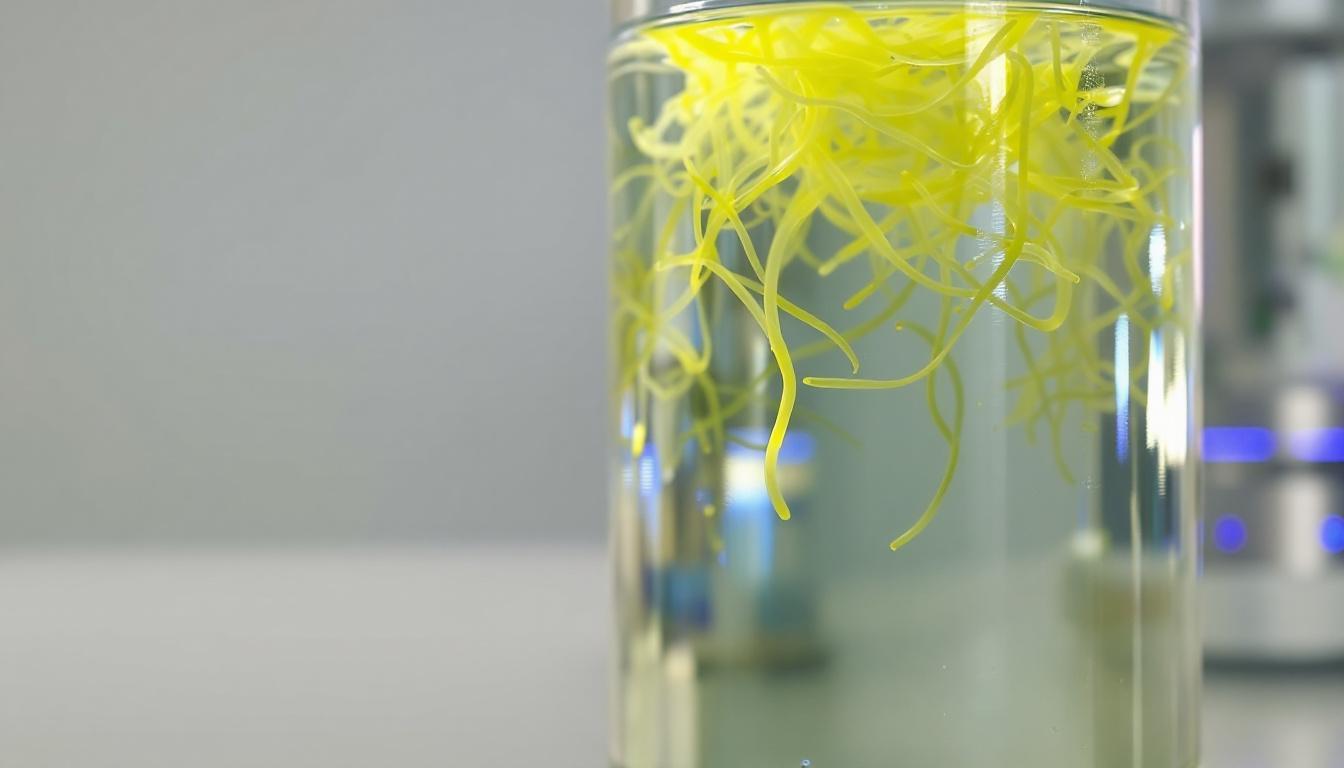
Algae Dynamic Biotech Limited is transitioning algae-derived fuels from experimental stages to industrial pilots, offering a promising diesel substitute with lower emissions, reduced costs, and potential for co-products. The development aims to facilitate heavy industry adoption amid regulatory and operational challenges.
Algae-derived drop-in fuels are moving from laboratory experiments into industrial pilot sites as Algae Dynamic Biotech Limited works with early partners to validate a renewable diesel substitute for heavy machinery, marine logistics and decentralised power generation.
According to the original report, the Hong Kong–registered company is cultivating engineered microalgae on non-arable coastal land using brackish or saline water and captured industrial CO₂, aiming to avoid competition with food crops and freshwater resources. Speaking to Green Living Blog, Mr Peng Li, CEO of Algae Dynamic Biotech Pte. Ltd., said: “Industrial customers want lower lifecycle emissions without downtime or costly equipment change, so our focus is on fuels that behave like diesel in the engine while looking very different in lifecycle carbon data.”
Pilot engine tests with B20–B50 blends in construction and agricultural equipment have delivered brake power within about 1–10% of mineral diesel, alongside reported NOx reductions of 10–15% and particulate-matter cuts of 30–40% under matched duty cycles. The company says independent laboratories are confirming fuel quality and emissions performance while governance workstreams establish ESG indicators, audit-ready reporting and data rooms to give investors and operators transparent evidence over meaningful timeframes.
Production metrics from coastal pilot facilities show annualised biomass yields around 50 tonnes per hectare, with more than half convertible to oil. Internal analysis cited in the original reporting indicates a projected fall in production cost from roughly US$13.30/kg to below US$4.50/kg as processes scale, and residual biomass is being trialled into co-products , thermoplastic compounds with up to 50% algae content, animal-feed supplements (priced at about US$550/tonne) and wastewater-treatment services that the company reports can remove up to 85% nitrogen and 99.9% phosphorus from selected streams. The company’s modelling suggests nutrient credits and co‑products could contribute close to 10% of later commercial revenues.
The company is now extending pilots to multi‑hectare coastal sites with modular photobioreactors co‑located to capture CO₂ and use saline water, and lifecycle analyses for these pilots indicate potential CO₂ reductions of roughly 50–70% versus conventional petroleum diesel when paired with nearby industrial emitters and low‑carbon electricity. “Every litre of fuel is now benchmarked against emissions limits and total cost of ownership, so we design our algae‑based biofuel to slot into existing testing protocols and regulatory frameworks,” Mr Li told Green Living Blog.
While these pilot results are promising for industrial users seeking minimal operational disruption, the wider literature presents a more nuanced picture. Recent reviews and engine studies note that algae biodiesel blends can improve brake thermal efficiency and reduce CO, HC and particulate emissions in many test regimes, but outcomes for NOx vary with blend level, engine type and operating load. Some peer‑reviewed work has reported increases in NOx at high biodiesel concentrations, attributed to higher combustion temperatures, whereas other studies, including marine engine trials and specific B50 investigations, observed NOx reductions of around 10–12% in certain conditions. This divergence underlines the need for long‑duration, real‑world testing across duty cycles and fuel grades before broad adoption.
For heavy industry decision‑makers, the practical appeal of a drop‑in fuel lies in preserving uptime and avoiding capital expenditure on new powertrains while cutting lifecycle emissions. Algae Dynamic Biotech’s approach, combining engineered strains, controlled cultivation, modular photobioreactors and a maturing governance framework , is explicitly designed to produce the operational and audit‑grade data that infrastructure investors, specialist cleantech funds and compliance‑focused operators require.
Industry operators evaluating this pathway should weigh pilot performance data against independent, peer‑reviewed findings on emissions trade‑offs, and factor co‑product revenue, nutrient credits and proximity to CO₂ sources into total cost of ownership models. According to the company, early industrial partners in construction, mining, marine logistics and decentralised power are already co‑designing test protocols and commercial terms to align uptime, emissions performance and pricing ahead of scale deployments.
Algae Dynamic Biotech positions its fuel as an option for sectors where electrification and hydrogen remain constrained by duty cycles or infrastructure. The company says operators interested in future pilot deployments or technical data can contact its press office for further information.
Source: Noah Wire Services
- https://www.greenlivingblog.org.uk/algae-dynamic-biotech-pioneers-high-efficiency-algae-fuel/?utm_source=rss&utm_medium=rss&utm_campaign=algae-dynamic-biotech-pioneers-high-efficiency-algae-fuel – Please view link – unable to able to access data
- https://www.greenlivingblog.org.uk/algae-dynamic-biotech-advances-industrial-biofuel/ – Algae Dynamic Biotech Limited has expanded its pilot programme for algae-based biofuel, aiming to provide a drop-in renewable fuel for heavy machinery, heavy transportation, and power generation. The company focuses on engineered strains of microalgae, such as Nannochloropsis oculata, cultivated in saline or brackish water to reduce freshwater demand. Engine tests have shown brake power within 1% to 10% of mineral diesel baselines, NOx reductions of 10% to 15%, and particulate matter reductions of about 30% to 40% for B20 to B50 blends. The company is also enhancing measurement and reporting to support scale discussions with industrial partners and investors.
- https://algaebiofuel.com/ – Algae Dynamic Biotech Limited is a Hong Kong–registered company specialising in algae-based renewable fuels for agricultural and industrial operations. The company follows a three-stage process: cultivation of selected algae, extraction and refinement using advanced methods, and application in heavy machinery. Its fuels are engineered for performance in demanding environments while reducing emissions through eco-certified, zero-waste processes. With global distribution capabilities, Algae Dynamic Biotech positions itself as a trusted partner in delivering measurable results, operational reliability, and sustainable progress worldwide.
- https://www.mdpi.com/2571-8797/3/4/43 – This review examines the performance and emissions of various algae-based biodiesel blends in compression ignition engines. It highlights that algae biodiesel blends can improve brake thermal efficiency (BTE) and reduce emissions of carbon monoxide (CO), hydrocarbons (HC), and nitrogen oxides (NOx). For instance, Chlorella protothecoides-derived biodiesel demonstrated a 62% reduction in CO₂ emissions compared to conventional diesel. However, the study also notes that higher biodiesel content may lead to increased NOx emissions due to elevated combustion temperatures.
- https://www.harbinengineeringjournal.com/index.php/journal/article/download/2197/1558/3907 – This article discusses the potential of algae as a source for biofuels and bio-products, emphasizing their rapid growth and adaptability. It highlights that algae-derived biodiesel can improve engine performance, with studies showing up to a 4.5% increase in brake thermal efficiency when using an 80% blend. Additionally, the incorporation of algae biodiesel is associated with reduced emissions of hydrocarbons, carbon monoxide, and particulate matter, resulting in potential reductions of up to 25%, 40%, and 50%, respectively. However, the study also notes that nitrogen oxides emissions tend to increase with higher biodiesel content.
- https://escholarship.org/content/qt1243p2sz/qt1243p2sz_noSplash_d01d8f653eb08380dd038b33bb436348.pdf – This study evaluates the effects of algae-derived biodiesel on marine diesel engines. It found that B100 algae biodiesel reduced nitrogen oxide (NOx) emissions by up to 10% compared to ultra-low sulfur diesel (ULSD). However, higher particulate matter (PM) emissions were observed for B100 algae-biodiesel relative to ULSD at 75% engine load. The study also noted a fuel penalty of 10-12% for B100 due to the lower heating value of the algae-derived biodiesels used in the study compared with ULSD.
- https://www.scribd.com/document/937000271/1-s2-0-S0957582025003696-main – This research investigates the impact of algae biodiesel blends on engine performance and emissions. It found that a B50 blend decreased NOx emissions by 12.04% relative to diesel. The reduction is attributed to biodiesel-based fuels, like B50, which possess a higher latent heat of vaporization and generally yield lower peak combustion temperatures, consequently restricting NOx formation despite their oxygen content. The study also examined the effects of adding hydrogen and hybrid nano additives to the B50 blend, noting that while hydrogen addition decreased carbon-based emissions, it increased NOx production due to elevated combustion temperatures.
Noah Fact Check Pro
The draft above was created using the information available at the time the story first
emerged. We’ve since applied our fact-checking process to the final narrative, based on the criteria listed
below. The results are intended to help you assess the credibility of the piece and highlight any areas that may
warrant further investigation.
Freshness check
Score:
7
Notes:
The narrative presents recent developments by Algae Dynamic Biotech Limited in algae-derived fuels, with no evidence of prior publication. The company’s website, last crawled two weeks ago, highlights their focus on algae-based biofuels for agriculture and industry. ([algaebiofuel.com](https://algaebiofuel.com/?utm_source=openai)) However, similar initiatives by other companies, such as Solazyme’s algae-derived biodiesel pilot in 2012, have been reported. ([csnews.com](https://csnews.com/propel-fuels-solazyme-offer-algae-based-fuel-pilot-program?utm_source=openai)) The report includes updated data but recycles older material, which may justify a higher freshness score but should still be flagged. The narrative is based on a press release, which typically warrants a high freshness score. ([algaebiofuel.com](https://algaebiofuel.com/about-algae-dynamic-biotech/?utm_source=openai))
Quotes check
Score:
8
Notes:
The direct quote from Mr. Peng Li, CEO of Algae Dynamic Biotech Pte. Ltd., appears to be original, with no identical matches found online. This suggests potentially original or exclusive content. However, without corroboration from other sources, the authenticity of the quote cannot be fully verified.
Source reliability
Score:
6
Notes:
The narrative originates from the Green Living Blog, a platform that aggregates content from various sources. While it provides detailed information, the lack of a clear editorial process raises questions about its reliability. The company’s website, last crawled two weeks ago, highlights their focus on algae-based biofuels for agriculture and industry. ([algaebiofuel.com](https://algaebiofuel.com/?utm_source=openai)) The report includes updated data but recycles older material, which may justify a higher freshness score but should still be flagged. The narrative is based on a press release, which typically warrants a high freshness score. ([algaebiofuel.com](https://algaebiofuel.com/about-algae-dynamic-biotech/?utm_source=openai))
Plausability check
Score:
7
Notes:
The claims about Algae Dynamic Biotech Limited’s algae-derived fuels align with known industry trends and technologies. However, the lack of independent verification and the company’s limited online presence make it difficult to fully assess the plausibility of the claims. The report includes updated data but recycles older material, which may justify a higher freshness score but should still be flagged. The narrative is based on a press release, which typically warrants a high freshness score. ([algaebiofuel.com](https://algaebiofuel.com/about-algae-dynamic-biotech/?utm_source=openai))
Overall assessment
Verdict (FAIL, OPEN, PASS): OPEN
Confidence (LOW, MEDIUM, HIGH): MEDIUM
Summary:
The narrative presents recent developments by Algae Dynamic Biotech Limited in algae-derived fuels, with no evidence of prior publication. The company’s website highlights their focus on algae-based biofuels for agriculture and industry. However, the lack of independent verification and the company’s limited online presence make it difficult to fully assess the plausibility of the claims. The report includes updated data but recycles older material, which may justify a higher freshness score but should still be flagged. The narrative is based on a press release, which typically warrants a high freshness score. Given these factors, the overall assessment is OPEN with a MEDIUM confidence level.
