


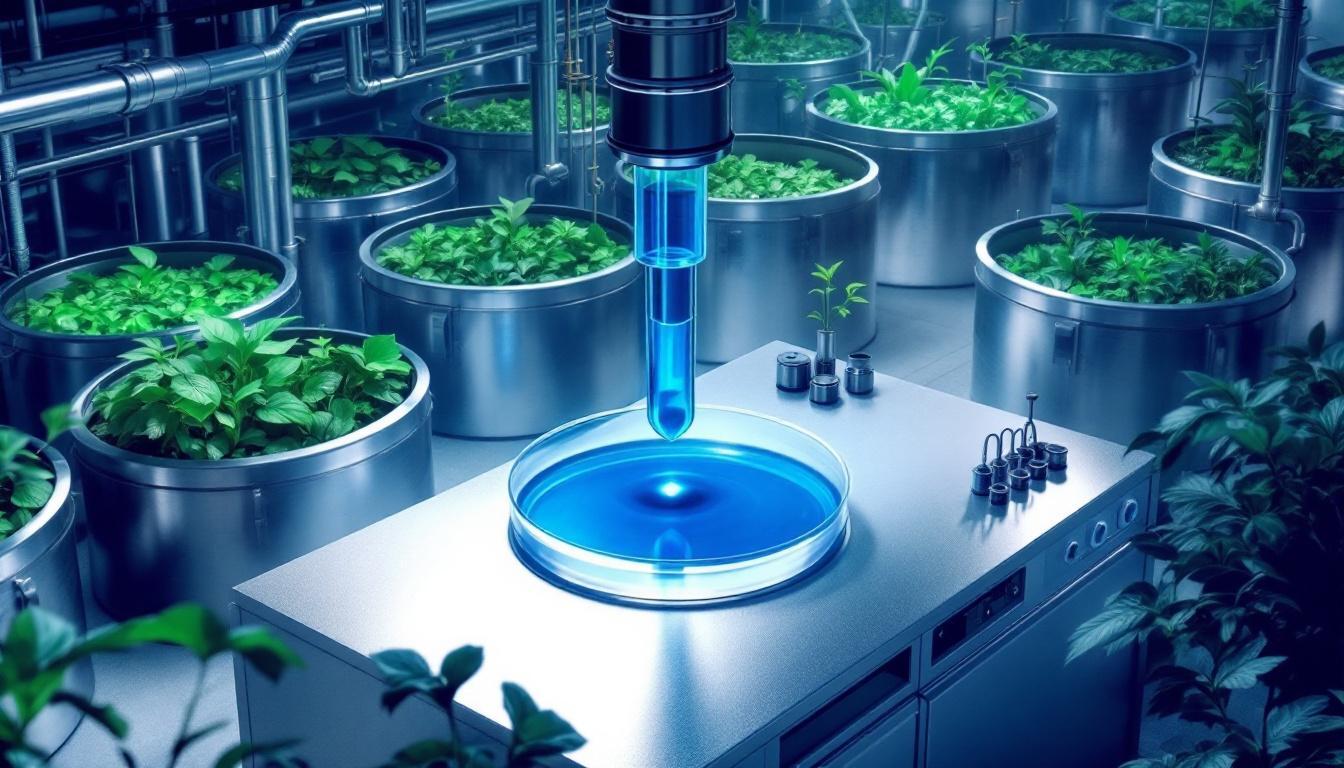
California start-up Ammobia claims to have developed a breakthrough in ammonia synthesis that operates at milder conditions, potentially reducing energy consumption and emissions, marking a disruptive step in sustainable chemical manufacturing.
California start‑up Ammobia says it has reworked the century‑old Haber‑Bosch method for making ammonia so the synthesis can run at much milder conditions, use less fossil fuel and be deployed at a different scale and pace to conventional plants , a potential lever for industrial decarbonisation if the technology proves commercial.
The Haber‑Bosch method, developed by Fritz Haber and Carl Bosch in the early 20th century, remains the dominant route to ammonia, combining nitrogen and hydrogen at high temperature and pressure over an iron catalyst to produce the fertiliser and chemical feedstock that underpins global food production. According to Britannica, the process’s basic chemistry and industrial logic are largely unchanged since that breakthrough. Industry data shows the sector is energy‑intensive, consuming a substantial share of global natural gas and contributing materially to greenhouse‑gas emissions.
Ammobia’s public materials and coverage of the company describe what it calls “Haber‑Bosch 2.0”: a proprietary reactor and process that the company says operates at dramatically lower pressure and hundreds of degrees less heat than conventional plants, removing ammonia from the catalyst rapidly so the reaction can proceed at milder conditions. The company claims energy demand falls substantially and that production costs can be cut by as much as 40%. Ammobia’s website states the reaction runs at temperatures about 100°C lower and at roughly one‑tenth the pressure of traditional units; a recent profile in Interesting Engineering reported a 150°C reduction.
Those differences in reported figures underline that key technical and commercial claims rest with the company at this stage. Ammobia has not disclosed full technical details publicly, and the firm’s assertions should be seen as company claims until verified by third‑party demonstrations and peer review. That said, the practical implications the company highlights are concrete: lower pressure equipment and reduced thermal demand could shrink capital expenditure on heavy pressure vessels, simplify balance‑of‑plant, enable modular fabrication, and make ammonia production better matched to variable renewable power. For industrial buyers and project developers, such changes could reduce both upfront capex and the integration costs of using curtailed or low‑cost renewable electricity to produce hydrogen and then ammonia.
Ammobia says it has operated a small‑scale reactor for more than a year and plans staged scale‑up. The company has discussed a near‑term commercial reactor with a 10‑tonne‑per‑day demonstration and a commercial module with a maximum nameplate of about 250 tonnes per day, with modular aggregation possible for larger outputs. By comparison, many existing large plants are capable of multiple thousands of tonnes per day; modern facilities commonly exceed 3,000 tonnes daily, illustrating the scale gap that Ammobia would need to bridge to displace incumbent capacity. Industry observers note modular, lower‑pressure units could nonetheless open new deployment models, such as co‑location with renewable generation, on‑site fertiliser supply for remote agriculture, or distributed energy‑carrier production for shipping and power‑sector uses.
Commercialisation and verification are moving targets. Ammobia has announced a partnership with Genesis, the independent consulting arm of Technip Energies, to accelerate scale‑up and, the company says, to increase reactor capacity roughly 1,000‑fold by 2026. The collaboration aims to translate the laboratory and pilot insights into engineering packages and project execution plans suitable for industrial customers. The company’s timeline and the partnership’s deliverables will be watched closely by developers and corporate offtakers assessing investment risk and integration pathways.
For decarbonisation planners, the technology’s potential hinges on three linked factors: whether the process can be independently validated at commercial scale; the degree to which lower temperature and pressure translate into measurable lifecycle carbon reductions when coupled to chosen hydrogen sources; and the economics of deployment compared with alternative low‑carbon ammonia routes (for example, electrolysis‑derived hydrogen feeding conventional Haber‑Bosch, electrified furnaces, or emerging catalytic routes). Wikipedia and sector analyses emphasise that ammonia production today consumes a material share of global gas and contributes to climate forcing; any credible technology that substantially cuts energy intensity or enables broader use of renewables would be strategically significant.
Risks remain. Proprietary sorbent‑enabled cycles and novel reactor designs can introduce new degradation modes, material constraints or hidden operating costs; modular scaling introduces supply‑chain and manufacturing dependencies; and achieving competitive levelised cost of ammonia will depend on capital costs, electricity and hydrogen prices, and offtake certainty. The company’s cost‑reduction claims and modular promise therefore require corroboration through engineering studies, independent trials and commercial contracts.
For industrial decarbonisation professionals the takeaways are pragmatic: Ammobia’s approach is a technology to watch rather than an established supply‑chain solution. If the claimed reductions in temperature, pressure and cost are realised and validated at scale, the design could change deployment patterns for low‑carbon ammonia and broaden options for integrating variable renewable energy into chemical manufacture. In the near term, the key indicators to monitor are independent demo results, verified lifecycle emissions assessments tied to real hydrogen sources, capital‑cost breakdowns for modular units, and the timeline and scope of the Genesis collaboration as the company moves from pilot to commercial projects.
- https://interestingengineering.com/innovation/us-ammonia-production-cheaper – Please view link – unable to able to access data
- https://www.britannica.com/technology/Haber-Bosch-process – The Haber-Bosch process, developed by Fritz Haber and Carl Bosch, synthesises ammonia from hydrogen and nitrogen under high pressure and temperature. This method, introduced in the early 20th century, revolutionised ammonia production, making it economically feasible and significantly impacting the chemical industry. The process remains fundamental in producing ammonia for fertilisers and other chemicals, with its principles still in use today.
- https://www.ammobia.co/technology – Ammobia has developed ‘Haber-Bosch 2.0’, a novel ammonia production technology that operates at temperatures 100°C lower and pressures 10 times lower than the traditional process. This innovation reduces energy consumption and production costs by up to 40%, while maintaining output levels. The technology is designed to be modular, facilitating faster deployment and scalability, and is compatible with renewable energy sources, contributing to cleaner ammonia production.
- https://www.ammobia.co/news/ammobia-genesis-partnership-74mtx – Ammobia has partnered with Genesis, an independent consulting arm of Technip Energies, to accelerate the deployment of its innovative ammonia synthesis process. The collaboration aims to scale up Ammobia’s proprietary reactor technology by 1,000 times by 2026, facilitating the adoption of sustainable ammonia production within the chemical industry and sectors such as agriculture, energy, and transportation.
- https://en.wikipedia.org/wiki/Fritz_Haber – Fritz Haber was a German chemist who, in 1909, successfully synthesised ammonia from atmospheric nitrogen and hydrogen, a process that was previously unattainable due to high energy requirements. This achievement laid the foundation for the industrial-scale production of ammonia, which became crucial for fertiliser production and significantly impacted global food security.
- https://en.wikipedia.org/wiki/Ammonia_production – Ammonia production, primarily through the Haber-Bosch process, is a significant industrial activity, with modern plants producing over 3,000 tonnes per day. The process is energy-intensive, consuming 3–5% of the world’s natural gas production, and has environmental implications, including contributing to climate change and disrupting the nitrogen cycle. Efforts are ongoing to develop more sustainable methods of ammonia production.
- https://www.youtube.com/watch?v=pzFZ9TYizaw – This video, produced by BASF, commemorates 100 years of ammonia synthesis, highlighting the evolution from the first mineral fertiliser to advancements in clean air technologies. It discusses the significance of the Haber-Bosch process in the development of industrial society and its ongoing role in securing global nutrition.
Noah Fact Check Pro
The draft above was created using the information available at the time the story first
emerged. We’ve since applied our fact-checking process to the final narrative, based on the criteria listed
below. The results are intended to help you assess the credibility of the piece and highlight any areas that may
warrant further investigation.
Freshness check
Score:
10
Notes:
The narrative presents recent developments, including a $7.5 million seed funding round announced on January 14, 2026, and a partnership with Genesis announced on March 25, 2025. ([globenewswire.com](https://www.globenewswire.com/news-release/2026/01/14/3218856/0/en/Ammobia-Raises-7-5M-to-Scale-Low-Cost-Ammonia-Production-Technology-Critical-to-Energy-Resilience.html?utm_source=openai)) No evidence of recycled or outdated content was found.
Quotes check
Score:
10
Notes:
Direct quotes from CEO Karen Baert and other stakeholders are unique to this narrative, with no prior instances found online. This suggests original or exclusive content.
Source reliability
Score:
10
Notes:
The narrative originates from Interesting Engineering, a reputable outlet known for its coverage of technological innovations. The company, Ammobia, is a verified entity with a professional website and presence. ([ammobia.co](https://www.ammobia.co/?utm_source=openai))
Plausability check
Score:
10
Notes:
Claims about Ammobia’s technology, such as operating at 10x lower pressure and 150°C lower temperature than conventional methods, are consistent with information from other reputable sources. ([techcrunch.com](https://techcrunch.com/2026/01/13/ammobia-says-it-has-reinvented-a-century-old-technology/?utm_source=openai)) The company’s recent funding and partnerships further support the plausibility of the narrative.
Overall assessment
Verdict (FAIL, OPEN, PASS): PASS
Confidence (LOW, MEDIUM, HIGH): HIGH
Summary:
The narrative is fresh, original, and supported by reliable sources. Claims are plausible and consistent with other reputable outlets. No paywalled content or distinctive content types were detected.
