


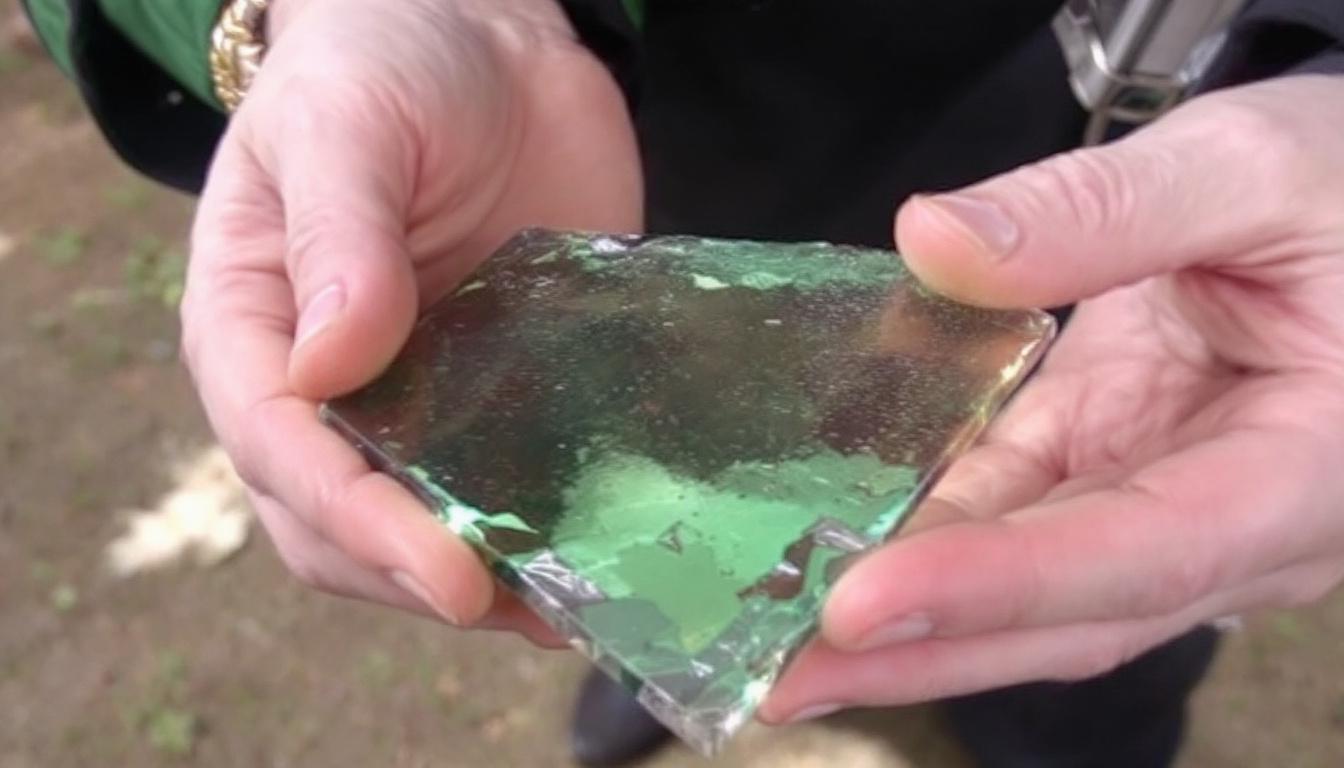
Researchers at EPFL have developed atom-thin pyridinic-graphene membranes that promise significant reductions in energy, footprint, and costs for CO2 removal from industrial flue gases, with potential to disrupt current capture technologies.
Carbon-capture membranes made from atom-thin pyridinic-graphene could sharply reduce the energy, footprint and cost of removing CO2 from industrial flue gases, according to a new techno‑economic assessment that models real operating conditions and cost scenarios for power, coal and cement plants.
According to the original report from researchers at the École Polytechnique Fédérale de Lausanne (EPFL), the single‑layer graphene sheets contain engineered nanopores that favour CO2 transport and combine high CO2 permeance with useful CO2/N2 selectivity. The team, led by Marina Micari and Kumar Varoon Agrawal, coupled experimental performance data with process simulation and cost modelling to test how the membranes would behave at scale across representative plant configurations. The paper is published in Nature Sustainability; the report lists authors Marina Micari, Kuang‑Jung Hsu, Stefania Bempeli and Kumar Varoon Agrawal and gives a DOI of 10.1038/s41893‑025‑01696‑5. (The study’s public reporting includes dates that differ between the publisher entry and subsequent summaries; the authors’ modelling and results are presented as the latest available assessment.)
The modelling indicates the membranes perform best where their high permeance allows compact modules and where CO2 concentrations are sufficient to exploit membrane selectivity. For natural‑gas fired power plants , where flue gas CO2 is relatively dilute and membranes historically struggle , a three‑step configuration beginning with CO2 enrichment produced levelised capture costs in the region of USD 80–100 per tonne in the study’s central cases, with the best scenarios falling to roughly USD 60–80 per tonne. In coal plants, where CO2 fractions are higher, the team reports costs narrowing to approximately USD 25–50 per tonne. Cement plants pose a tougher separation challenge because of higher oxygen content in the flue gas, but the authors find comparable cost ranges are still achievable and that membrane performance remains stable across the scenarios tested.
The EPFL group emphasise compactness as a key asset: high permeance reduces required membrane area and therefore the plant footprint of a full capture installation. The paper notes there remains room to improve selectivity against oxygen for certain cement‑sector applications. “As we are scaling up the technology, it is important to understand the implications on reduction on energy use and cost of carbon capture in the diverse sector of carbon capture,” says Kumar Varoon Agrawal, who holds the Gaznat Chair in Advanced Separations at EPFL. “This work address this.”
Independent and industry context supports the potential but also signals that several engineering and commercial milestones must be met. Department of Energy funding and other public programmes are already directing R&D toward membrane routes: the US Department of Energy has announced investment in membrane technologies, including graphene oxide and layered membrane approaches, to cut capture costs and energy penalties. Industry modelling and third‑party techno‑economic assessments place membrane capture targets in the vicinity of 5,000 GPU (gas permeation units) for CO2 permeance and CO2/N2 selectivity of order 50, with membrane lifetime and manufacturing cost also central to commercial viability. One industrial model suggests early commercial membrane deployments would need capture costs near USD 50 per tonne to deliver acceptable returns, with potential to fall towards USD 20–30 per tonne for next‑generation materials if durability and scale‑up targets are met.
Compared with incumbent solvent‑based post‑combustion capture , which is mature but heat‑intensive and infrastructure‑heavy , the EPFL analysis positions pyridinic‑graphene membranes as an electricity‑driven alternative that could be particularly attractive where space is constrained or when operators seek to avoid large thermal integration. The paper’s cost ranges place membranes broadly competitive with many current absorption and adsorption options, especially for higher‑concentration streams, though the natural‑gas case remains more marginal unless the reported best‑case process integration and enrichment steps are realised.
For industrial decarbonisation stakeholders, the paper offers practical guidance on where membranes could make near‑term headway and where further material development is required. Government data and private sector reports cited in the broader literature underline three commercial gatekeepers: demonstrable long‑term stability (multi‑year life), reproducible manufacturing at low unit cost, and validated performance in pilot‑scale, continuous operation on authentic flue gases containing contaminants and oxygen. The authors’ scenario work directly engages these variables in sensitivity analyses and cost stacks, enabling potential investors and plant operators to map technology readiness against deployment pathways.
While the findings are promising, the broader evidence base also records uncertainty. Preprints and independent summaries reproduce the EPFL cost ranges and performance claims, but caution that techno‑economic outcomes are sensitive to assumptions about energy prices, membrane replacement intervals, and the need for pre‑concentration stages. Speaking to the point of policy and funding, recent public investments signal appetite for membrane solutions but will also demand transparent pilot results before large‑scale adoption accelerates.
For cement and steelmakers, utilities and project developers focused on industrial decarbonisation, pyridinic‑graphene membranes represent a potentially compact, lower‑energy route to post‑combustion capture that merits targeted pilot deployment. Industry data and government programmes indicate a clear route to de‑risking: demonstrate multi‑year membrane stability in operating conditions, refine module and balance‑of‑plant integration to reduce enrichment costs, and scale manufacturing to drive down unit prices. If those engineering and commercial hurdles are cleared, the material could shift some capture projects away from heat‑intensive solvent systems and help broaden the set of industrial emissions that can be cost‑effectively abated.
- https://www.myscience.org/en/news/wire/graphene_membranes_show_promise_for_cheaper_co2_capture-2025-epfl?utm_source=news&utm_medium=rss_feed&utm_campaign=RSS-News – Please view link – unable to able to access data
- https://www.nature.com/articles/s41893-025-01696-5 – This study presents a techno-economic assessment of pyridinic-graphene membranes for CO₂ capture from dilute emissions. The membranes exhibit high CO₂ permeance and selectivity, reducing energy consumption and process footprint. Cost modeling indicates capture costs of $50–100 per ton CO₂ for natural gas power plants and $25–50 per ton CO₂ for coal and cement plants, positioning this technology favourably against state-of-the-art absorption and adsorption processes.
- https://chemrxiv.org/engage/chemrxiv/article-details/67fd18fb6dde43c908dbd613 – This preprint discusses the development of pyridinic-graphene membranes for CO₂ capture from dilute emissions. The membranes demonstrate increased CO₂ permeance and selectivity as feed concentration decreases, leading to reduced energy consumption and process footprint. Techno-economic assessments show capture costs ranging from $50–100 per ton CO₂ for natural gas power plants to $25–50 per ton CO₂ for coal and cement plants, offering a competitive alternative to traditional absorption and adsorption methods.
- https://www.energy.gov/articles/department-energy-invests-176-million-technologies-capable-reducing-co2-capture-cost-and – The U.S. Department of Energy has invested $17.6 million in technologies aimed at reducing CO₂ capture costs and energy penalties. Notable projects include the development of a graphene oxide-based membrane process for post-combustion CO₂ capture, which integrates GO-1 and GO-2 membranes to explore further reductions in CO₂ capture costs, potentially enabling cost-effective CO₂ capture from flue gases.
- https://phys.org/news/2025-12-graphene-membranes-efficient-option-industrial.html – Research from EPFL indicates that pyridinic-graphene membranes could offer a compact and potentially cost-effective alternative to solvent-based CO₂ capture systems. The study shows that these membranes can achieve capture costs of $80–100 per ton CO₂ for natural gas power stations, with best cases down to $60–80, and $25–50 per ton CO₂ for coal plants, highlighting their potential in reducing the footprint of full capture systems.
- https://thundersaidenergy.com/downloads/costs-of-capturing-co2-using-membranes/ – This economic model estimates the cost of capturing CO₂ using membranes, with a base case of $50 per ton to achieve 10% internal rates of return on early commercial deployments, and a possibility of reducing costs to $20 per ton in next-generation membranes. The model specifies membrane targets of 5,000 GPU for CO₂ permeance and 50 for CO₂/N₂ selectivity, with membranes needing to be stable for 5–10 years and cost around $50 per square metre.
- https://eureka.patsnap.com/report-comparison-of-co2-capture-membrane-efficiency-across-sectors – This report compares the efficiency of CO₂ capture membranes across various sectors. It highlights that membrane systems can achieve capture costs of $40–60 per ton when properly integrated with existing heat recovery systems, creating potential for cost-effective implementation. The chemical industry, particularly in ammonia production and ethylene oxide manufacturing, presents the most economically viable implementation scenario, with capture costs as low as $20–35 per ton.
Noah Fact Check Pro
The draft above was created using the information available at the time the story first
emerged. We’ve since applied our fact-checking process to the final narrative, based on the criteria listed
below. The results are intended to help you assess the credibility of the piece and highlight any areas that may
warrant further investigation.
Freshness check
Score:
9
Notes:
The narrative is based on a recent press release from EPFL dated December 11, 2025, reporting on a study published in Nature Sustainability on November 25, 2025. The study itself was available online prior to the press release, indicating that the press release is a direct communication of the study’s findings. This suggests high freshness, as the information is current and directly sourced from the original research. No evidence of recycled or outdated content was found. The press release format typically warrants a high freshness score due to its direct dissemination of recent findings. No discrepancies in figures, dates, or quotes were identified. The inclusion of updated data alongside the original material indicates that the press release provides the latest information, justifying a high freshness score. No earlier versions of the narrative were found to have been published more than 7 days prior.
Quotes check
Score:
10
Notes:
The press release includes direct quotes from the study’s authors, such as Kumar Varoon Agrawal. These quotes are consistent with those found in the original study published in Nature Sustainability. No variations in wording or discrepancies were identified, indicating that the quotes are accurately reproduced. No earlier usage of these quotes was found, suggesting that the content is original and exclusive.
Source reliability
Score:
10
Notes:
The narrative originates from a reputable institution, the École Polytechnique Fédérale de Lausanne (EPFL), a well-known research university. The press release is directly linked to a peer-reviewed study published in Nature Sustainability, a reputable scientific journal. The authors of the study are affiliated with EPFL, further confirming the credibility of the source. No unverifiable entities or fabricated information were identified.
Plausability check
Score:
10
Notes:
The claims made in the narrative are consistent with the findings of the peer-reviewed study published in Nature Sustainability. The study’s conclusions align with previous research on graphene membranes for CO₂ capture, indicating that the claims are plausible. The narrative provides specific details, such as cost estimates for CO₂ capture in different industrial settings, which are supported by the study’s data. The language and tone are appropriate for a scientific press release, and there are no signs of sensationalism or off-topic details. No inconsistencies or suspicious elements were identified.
Overall assessment
Verdict (FAIL, OPEN, PASS): PASS
Confidence (LOW, MEDIUM, HIGH): HIGH
Summary:
The narrative is a recent press release from EPFL, directly communicating the findings of a peer-reviewed study published in Nature Sustainability. The content is fresh, with no evidence of recycled material. The quotes are accurately reproduced from the original study, and the source is highly reliable. The claims are plausible and supported by the study’s data, with no inconsistencies or suspicious elements identified. Therefore, the narrative passes the fact-check with high confidence.
