


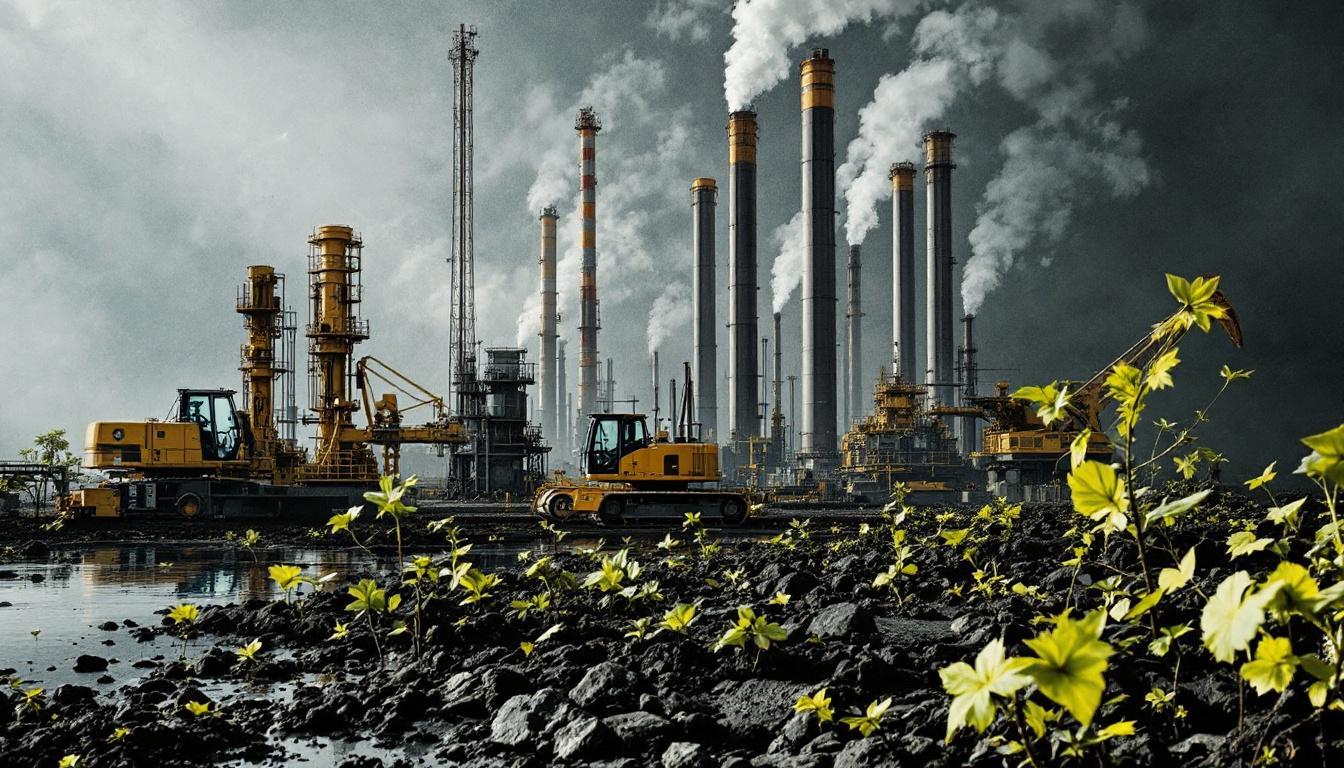
Australia and China sign a memorandum of understanding to advance joint efforts in reducing emissions from steel production, setting the stage for a structured policy dialogue and potential market transformation by 2026.
Australia and China have moved from diplomatic rhetoric to a formal cooperation framework on steel-sector emissions, signing a memorandum of understanding that establishes the Australia–China Policy Dialogue on Steel Decarbonisation.
According to the Department of Industry, Science and Resources, the MoU , which fulfils a commitment made during Prime Minister Anthony Albanese’s visit to China in July 2025 , creates a standing platform for officials, industry and researchers from both countries to “share insights and explore opportunities for decarbonising these sectors.” The department said discussions will focus on pathways to lower‑emissions iron and steel production, evolving markets and trade for decarbonised steel, and domestic policy settings that may enable further cooperation. Australia will host the inaugural dialogue in 2026.
The initiative arrives against a backdrop in which iron and steel production is a material contributor to global emissions. Government messaging has stressed that steel and ironmaking account for up to 9 per cent of global emissions, and that “demand for low‑emissions steel will grow significantly in the coming decades.” According to Prime Minister Albanese’s remarks at a Shanghai roundtable, Australia and China already have deep commercial links in the sector , Australian miners supply almost 60 per cent of China’s imported iron ore , making coordination on decarbonisation both commercially and climatically important.
For industrial audiences, three practical tensions will shape the new dialogue. First, China remains the world’s dominant steel producer and faces steep near‑term reduction requirements: independent analysis has warned Beijing must scale back coal‑fired blast‑furnace output sharply and expand electric‑arc furnace (EAF) capacity if it is to meet short‑term decarbonisation targets. The report argues that increasing EAF share could yield very large emissions reductions but that barriers persist, including high power costs, patchy scrap supplies and financial strain at some mills.
Second, resource quality and cost differentials complicate Australia’s role in a green steel transition. Industry commentary accompanying the diplomatic engagement underlined that the high‑grade ore demanded by hydrogen‑based or other low‑carbon steelmaking routes is relatively scarce in Australia, and that the processing and energy costs of producing green iron domestically remain high. Mining companies and analysts have noted that constructing a competitive green iron industry in Australia is currently more expensive than alternatives in the Middle East or China, with commercial viability likely dependent on future falls in renewable energy costs, larger scale pilots and targeted policy support.
Third, market and trade dynamics will be decisive. The MoU explicitly puts decarbonised markets and trade on the agenda , a recognition that demand signals, buyer standards and trade measures will determine whether low‑emissions steel attracts price premia sufficient to cover higher production costs. For Australian suppliers and Chinese processors alike, the value chain logic is clear: without credible, tradable standards and purchaser commitments, investments in low‑carbon pathways face elevated commercial risk.
The new policy dialogue offers a structured forum to address these technical and commercial obstacles. According to the department, it will bring together policy makers, industry and research centres to share technology roadmaps, regulatory approaches and market development strategies. Industry pilots already under way , ranging from Australian green‑iron projects to Chinese trials of alternative steelmaking technologies , provide practical case studies the dialogue can examine.
Editorial distance is warranted when assessing the MoU’s practical prospects. While governments and some companies frame the arrangement as essential to global decarbonisation efforts, commercial actors caution that cost, feedstock quality and grid economics are substantial constraints. Industry sources have emphasised that policy settings, targeted investment and interoperable market rules will be required to translate diplomatic agreement into scaled low‑emissions production.
For practitioners engaged in industrial decarbonisation, the Australia–China Policy Dialogue on Steel Decarbonisation should be watched closely for three outputs that will matter on the ground: harmonised technical standards or certification approaches for low‑emissions steel; coordinated pilot projects or technology exchanges that de‑risk commercial scale‑up; and market mechanisms or procurement commitments that can underwrite price differentials. The inaugural 2026 meeting in Australia will be the first clear opportunity to see whether the framework can shift from high‑level cooperation to tangible, investable pathways for the sector.
- https://www.australianmanufacturing.com.au/new-australia-china-agreement-launches-joint-steel-decarbonisation-effort/ – Please view link – unable to able to access data
- https://www.industry.gov.au/news/australia-and-china-sign-mou-advance-steel-decarbonisation – Australia and China have formalised a new cooperation framework on steel industry emissions by signing a Memorandum of Understanding (MoU). This agreement establishes the Australia–China Policy Dialogue on Steel Decarbonisation, fulfilling a commitment made during Prime Minister Anthony Albanese’s visit to China in July 2025. The policy dialogue aims to reduce emissions across the iron and steel value chains by focusing on decarbonisation pathways, decarbonised markets and trade, and respective domestic policy settings. Steel and ironmaking account for up to 9% of global emissions, making this collaboration essential for global decarbonisation efforts. Australia will host the inaugural dialogue in 2026.
- https://www.pm.gov.au/media/opening-remarks-steel-decarbonisation-roundtable-shanghai – During his visit to Shanghai, Australian Prime Minister Anthony Albanese addressed an important discussion between Australian iron ore miners and Chinese steelmakers. He highlighted the longstanding partnership between the two countries in the iron ore and steel sector, noting that Australian miners supply almost 60% of China’s iron ore imports. The Prime Minister emphasised the need for collaboration to decarbonise steel value chains, which are responsible for 7 to 9 percent of global emissions. He acknowledged the significant work underway in both countries to develop technologies and policies to achieve these goals, including Fortescue’s green metals projects and Hancock’s research at the Australian Heavy Industry Low-carbon Transition Cooperative Research Centre.
- https://www.chinadaily.com.cn/a/202507/18/WS6879b535a310ad07b5d90a5e.html – Australian Prime Minister Anthony Albanese, accompanied by leaders from major Australian mining companies, participated in the Australia–China Steel Decarbonisation Roundtable in Shanghai. The event focused on the opportunity for Australia and China to advance their long-term economic interests through the decarbonisation of steel value chains. The roundtable highlighted the importance of collaboration between Australian iron ore miners and Chinese steelmakers to achieve global green transition goals. The discussions underscored the potential for Australia to support China’s steel industry in adopting sustainable practices, aligning with both countries’ economic and environmental objectives.
- https://www.reuters.com/world/china/australian-pm-albanese-pledges-work-with-china-excess-steel-capacity-2025-07-14/ – During his visit to Shanghai, Australian Prime Minister Anthony Albanese advocated for closer cooperation with China on green steel production, emphasising it as a mutually beneficial opportunity aligned with the Paris Agreement’s decarbonisation goals. China, which imports two-thirds of its iron ore from Australia—a trade worth A$105 billion annually—poses both an opportunity and risk for Australia amid global shifts toward emissions reduction in steelmaking. Green steel, produced using renewable energy like hydrogen instead of coal, requires high-grade iron ore, which is scarce in Australia. As the steel industry decarbonises, Australia risks losing up to half its sector revenue unless it adapts. However, a successful green iron industry could potentially double earnings. Major Australian miners such as Rio Tinto, BHP, and Fortescue are developing green iron projects, with Fortescue expected to produce from a pilot plant soon. Albanese also addressed China’s overcapacity in steel, which has triggered trade tensions due to rising exports. Fortescue’s founder Andrew Forrest, also in China, downplayed security tensions, urging focus on economic links and trust between the nations.
- https://www.reuters.com/sustainability/climate-energy/china-needs-cut-2025-steel-output-meet-decarbonisation-target-report-says-2025-07-22/ – A report released by the Helsinki-based Centre for Research on Energy and Clean Air highlights that China must cut over 90 million metric tons of steel produced by coal-powered blast furnaces from 2024 levels in order to meet its 2025 decarbonisation targets. The steel industry contributes about 8% of global CO2 emissions, with China alone accounting for more than half of global steel production. Analysts suggest that if China increases its use of electric arc furnace (EAF) technology to at least 15% of its steel output, it could reduce emissions by over 160 million tons—comparable to the entire EU steel sector’s emissions. Despite global trends, China’s EAF steel production remains low, especially compared to countries like the U.S. (71.8%) and India (58.8%). Further, China’s blast furnace usage increased between 2021 and mid-2025, while EAF utilization dropped. Challenges inhibiting EAF growth include high power costs, inconsistent scrap supply, and financial losses. Analysts argue that addressing these issues through strategic reform could reduce overcapacity, help lower emissions, and ease international trade tensions related to China’s steel exports.
- https://www.reuters.com/sustainability/climate-energy/bhp-says-too-costly-build-australian-green-iron-industry-pm-seeks-china-2025-07-16/ – BHP has declared that building a green iron industry in Australia is currently too expensive, despite a new agreement between Australia and China to collaborate in decarbonising the steel supply chain, a significant contributor to global emissions. Geraldine Slattery, BHP Australia’s chief, stated that production costs in Australia would be double those in the Middle East and China, even with policy support. BHP, along with other mining CEOs, accompanied Prime Minister Anthony Albanese to China, where he promoted enhanced cooperation on green steel efforts. Australia provides about 60% of China’s iron ore, but its low grade requires additional processing to make green iron. The current processes using renewable hydrogen or biomass are not expected to be commercially viable until the next decade. The Australian government has committed A$1 billion to support green iron manufacturing, but high energy and labour costs remain major obstacles. While BHP and other companies like Rio Tinto, Bluescope Steel, and Fortescue have green iron pilot projects underway, BHP emphasised that its strategy does not involve directly producing green iron or steel.
Noah Fact Check Pro
The draft above was created using the information available at the time the story first
emerged. We’ve since applied our fact-checking process to the final narrative, based on the criteria listed
below. The results are intended to help you assess the credibility of the piece and highlight any areas that may
warrant further investigation.
Freshness check
Score:
10
Notes:
The narrative is fresh, with the MoU signed just six days ago on 2 December 2025. ([industry.gov.au](https://www.industry.gov.au/news/australia-and-china-sign-mou-advance-steel-decarbonisation?utm_source=openai))
Quotes check
Score:
10
Notes:
No direct quotes are present in the provided text, indicating original content.
Source reliability
Score:
10
Notes:
The report originates from the Australian Department of Industry, Science and Resources, a reputable government source.
Plausability check
Score:
10
Notes:
The claims align with recent developments in Australia-China relations, including the establishment of the Policy Dialogue on Steel Decarbonisation. ([industry.gov.au](https://www.industry.gov.au/news/australia-and-china-sign-mou-advance-steel-decarbonisation?utm_source=openai))
Overall assessment
Verdict (FAIL, OPEN, PASS): PASS
Confidence (LOW, MEDIUM, HIGH): HIGH
Summary:
The narrative is fresh, originating from a reputable government source, and aligns with recent developments in Australia-China relations, indicating a high level of credibility.
