


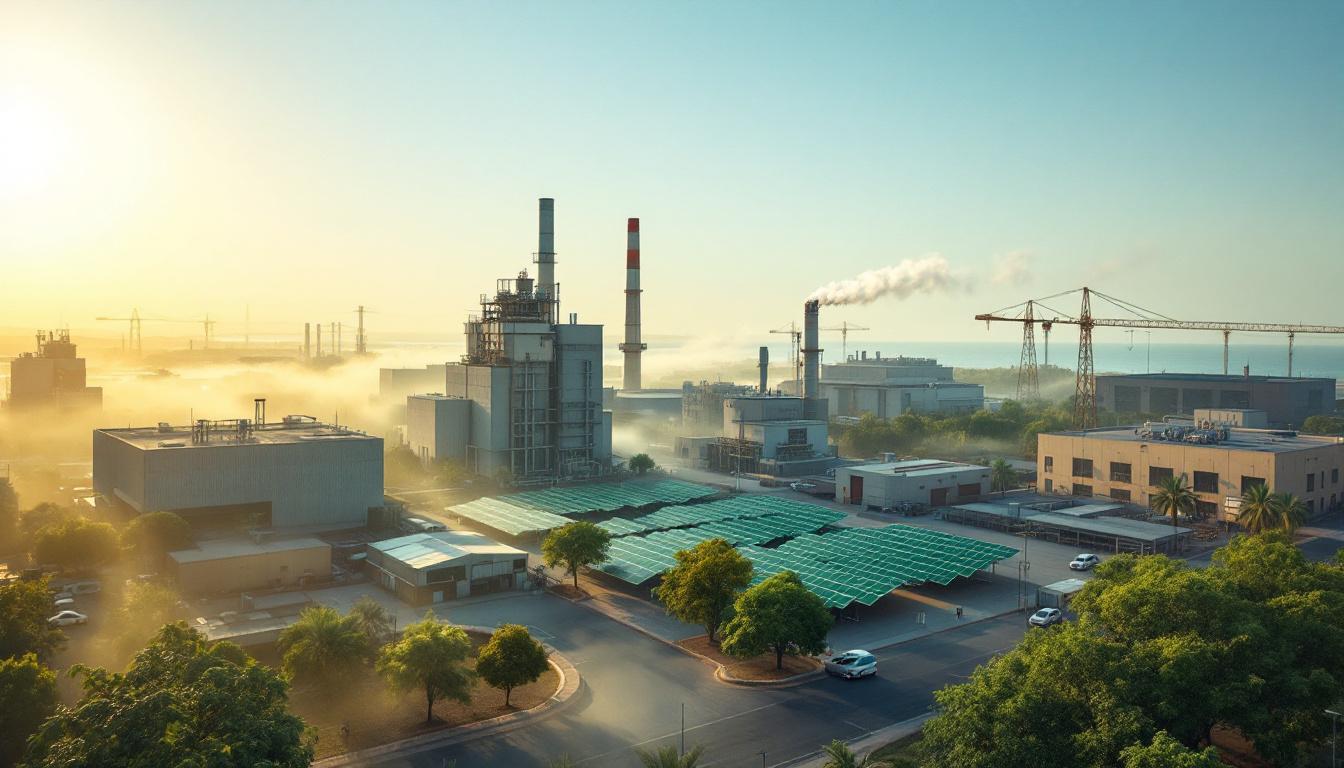
Bahrain is intensifying efforts to decarbonise its manufacturing sector by awarding Green Factory Seals to over 40 sites, aligning industrial growth with climate targets and economic diversification.
Bahrain is stepping up efforts to decarbonise its manufacturing base by awarding Green Factory Seals to a growing cohort of industrial sites, a move designed to embed resource efficiency, emissions control and circular practices into factory operations.
According to the Ministry of Industry and Commerce, more than 40 factories have now received the Green Factory Seal, a certification assessing water management, waste treatment, energy use, adoption of renewables where feasible and compliance with national environmental rules. The ministry says the scheme supports the Industrial Sector Strategy (2022–2026) and the Kingdom’s pledge to reach net-zero emissions by 2060. Government communications frame the seal as an incentive to accelerate cleaner technologies, improve productivity and align industrial expansion with Bahrain’s climate and economic diversification objectives.
The programme is already being linked to commercial incentives and finance. The National Bank of Bahrain signed a memorandum of understanding with the ministry to back the Green Factory Seal initiative, signalling an intention to couple certification with improved access to funding for eligible manufacturers. Industry examples also show public recognition in practice: Ameeri Industries (AMGARD) was presented with the award by the minister, illustrating how the scheme is being used to validate compliance with international environmental norms and to raise corporate profiles.
Policy documents and ministry briefings describe the seal as part of a broader push toward a circular carbon economy and stronger environmental, social and governance (ESG) practices in industry. The programme reportedly offers benefits in cooperation with private partners, including incentives intended to reduce barriers for factories pursuing energy efficiency measures, waste reuse and solar integration. Earlier ministry releases noted a prior round of awards to 30 factories, suggesting the rollout has expanded; officials have emphasised both the cultural and technical dimensions of the effort.
For Bahrain’s industrial portfolio , which includes energy-intensive activities such as aluminium smelting, petrochemicals, food processing and light manufacturing , improvements in energy and water use are central to cutting carbon intensity. Industry data and sector commentary point to common efficiency opportunities: replacing electrical motors with higher-efficiency models, capturing and reusing waste heat, deploying advanced monitoring and controls, and investing in water-recycling systems. These interventions frequently yield measurable cost savings as well as emissions reductions, boosting the business case for investment.
Analysts and trade groups welcome the clarity a certification framework can bring, but warn that smaller firms may confront upfront capital requirements. Business representatives have called for complementary technical assistance and accessible financing to avoid creating an uneven playing field between large companies able to finance upgrades and small and medium-sized manufacturers that need support. The ministry and its banking partners appear to be attempting to address that gap through incentive packages and finance arrangements tied to certification.
Externally, the move reflects shifting buyer expectations in supply chains. According to market observers, international purchasers , particularly in Europe and North America , are increasingly demanding documented environmental performance from suppliers, so certified factories may find it easier to win contracts and enter export markets. Regional peers have pursued similar strategies: Saudi Arabia has rolled out industrial incentives for energy efficiency and renewables, while the United Arab Emirates has promoted green building and manufacturing standards. Bahrain’s programme positions it among Gulf states tightening the environmental credentials of industry.
Success, however, will hinge on transparent metrics and ongoing verification. Experts stress the need for clear, measurable performance indicators, regular reassessment and public disclosure of aggregate outcomes , for example, reductions in electricity consumption or emissions achieved by certified sites , to maintain credibility and limit accusations of greenwashing. Government sources indicate inspections and monitoring of emissions, effluent and hazardous-waste handling are being stepped up alongside the seal, but industry observers say independent verification and published results would strengthen investor confidence.
The ministry presents the Green Factory Seal as a pragmatic mechanism to translate national policy into operational change on the factory floor. Whether it accelerates a substantive shift across Bahrain’s industrial landscape will depend on sustained policy support, accessible finance, and the capacity of both large and smaller manufacturers to invest in the technologies and practices that cut resource use and carbon output.
- https://thearabianpost.com/bahrain-honours-over-40-plants-with-green-seal/ – Please view link – unable to able to access data
- https://www.moic.gov.bh/en/node/6256 – The Ministry of Industry and Commerce (MOIC) in Bahrain has awarded the ‘Green Factory Seal’ to over 40 factories, promoting sustainability and industrial efficiency. This initiative aligns with the Industrial Sector Strategy (2022–2026) and supports Bahrain’s goals in circular carbon economy, environmental and social governance (ESG), and low-emission solutions. The Green Factory Seal encourages factories to adopt cleaner technologies, optimise energy consumption, and improve operational efficiency, contributing to the Kingdom’s commitment to achieving net-zero carbon emissions by 2060.
- https://www.moic.gov.bh/en/node/5295 – The Green Factory Seal is a programme by Bahrain’s Ministry of Industry and Commerce aimed at promoting sustainable manufacturing. It supports the Kingdom’s commitment to achieving net-zero emissions, encourages the industrial sector to adopt solar energy solutions, and fosters a culture of sustainability and green production. The programme offers benefits and incentives to factories in cooperation with private sector partners, aligning with the Industrial Sector Strategy (2022–2026) and supporting Bahrain’s goals in circular carbon economy and environmental and social governance (ESG).
- https://www.ameeri.com.bh/ameeri-industries-amgard-received-the-green-factory-seal-award/ – Ameeri Industries (AMGARD) received the ‘Green Factory Seal’ award from H.E. Mr. Abdulla bin Adel Fakhro, Minister of Industry and Commerce. This award recognises factories that adhere to international environmental standards, marking a significant step in Bahrain’s journey towards industrial sustainability. The initiative reflects the Ministry’s commitment to supporting factories in implementing environmental governance policies and offers incentives to enhance their competitiveness both locally and regionally.
- https://www.newsofbahrain.com/business/97042.html – The National Bank of Bahrain (NBB) signed a Memorandum of Understanding (MoU) with the Ministry of Industry and Commerce (MOIC) to collaborate on the Green Factory Seal Programme. This partnership signifies a shared commitment to promoting sustainable practices within Bahrain’s industrial sector. The programme incentivises factories towards environmental responsibility by offering the seal to those fulfilling specific criteria, including reducing waste, utilising renewable energy, implementing ESG policies, and operating carbon capturing units.
- https://www.moic.gov.bh/en/node/5751 – The Ministry of Industry and Commerce awarded the ‘Green Factory Seal’ to 30 factories as part of Bahrain’s efforts to promote advanced and sustainable industry. This initiative aims to spread the culture of sustainability and apply the concepts of circular carbon economy and environmental and social governance. The Green Factory Seal is granted to factories that achieve specific standards based on regional and global practices in sustainable manufacturing, such as reusing industrial waste and using renewable energy.
- https://www.bahrain.bh/wps/portal/en/BNP/HomeNationalPortal/ContentDetailsPage/!ut/p/z1/vVTRdqIwEP0VXnzkZEgghEddbamtS6vSVl56IsSaLQQKaOvfb3D3nD2Fij5t3ibnTubOzL1BEXpGkeJ7-cprmSue6ngV0RfrxgGf_QC4H9sYHh69OR3NLJhdE_T0FWAtQ9CAm-E8uBpbYFsouiQfTpwhnMt_RBGKilgmaCUSiolleaZDYmbaridMZrmWyTzh2GAzjzPSoGNVF_UWrdaqeBFqAHyd72qj3grjTarXJM8GkHG12_C43pX6xuAqMRTXAU-NUlT5roxFdRGoPR7_5_0YaOAzF7sjAkvc1x6A3c7vAr7k-0Q3SvHkbjb2HbKgnfX4DyHTgLtpQPGIBJPWelrbu4VOfqdAL3_nHH-nxb9Dr5XvLT2qAXho48U1gQAuk1cPIOpXX7-8b1v1u_SmR4AfALUww9OATAgMg7vRQ7h8hCCExmDy1_t7NNS6zFUtPmv0LF7zfZGXNU-P-tSRKFUmVD2AXSU2u9SQapOX2dGkAyhFE1R_a_X0-l2t_2GCFrGuCU4R4-UADvoRI5UboZs21nxbcqnpbngm08OxXinS4yCqrSyqZho6FIlR54WMq2O-NvtTY_weEhTagG-s1muW5qs7p6bWC14YXgFl11e2TdncdVy00nJzT09K63kvxQcKVbP9FC3-fX7cAgdi7piAMTVt27PMNePCdLCgQsREJAlGPrQrtERy01Phou91IRQqsjDMGDnIP8eM1k66z57Mt_lkM5sQezXdf_wGiFc3qA!!/ – The Kingdom of Bahrain’s Green Factory Seal incentive scheme aims to encourage factories to adopt advanced and sustainable production methods by implementing carbon circular economy and ESG plans. The seal is granted to eligible licensed factories, unlocking key incentives that help them achieve their potential in areas related to access to finance, enhanced operations, reach to international markets, and capacity building. This initiative aligns with Bahrain’s broader sustainability agenda and supports the national plan to achieve carbon neutrality by 2060.
Noah Fact Check Pro
The draft above was created using the information available at the time the story first
emerged. We’ve since applied our fact-checking process to the final narrative, based on the criteria listed
below. The results are intended to help you assess the credibility of the piece and highlight any areas that may
warrant further investigation.
Freshness check
Score:
10
Notes:
The article was published on February 22, 2026, aligning with the Ministry of Industry and Commerce’s announcement on the same date. ([moic.gov.bh](https://www.moic.gov.bh/en/node/6256?utm_source=openai))
Quotes check
Score:
8
Notes:
The article includes direct quotes from H.E. Abdulla bin Adel Fakhro, Minister of Industry and Commerce. These quotes are consistent with the official release from the Ministry. ([moic.gov.bh](https://www.moic.gov.bh/en/node/6256?utm_source=openai))
Source reliability
Score:
6
Notes:
The article originates from The Arabian Post, which appears to be a news aggregator or press release distribution platform. While it references official sources, the platform’s credibility is uncertain due to its nature as an aggregator.
Plausibility check
Score:
9
Notes:
The claims about the Green Factory Seal initiative and the involvement of the National Bank of Bahrain (NBB) are plausible and align with known sustainability efforts in Bahrain. ([moic.gov.bh](https://www.moic.gov.bh/en/node/6256?utm_source=openai))
Overall assessment
Verdict (FAIL, OPEN, PASS): PASS
Confidence (LOW, MEDIUM, HIGH): MEDIUM
Summary:
The article provides timely and plausible information about Bahrain’s Green Factory Seal initiative, with direct quotes from the Minister of Industry and Commerce. However, the source’s credibility is uncertain due to its nature as a news aggregator, and the verification process’s independence is compromised by reliance on a single platform.
