


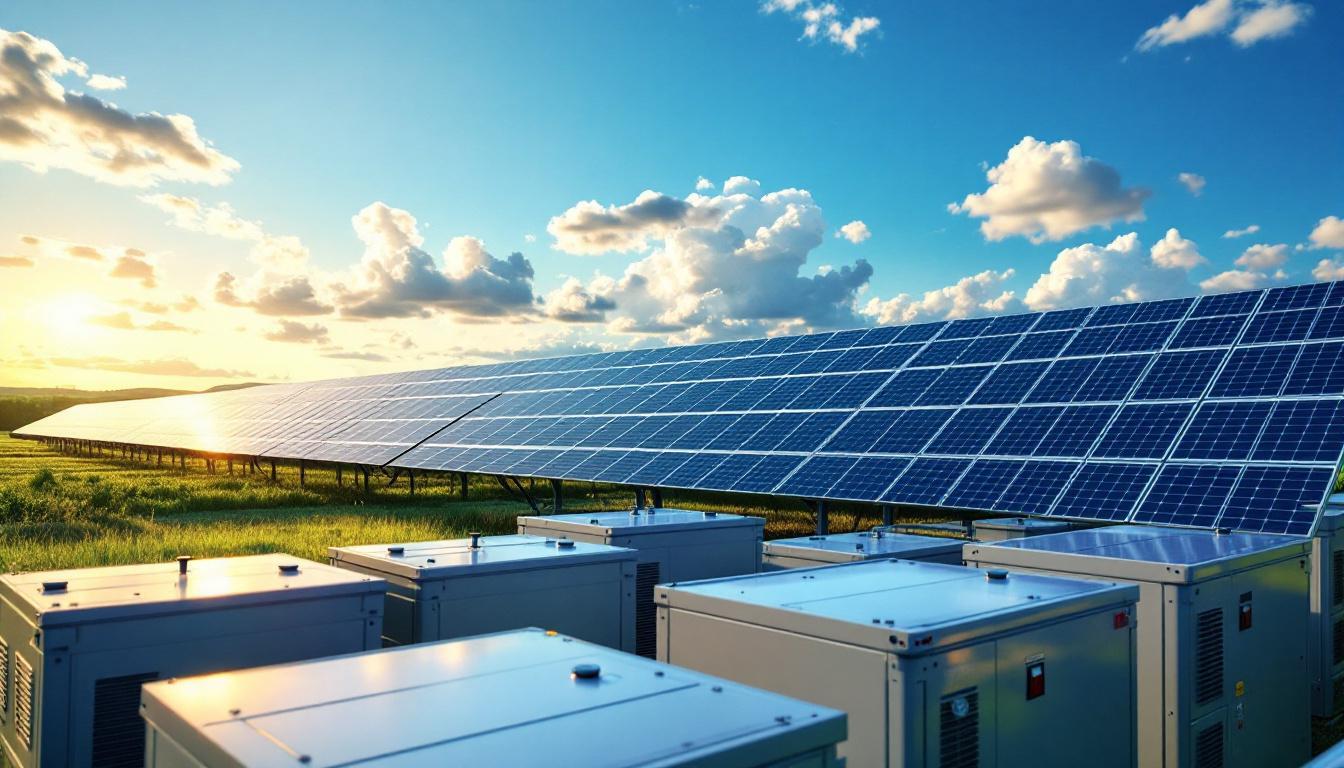
BloombergNEF’s latest analysis reveals record-low costs for battery storage, accelerating solar-plus-storage deployment and reshaping the power sector amid rising prices for wind and thermal technologies.
BloombergNEF’s latest Levelized Cost of Electricity analysis shows battery storage reached unprecedented cost levels in 2025, reshaping the economics of utility‑scale power and accelerating coupled solar-plus-storage deployments even as many renewable technologies saw rising prices.
According to BloombergNEF, the global benchmark LCOE for a four‑hour battery project plunged 27% year‑on‑year to $78/MWh in 2025, a dramatic fall from costs a decade and more ago. The consultancy notes that four‑hour systems were priced below $100/MWh in six markets, a milestone driven by lower battery pack prices, intensified manufacturer competition and more efficient system designs. BloombergNEF’s separate 2025 lithium‑ion battery pack survey records pack prices at a record low of $108/kWh overall, with stationary‑storage packs averaging $70/kWh, reflecting steep declines and the growing uptake of lower‑cost chemistries such as lithium‑iron‑phosphate.
Those cost improvements translated rapidly into project activity. Developers added 87 GW of co‑located solar and storage in 2025, delivering electricity from those combined assets at an average of $57/MWh, BloombergNEF reports. The consultancy highlights that, in some regions , notably parts of California and Texas , co‑located solar with four‑hour storage can supply a large share of data‑centre demand at prices below gas‑fired alternatives.
By contrast, BNEF finds that benchmark costs for several renewable technologies reversed recent declines in 2025. The typical fixed‑axis solar farm’s LCOE rose by about 6% to $39/MWh, onshore wind reached $40/MWh and offshore wind climbed to roughly $100/MWh. BloombergNEF attributes those increases to supply‑chain bottlenecks, weakened resource availability and policy and market reforms in mainland China that tightened inputs and pushed up equipment prices in several segments.
The report also flags rising costs for thermal generation. Global LCOE for combined‑cycle gas turbines increased about 16% to $102/MWh, reaching a record high, an outcome BNEF links to higher equipment prices and stronger demand for gas turbines amid data‑centre expansion. The consultancy expects gas plant costs to remain elevated for the foreseeable future.
Regional and technology nuances underpin the headline numbers. BloombergNEF’s battery survey shows China continues to set the low‑cost benchmark, with average pack prices there considerably below those in North America and Europe; LFP adoption, long‑term contracts and hedging strategies helped producers absorb rising metal prices in 2025. Industry coverage by Energy‑Storage.News echoes BNEF’s finding of an 8% fall in pack prices year‑on‑year despite higher metal costs, and notes that stationary‑storage pack prices dropped much faster than transport‑segment packs.
Looking further ahead, BloombergNEF expects continued declines across clean technologies as innovation and competition press down costs. Its central forecast projects LCOE reductions to 2035 of around 30% for solar, 25% for battery storage, 23% for onshore wind and 20% for offshore wind. An earlier BNEF outlook estimated even larger long‑run falls for some technologies, projecting fixed‑tilt PV costs to approach $35/MWh by the end of 2025 and substantial battery cost reductions through 2035.
For industrial decarbonisation planners and project developers, the findings imply a shifting merit order and procurement calculus. Where battery storage costs have collapsed, hybrid solar‑plus‑storage projects can displace peaking gas or provide reliable, firmed renewable supply to energy‑intensive operations and hyperscale computing facilities at increasingly competitive prices. At the same time, rising capital and component costs for wind and thermal plants underscore supply‑chain exposure and the importance of regional manufacturing dynamics, particularly China’s production capacity, in shaping project economics.
BloombergNEF’s analysis underscores two practical imperatives for industry players: accelerate integration of storage into renewable project design where feasible, and manage supply‑chain risk by diversifying procurement, locking long‑term equipment contracts or securing localised manufacturing sources. Taken together, the 2025 data suggest storage is no longer merely an enabler of variable renewables but a primary driver of cost and market transformation across the power sector.
- https://www.mercomindia.com/battery-storage-costs-dropped-to-record-low-in-2025-bnef – Please view link – unable to able to access data
- https://about.bnef.com/insights/clean-energy/battery-storage-costs-hit-record-lows-as-costs-of-other-clean-power-technologies-increased-bloombergnef/ – BloombergNEF’s Levelized Cost of Electricity 2026 report reveals that in 2025, the global benchmark cost for a four-hour battery storage project fell 27% year-over-year to $78 per megawatt-hour (MWh), marking a significant decline from 2009 prices. This reduction is attributed to lower battery pack prices, increased competition among manufacturers, and improved system designs. The report also highlights that the LCOE for a four-hour energy storage system stood below $100/MWh in six markets. Additionally, the decline in battery storage costs has accelerated the buildout of co-located renewable projects, with developers adding 87 gigawatts of combined solar and storage in 2025, delivering power at an average of $57/MWh. In contrast, the benchmark cost of a typical fixed-axis solar farm increased by 6% from 2025 to $39/MWh, while onshore wind reached $40/MWh and offshore wind climbed to $100/MWh globally. The report attributes this uptrend in the cost of renewables, excluding battery storage projects, to a combination of supply chain constraints, reduced resource availability, and market reforms in mainland China. Amar Vasdev, lead author of the report and senior energy economics associate at BloombergNEF, stated that the lower cost of battery storage projects, driven by manufacturing overcapacity from the electric vehicle market and better system designs, has transformed the economics of large energy storage projects. The report also notes that co-located solar and four-hour energy storage systems can meet a substantial share of data center electricity demand at a lower cost than gas, with the competitiveness of such projects improving in regions like California and parts of Texas as solar output expands and storage prices fall. Looking ahead, BloombergNEF expects innovation and competition in the sector to drive down the cost of clean energy technology, forecasting LCOE reductions of 30% for solar, 25% for battery storage, 23% for onshore wind, and 20% for offshore wind by 2035. However, the report also highlights an increase in thermal power generation costs, noting that the global LCOE for combined-cycle gas turbines rose 16% to $102/MWh, reaching an all-time high. This increase is attributed to a jump in equipment prices impacting the cost of developing new-build gas and coal plants, as well as elevated demand for gas turbines driven by the growing development of data centers. BloombergNEF expects gas plant costs to remain expensive for the foreseeable future.
- https://about.bnef.com/insights/clean-transport/lithium-ion-battery-pack-prices-fall-to-108-per-kilowatt-hour-despite-rising-metal-prices-bloombergnef/ – BloombergNEF’s 2025 Lithium-Ion Battery Price Survey reports that lithium-ion battery pack prices have dropped 8% since 2024 to a record low of $108 per kilowatt-hour, despite rising metal prices. This decline is driven by continued cell manufacturing overcapacity, intense competition, and the ongoing shift to lower-cost lithium iron phosphate (LFP) batteries. The survey also notes that battery pack prices for stationary storage fell to $70/kWh in 2025, a 45% decrease from 2024, making stationary storage the lowest-priced segment for the first time. In the transport segment, battery electric vehicle (BEV) packs were the cheapest at $99/kWh, marking the second year they were below the $100/kWh threshold. Average LFP battery pack prices across all segments were $81/kWh, while nickel manganese cobalt (NMC) packs were at $128/kWh. The report highlights regional differences in pricing, with average battery pack prices lowest in China at $84/kWh. Prices in North America and Europe were 44% and 56% higher, respectively, reflecting higher local production costs and greater dependence on imported batteries. The largest drop in pack prices was in China, down 13% in real terms from 2024, while North America and Europe saw declines of 4% and 8%, respectively. The report also notes that despite an increase in battery metal costs, these did not translate to higher annual prices for cells or packs, as the industry absorbed these shocks through greater LFP adoption, long-term contracts, and broader hedging strategies. Looking ahead, BloombergNEF expects battery pack prices to decline again in 2026, as raw material costs rise but LFP adoption continues to expand as a lower-cost option.
- https://www.energy-storage.news/li-ion-battery-pack-prices-fell-8-since-last-year-despite-metals-prices-rising-bloombergnef-says/?jet_blog_ajax=1&nocache=1765526002 – According to BloombergNEF’s 2025 Lithium-Ion Battery Price Survey, lithium-ion battery pack prices have fallen 8% since 2024 to a record low of $108 per kilowatt-hour, despite rising metal prices. This decline is attributed to continued cell manufacturing overcapacity, intense competition, and the ongoing shift to lower-cost lithium iron phosphate (LFP) batteries. The survey also reports that battery pack prices for stationary storage fell to $70/kWh in 2025, a 45% decrease from 2024, making stationary storage the lowest-priced segment for the first time. In the transport segment, battery electric vehicle (BEV) packs were the cheapest at $99/kWh, marking the second year they were below the $100/kWh threshold. Average LFP battery pack prices across all segments were $81/kWh, while nickel manganese cobalt (NMC) packs were at $128/kWh. The report highlights regional differences in pricing, with average battery pack prices lowest in China at $84/kWh. Prices in North America and Europe were 44% and 56% higher, respectively, reflecting higher local production costs and greater dependence on imported batteries. The largest drop in pack prices was in China, down 13% in real terms from 2024, while North America and Europe saw declines of 4% and 8%, respectively. The report also notes that despite an increase in battery metal costs, these did not translate to higher annual prices for cells or packs, as the industry absorbed these shocks through greater LFP adoption, long-term contracts, and broader hedging strategies. Looking ahead, BloombergNEF expects battery pack prices to decline again in 2026, as raw material costs rise but LFP adoption continues to expand as a lower-cost option.
- https://about.bnef.com/blog/global-cost-of-renewables-to-continue-falling-in-2025-as-china-extends-manufacturing-lead-bloombergnef/ – BloombergNEF’s Levelized Cost of Electricity report indicates that the global benchmark cost for battery storage projects fell by a third in 2024 to $104 per megawatt-hour (MWh), as a glut in supply due to slower electric vehicle sales led to cheaper prices for battery packs. Meanwhile, the cost of a typical fixed-axis solar farm fell by 21% globally last year. Modules were sold at or below the cost of production, with no signs of the overcapacity in the solar supply chain easing in 2025. Batteries are expected to cross the $100/MWh watershed in 2025, while global benchmarks for wind and solar generation are also set to fall 4% and 2%, respectively. China’s abundance of clean-tech manufacturing capacity was a key driver behind cost declines last year and has a major impact on project economics at home and abroad. On average, the country can produce a megawatt-hour of electricity from major power-generating technologies 11-64% cheaper than other markets. For example, power generated from onshore wind turbines costs around 24% less than the global benchmark of $38 per megawatt-hour. While wind turbine prices in China have been falling, they have increased elsewhere since 2020. BloombergNEF’s turbine price index shows component costs coming down again in 2025, but manufacturers are keeping prices high to improve margins. Although clean power technologies have improved markedly over the last few decades, there is still room for further technological and economic efficiencies. Looking to 2035, BloombergNEF’s global benchmark LCOEs fall 26% for onshore wind, 22% for offshore wind, 31% for fixed-axis PV, and almost 50% for battery storage.
- https://prometheus.org/2025/02/06/bnef-fixed-tilt-pv-lcoe-to-fall-to-us35-mwh-by-the-end-of-2025/ – BloombergNEF forecasts that the Levelized Cost of Electricity (LCOE) for fixed-tilt photovoltaic (PV) systems will fall to $35 per megawatt-hour (MWh) by the end of 2025. This decline is part of a broader trend where the LCOE for solar is expected to decrease by 31% over the next decade, reaching $25 per MWh by 2035. The report attributes this reduction to technological advancements, economies of scale, and increased competition in the solar industry. Additionally, the LCOE for battery storage is projected to decline by 50% by 2035, reaching $53 per MWh. The report also notes that new solar plants, even without subsidies, are becoming nearly as cost-competitive as new U.S. gas plants, highlighting the growing economic viability of solar energy.
Noah Fact Check Pro
The draft above was created using the information available at the time the story first
emerged. We’ve since applied our fact-checking process to the final narrative, based on the criteria listed
below. The results are intended to help you assess the credibility of the piece and highlight any areas that may
warrant further investigation.
Freshness check
Score:
10
Notes:
The article was published on February 23, 2026, and references BloombergNEF’s Levelized Cost of Electricity 2026 report, which was released on February 18, 2026. This indicates that the content is current and not recycled from older sources. ([about.bnef.com](https://about.bnef.com/insights/clean-energy/battery-storage-costs-hit-record-lows-as-costs-of-other-clean-power-technologies-increased-bloombergnef/?utm_source=openai))
Quotes check
Score:
10
Notes:
The article includes direct quotes from Amar Vasdev, lead author of the report and senior energy economics associate at BloombergNEF. These quotes are consistent with those found in BloombergNEF’s official release, confirming their authenticity. ([about.bnef.com](https://about.bnef.com/insights/clean-energy/battery-storage-costs-hit-record-lows-as-costs-of-other-clean-power-technologies-increased-bloombergnef/?utm_source=openai))
Source reliability
Score:
8
Notes:
The article is published on Mercom India’s website, which is a reputable source for clean energy news. However, it is not as widely recognised as BloombergNEF itself. The content is based on BloombergNEF’s official report, which is a credible and authoritative source. ([about.bnef.com](https://about.bnef.com/insights/clean-energy/battery-storage-costs-hit-record-lows-as-costs-of-other-clean-power-technologies-increased-bloombergnef/?utm_source=openai))
Plausibility check
Score:
10
Notes:
The claims made in the article align with known industry trends, such as the decline in battery storage costs and the increase in costs for other renewable technologies. The data presented is consistent with BloombergNEF’s findings and other reputable sources. ([about.bnef.com](https://about.bnef.com/insights/clean-energy/battery-storage-costs-hit-record-lows-as-costs-of-other-clean-power-technologies-increased-bloombergnef/?utm_source=openai))
Overall assessment
Verdict (FAIL, OPEN, PASS): PASS
Confidence (LOW, MEDIUM, HIGH): HIGH
Summary:
The article is current, cites credible sources, and presents information consistent with known industry trends. The quotes are verifiable, and the content is not behind a paywall. While the article relies on BloombergNEF’s report without additional independent verification, the primary source is authoritative and trustworthy.
