


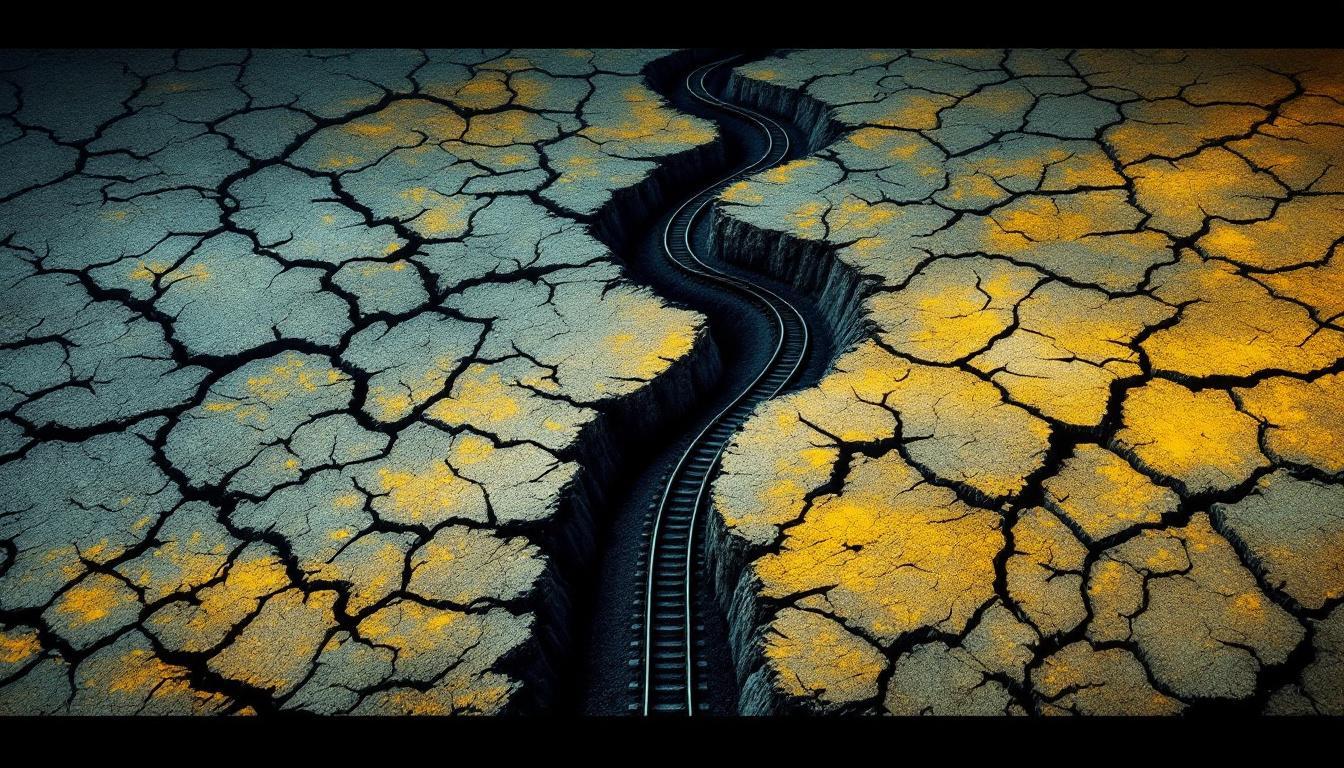
As developed nations accelerate electrification, many emerging markets remain reliant on coal and energy-intensive industries, risking a deepening global split that could undermine climate targets and sustainable growth.
The global energy transition is fracturing along lines of industrial structure and development priorities, with wealthy economies accelerating electrification for digital growth while many emerging markets double down on energy-intensive raw materials production. That divergence, industry data and recent reports show, risks locking large parts of the world into fossil-fuel dependence for decades and complicates decarbonisation efforts essential to meeting climate targets.
In North America and Europe, surging demand for data processing, artificial intelligence and cloud services is driving rapid expansion of high-reliability power systems and grid upgrades. Utilities and policymakers in these regions are prioritising low-carbon generation, grid flexibility and electrification to meet the needs of hyperscale data centres and digitally enabled industry. According to Reuters commentary, that build-out contrasts sharply with the priorities in many countries across Asia, Africa and the Middle East, where job creation and value added still hinge on steel, cement, chemicals and plastics.
Global Energy Monitor (GEM) data underline the scale of the contrast: roughly three quarters of global capacity for steel and chemicals sits outside North America and Europe, while about 85% of cement and clinker capacity is located in emerging-market regions. Moreover, nearly 90% of steel, cement and chemicals capacity currently under construction is also concentrated in those same countries. For decision makers focused on industrial decarbonisation, those figures signal where the bulk of future emissions will originate unless technology and policy pathways change.
The economic logic in many producer countries helps explain the persistence of carbon-heavy industrial systems. Local production of basic materials supports extensive supply chains , from trucking and storage to processing and manufacturing , and sustains large numbers of jobs. Governments that face the twin imperatives of competitiveness and employment often shape energy policy to keep power cheap and reliable for industry, treating the energy system itself as an instrument of industrial policy. That can make coal an attractive short-term option: it is often available, familiar and able to be scaled quickly to meet rising industrial electricity demand.
The macro picture for coal remains sobering. Independent reporting and energy analyses show global coal consumption at historically high levels in recent years, with developing economies responsible for most of the demand. China and India alone account for a dominant share of worldwide coal use, and more coal-fired capacity has been commissioned than retired in recent years, driven largely by additions in Asia. In this context, the continued build‑out of coal infrastructure in parts of Southeast Asia, South Asia and Africa risks undermining global emissions reduction efforts.
Country-level dynamics illustrate the risk of misaligned incentives. Indonesia, despite record domestic coal production, is already seeing export demand soften as major buyers such as China and India shift toward cleaner sources and expand their own domestic supplies. A Jakarta-based analysis warns that Indonesia’s coal sector faces structural vulnerabilities , from concentrated ownership to volatile financing , and that a delayed pivot to diversification could force a more disruptive adjustment later.
India presents a particularly acute policy challenge. Global Energy Monitor projects that India’s planned steel expansion , aiming to roughly double output by 2030 , would substantially raise the carbon intensity of the sector under current, coal-dependent technologies. Industry data show India’s steelmaking can emit roughly 2.6 tonnes of CO2 per tonne of steel, about 25% above the global average, driven by widespread reliance on blast furnaces, limited scrap availability and constrained access to natural gas. With more than 40% of planned new global steel capacity sited in India and much of it coal-based, the country’s pathway will be decisive for global emissions trajectories and for the competitiveness of its exports in markets facing carbon-adjustment measures.
At the same time, sectoral research highlights reasons for guarded optimism. Recent GEM analysis finds that, although planned coal-based blast-furnace capacity remains large, nearly all newly announced steel projects propose electric arc furnace (EAF) routes and direct reduced iron (DRI) pathways are expanding. Global trackers show substantial additions of EAF and lower-emission DRI capacity in development, and rising DRI output , led by India and supported by new build in the Middle East , is already reshaping the supply mix. These shifts indicate that with the right policy nudges and finance, industry can pivot toward lower-emissions technologies at scale.
For industrial decarbonisation practitioners and investors, the policy implications are immediate. Achieving a just and commercially viable transition in producer countries will require coordinated packages that align industrial competitiveness with decarbonisation: targeted finance to de-risk low‑carbon production routes, incentives to mobilise scrap and circular material flows, support for hydrogen-ready DRI and EAF facilities, and transitional mechanisms that protect employment without perpetuating coal lock-in. International mechanisms such as just energy transition partnerships can help, but progress to date has been uneven and insufficient compared with the scale of new coal and coal-dependent industrial projects.
Finally, timing matters. Much of the new heavy-industry capacity is still at the planning stage, creating a window of opportunity for course correction. If policymakers, financiers and industrial leaders act now to redirect investments toward green steel, low-carbon cement alternatives, and electrified chemical routes powered by increasingly cheap renewables, emerging markets can reconcile industrial development objectives with long-term climate commitments. Absent such intervention, the global energy transition risks becoming a two-speed process: a rapid, electrified shift in the data‑driven economies of the West and a slower, carbon-intensive expansion in many supply-chain hubs , a divergence with serious implications for global decarbonisation targets and the integrity of industrial supply chains.
- https://www.devdiscourse.com/article/headlines/3787218-rpt-roi-old-economy-demands-may-stall-emerging-market-decarbonization-maguire – Please view link – unable to able to access data
- https://www.lemonde.fr/en/economy/article/2024/10/02/coal-global-consumption-still-at-a-record-high_6727918_19.html – Global coal consumption remains at historically high levels, with 2024 usage projected around 8.7 billion tonnes, marking a 10% increase since 2014. Despite coal’s severe environmental impact, especially in terms of climate change, global demand—primarily for electricity generation—continues, driven especially by developing countries. While coal’s share in electricity generation has decreased from 41% in 2014 to 35% in 2024, actual consumption remains stable, expected to plateau over the next few years before potentially declining. China and India, the world’s most populous nations, are the largest coal consumers and producers, despite advancing rapidly in renewables. China alone accounts for 56% of global coal demand. In 2023, far more coal power was added (69.5 GW) than retired (21.1 GW), with China leading in new capacity. Countries like Indonesia, Vietnam, and Pakistan also continue to expand coal power. Meanwhile, some Western countries are moving away from coal. The UK is closing its last coal plant, France plans shutdowns by 2027, and Germany by 2030. Yet, three-quarters of the world’s coal power plants lack any retirement schedule. Global efforts to transition—like the ‘just energy transition partnerships’—are still in early stages. In 2023 as a whole, three times more coal-fired power generation capacity was commissioned than closed down. That’s 69.5 gigawatts (GW) more, compared with 21.1 GW less, according to the … . Almost two-thirds of capacity installed by … ‘among the biggest financiers of the … ,’ pointed out Lucie Pinson … . In France, shutdowns scheduled for … . In a report published in November … ‘a near total phase-out of … .’ Yet, according to Global Monitor … . After aiming for 2022, … ‘health and environmental,’ with an impact on ‘other parts of the economy,’ argued Alastair Clewer … . South Africa, Indonesia, Vietnam and … ‘just energy transition partnership’ with other countries, including France … .
- https://apnews.com/article/903d586d6e3e4ff69a2dea0497eef9fd – A recent report by Jakarta-based Energy Shift warns that Indonesia’s coal industry is facing significant challenges as major importers China and India reduce coal imports in favor of cleaner energy sources. Although coal production in Indonesia hit a record 836 million tons in 2024, exports are declining, with January-April 2025 seeing a three-year low. China and India historically accounted for nearly two-thirds of Indonesia’s coal exports, but shifting energy policies and a boost in domestic production in India have reduced demand. The report highlights deep-rooted structural issues, including high insider shareholding, restrictive financing, and inconsistent government policies, hindering transition efforts. Despite Indonesia’s commitments to clean energy, it paradoxically continues to expand coal production and infrastructure. Experts emphasize the need for Indonesia to begin diversifying and planning a gradual energy transition or face a more costly and abrupt adjustment in the near future.
- https://apnews.com/article/e940582596c6e32da61b70a0e027e7eb – A new report by Global Energy Monitor warns that India’s ambitious plan to double steel production by 2030 could significantly hinder its national climate targets and global decarbonization goals. As the world’s second-largest steel producer, India heavily depends on coal-based technology, which contributes approximately 12% of the country’s greenhouse gas emissions—potentially doubling within five years under current plans. Despite targeting 500 GW of clean power and a net-zero goal by 2070, India’s steel expansion risks becoming a major climate liability. India’s steel sector emits around 2.6 tons of CO₂ per ton of steel—25% more than the global average—largely due to inexpensive coal, a young fleet of blast furnaces, limited access to natural gas and steel scrap, and an underdeveloped recycling system. With over 40% of new global steel capacity under development in India, and more than half of it relying on coal, the report underscores the urgent need for a green transition. Although only 8% of planned projects are underway, giving India a chance to pivot, failure to decarbonize could also affect competitiveness due to upcoming carbon border taxes in key export markets like the EU. Current projections by GEM show the world reaching just 36% – a shortfall largely due to India’s coal-heavy pipeline. India plans to expand its steel production capacity from 200 million to over 330 million tonnes per year by 2030. According to the new data … . “India is the only major steel … ,” said Henna Khadee … India’s steel sector releases approximately 2 … . India’s heavy dependence on coal for steel … .
- https://globalenergymonitor.org/press-release/coal-based-steelmaking-more-than-double-green-plans-as-top-50-producers-lag-on-emissions-targets/ – New research shows that planned capacity for coal-based blast furnaces is 208.2 million tonnes per annum (Mtpa), two-and-a-half times the 83.6 Mtpa in planned primary green iron and steel capacity. Latest data show only a third of the world’s top 50 steel producers have set targets to reach net zero emissions by 2050, despite these 50 producers being responsible for more than 60% of the sector’s emissions.
- https://www.linkedin.com/posts/global-energy-monitor_the-global-steel-sector-is-nearing-a-key-activity-7330527460230393856-fLQe – Key Numbers at a Glance (August 2025) 🔹 Global DRI Output: 10.86 million MT, up 8.6% YoY (though slightly down 0.9% MoM). 🔹 Jan–Aug 2025: 84.44 million MT, up 5.3% YoY, signaling sustained growth in the green steel supply chain. 🌟 Region-Wise Highlights 🇮🇳 India – 4.95 million MT, retaining its position as the world’s largest DRI producer. India’s dominance reflects its abundant natural gas/coal-based DRI capacity and its strategic push towards low-emission steel production under the National Green Hydrogen Mission. 🇮🇷 Iran – 3.18 million MT, maintaining strong output despite global trade challenges. Iran continues to leverage its gas-based DRI technology, reinforcing its role as a key exporter to Asian markets. 🇷🇺 Russia – 650,000 MT, showing resilience amid geopolitical constraints and shifting trade flows. 🇸🇦 Saudi Arabia – 613,000 MT, reflecting the Middle East’s increasing investment in natural gas-based and hydrogen-ready DRI facilities as part of its Vision 2030 strategy. 💡 Key Insight: The steady rise in DRI production underscores the global steel industry’s transition toward low-carbon pathways. DRI is emerging as a critical feedstock for Electric Arc Furnaces (EAFs), enabling steelmakers to reduce reliance on blast furnace operations and cut CO₂ emissions. With India leading and Middle Eastern nations ramping up hydrogen-based DRI capacity, the stage is set for a new era of green steelmaking—a crucial step towards the global net-zero ambition.
- https://globalenergymonitor.org/report/pedal-to-the-metal-2024/ – The report shows two trends supporting this shift: First, nearly all newly-announced steelmaking capacity follows the EAF production route (93%), which indicates a strong boost in electric arc furnace steelmaking in the years to come. Second, planned capacity and retirements indicate a transition away from coal-based steelmaking: The global fleet will count an additional 171 million tonnes per annum (mtpa) of higher-emissions basic oxygen furnace (BOF) capacity, 310 mtpa of EAF capacity, and 80 mtpa of capacity with unknown technology. If these developments and retirements take effect, global operating steel capacity should sit just under the IEA’s net zero-aligned target of 37% EAF steelmaking by 2030, and with heightened momentum the goal is increasingly attainable. The shift toward a carbon neutral iron and steel industry is multi-pronged and generally involves the replacement of coal-based BF-BOF capacity with hydrogen-DRI or scrap-based EAF production. Data from Global Energy Monitor’s 2024 Global Steel Plant Tracker and Global Blast Furnace Tracker indicate that, while there has been a notable move toward the lower-emissions direct reduced iron (DRI) and electric arc furnace (
Noah Fact Check Pro
The draft above was created using the information available at the time the story first
emerged. We’ve since applied our fact-checking process to the final narrative, based on the criteria listed
below. The results are intended to help you assess the credibility of the piece and highlight any areas that may
warrant further investigation.
Freshness check
Score:
8
Notes:
The article was published on 30 January 2026, which is within the past week, indicating high freshness. However, the content discusses ongoing trends and data, suggesting that similar narratives may have appeared earlier. A thorough search did not reveal identical articles from the past seven days, but the topic is widely covered, which raises concerns about originality.
Quotes check
Score:
7
Notes:
The article includes direct quotes attributed to Reuters. However, no independent verification of these quotes was found in the available search results. This lack of verifiable sources raises concerns about the authenticity of the quotes.
Source reliability
Score:
6
Notes:
The article originates from Devdiscourse, a news platform that aggregates content from various sources. While it provides a platform for diverse viewpoints, its reliance on aggregated content may affect the originality and independence of the reporting. The absence of direct links to primary sources further complicates the assessment of reliability.
Plausibility check
Score:
7
Notes:
The article discusses the divergence in energy transition trajectories between developed and emerging economies, a topic that aligns with ongoing global discussions. However, the lack of specific data points, direct quotes from primary sources, and independent verification raises questions about the depth and accuracy of the analysis.
Overall assessment
Verdict (FAIL, OPEN, PASS): FAIL
Confidence (LOW, MEDIUM, HIGH): MEDIUM
Summary:
The article presents a timely discussion on the challenges emerging markets face in decarbonization efforts. However, concerns about the originality of the content, the authenticity of the quotes, and the reliability of the source raise significant doubts. The lack of independent verification and direct sourcing further diminishes confidence in the article’s credibility. Given these issues, the content does not meet the necessary standards for publication under our editorial indemnity.
