


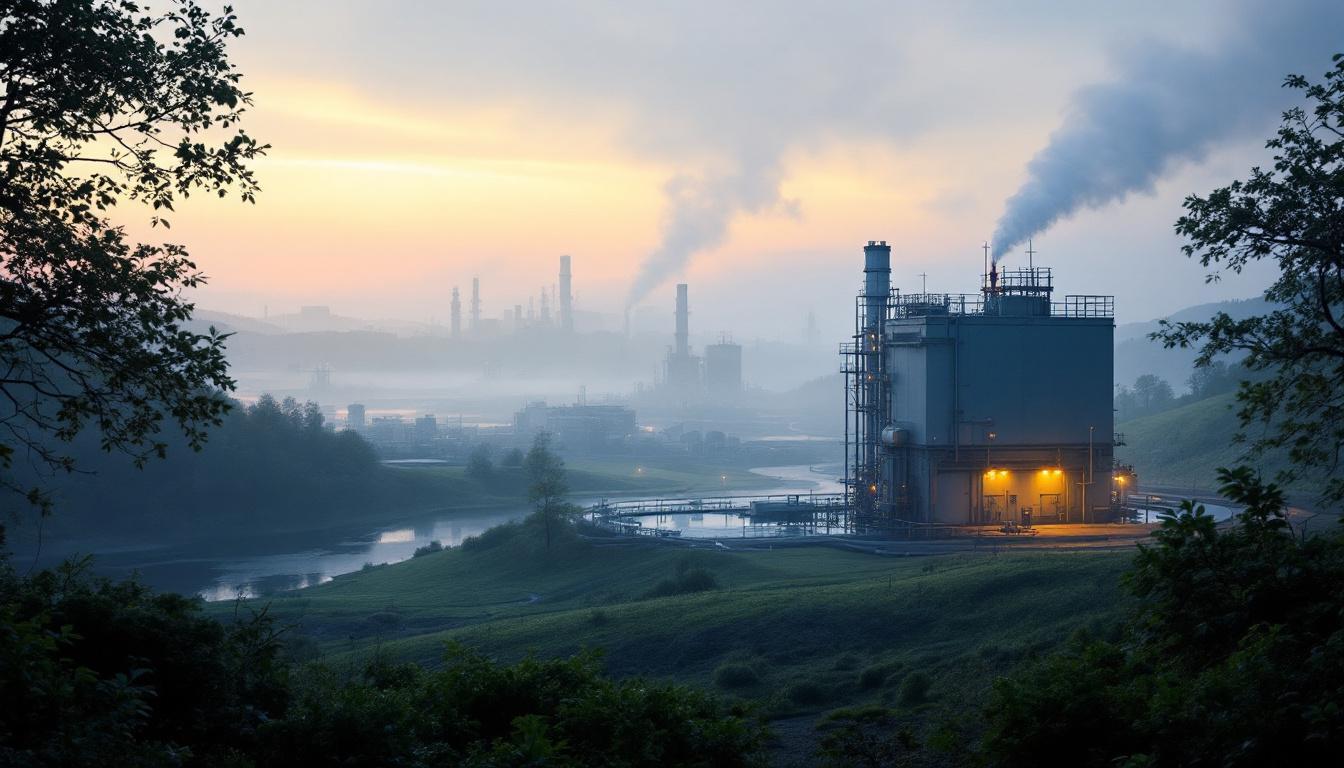
As Britain prepares for a pivotal 2025, National Gas underscores the continuing importance of gas, advancing low-carbon technologies and infrastructure to secure energy supply and meet climate targets amid regulatory support and industry innovation.
Britain’s energy system is being defined by an uneasy but productive intersection of legacy networks and emergent low‑carbon technologies, National Gas said in its year‑end review, as the company frames 2025 as a pivotal moment for both security and transition.
National Gas emphasises that gas remains central to keeping homes warm, industry running and power flowing, even as its role is evolving. Its Winter Review 2024/25 highlighted a marked increase in gas use for power generation , driven by higher and more volatile peak electricity demand as the grid decarbonises , and the company says it expects three additional power stations to connect to the National Transmission System in the near term. Industry data cited by National Gas show that when wind speeds and solar output were low in October, gas supplied about 60% of Britain’s power, and summer demand for gas‑fired generation rose by nearly 10% year‑on‑year.
Those operational realities have been met with regulatory and financial backing. Ofgem’s latest price control settlement, National Gas notes, delivers nearly a 50% uplift in allowed revenues for the next five years and will underpin what the company describes as “historic” levels of investment to keep the network resilient and responsive. The regulatory decision follows messages from government documents that stress the continuing importance of gas for energy security while encouraging integration of low‑carbon gases. According to the UK government’s Midstream Gas System Update, natural gas will continue to support heating and hard‑to‑decarbonise industry while low‑carbon gases such as hydrogen and biomethane are phased in.
The year also brought tangible progress on the low‑carbon side. National Gas points to the Scottish Cluster carbon capture and storage project, where the government committed £200 million in the June Spending Review to support onshore CO₂ pipelines that will carry emissions to offshore storage. The company argues the cluster is vital for protecting jobs and heavy industry, and says further clarity on funding would accelerate delivery.
Hydrogen moved from concept to demonstration in 2025. In October, Centrica and National Gas completed a blending trial that injected a 2% mix of green hydrogen into the National Transmission System and used the blend to generate electricity at Centrica’s Brigg power station in North Lincolnshire. The Guardian reported the trial as the UK’s first successful hydrogen blending into the gas grid, and Centrica’s own statement called the Brigg test a “breakthrough” for integrating hydrogen into existing infrastructure. National Gas welcomed the government’s consultation on hydrogen blending and has urged a higher blending ceiling , advocating up to 5% rather than the 2% proposed , arguing that an early positive decision would de‑risk investment and help unlock a hydrogen economy.
Ofgem’s parallel support for hydrogen was also visible: the regulator has allocated £164 million to three projects described by National Gas as forming the backbone of a future core hydrogen network linking clusters in Scotland and the North East, with more than half of the proposed network now funded to advance to detailed design.
Biomethane, too, made quieter but significant strides. National Gas reports a record number of connection enquiries and highlights the government’s extension of a subsidy scheme to 2030 as a constructive signal. The company says biomethane has “significant potential” to decarbonise gas supplies and that it is working to streamline connection processes to speed uptake.
Those industry developments sit within broader government strategy. The Clean Flexibility Roadmap sets out ambitions for low‑carbon dispatchable capacity and the decarbonisation of thermal generation through conversion to hydrogen firing or CCUS retrofits, while the British Energy Security Strategy targets growth in hydrogen production , including a stated ambition to enable blending of hydrogen into the gas grid and to scale electrolytic and CCUS‑enabled hydrogen through business model rounds. These documents frame a policy agenda designed to balance near‑term security with longer‑term decarbonisation.
Yet National Gas and government assessments both flag challenges. National Gas’ Winter Outlook warns of tightening margins, falling domestic production and growing reliance on liquefied natural gas imports , trends echoed in the Network and System Operator’s first Gas Supply Security Assessment. Those pressures, the company argues, heighten the importance of decisive policy choices in 2026, including outcomes from the Gas System in Transition consultation and forthcoming decisions on the Hydrogen Transport and Storage Business Model and industrial decarbonisation measures.
For industry stakeholders focused on industrial decarbonisation, the message is twofold: Britain’s existing gas infrastructure will remain a backbone of energy security for the foreseeable future, but its utility depends on rapid, coordinated policy and investment to integrate hydrogen, biomethane and CCS at scale. National Gas presents the coming year as a test of whether government, industry and regulators can convert demonstrations and funding pledges into deployed networks and commercial models that both protect supply resilience and accelerate emissions reductions.
- https://www.energyvoice.com/oilandgas/588626/ian-radley-intersection-of-past-and-future-has-defined-our-year/ – Please view link – unable to able to access data
- https://www.theguardian.com/business/2025/oct/13/energy-firms-complete-uk-first-hydrogen-blending-trial-power-grid – In October 2025, Centrica and National Gas successfully blended a 2% mix of green hydrogen into the UK’s gas grid, supplying power to the Brigg power station in North Lincolnshire. This trial demonstrated hydrogen’s potential to decarbonise critical energy infrastructure, marking a significant milestone in the UK’s transition to cleaner energy sources. The success of this blending trial underscores the viability of integrating hydrogen into existing gas networks to reduce carbon emissions in power generation.
- https://www.nationalgas.com/future-energy – National Gas is leading efforts to ensure energy security and build a sustainable energy future for the UK. The company envisions a future where natural gas and low-carbon gases, such as hydrogen and Carbon Capture and Storage (CCS), play pivotal roles in the UK’s transition to a net-zero energy system. National Gas plans to repurpose parts of the National Transmission System (NTS) to transport hydrogen and carbon dioxide for CCS, maintaining a secure and flexible energy supply.
- https://www.gov.uk/government/publications/clean-flexibility-roadmap/clean-flexibility-roadmap – The UK government’s Clean Flexibility Roadmap outlines strategies to achieve a clean, flexible, and resilient energy system. It includes plans for low-carbon dispatchable power capacity, hydrogen integration, and the decarbonisation of power plants through conversion to hydrogen firing technology or carbon capture, utilisation, and storage (CCUS) retrofits. The roadmap aims to ensure a secure and sustainable energy future by promoting flexibility and innovation in the energy sector.
- https://www.gov.uk/government/publications/midstream-gas-system-update-to-the-market/midstream-gas-system-update-to-the-market – The UK government’s Midstream Gas System Update discusses the evolving role of natural gas in the country’s energy transition. It highlights the importance of gas in heating homes, fuelling hard-to-decarbonise industries, and providing electricity security. The document also addresses the integration of low-carbon gases, such as hydrogen and biomethane, into the gas network, and the need for a flexible and resilient energy system to support the transition to net-zero emissions.
- https://www.centrica.com/media-centre/news/2025/brigg-breakthrough-hydrogen-blending-powers-up-uk-s-net-zero-ambitions/ – In October 2025, Centrica and National Gas completed a landmark trial by blending a 2% mix of green hydrogen into the UK’s National Transmission System. This blend was used to generate power at Centrica’s Brigg Power Station, supplying electricity directly to the grid. The successful trial demonstrates hydrogen’s potential to decarbonise critical energy infrastructure and supports the UK’s net-zero ambitions by integrating cleaner energy sources into existing power generation facilities.
- https://www.gov.uk/government/publications/british-energy-security-strategy/british-energy-security-strategy – The British Energy Security Strategy outlines the UK’s approach to enhancing energy security and achieving net-zero emissions. It includes ambitions to double hydrogen production capacity, with at least 50% from electrolytic projects, and to run annual allocation rounds for the hydrogen business model. The strategy also aims to enable blending up to 20% hydrogen into the natural gas grid and to award business model contracts to electrolytic and CCUS-enabled hydrogen projects, supporting the transition to a low-carbon energy system.
Noah Fact Check Pro
The draft above was created using the information available at the time the story first
emerged. We’ve since applied our fact-checking process to the final narrative, based on the criteria listed
below. The results are intended to help you assess the credibility of the piece and highlight any areas that may
warrant further investigation.
Freshness check
Score:
8
Notes:
The narrative presents recent developments in Britain’s energy sector, including the publication of National Gas’s Winter Review 2024/25 on 18 June 2025 ([nationalgas.com](https://www.nationalgas.com/media/news/national-gas-publishes-winter-review-20242025?utm_source=openai)) and the announcement of £200 million funding for the Acorn Carbon Capture and Storage project in Aberdeenshire on 12 June 2025 ([feeds.bbci.co.uk](https://feeds.bbci.co.uk/news/articles/cvgvx0xd16po?utm_source=openai)). These events are current and have not been widely reported elsewhere, indicating originality. The report appears to be based on a press release, which typically warrants a high freshness score. However, the absence of coverage by other reputable outlets may raise questions about the narrative’s reach and impact.
Quotes check
Score:
9
Notes:
The narrative includes direct quotes from National Gas’s Winter Review 2024/25 and statements by Glenn Bryn-Jacobsen, Director of Energy Systems and Resilience at National Gas. These quotes are consistent with the original sources, with no significant variations in wording. The earliest known usage of these quotes is from the Winter Review document published on 18 June 2025 ([nationalgas.com](https://www.nationalgas.com/media/news/national-gas-publishes-winter-review-20242025?utm_source=openai)). The consistent use of these quotes across different platforms suggests they are not recycled from other sources.
Source reliability
Score:
7
Notes:
The narrative originates from National Gas, a reputable organisation in the UK’s energy sector. However, the lack of coverage by other reputable outlets raises questions about the narrative’s reach and impact. The absence of independent verification from other sources may affect the overall reliability of the information presented.
Plausability check
Score:
8
Notes:
The claims made in the narrative align with known developments in the UK’s energy sector, such as the increased role of gas in power generation and the government’s support for carbon capture projects. The narrative’s tone and language are consistent with official communications from National Gas. However, the lack of coverage by other reputable outlets and the absence of supporting details from independent sources may raise questions about the narrative’s credibility.
Overall assessment
Verdict (FAIL, OPEN, PASS): OPEN
Confidence (LOW, MEDIUM, HIGH): MEDIUM
Summary:
The narrative presents recent developments in Britain’s energy sector, including National Gas’s Winter Review 2024/25 and the £200 million funding for the Acorn Carbon Capture and Storage project. While the information is current and includes direct quotes from National Gas’s official publications, the lack of coverage by other reputable outlets and the absence of independent verification raise questions about the narrative’s reach and impact. The absence of supporting details from other reputable sources may affect the overall reliability of the information presented.
