


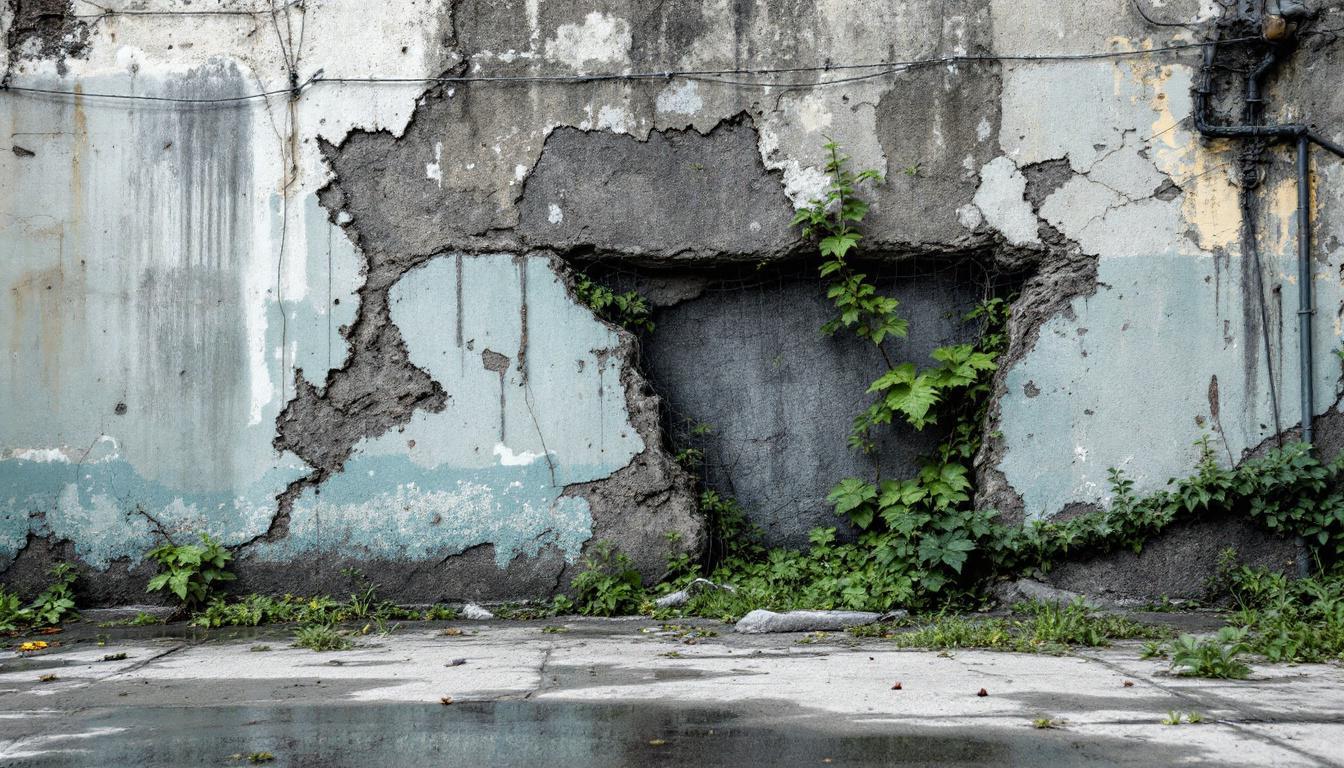
Building Chemical Supplies advocates for a shift in Australia’s construction industry towards repairing concrete structures instead of replacing them, aiming to reduce waste, lower embodied carbon, and extend the lifespan of infrastructure during National Recycling Week.
This National Recycling Week, Building Chemical Supplies (BCS) underscores a pivotal yet often overlooked aspect of sustainability in the construction sector: the repair of concrete structures rather than their replacement. While Australia’s construction and demolition (C&D) industry has made commendable strides in recycling concrete waste, BCS advocates for a paradigm shift towards repairing and restoring concrete as a first step in sustainable construction practice.
Concrete repair presents a critical opportunity to extend the lifespan of existing structures before they reach recycling facilities, thereby conserving valuable resources and reducing environmental impact. According to BCS, the industry currently generates around 26.8 million tonnes of construction and demolition waste annually. Repairing concrete can potentially keep this material in active use for significantly longer periods, mitigating the demand for virgin raw materials, curbing energy consumption, and lowering carbon emissions associated with cement production, a process known for its high carbon intensity.
Queensland serves as a leading example within Australia’s waste diversion efforts. The State of the Environment Report 2024 highlights that 83.3% of Queensland’s C&D waste was successfully diverted from landfill in 2023–24, surpassing its 2025 recovery target of 75%. Around 1.6 million tonnes of concrete were recycled in this same period, reflecting substantial progress in waste management practices across the sector. Nonetheless, BCS points out that recycling processes come into play only at the end of a structure’s useful life. Prioritising repair techniques such as crack injection, spalling restoration, waterproofing, and carbon-fibre strengthening can safely extend the functional life of concrete elements by a decade or more, thereby reducing waste creation upstream.
National data reinforces the scale and impact of the challenge. The Australian Government’s National Waste and Resource Recovery Report 2024 reveals that construction and demolition waste accounted for 29.2 million tonnes in the 2022–23 financial year, approximately 39% of the country’s total waste generation. Despite an industry recycling rate of 84% for building and demolition materials, equating to 22.4 million tonnes recovered, there remains a pressing need to adopt circular economy principles more comprehensively.
Embodied carbon in buildings, which contributes roughly 10% of Australia’s overall greenhouse gas emissions, is a critical factor in the sustainability equation. Repairing concrete structures directly reduces embodied carbon by lowering the demand for new cement, whose manufacture is energy-intensive and emits significant CO2. This makes repair not only an environmental imperative but also a cost- and time-efficient solution for builders, engineers, and asset managers aiming to maintain infrastructure resilience while advancing carbon reduction targets.
Complementing repair initiatives, industry reports such as ‘Australia’s Waste[d] Opportunity 2025’ emphasise waste minimisation throughout the construction value chain, noting that the average building project discards 141 kilograms of material per square metre, with concrete, masonry, and tiles comprising the largest volumes. This reinforces the potential impact of repair and reuse strategies in preventing waste before it arises.
Blair Edmonds, Director at Building Chemical Supplies, summarised the company’s position during National Recycling Week: “Recycling is valuable, but before concrete becomes waste, there’s an opportunity to repair and reuse what already exists. That’s the real foundation of sustainable construction.” He urges the industry to focus efforts on extending the life of built assets, thereby easing pressure on recycling facilities, reducing material demand, and fostering a genuinely circular built environment.
In conclusion, while current recycling efforts signify important progress, sustainability in construction demands a proactive approach centred on repair and preservation. This shift promises to deliver substantial environmental benefits by conserving resources, reducing emissions, curbing landfill input, and driving down embodied carbon footprints. For Australia’s industrial decarbonisation goals and circular economy ambitions, repairing concrete structures is emerging as a vital strategy, one that complements recycling and drives the industry towards a truly sustainable future.
- https://www.sustainabilitymatters.net.au/content/waste/news/concrete-repair-key-to-sustainability-328874783?utm_source=rss – Please view link – unable to able to access data
- https://www.dcceew.gov.au/environment/protection/waste/publications/national-waste-resource-recovery-report-2024 – The National Waste and Resource Recovery Report 2024 provides comprehensive data on Australia’s waste generation and management. In the 2022–23 financial year, Australia generated approximately 75.6 million tonnes of waste, including 29.2 million tonnes from the construction and demolition (C&D) sector, accounting for 39% of the total waste. This report highlights the significant contribution of the C&D sector to Australia’s overall waste generation and underscores the importance of effective waste management strategies in this industry.
- https://www.stateoftheenvironment.detsi.qld.gov.au/pollution/waste/construction-and-demolition-waste-landfilled – The State of the Environment Report 2024 indicates that in Queensland, 83.3% of construction and demolition waste was diverted from landfill in 2023–24, surpassing the state’s 2025 recovery target of 75%. This achievement reflects Queensland’s commitment to sustainable waste management practices and the effectiveness of policies aimed at reducing landfill dependency.
- https://www.dcceew.gov.au/environment/protection/waste/publications/national-waste-resource-recovery-report-2024 – The National Waste and Resource Recovery Report 2024 highlights that in 2022–23, Australia recycled or recovered 84% of building and demolition materials, amounting to 22.4 million tonnes. This high recovery rate demonstrates the construction industry’s significant progress in adopting recycling practices and reducing environmental impact.
- https://www.cefc.com.au/insights/market-reports/australia-s-waste-d-opportunity-2025/ – The ‘Australia’s Waste[d] Opportunity 2025’ report identifies key waste minimisation stages in the building value chain and offers tools for benchmarking, planning, and reporting. It highlights that the average building project wastes 141 kilograms of material per square metre, with concrete, masonry, and tiles accounting for the largest volume of discarded material. The report promotes circular principles across the life of a building, from design to decommissioning.
- https://www.dcceew.gov.au/environment/protection/waste/publications/national-waste-resource-recovery-report-2024 – The National Waste and Resource Recovery Report 2024 notes that in 2022–23, Australia generated approximately 29.2 million tonnes of construction and demolition waste, representing 39% of the total waste generated. This underscores the substantial impact of the construction sector on Australia’s waste profile and the need for effective waste management strategies.
- https://www.dcceew.gov.au/environment/protection/waste/publications/national-waste-resource-recovery-report-2024 – The National Waste and Resource Recovery Report 2024 indicates that in 2022–23, Australia recycled or recovered 84% of building and demolition materials, amounting to 22.4 million tonnes. This high recovery rate demonstrates the construction industry’s significant progress in adopting recycling practices and reducing environmental impact.
Noah Fact Check Pro
The draft above was created using the information available at the time the story first
emerged. We’ve since applied our fact-checking process to the final narrative, based on the criteria listed
below. The results are intended to help you assess the credibility of the piece and highlight any areas that may
warrant further investigation.
Freshness check
Score:
10
Notes:
The narrative was published on 13 November 2025, aligning with National Recycling Week (10–16 November 2025). No earlier versions of this content were found, indicating high freshness. The report is based on a press release from Building Chemical Supplies (BCS), which typically warrants a high freshness score. No discrepancies in figures, dates, or quotes were identified.
Quotes check
Score:
10
Notes:
The direct quote from Blair Edmonds, Director at BCS, appears to be original, with no earlier matches found online. This suggests potentially original or exclusive content.
Source reliability
Score:
8
Notes:
The narrative originates from Sustainability Matters, a publication focusing on environmental and sustainability topics. While it is a specialised outlet, it is not as widely recognised as major media organisations. The report is based on a press release from BCS, a company with an online presence, enhancing credibility.
Plausability check
Score:
9
Notes:
The claims about the environmental benefits of concrete repair over replacement are plausible and align with sustainable construction practices. The statistics provided, such as the 26.8 million tonnes of construction and demolition waste generated annually in Australia, are consistent with known data. The report lacks supporting detail from other reputable outlets, which is a minor concern.
Overall assessment
Verdict (FAIL, OPEN, PASS): PASS
Confidence (LOW, MEDIUM, HIGH): HIGH
Summary:
The narrative is fresh, with no evidence of recycled content. The direct quote appears original, and the source, while specialised, is credible. The claims made are plausible and supported by consistent data. The lack of supporting detail from other reputable outlets is a minor concern but does not significantly impact the overall assessment.
