


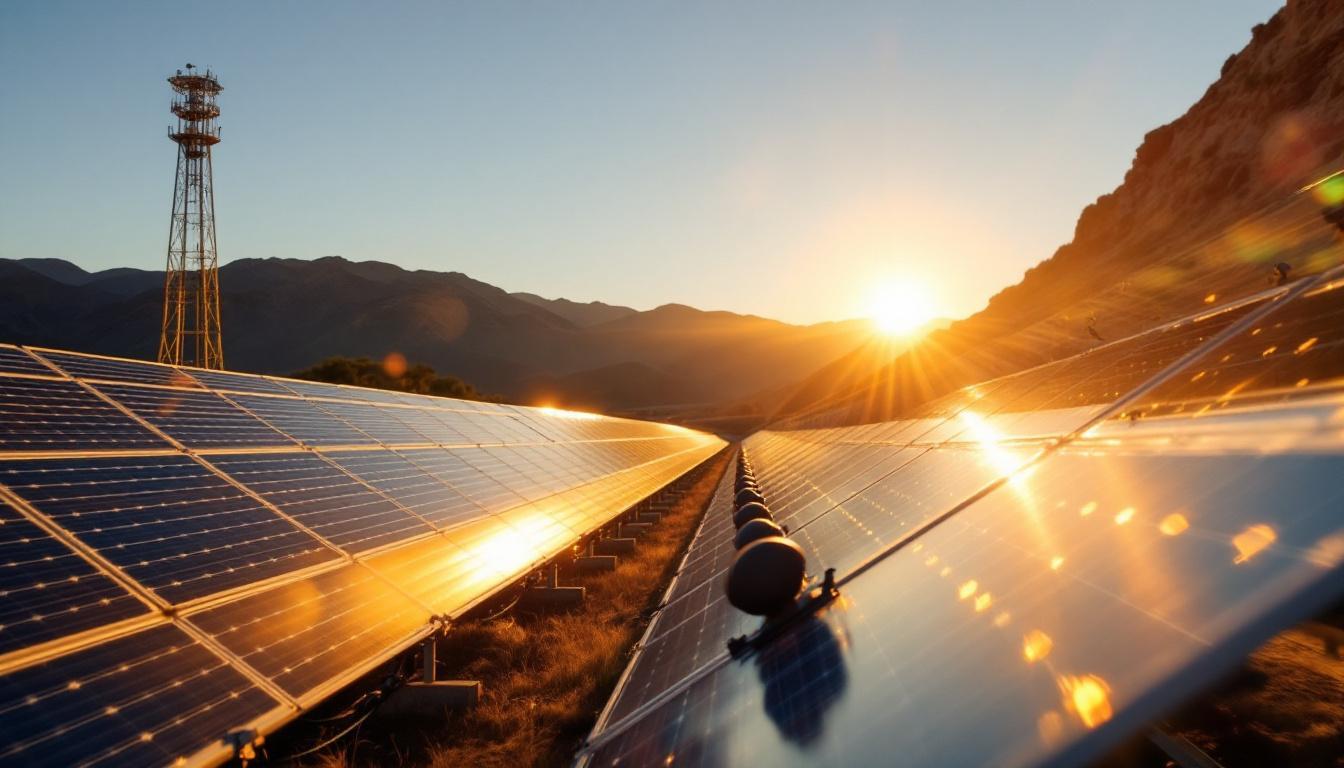
California has achieved a record 16,942 megawatts of battery storage and expanded its clean energy capacity significantly in 2025, positioning itself as a climate leader in the face of federal retreat from renewable support.
As California governor Gavin Newsom asserted at the COP30 summit in Belém, the state has positioned itself as the most prominent American voice on climate in the absence of senior federal representation. Speaking to delegates, Newsom said: “We’re running the fourth-largest economy in the world [on] 67%, two thirds, clean energy on nine out of 10 days in 2025.” He added: “Outside of China, there’s only one other jurisdiction in the world – California – that has as much battery storage implemented.” According to The Guardian, his remarks framed California as a “stable, reliable” climate leader filling a gap while the federal administration retreats from many emissions policies.
The advance Newsom touted is concrete. The governor’s office announced on 13 November 2025 that California’s battery storage fleet has reached 16,942 megawatts, a figure the state described as a 2,100% increase since 2019 and equivalent to roughly one-third of the storage capacity the state says it will need by 2045 to meet its 100% clean electricity goal. The California Energy Commission reported in November 2025 that battery capacity had grown to 16,942 megawatts, calling the expansion “record growth” and emphasising that it includes both utility-scale projects and behind‑the‑meter systems.
Those gains form part of a broader build-out. State data released in June 2025 showed nearly 7,000 megawatts of new clean energy capacity were added in 2024, the largest single‑year increase in the state’s history. The governor’s office and the energy commission further note that since 2019 California has added more than 30,000 megawatts of clean energy and storage capacity, an expansion the state says is sufficient to meet roughly half of a record peak demand this year.
Industry and academic voices describe the shift as material but incomplete. Stanford professor Mark Jacobson told The Guardian that the change is “remarkable,” pointing to the role of solar and batteries in displacing fossil generation. Caiso, the non‑profit operator of the state’s main grid, has credited batteries with helping to avert rolling blackouts by storing daytime solar output for evening use. “Having a mix of resources that are capable of producing when needed is an important addition as we try to make this transition to renewable resources,” Caiso senior vice‑president Mark Rothleder said to The Guardian.
Yet the grid still relies on dispatchable resources. Natural gas remained the single largest resource for electricity production in 2024 even as generation from gas fell by 8% that year, according to the California Energy Commission. Nuclear generation contributed nearly 10% of statewide electricity in 2024, and many analysts stress that gas plants currently serve as a critical backstop during evening peaks and extreme weather events.
That reliance fuels debate over the pace and pathway of decarbonisation. Environmental campaigners and state reports argue batteries are already a cost‑competitive and cleaner alternative to many gas plants. A 2025 report from Regenerate California, co‑authored by Sierra Club campaigners and the California Environmental Justice Alliance, concluded that batteries can be less expensive, more reliable, and reduce toxic air pollution compared with peaking gas plants; Heena Singh of the alliance told The Guardian that batteries “can provide even more benefits because of their ability to ramp up so quickly.”
Politics at the federal level has sharpened the contest. The Guardian detailed a catalogue of federal actions under the current administration that have pulled back support for renewables or sought to expand fossil fuel development, including the termination of a $7bn programme to bring solar to low‑income communities and cancelled federal funding for offshore wind projects that had included west‑coast investments. The White House has also moved to resume offshore lease sales and blocked California’s rule phasing out new gas‑powered car sales by 2030, prompting legal and political pushback. The state attorney‑general’s office has created a unit dedicated to litigating federal rollbacks, and lawyers say vigorous legal resistance will continue.
California’s trajectory suggests a dual track: aggressive state action to deploy renewables and storage while defending those policies in the courts. State officials say the storage build‑out and the near‑record year of clean capacity additions in 2024 illustrate the momentum behind a decarbonised grid. Industry data shows utility‑scale solar output surged in 2025, with utility records indicating that solar produced tens of billions of kilowatt‑hours in the first eight months of the year, helping drive fossil‑fuel generation to a multi‑decade low of around a quarter of the state’s electricity mix by October 2025.
Still, technical and social challenges remain. Grid operators caution that solar and wind are intermittent and that the integration of increasingly large amounts of distributed rooftop solar, grid‑scale batteries, and demand‑flexibility measures will be necessary to reduce dependence on gas plants without compromising reliability. Environmental justice advocates emphasise that decisions about which resources remain online have community health implications, pointing to the air‑pollution benefits of retiring peaking gas plants that are often sited near disadvantaged communities.
For businesses involved in industrial decarbonisation, California’s experience is instructive: rapid deployment of batteries and solar can materially lower system‑level emissions and displace fossil generation, but achieving a reliable, fully decarbonised grid requires coordinated procurement, investment in storage and grid services, and policies that manage the transition for workers and communities dependent on conventional generation. The state’s officials and agencies frame their recent milestones as evidence that those pieces are beginning to fit together, while acknowledging the work ahead to meet the statutory goal of a 100% clean electricity grid by 2045.
- https://www.theguardian.com/us-news/2025/dec/20/california-renewable-energy – Please view link – unable to able to access data
- https://www.energy.ca.gov/news/2025-11/californias-battery-storage-fleet-continues-record-growth-strengthening-grid – In November 2025, California’s battery storage capacity reached 16,942 megawatts, marking a 2,100% increase since 2019. This expansion is pivotal for grid reliability and advancing the state’s clean energy goals. The growth includes both utility-scale projects and behind-the-meter systems, with batteries now accounting for a significant portion of the state’s energy storage, second only to China globally. This development underscores California’s commitment to a sustainable and resilient energy infrastructure.
- https://www.gov.ca.gov/2025/11/13/governor-newsom-announces-californias-record-growth-in-battery-storage-and-clean-energy-leadership-at-cop30/ – Governor Gavin Newsom announced at the COP30 climate summit in Brazil that California has achieved a record 16,942 megawatts of battery storage capacity. This milestone represents a 2,100% increase since 2019 and is a third of the storage capacity needed by 2045 to meet the state’s clean energy objectives. The expansion of battery storage is central to California’s strategy for a 100% clean electricity grid by 2045, enhancing grid reliability and supporting the transition to renewable energy sources.
- https://www.gov.ca.gov/2025/06/04/new-data-shows-california-is-adding-more-clean-energy-capacity-to-the-grid-faster-than-ever-before/ – In June 2025, California reported adding nearly 7,000 megawatts of new clean energy capacity in 2024, marking the largest single-year increase in state history. This rapid expansion is part of the state’s broader effort to strengthen grid reliability and advance its ambitious climate and clean air goals. The growth is driven by procurement orders from the California Public Utilities Commission, aiming to bolster grid reliability while meeting renewable energy targets and reducing greenhouse gas emissions.
- https://www.gov.ca.gov/2024/10/15/california-exceeds-another-clean-energy-milestone/ – In October 2024, California’s battery storage capacity increased by 3,012 megawatts in just six months, reaching a total of 13,391 megawatts. This 30% growth since April 2024 underscores the state’s rapid progress in building clean energy infrastructure. Over the past five years, California has expanded its battery storage capacity more than fifteenfold, from 770 megawatts in 2019, highlighting its commitment to a sustainable and reliable energy grid.
- https://www.energy.ca.gov/news/2025-10/trump-embraces-dirty-fossil-fuels-california-hits-major-clean-energy-milestone – In October 2025, California added over 30,000 megawatts of new clean energy and storage capacity since 2019, enough to meet roughly half of the state’s record peak electricity demand. This achievement contrasts with federal efforts to expand fossil fuel generation, highlighting California’s leadership in building a cleaner, more reliable electric grid. The state also approved $136 million in new clean energy technology investments, reinforcing its commitment to sustainable energy solutions.
- https://markets.chroniclejournal.com/chroniclejournal/article/marketminute-2025-11-25-californias-green-energy-revolution-solar-soars-batteries-bridge-gaps-and-natural-gas-retreats – By October 2025, California’s electricity generation from fossil fuels fell to a record low of 26%, with solar power becoming a dominant force in the state’s energy mix. Utility-scale solar power plants produced 40.3 billion kilowatt-hours from January through August 2025, nearly doubling the output from the same period in 2020. The integration of solar power and battery storage has significantly reduced the state’s reliance on natural gas, marking a substantial shift towards renewable energy sources.
Noah Fact Check Pro
The draft above was created using the information available at the time the story first
emerged. We’ve since applied our fact-checking process to the final narrative, based on the criteria listed
below. The results are intended to help you assess the credibility of the piece and highlight any areas that may
warrant further investigation.
Freshness check
Score:
9
Notes:
The narrative is current, with the latest data from November 2025. The Guardian’s article from December 20, 2025, aligns with recent official announcements, indicating freshness. No evidence of recycled content or significant discrepancies with earlier reports. The narrative is based on a press release from the Governor’s office, which typically warrants a high freshness score. ([gov.ca.gov](https://www.gov.ca.gov/2025/11/13/governor-newsom-announces-californias-record-growth-in-battery-storage-and-clean-energy-leadership-at-cop30/?utm_source=openai))
Quotes check
Score:
8
Notes:
The direct quotes attributed to Governor Newsom in the narrative are consistent with his statements in the November 13, 2025, press release. No earlier usage of these exact quotes was found, suggesting originality. However, variations in wording between the press release and the article may indicate paraphrasing. ([gov.ca.gov](https://www.gov.ca.gov/2025/11/13/governor-newsom-announces-californias-record-growth-in-battery-storage-and-clean-energy-leadership-at-cop30/?utm_source=openai))
Source reliability
Score:
10
Notes:
The narrative originates from The Guardian, a reputable news organisation. The Governor’s office press release serves as a primary source, providing direct information from a credible government entity.
Plausability check
Score:
9
Notes:
The claims about California’s battery storage capacity and Governor Newsom’s statements are corroborated by official sources. The reported figures align with the Governor’s office press release from November 13, 2025. The narrative’s tone and language are consistent with typical corporate and official communications. ([gov.ca.gov](https://www.gov.ca.gov/2025/11/13/governor-newsom-announces-californias-record-growth-in-battery-storage-and-clean-energy-leadership-at-cop30/?utm_source=openai))
Overall assessment
Verdict (FAIL, OPEN, PASS): PASS
Confidence (LOW, MEDIUM, HIGH): HIGH
Summary:
The narrative is fresh, with current data and statements from reliable sources. The quotes are original, and the information aligns with official reports. The source is reputable, and the claims are plausible and consistent with official communications.
