


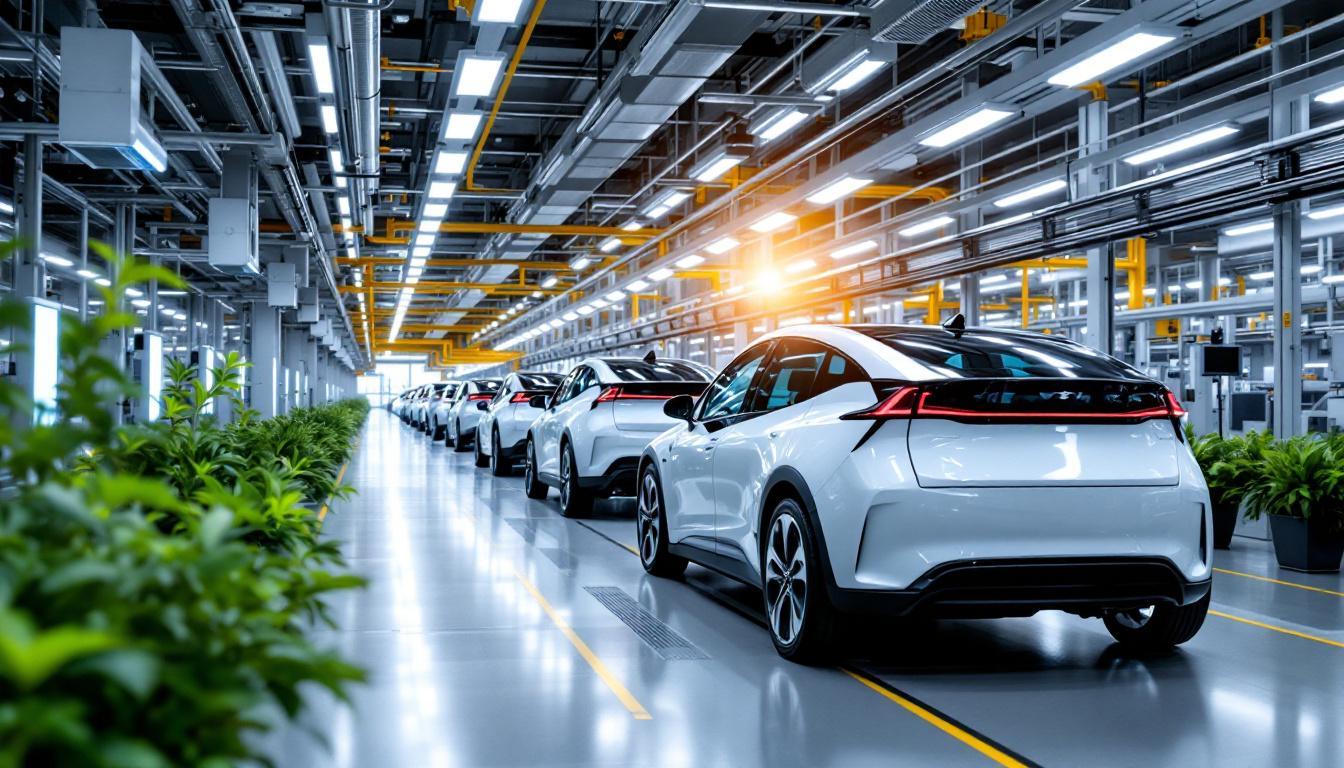
The Canadian government unveils a five-year, C$2.3 billion programme to incentivise zero-emission vehicles and support domestic clean-transport supply chains, signalling a major shift in its climate policy.
The Canadian government has launched a five‑year, C$2.3 billion programme to lower the upfront cost of zero‑emission vehicles and create a clearer investment signal for domestic clean‑transport manufacturing and infrastructure.
According to Transport Canada, the Electric Vehicle Affordability Program (EVAP) takes effect on 16 February 2026 and provides point‑of‑sale incentives of up to C$5,000 for new battery‑electric vehicles (BEVs) and fuel‑cell electric vehicles (FCEVs), and up to C$2,500 for plug‑in hybrids. Eligibility requires a final transaction price at or below C$50,000, although vehicles assembled in Canada are exempt from that pricing cap. The programme is structured to step down payments over time, beginning at the maximum in 2026 and declining to C$2,000 by 2030. Transport Canada expects EVAP to support roughly 840,000 zero‑emission vehicle purchases across its five‑year window.
EVAP replaces the earlier iZEV rebate scheme, which ended in January 2025, and broadens federal support by formally including hydrogen fuel‑cell cars alongside battery electric models. According to the government, the programme’s vehicle eligibility rules, published on an official EVAP vehicle list, also specify manufacturing origin requirements and the date of purchase or lease necessary to claim incentives.
For industrial decarbonisation stakeholders, the package is significant on several fronts. The predictable, multi‑year incentive stream gives OEMs, battery suppliers, and component makers a clearer demand outlook when sizing investments in assembly plants, gigafactories and electrolyser lines. Electrification of light vehicles is also expected to accelerate the roll‑out of high‑power charging assets; the federal plan includes substantial funding for coast‑to‑coast charging deployment, which utilities and municipalities are likely to co‑finance or operate in partnership with private firms.
EVAP’s inclusion of FCEVs signals Ottawa’s technology‑neutral approach, recognising that hydrogen may be better suited to specific heavy‑duty, long‑range or fleet applications. However, the federal package stops short of a national programme for hydrogen refuelling infrastructure: the lead implementation role for hydrogen pumps remains largely with provincial governments and private operators, meaning FCEV scale‑up will depend on regional initiatives and targeted commercial investments.
Provincial incentive programmes will continue to compound the federal discounts. Industry tracking of provincial offers shows British Columbia’s CleanBC grants up to C$4,000 on eligible models, Quebec’s Roulez vert provides scaled rebates for all‑electric and plug‑in hybrid cars, and several other provinces maintain rebates ranging from C$2,000 to C$5,000 for new EVs. Combined, federal and provincial incentives can substantially cut consumer purchase prices, strengthening demand forecasts that OEMs and suppliers rely on when planning local capacity.
Analysts and industry observers say the policy trade‑offs are deliberate. According to reporting on the policy shift, Ottawa has moved away from strict sales mandates in favour of fiscal incentives and infrastructure support to both stimulate immediate consumer uptake and create a multi‑year market signal. That predictability is intended to lower investment risk for domestic manufacturing of batteries, fuel‑cell stacks and electrolysers, and to help develop local supply chains for components such as cathodes, separators and power electronics.
Nevertheless, gaps remain. Without a coordinated national hydrogen refuelling rollout, fuel‑cell vehicles are likely to find early traction in fleet and commercial segments that can install private fuelling at depots, rather than in mass consumer markets. Observers expect private capital and provincial programmes to step in where public funding for hydrogen refuelling is absent, potentially creating regional hydrogen hubs tied to large‑scale renewable generation and industrial demand.
For corporate fleet managers, infrastructure investors and heavy industry, the immediate takeaway is twofold: first, the strengthened purchase incentives improve the business case for electrifying light‑duty fleets now; second, the policy’s technology‑neutral stance keeps hydrogen in play for applications where battery solutions are impractical. That combination could accelerate integrated projects that pair charging networks, on‑site renewables and electrolysers to serve mixed fleets and adjacent industrial customers.
EVAP’s longer‑term effects will depend on how provinces, utilities and private capital respond. If provincial rebates remain generous and charging deployment accelerates as anticipated, Canada’s market could mature rapidly enough to anchor domestic manufacturing and export opportunities. Conversely, if hydrogen infrastructure lags, fuel‑cell demand may be constrained to specialised fleet uses in the near term.
For decision‑makers involved in industrial decarbonisation, the programme provides a clearer policy horizon and a concrete lever for demand creation. Firms planning investments in batteries, power conversion, charging networks, electrolysers or refuelling infrastructure should factor the five‑year timetable and the staged incentive reductions into capacity‑planning and financing models, while monitoring provincial top‑ups and regional infrastructure commitments that will determine where manufacturing and hydrogen projects are most viable.
- https://www.hydrogenfuelnews.com/electric-vehicle-affordability-program-accelerates-canadas-ev-transition-and-includes-hydrogen/8574904/ – Please view link – unable to able to access data
- https://tc.canada.ca/en/road-transportation/innovative-technologies/zero-emission-vehicles/electric-vehicle-affordability-program-evap – The Electric Vehicle Affordability Program (EVAP) is a Canadian initiative aimed at accelerating the adoption of zero-emission vehicles. Starting February 16, 2026, the program offers incentives of up to $5,000 for battery-electric and fuel cell electric vehicles, and up to $2,500 for plug-in hybrid vehicles. To qualify, vehicles must have a final transaction value of $50,000 or less, with no cap for Canadian-made EVs. The program is set to run for five years, with incentives decreasing over time. More details are available on the official Transport Canada website.
- https://tc.canada.ca/en/road-transportation/innovative-technologies/zero-emission-vehicles/electric-vehicle-affordability-program-evap/evap-vehicle-list – The EVAP Vehicle List provides detailed eligibility criteria for vehicles under the Electric Vehicle Affordability Program. To qualify for incentives, vehicles must be purchased or leased on or after February 16, 2026, have a final transaction value of $50,000 or less (with no cap for Canadian-made EVs), and be manufactured in Canada or in countries with which Canada has free-trade agreements. The list outlines the specific requirements for battery-electric, fuel cell electric, and plug-in hybrid vehicles to be eligible for the program.
- https://electricautonomy.ca/policy-regulations/2026-02-05/canada-repeals-ev-availability-standard-restores-5000-vehicle-incentives-with-new-automotive-policy/ – Canada has reinstated electric vehicle incentives through a $2.3-billion investment in the Electric Vehicle Affordability Program (EVAP). The program offers up to $5,000 for battery-electric and fuel cell electric vehicles, and up to $2,500 for plug-in hybrid vehicles, applicable to models with a final transaction value of $50,000 or less. The incentives will decrease over the program’s five-year lifespan, starting at $5,000 in 2026 and tapering to $2,000 by 2030. The program aims to incentivize the purchase of approximately 840,000 electric vehicles over five years.
- https://www.canada.ca/en/services/transport/zero-emission-vehicles/zero-emission-vehicles-incentives.html – The Government of Canada offers federal incentives for the purchase or lease of zero-emission vehicles (ZEVs) through two programs: the Incentives for Zero-Emission Vehicles (iZEV) Program for light-duty vehicles and the Incentives for Medium- and Heavy-Duty Zero-Emission Vehicles (iMHZEV) Program. These programs provide point-of-sale incentives to Canadian individuals, businesses, and organizations to encourage the adoption of ZEVs and reduce greenhouse gas emissions.
- https://goodfoodorganizations.ca/latest-finance-news/ev-rebate-canada-2026-the-complete-list-of-electric-vehicles-that-still-qualify/ – As of 2026, several provinces in Canada continue to offer substantial incentives for the purchase of electric vehicles. British Columbia’s CleanBC Go Electric program provides up to $4,000 for eligible new EVs based on the applicant’s income levels. Quebec’s Roulez vert program offers scaled rebates for all-electric and plug-in hybrid models. Manitoba provides a rebate of $4,000 for new EVs and $2,500 for used EVs. New Brunswick’s Plug-In NB program offers up to $5,000 for new battery electric vehicles and $2,500 for plug-in hybrids. Nova Scotia residents can access the Electrify NS rebate of up to $3,000 for BEVs and $2,000 for PHEVs.
- https://tc.canada.ca/en/road-transportation/innovative-technologies/zero-emission-vehicles/incentives-zero-emission-vehicles/program-overview – The Incentives for Zero-Emission Vehicles (iZEV) Program was a Canadian federal initiative that provided point-of-sale incentives for the purchase or lease of eligible zero-emission vehicles. The program aimed to make zero-emission vehicles more affordable and encourage their adoption to reduce greenhouse gas emissions. However, as of January 2025, the iZEV Program has ended, and the Electric Vehicle Affordability Program (EVAP) has been introduced as its successor, offering updated incentives and eligibility criteria.
Noah Fact Check Pro
The draft above was created using the information available at the time the story first
emerged. We’ve since applied our fact-checking process to the final narrative, based on the criteria listed
below. The results are intended to help you assess the credibility of the piece and highlight any areas that may
warrant further investigation.
Freshness check
Score:
8
Notes:
The article was published on February 13, 2026, which is after the official announcement of the Electric Vehicle Affordability Program (EVAP) on February 5, 2026. ([canada.ca](https://www.canada.ca/en/innovation-science-economic-development/news/2026/02/prime-minister-carney-unveils-canadas-new-automotive-strategy-to-protect-jobs-and-position-our-country-as-a-global-leader-in-next-generation-vehicl.html?utm_source=openai)) However, the content appears to be a summary of existing information, with no new developments or insights. ([tc.canada.ca](https://tc.canada.ca/en/road-transportation/innovative-technologies/zero-emission-vehicles/electric-vehicle-affordability-program-evap?utm_source=openai))
Quotes check
Score:
7
Notes:
The article includes direct quotes from Prime Minister Mark Carney and other officials. ([canada.ca](https://www.canada.ca/en/innovation-science-economic-development/news/2026/02/prime-minister-carney-unveils-canadas-new-automotive-strategy-to-protect-jobs-and-position-our-country-as-a-global-leader-in-next-generation-vehicl.html?utm_source=openai)) However, these quotes are widely available in other sources, raising concerns about originality. ([autotrader.ca](https://www.autotrader.ca/editorial/20260205/canada-announces-return-of-zev-incentives-of-5-000-on-any-canadian-made-ev?utm_source=openai))
Source reliability
Score:
6
Notes:
The article is published on Hydrogen Fuel News, which is a niche publication. While it provides detailed information, the source’s limited reach and potential bias towards hydrogen fuel may affect its reliability.
Plausibility check
Score:
9
Notes:
The claims about the EVAP program, including the incentive amounts and eligibility criteria, align with official government announcements. ([canada.ca](https://www.canada.ca/en/innovation-science-economic-development/news/2026/02/prime-minister-carney-unveils-canadas-new-automotive-strategy-to-protect-jobs-and-position-our-country-as-a-global-leader-in-next-generation-vehicl.html?utm_source=openai)) However, the article’s focus on hydrogen fuel may not fully represent the program’s broader scope.
Overall assessment
Verdict (FAIL, OPEN, PASS): FAIL
Confidence (LOW, MEDIUM, HIGH): MEDIUM
Summary:
The article provides a summary of the EVAP program, but it lacks originality and independent verification. The reliance on a niche publication with potential bias and the absence of new insights contribute to the failure verdict.
