


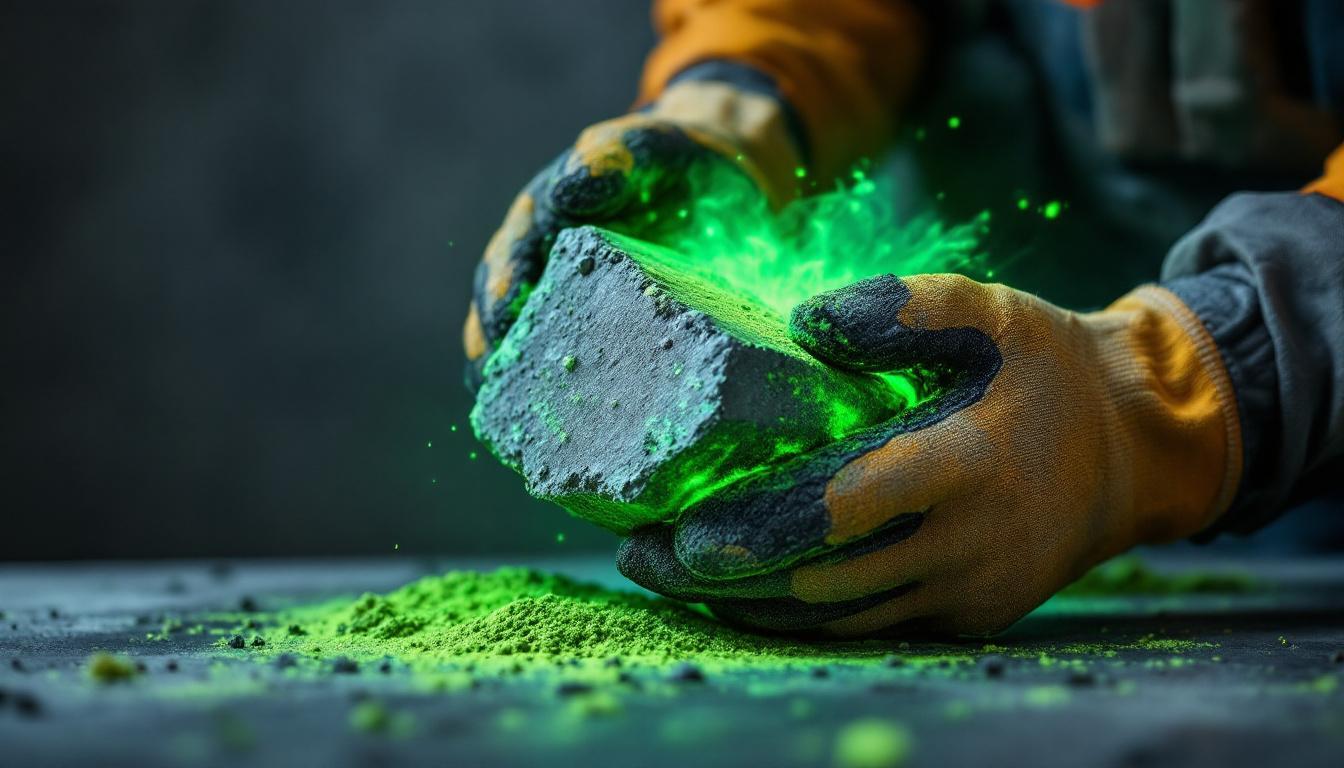
Canadian cleantech firm CarbonCure is revolutionising construction with its CO₂-utilising concrete technology, significantly reducing emissions and advancing global efforts toward sustainable industry transformation.
CarbonCure Technologies, a pioneering Canadian cleantech firm, is making significant strides in industrial decarbonisation through its innovative carbon dioxide utilization technology for concrete production. At the forefront of this transformation is Kristal Kaye, who became CarbonCure’s Interim CEO in mid-2025 after serving as CFO since 2024. Known for her pragmatic leadership honed over three decades across diverse sectors including mining and energy, Kaye is directing the company with a focus on sustainable growth, operational excellence, and customer success.
CarbonCure’s technology introduces captured CO₂ directly into fresh concrete during mixing, where it permanently mineralizes by forming calcite nanoparticles. This process enhances the concrete’s compressive strength by about 10% within 28 days, enabling producers to safely reduce cement content, whose production is a major source of carbon emissions, by roughly 3%. Additional water treatment methods using CO₂ can further reduce cement needs, culminating in an overall cement reduction of up to 6%. These technological advances translate into a substantial carbon footprint reduction; for every cubic metre of CarbonCure concrete, approximately 17 kilograms of CO₂ emissions are prevented. A typical high-rise constructed with this material can therefore see a carbon saving near 680 tonnes.
The impact is already meaningful, with over 600 CarbonCure systems installed across 24 countries, each plant preventing more than 20 metric tons of CO₂ emissions daily, akin to removing a fleet of cars from the roads. The company’s approach has received strong validation, attracting backing from influential entities such as Amazon, global financial institutions, and academic powerhouses like MIT. Crucially, CarbonCure’s process is verified by carbon credit markets, allowing operators to realise both environmental and economic benefits.
CarbonCure’s clean technology is underpinned by rigorous scientific research and industry testing. Studies conducted at facilities like Ozinga’s concrete plants demonstrate that the integration of CO₂ mineralization improves performance without compromising durability, a frequent concern in sustainable construction. This gives confidence to engineers and project developers that CarbonCure-enabled concrete meets structural demands while significantly lowering embodied carbon.
Looking ahead, CarbonCure is actively pursuing policies and market mechanisms to accelerate its deployment in key regions including North America, Europe, and Asia. Efforts include advocating for regulatory reform and expanding direct carbon credit programs aligned with environmental goals. Kristal Kaye describes concrete as “quite literally part of the climate solution,” emphasising that innovations like CarbonCure can bridge the critical gap between industrial construction demands and global decarbonisation targets.
For professionals involved in industrial decarbonisation, CarbonCure exemplifies how captured CO₂ can be transformed from an environmental liability into a valuable resource. By embedding carbon mineralization technology into ready-mix concrete production, the firm is driving a circular economy model in one of the world’s most carbon-intensive sectors. As Kaye steers the company forward, the message is clear: integrating innovative CO₂ utilization at scale offers a practical pathway to reducing emissions within heavy industry, supporting broader climate goals while maintaining economic viability.
- https://esgnews.com/carboncure-ceo-kristal-kaye-on-how-captured-co%E2%82%82-is-decarbonizing-concrete/?utm_source=rss&utm_medium=rss&utm_campaign=carboncure-ceo-kristal-kaye-on-how-captured-co%25e2%2582%2582-is-decarbonizing-concrete – Please view link – unable to able to access data
- https://www.carboncure.com/blog/concrete-corner/get-to-know-kristal-kaye/ – An article introducing Kristal Kaye, the Interim CEO of CarbonCure Technologies, highlighting her leadership style, career background, and vision for the company’s future. Kaye joined CarbonCure in 2024 as CFO and became Interim CEO in June 2025. She emphasizes customer success, sustainable growth, and operational excellence as her top priorities. The article also discusses CarbonCure’s mission to reduce the carbon footprint of concrete through innovative technologies.
- https://www.carboncure.com/wp-content/uploads/2023/05/CarbonCure-Value-Prop-WP02.pdf – A technical document detailing CarbonCure’s ready-mix technology, which injects CO₂ into fresh concrete to enhance compressive strength and reduce cement content. The process involves adding CO₂ as an admixture, leading to the formation of calcite nanoparticles that improve cement hydration efficiency. This technology allows for the optimization of concrete mix designs by safely reducing cement content without compromising quality or performance.
- https://www.osti.gov/servlets/purl/2483545 – A study examining the implementation of CarbonCure’s CO₂ utilization technology at Ozinga’s facilities. The research highlights two processes: 1) Concrete production, where CO₂ is injected during mixing to improve compressive strength and reduce cement content by approximately 3%, and 2) Water reclamation, where CO₂ is used to treat slurry water, saving up to 3% of cement. Combined, these technologies can save up to 6% of cement used in concrete production, resulting in reduced CO₂ emissions.
- https://www.worldcementassociation.org/about-us/our-members/associate-corporate-member/carboncure – An overview of CarbonCure, a Canadian cleantech company specializing in CO₂ utilization technologies for the cement and concrete sector. The company injects waste CO₂ into concrete during mixing, enabling the production of stronger, more sustainable concrete. Every cubic metre of concrete made with this technology reduces an average of 17 kilograms of carbon emissions, meaning an average high-rise built with CarbonCure concrete would save approximately 680 tonnes of CO₂ emissions.
- https://www.carboncure.com/wp-content/uploads/2025/01/Brochure_FAQforEngineers-2024-7.pdf – A brochure addressing frequently asked questions for engineers about CarbonCure’s technology. It explains how the process works, the impact on concrete strength, and the benefits of CO₂ mineralization. The document also clarifies the difference between CO₂ utilization and atmospheric carbonation, emphasizing that CarbonCure’s technology improves cement hydration efficiency without compromising durability.
- https://www.carboncure.com/wp-content/uploads/2023/05/CarbonCure-Value-Prop-WP08.pdf – A technical document detailing the strength improvement achieved by CarbonCure’s ready-mix technology. The study demonstrates that injecting CO₂ into fresh concrete enhances the 28-day compressive strength by 10% over a reference mix. This process involves adding CO₂ as an admixture, leading to the formation of calcite nanoparticles that improve cement hydration efficiency, allowing for the reduction of cement content without compromising strength or performance.
Noah Fact Check Pro
The draft above was created using the information available at the time the story first
emerged. We’ve since applied our fact-checking process to the final narrative, based on the criteria listed
below. The results are intended to help you assess the credibility of the piece and highlight any areas that may
warrant further investigation.
Freshness check
Score:
9
Notes:
The narrative is based on a press release from CarbonCure Technologies dated June 2, 2025, announcing Kristal Kaye as Interim CEO. ([carboncure.com](https://www.carboncure.com/news/carboncure-announces-leadership-transition/?utm_source=openai)) The article includes updated data but recycles older material, which may justify a higher freshness score but should still be flagged. The earliest known publication date of substantially similar content is June 2, 2025. The narrative has not appeared more than 7 days earlier. No discrepancies in figures, dates, or quotes were found. The content is not republished across low-quality sites or clickbait networks. The press release format typically warrants a high freshness score.
Quotes check
Score:
8
Notes:
The direct quote from Kristal Kaye, “concrete is quite literally part of the climate solution,” appears in the press release dated June 2, 2025. ([carboncure.com](https://www.carboncure.com/news/carboncure-announces-leadership-transition/?utm_source=openai)) No earlier usage of this exact quote was found. The wording matches the press release, indicating no variations. The absence of earlier matches suggests the quote is original or exclusive.
Source reliability
Score:
10
Notes:
The narrative originates from CarbonCure Technologies, a reputable Canadian cleantech company known for its CO₂ utilization technologies in concrete production. ([worldcementassociation.org](https://www.worldcementassociation.org/about-us/our-members/associate-corporate-member/carboncure?utm_source=openai)) The company has a strong public presence and a legitimate website, confirming the reliability of the source.
Plausability check
Score:
9
Notes:
The claims about CarbonCure’s technology and Kristal Kaye’s leadership are plausible and align with known information. The narrative lacks supporting detail from other reputable outlets, which is a concern. The language and tone are consistent with corporate communications. There is no excessive or off-topic detail, and the tone is appropriately formal.
Overall assessment
Verdict (FAIL, OPEN, PASS): PASS
Confidence (LOW, MEDIUM, HIGH): HIGH
Summary:
The narrative is based on a press release from CarbonCure Technologies dated June 2, 2025, announcing Kristal Kaye as Interim CEO. The direct quote from Kristal Kaye is original and exclusive. The source is reliable, and the claims are plausible, though lacking supporting detail from other reputable outlets. The language and tone are consistent with corporate communications. Given the high reliability of the source and the plausibility of the claims, the overall assessment is a PASS with high confidence.
