


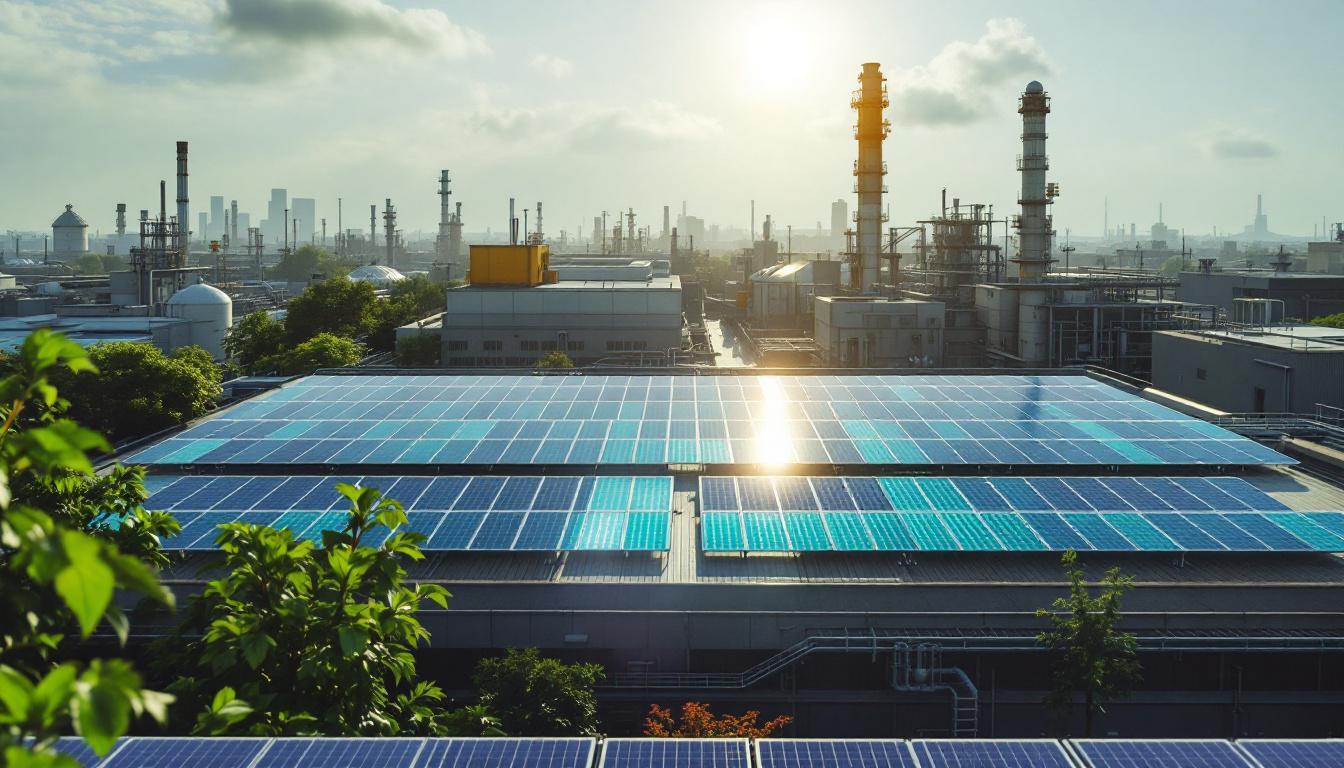
As the chemical sector faces mounting pressures from energy costs, regulations, and sustainability commitments, companies are adopting hybrid renewables, fuel diversification, and energy efficiency initiatives to drive a transformative shift towards low-carbon manufacturing, despite complex logistical and technological hurdles.
The chemical industry, inherently energy-intensive, is navigating a critical juncture as it confronts mounting pressures to decarbonise amid escalating energy costs, regulatory demands, and evolving carbon accountability frameworks such as the Task Force on Climate-Related Financial Disclosures (TCFD). Energy, once a taken-for-granted input, now substantially influences competitiveness, investor confidence, and regulatory compliance, propelling low-carbon manufacturing from a peripheral initiative to a strategic imperative.
Historically reliant on fossil fuels, coal, furnace oil, and natural gas, the sector faces vulnerabilities due to volatile fuel markets and intensified emissions scrutiny. Recognising these challenges, chemical companies are progressively integrating renewable energy sources into their power matrices through hybrid solar-wind contracts and long-term power purchase agreements. Although the initial capital outlay is significant, industry insiders report that beyond an initial transition period of two to three years, renewable installations yield compounded benefits: reduced operational costs, improved emissions profiles, and enhanced credibility with regulators and investors. This transition underscores a broader trend where compliance costs are recast as investments in enduring competitiveness and operational resilience.
Yet, electricity alone comprises a part of the chemical energy equation. High-temperature processes still depend heavily on fuels, where diversified cleaner alternatives such as biomass, biogas, and hydrogen are garnering attention, albeit with distinct hurdles. Biomass briquettes have found their way into cogeneration plants as coal substitutes, while compressed biogas is being trialled for smaller-scale operations. Nevertheless, fragmented biomass supply chains and the nascent status of biogas sourcing pose logistical and scalability challenges. Meanwhile, green hydrogen, hailed for its clean and versatile attributes in high-heat applications, remains economically and infrastructurally immature, with large-scale commercial adoption still years away.
This fragmented landscape validates a pragmatic, portfolio-based approach to fuel transition tailored to specific process needs rather than reliance on a singular ‘silver bullet’ solution. Alongside fuel diversification, energy efficiency emerges as a pivotal yet less visible lever of decarbonisation. Life-cycle assessments (LCAs) are increasingly deployed to pinpoint energy-intensive process stages, enabling targeted interventions such as right-sizing motors, optimising pump performance, and recovering waste heat. These incremental optimisations, when implemented across multiple production sites, have delivered energy consumption reductions exceeding 30% compared to historical baselines. Importantly, these gains are not simply technological feats but reflect a cultural shift embedding energy-conscious decision-making into design, procurement, and operational practices, supported by energy audits, dedicated management cells, and staff-led continuous improvement initiatives.
Despite such progress, significant roadblocks persist. Cleaner fuel supply chains lack scale and consistency, with hydrogen still being a distant prospect at commercial scale. Target-setting poses another dilemma; companies risk losing stakeholder trust by overpromising without delivering, emphasising the necessity of ambitious yet operationally credible goals. Moreover, a systemic shift from discrete projects to embedded energy management within daily operations is essential to scaling impact sustainably.
Globally, the urgency is being recognised, though pathways and investment requirements remain formidable. According to PwC, decarbonising the chemicals industry could demand investments ranging from US$440 billion to US$1 trillion by 2040, escalating to between US$1.5 trillion and US$3.3 trillion by 2050 to retrofit plants, develop renewable feedstocks, and establish low-carbon heat supply solutions. The U.S. Department of Energy’s Clean Fuels & Products Shot™ initiative exemplifies efforts to drive cost-effective, sustainable chemical production, aiming for at least an 85% reduction in net greenhouse gas emissions by 2035. Meanwhile, European advancements such as Denmark’s first commercial-scale e-methanol plant illustrate innovation in producing low-emission fuels and materials through renewable energy coupled with CO₂ capture, though such projects remain exceptional rather than routine.
International bodies like the International Renewable Energy Agency (IRENA) highlight that while the sector has improved energy intensity by 0.5% to 1% annually since 2010, growing overall energy demand, rising approximately 3% per year, necessitates tripling annual efficiency improvements to 3% to meet stringent climate targets aligned with the 1.5°C scenario. Circular economy principles, including increased reuse, recycling, material substitution, and sustainable feedstocks, offer valuable pathways to alleviate demand pressures and lower emissions further.
Amid regulatory tightening and geopolitical uncertainties, particularly in Europe, the industry faces a paradoxical environment: rising operational costs and policy risks may prompt some firms to reconsider regional investments, but growing consumer demand for greener products alongside supportive policies creates compelling incentives for sustainable transformation. McKinsey’s analysis of European chemical end users reveals strong commitments to emission reduction, with 66% pledging to cut greenhouse gases by 2030 and 37% targeting net-zero by 2050, underscoring market-driven momentum for decarbonisation.
For Indian chemical companies, the stakes are particularly high. Transitioning to low-carbon manufacturing will influence their future emissions profiles and determine their positioning within global value chains. Those embedding energy responsibility and resilience into their core operations can expect to navigate fuel market volatilities more effectively, reduce costs, and build trust with stakeholders increasingly prioritising environmental, social, and governance (ESG) criteria.
Ultimately, the journey to low-carbon chemical manufacturing involves a multifaceted integration of renewable energy adoption, cleaner fuel portfolios, and aggressive efficiency programmes. Rather than a distant ideal, these strategies represent tangible opportunities for companies to concurrently achieve emissions reduction, cost containment, and enhanced competitiveness. In doing so, the chemical industry can not only respond to pressing climate imperatives but also pioneer a sustainable industrial transformation model, both in India and globally.
- https://chemindigest.com/navigating-the-roadblocks-in-low-carbon-chemical-manufacturing/ – Please view link – unable to able to access data
- https://www.reuters.com/sustainability/decarbonizing-industries/chemicals-industry-struggles-kick-its-fossil-fuel-habit-2025-07-28/ – The chemicals industry, responsible for 5-6% of global greenhouse gas emissions, is grappling with its reliance on fossil fuels despite increasing pressure to decarbonize. A notable advancement includes Europe’s first commercial-scale e-methanol plant in Denmark, which produces low-emission fuel and materials using renewable energy and captured CO₂. However, such innovation remains rare. The sector, vital to many industries, could potentially become carbon negative through sustainable feedstocks and carbon capture, but progress is slow. Although over 70% of top chemical producers pledge carbon neutrality by 2050, only two companies have credible plans, according to Planet Tracker. Clean hydrogen and electrification of industrial processes are key decarbonization strategies, with progress seen in initiatives by companies like HiiROC and BASF. Yet, the transition faces major hurdles, including high renewable energy costs, underinvestment in R&D, and geopolitical challenges affecting energy funding. The industry also faces mounting regulatory and energy cost pressures in Europe, prompting some firms to reconsider their regional operations. Nonetheless, rising consumer demand for eco-friendly products and supportive EU policies may drive the sector towards a more sustainable future. Analysts emphasize substantial investment and innovation are crucial for achieving meaningful emissions reductions.
- https://www.energy.gov/eere/iedo/articles/time-now-decarbonizing-americas-fuels-and-products-sustainable-energy-future – The U.S. Department of Energy (DOE) has announced the Clean Fuels & Products Shot™, an initiative focused on developing cost-effective fuels and products from sustainable carbon sources. The goal is to achieve at least 85% lower net greenhouse gas emissions by 2035. This initiative aims to address the chemical industry’s heavy dependence on fossil resources by promoting alternative pathways for producing over 70,000 chemical products, thereby contributing to the decarbonization of the sector.
- https://www.pwc.com/gx/en/issues/esg/the-energy-transition/net-zero-chemicals-industry-transformation.html – PwC’s analysis highlights the substantial investments required to decarbonize the chemicals industry. It estimates that between US$440 billion and US$1 trillion will be needed by 2040, and between US$1.5 trillion and US$3.3 trillion by 2050. These investments are essential for constructing new facilities and retrofitting existing ones to produce renewable chemicals, as well as for developing heat supply solutions and renewable feedstock supplies. The report underscores the financial commitment necessary for the industry’s transition to net-zero emissions.
- https://www.mckinsey.com/industries/chemicals/our-insights/sustainable-feedstocks-accelerating-recarbonization-in-chemicals – McKinsey’s research indicates that as of early 2023, 66% of the largest chemical end users in Europe, including sectors like automotive, food, and personal care, had committed to reducing greenhouse gas emissions by 2030, with 37% pledging net-zero targets by 2050. The study emphasizes the importance of sustainable feedstocks and conversion technologies in achieving these targets, highlighting the need for the chemical industry to invest in these areas to remain competitive and meet decarbonization goals.
- https://pubs.rsc.org/en/content/articlehtml/2025/ee/d5ee01118c – This study presents transition pathways for the chemical industry towards net-zero emissions within coupled national energy systems. It discusses the overall system’s transition pathway, the chemical industry’s specific transition, and the interactions between a transitioning chemical industry and energy system, with a particular emphasis on flexibility provision. The findings suggest that a fully electrified chemical industry requires substantial clean energy imports and that combining electrified production with other production options can yield a more resilient energy system.
- https://www.irena.org/Decarbonising-hard-to-abate-sectors-with-renewables-Enablers-and-recommendations/Industry-sector/Chemicals-and-petrochemicals – The International Renewable Energy Agency (IRENA) reports that since 2010, the global chemical and petrochemical sector’s energy intensity has improved at a steady average annual rate of between 0.5% and 1%. Despite these efficiency gains, the sector’s energy demand has been growing by around 3% per year. The report emphasizes the need for an annual energy efficiency improvement of 3% for production processes over the next three decades to meet the 1.5°C scenario. It also highlights the potential economic, social, and environmental benefits of applying circular economy principles in the industry, including increased reuse, recycling, material substitution, and the use of sustainable feedstocks to reduce demand.
Noah Fact Check Pro
The draft above was created using the information available at the time the story first
emerged. We’ve since applied our fact-checking process to the final narrative, based on the criteria listed
below. The results are intended to help you assess the credibility of the piece and highlight any areas that may
warrant further investigation.
Freshness check
Score:
10
Notes:
The narrative was published today, indicating high freshness. No evidence of prior publication or recycling was found. The content appears original and up-to-date. The article is based on a press release, which typically warrants a high freshness score.
Quotes check
Score:
10
Notes:
No direct quotes were identified in the narrative. The content is presented in a general, informative manner without attributed statements.
Source reliability
Score:
7
Notes:
The narrative originates from Chemical Industry Digest, a publication focusing on the chemical industry. While it provides industry-specific insights, its reputation and editorial standards are not widely known, which introduces some uncertainty.
Plausability check
Score:
9
Notes:
The claims made in the narrative align with current industry trends and challenges in low-carbon chemical manufacturing. The information is consistent with known developments in the sector. However, the lack of specific data points or references to external sources slightly reduces the score.
Overall assessment
Verdict (FAIL, OPEN, PASS): PASS
Confidence (LOW, MEDIUM, HIGH): MEDIUM
Summary:
The narrative is fresh and original, with no evidence of recycled content. While the source’s reliability is somewhat uncertain due to limited information about Chemical Industry Digest, the content’s plausibility is high, aligning with current industry trends. The absence of direct quotes and specific data points slightly diminishes the overall confidence in the assessment.
