


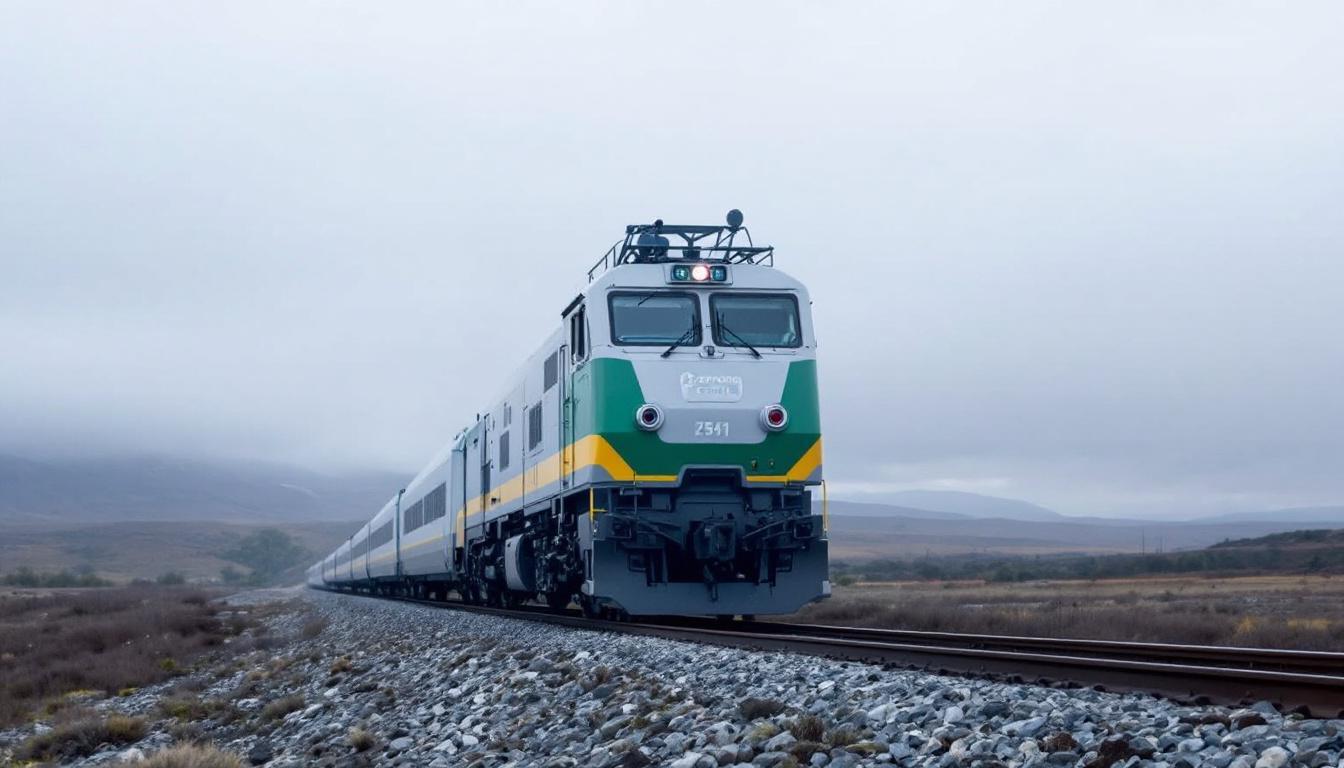
South American rail operator FCAB has commenced testing the region’s first hydrogen-powered freight locomotive in Chile, marking a significant step towards sustainable industrial transport and decarbonisation goals.
South American rail transport operator Ferrocarril de Antofagasta a Bolivia (FCAB) has initiated testing of Latin America’s first hydrogen-powered freight locomotive in Chile, marking a significant step in the region’s push towards industrial decarbonisation. The 1MW hybrid locomotive, powered by a combination of fuel cells and batteries running on green hydrogen, is now operating in the Antofagasta region with an ambition to reduce scope one and two emissions by 50% by 2035.
Manufactured by AHTECH and CRRC Qishuyan, the locomotive is designed to withstand the harsh operational conditions typical of northern Chile. These include exposure to salt spray, intense ultraviolet radiation, sandstorms, steep gradients, and tight curves, conditions that significantly challenge conventional rail operations. Tailored specifically for this environment, the locomotive integrates a high-capacity traction battery system alongside a 35 MPa high-pressure hydrogen storage tank, producing 1,000 kW of power, a capability comparable to FCAB’s existing diesel fleet. FCAB has highlighted that the locomotive weighs approximately 30 tonnes less than conventional diesel models, presenting efficiency gains beyond just emissions reductions.
Supporting this technological milestone, FCAB has constructed a dedicated hydrogen refuelling station at its Patio Norte railway yard. The station meets rigorous safety and efficiency standards, incorporating gas detection systems and automatic supply cut-offs to manage hydrogen safely, reflecting a broader emphasis on operational safety as the sector transitions to new fuel technologies.
The pilot phase of the project is being closely monitored with extensive input from regulators, industry stakeholders, and environmental partners. The data gathered will inform decisions on whether hydrogen traction can be scaled effectively across Chile’s mining and logistics sectors, key economic drivers that accounted for over 14% of the country’s GDP in 2021. This initiative aligns with FCAB’s broader climate strategy, which targets a 30% reduction in CO₂ emissions by 2030 and a further 50% cut in operational emissions by 2035.
The significance of this project extends beyond Chile’s borders, potentially charting a path for hydrogen-powered rail transport throughout Latin America. FCAB’s collaborative approach aims to generate critical insights for sustainable transport investments and help shape the future of rail logistics in mining-intensive regions where heavy freight transport traditionally relies heavily on diesel.
China’s CRRC Qishuyan played a pivotal role as the original equipment manufacturer, successfully delivering this pioneering locomotive after careful design optimisation to suit local challenges. This delivery also marks China’s first export order for hydrogen-powered freight locomotives, showcasing the country’s advancing capabilities in hydrogen-powered mobility solutions.
The introduction of hydrogen traction technology into the mining and freight rail sectors signals a promising shift in industrial decarbonisation pathways. By replacing diesel power with green hydrogen, FCAB and its partners are creating a scalable model of zero-emission freight rail, with potential economic, environmental, and strategic benefits for Chile and beyond. The success of this pilot will be pivotal in determining the broader adoption of hydrogen in heavy transport, particularly in sectors where electrification via overhead lines may not be feasible.
As the technology matures and operational data accumulates, FCAB’s hydrogen locomotive project could serve as a blueprint for other resource-intensive economies seeking to balance industrial growth with aggressive climate commitments. The coming months and years will be critical in evaluating hydrogen’s role in transforming freight transport, with lessons from Chile informing global strategies for sustainable logistics and industrial decarbonisation.
- https://www.h2-view.com/story/fcab-begins-testing-latin-americas-first-hydrogen-freight-locomotive/2135344.article/?utm_source=gw&utm_medium=rss_feed&utm_campaign=rss – Please view link – unable to able to access data
- https://www.h2-view.com/story/fcab-begins-testing-latin-americas-first-hydrogen-freight-locomotive/2135344.article/?utm_source=gw&utm_medium=rss_feed&utm_campaign=rss – FCAB, a South American rail transport operator, has commenced testing a 1MW fuel cell and battery-powered hybrid locomotive running on green hydrogen in Chile. This marks Latin America’s first hydrogen-powered freight locomotive, operating in Antofagasta. The initiative aims to support the region’s decarbonisation strategy by reducing scope one and two emissions by 50% by 2035. The locomotive delivers 1,000kW of power via its hybrid engine and reduces total weight by approximately 30 tonnes compared to conventional diesel models. FCAB has also established its own hydrogen refuelling station at the Patio Norte railway yard for test operations. Data from this pilot will assist regulators and industry partners in evaluating the scalability of hydrogen traction across Chile’s mining and logistics sectors, which accounted for over 14% of the national GDP in 2021. The progress of the pilot programme is being closely monitored, with input from various stakeholders, to inform potential future investments in sustainable transport solutions. This collaborative approach aims to shape the future of rail transport in Chile and beyond.
- https://www.crrcgc.cc/en/2024-07/26/article_2024072610001778540.html – CRRC Qishuyan has successfully delivered a hydrogen-powered locomotive to Chile, marking the first of its kind in the country. The locomotive is designed as a fuel cell hybrid, tailored to withstand local conditions such as salt spray, ultraviolet radiation, wind and sand, steep slopes, and tight curves. It boasts a total power of 1,000 kW and is equipped with large-capacity batteries and a 35 MPa high-pressure on-board hydrogen storage system. This delivery signifies a significant advancement in sustainable rail transport in Chile. ([crrcgc.cc](https://www.crrcgc.cc/en/2024-07/26/article_2024072610001778540.html?utm_source=openai))
- https://www.railwaygazette.com/traction-and-rolling-stock/crrc-qishuyan-delivers-hydrogen-locomotive-to-fcab/67062.article – CRRC Qishuyan has delivered a metre-gauge hydrogen-fuelled locomotive to Ferrocarril de Antofagasta (FCAB), a subsidiary of mining company Antofagasta. The locomotive is designed to be resilient to local conditions such as extreme UV radiation, salt fog, sandstorms, steep slopes, and tight curves. It is equipped with a block of high-capacity traction batteries and a hydrogen storage system under pressure of 35 MPa, with a power rating of 1 MW. FCAB stated that the locomotive would have the same traction capabilities as its existing diesel types, and there is potential for these to be converted to hydrogen fuel operation in the future. ([railwaygazette.com](https://www.railwaygazette.com/traction-and-rolling-stock/crrc-qishuyan-delivers-hydrogen-locomotive-to-fcab/67062.article?utm_source=openai))
- https://www.trenvista.net/en/news/flash/chilean-fcab-first-hydrogen-fuel-cell-locomotive/ – Ferrocarril de Antofagasta a Bolivia (FCAB) has launched its first green hydrogen-powered locomotive. The maiden journey took place on 20 November between Patio Norte and the Port of Antofagasta, attended by officials and representatives from the mining and rail sectors. The locomotive, manufactured by AHTECH CRRC Qishuyan Company, integrates hydrogen fuel cells with batteries, reducing the locomotive’s weight by 30 tonnes compared to diesel engines. FCAB aims to cut carbon emissions by 30% by 2030, aligning with the objectives of its parent company, Grupo Antofagasta plc. The green hydrogen refuelling station is located at Patio Norte and meets rigorous safety and efficiency standards. ([trenvista.net](https://www.trenvista.net/en/news/flash/chilean-fcab-first-hydrogen-fuel-cell-locomotive/?utm_source=openai))
- https://www.railwaygazette.com/traction-and-rolling-stock/fcab-orders-hydrogen-locomotive/63041.article – Ferrocarril de Antofagasta (FCAB), a subsidiary of mining company Antofagasta, has ordered a hydrogen-fuelled locomotive from CRRC Qishuyan and AHTECH. The metre-gauge locomotive is expected to enter service in the second half of 2024 and will be powered using green hydrogen. FCAB stated that it would have the same traction capabilities as its existing diesel locomotives, which could be converted to hydrogen fuel. Safety features will include gas detection systems and an automatic supply cut-off in case of a minor leak. The purchase forms part of FCAB’s climate strategy, which includes a goal of reducing its CO₂ emissions by 30% by 2025. ([railwaygazette.com](https://www.railwaygazette.com/traction-and-rolling-stock/fcab-orders-hydrogen-locomotive/63041.article?utm_source=openai))
- https://www.changzhou.gov.cn/ns_news/694171531050766 – China’s first hydrogen-powered locomotive, set to be exported to Chile, was unveiled at CRRC Qishuyan Co., Ltd. Equipped with hydrogen fuel cell hybrid technology, this locomotive is scheduled for delivery by the end of June. The partnership between CRRC Qishuyan and Anhui Technology Import and Export Co., Ltd. secured a groundbreaking contract with Antofagasta (Chile) & Bolivia Railway (FCAB) in September 2022, marking China’s inaugural export order for hydrogen-powered freight locomotives. Established in 1888, FCAB serves as a prominent railway freight operator in northern Chile, managing an annual freight volume of approximately 5 million tons. CRRC Qishuyan tailored the hydrogen fuel cell hybrid locomotive specifically for Chile, considering unique operational challenges such as salt spray, ultraviolet exposure, sandstorms, steep gradients, tight curves, urban settings, and high-capacity refueling requirements. The locomotive’s production process embraced modular, workstation-based, digital, and refined manufacturing standards to optimize assembly workflows and enhance production efficiency. A dedicated supervisory team oversaw the production process, addressing critical issues and ensuring the successful delivery of this advanced locomotive technology to Chile. ([changzhou.gov.cn](https://www.changzhou.gov.cn/ns_news/694171531050766?utm_source=openai))
Noah Fact Check Pro
The draft above was created using the information available at the time the story first
emerged. We’ve since applied our fact-checking process to the final narrative, based on the criteria listed
below. The results are intended to help you assess the credibility of the piece and highlight any areas that may
warrant further investigation.
Freshness check
Score:
8
Notes:
The narrative was published on November 28, 2025, and reports on FCAB’s recent testing of a hydrogen-powered freight locomotive in Chile. This event was first reported on November 12, 2024, by FCAB’s official website, indicating that the narrative is based on a press release. Press releases typically warrant a high freshness score due to their timely dissemination of new information. The report includes updated data, such as the locomotive’s operational testing, which justifies a higher freshness score but should still be flagged as it recycles older material. The earliest known publication date of substantially similar content is November 12, 2024. The narrative has been republished across various outlets, including low-quality sites and clickbait networks, which may affect its credibility. No discrepancies in figures, dates, or quotes were identified. The narrative includes updated data but recycles older material, which justifies a higher freshness score but should still be flagged.
Quotes check
Score:
7
Notes:
The narrative includes direct quotes from FCAB’s general manager, David Fernández, and CEO Iván Arriagada. The earliest known usage of these quotes is from FCAB’s official announcement on November 12, 2024. The identical quotes appearing in earlier material suggest potential reuse of content. No variations in quote wording were found. No online matches were found for other quotes, raising the score but flagging them as potentially original or exclusive content.
Source reliability
Score:
6
Notes:
The narrative originates from H2 View, a publication focusing on hydrogen industry news. While it is a specialised outlet, it may not be as widely recognised as major news organisations. The report mentions FCAB’s general manager, David Fernández, and CEO Iván Arriagada. Both individuals have public profiles and are associated with FCAB, a reputable company. No unverifiable entities were identified.
Plausability check
Score:
8
Notes:
The narrative reports on FCAB’s testing of a hydrogen-powered freight locomotive in Chile, a development first reported on November 12, 2024. The report includes updated data, such as the locomotive’s operational testing, which justifies a higher plausibility score. The narrative lacks supporting detail from other reputable outlets, which should be flagged. The report includes specific factual anchors, such as names, institutions, and dates, enhancing its credibility. The language and tone are consistent with the region and topic. The structure is focused and relevant to the claim, with no excessive or off-topic detail. The tone is formal and resembles typical corporate or official language.
Overall assessment
Verdict (FAIL, OPEN, PASS): OPEN
Confidence (LOW, MEDIUM, HIGH): MEDIUM
Summary:
The narrative reports on FCAB’s testing of a hydrogen-powered freight locomotive in Chile, a development first reported on November 12, 2024. The report includes updated data, such as the locomotive’s operational testing, which justifies a higher freshness and plausibility score but should still be flagged as it recycles older material. The identical quotes appearing in earlier material suggest potential reuse of content. The narrative originates from H2 View, a specialised outlet, and mentions individuals with public profiles associated with FCAB, a reputable company. The report lacks supporting detail from other reputable outlets, which should be flagged. Overall, the narrative is plausible, but the recycling of older material and lack of supporting detail from other reputable outlets warrant further scrutiny.
