

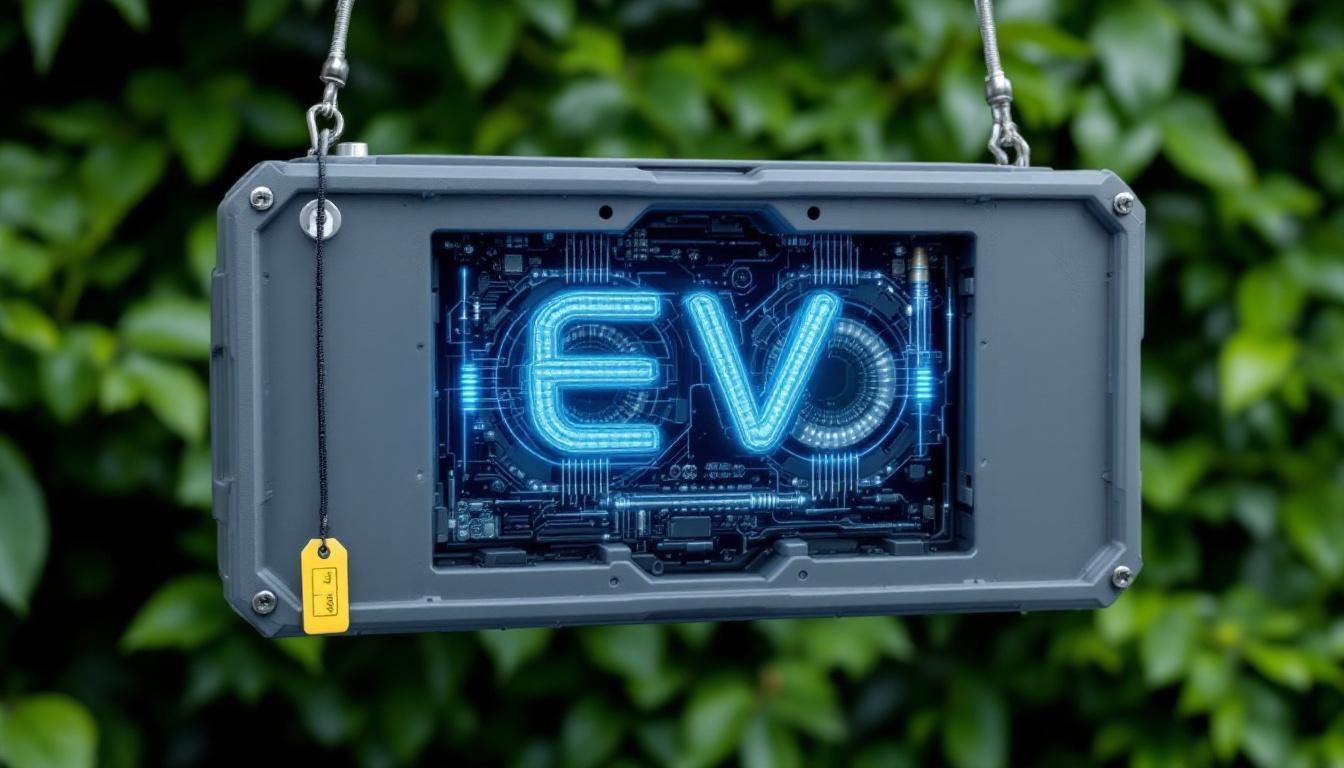
China is implementing mandatory digital identities for new-energy vehicle batteries to improve lifecycle traceability, regulate recycling, and align with international standards amid a surge in EV production and retiring batteries.
China has moved to impose mandatory “digital identities” on new-energy vehicle (NEV) power batteries, aiming to trace units from manufacture through installation, end‑of‑life and recycling as Beijing prepares for a large wave of retired cells.
According to the interim measures jointly issued by the Ministry of Industry and Information Technology (MIIT) and five other departments, each power battery will be assigned a digital ID linked to a unique code that records origin, usage history, replacement and recycling instructions. The measures take effect on April 1, 2026, the government said. Government figures show China’s NEV production and sales each exceeded 16 million units in 2025, accounting for more than half of domestic new vehicle sales, and MIIT projects retired battery volumes could exceed 1 million tonnes a year by 2030.
Wang Peng, head of the energy conservation and comprehensive utilization department at MIIT, described the measure as “a significant institutional innovation, applying digital technology to trace the entire lifecycle of power batteries,” according to China Daily. The rules also clarify recycling responsibilities for battery makers and automakers and require manufacturers to establish recycling services across all provinces, the government statement said.
Beijing’s move mirrors parallel industry efforts to standardise battery data. At Tianjin’s 2025 Automotive Intelligent Data Ecosystem Conference, major automakers including Geely, Great Wall Motor, Chery and Nio partnered with battery suppliers such as CATL, FinDreams and CALB to launch a Battery ID digital framework intended to standardise data collection, system integration and the issuance of unique battery identifiers. According to industry reporting, that initiative completed an initial full workflow integration in 2024 and expanded in 2025 to cover energy storage batteries, with certification rules developed in cooperation with TÜV SÜD.
CATL has previously taken part in European battery passport pilots; its chief executive Robin Zeng was quoted in 2024 saying: “A battery passport definitely fits. So you can tell the battery story.” The new Chinese digital ID regime and the industry Battery ID framework point to growing alignment between state regulation and private-sector data standards as Chinese batteries and EVs reach overseas markets.
The rules also seek to curb informal and potentially hazardous recycling practices. Bloomberg reporting cited analyst Edgar Gao of Fubao saying the new measures “aim to prevent illegal dismantling of battery packs by traders that could create pollution problems” and to bolster licensed dismantling operations. The regulations, enforcement provisions and penalties are more prescriptive than prior practice: offenders who illegally dismantle batteries or fail to ensure authorised recycling may face fines, detention or licence revocation, and batteries must be scrapped together with their vehicles.
Beijing is also discouraging ad hoc second‑life uses that can confuse consumers and compromise safety. Wang Peng warned that repurposing EV batteries for applications such as electric scooters can be risky and misleading for the public. At the same time, government data show progress in formal recycling: in 2025 more than 400,000 tonnes of retired NEV batteries were comprehensively reused in China, a year‑on‑year increase of 32.9 percent, and leading firms have reached internationally advanced recovery rates for key metals such as lithium, cobalt and nickel.
The digital ID scheme could draw on China’s broader national digital identity infrastructure. China launched a national decentralised identifier system, China RealDID, in December 2023 to support real‑name verification and cryptographic identity services; industry observers note such platforms may be leveraged to underpin secure, auditable battery lifecycle records.
For industry and policymakers the policy offers potential benefits and challenges. A robust, interoperable battery ID could improve material recovery, reduce environmental and safety risks from informal recycling, and help exporters demonstrate compliance with overseas rules such as Europe’s battery passport pilots. But success will depend on data standards, secure interoperability between private and public platforms, effective enforcement of recycling chains and the willingness of market participants to share reliable information.
According to the government statement, consumers are urged to ensure end‑of‑life vehicles and batteries are handled by authorised recyclers. The new rules represent Beijing’s effort to pair regulatory oversight with emerging industry standards to steer China’s NEV ecosystem toward a more circular and safer battery economy.
- https://www.batterytechonline.com/ev-batteries/china-launches-digital-ids-for-ev-battery-traceability – Please view link – unable to able to access data
- https://www.chinadaily.com.cn/a/202601/16/WS696a05d5a310d6866eb34342.html – China will assign a unique ‘digital identity’ to every new-energy vehicle power battery to strengthen full-lifecycle supervision and promote safe, efficient recycling. This initiative is part of newly released regulations aimed at establishing a standardized system for handling retired batteries, as the country anticipates a massive wave of battery retirements in the coming years. The volume of retired batteries in China could exceed 1 million metric tons a year in 2030, according to the Ministry of Industry and Information Technology. Wang Peng, head of the energy conservation and comprehensive utilization department at the Ministry of Industry and Information Technology, said at a news conference in Beijing that the digital ID, linked to a battery’s unique code, will track its entire journey—from production and installation to replacement, vehicle retirement, recycling, and final reuse. ‘This represents a significant institutional innovation, applying digital technology to trace the entire lifecycle of power batteries,’ Wang said. The measure is included in a document roughly translated as the interim measures for the recycling and comprehensive utilization of retired NEV power batteries, jointly issued recently by MIIT and five other ministries. The rules also clarify the recycling responsibilities of battery and automotive manufacturers. With NEV sales soaring, China is facing a rapid increase in retired batteries. Improper handling poses environmental and safety risks, while proper recycling can recover valuable resources like lithium, cobalt, and nickel. Wang encouraged consumers to ensure end-of-life vehicles and their batteries are processed by authorized recyclers, warning against using informal channels that threaten public safety and the environment. Progress is already being made. In 2025, over 400,000 tons of retired NEV batteries were comprehensively reused in China, a year-on-year increase of 32.9 percent, with leading enterprises achieving internationally advanced recovery rates for key metals.
- https://english.www.gov.cn/news/202601/16/content_WS6969df0cc6d00ca5f9a089c0.html – China will strengthen management on the recycling and comprehensive utilization of used new energy vehicle (NEV) power batteries, according to the interim measures jointly issued by the Ministry of Industry and Information Technology (MIIT) and five other departments on Friday. Each power battery of NEVs will be assigned a digital identity under the interim measures, which will take effect on April 1, 2026. The move comes as China’s NEV industry has expanded rapidly. In 2025, NEV production and sales both exceeded 16 million units, accounting for over half of domestic new vehicle sales. With power batteries from earlier NEVs reaching the end of their service life due to capacity degradation, the volume of retired batteries is growing significantly, according to the MIIT. Industry experts note that the regulation is timely, given that China is entering a phase of large-scale battery retirement, with projected used battery generation exceeding 1 million tonnes by 2030.
- https://www.enghunan.gov.cn/hneng/News/Text_News/202601/t20260118_33894728.html – China will strengthen management on the recycling and comprehensive utilization of used new energy vehicle (NEV) power batteries, according to the interim measures jointly issued by the Ministry of Industry and Information Technology (MIIT) and five other departments on Friday. Each power battery of NEVs will be assigned a digital identity under the interim measures, which will take effect on April 1, 2026. The move comes as China’s NEV industry has expanded rapidly. In 2025, NEV production and sales both exceeded 16 million units, accounting for over half of domestic new vehicle sales.
- https://battery-tech.net/battery-markets-news/china-automakers-launch-unified-battery-id-data-platform/ – At Tianjin’s 2025 Automotive Intelligent Data Ecosystem Conference, China’s automakers Geely, Great Wall Motor, Chery and Nio teamed with CATL, FinDreams and CALB to debut the Battery ID digital framework, standardizing battery data and certification globally. The initiative aims to support the growing global electric vehicle (EV) and energy storage markets by establishing a unified digital framework for battery data. The Battery ID program comprises three core components: a Battery ID management system for standardized data collection, a Data Interaction Connector for system integration, and a Battery ID service platform that generates unique identifiers for each battery. These tools address the need to verify production details, regulatory compliance and technical specifications as Chinese EVs and storage solutions reach overseas markets. In 2024, the platform completed its first full workflow integration, enabling participating companies to issue trusted battery certificates. In 2025, the initiative expanded to cover energy storage batteries, and the first certification rules for Battery ID were introduced in collaboration with TÜV SÜD. These rules cover data accuracy, integration processes and transmission security. Thirteen companies formed seven joint working teams to test connectivity and authentication in real-world scenarios.
- https://carnewschina.com/2025/12/03/geely-and-catl-back-chinas-new-battery-id-platform-to-standardise-data-for-global-ev-markets/ – China’s automotive and battery sectors are advancing digital data standards as electric vehicles and energy storage products expand internationally. At the 2025 Automotive Intelligent Data Ecosystem Conference in Tianjin, Geely, Great Wall Motor, Chery and Nio, alongside battery suppliers including CATL, FinDreams Battery and CALB, presented progress on the Battery ID digital ecosystem initiative, which establishes a unified framework for reliable battery data. The conference also highlighted broader developments in the automotive industry’s trusted data space, covering batteries, insurance, communications and charging infrastructure, as reported by CCTV.
- https://en.wikipedia.org/wiki/China_RealDID – China’s national-level decentralized identifier system, China RealDID, was officially launched on December 12, 2023, by the First Research Institute of China’s Ministry of Public Security and the Blockchain-based Service Network (BSN) China. China RealDID was developed as a real-name identity verification system based on blockchain technology, including real name verification, data encryption for personal data protection, secure private logins, business identity checks, and personal identification certificate services. It allows Chinese residents to access online services using DID addresses and private keys, maintaining anonymity with business platform operators while upholding real-name compliance in accordance with Chinese legislation that requires real-name registration for online accounts. In November 2024, China RealDID underwent trials in Hong Kong, allowing Mainland Chinese citizens traveling to the city to verify their identities across borders while maintaining anonymity in KYC processes for purchasing regulated stablecoin and tokenized financial products without presenting a physical ID.
Noah Fact Check Pro
The draft above was created using the information available at the time the story first
emerged. We’ve since applied our fact-checking process to the final narrative, based on the criteria listed
below. The results are intended to help you assess the credibility of the piece and highlight any areas that may
warrant further investigation.
Freshness check
Score:
8
Notes:
The article was published on January 20, 2026, reporting on China’s initiative to assign digital identities to new-energy vehicle (NEV) power batteries, effective April 1, 2026. Similar information was reported by other reputable sources on January 16, 2026, indicating that the content is fresh and not recycled. ([english.www.gov.cn](https://english.www.gov.cn/news/202601/16/content_WS6969df0cc6d00ca5f9a089c0.html?utm_source=openai))
Quotes check
Score:
7
Notes:
The article includes a quote from Wang Peng, head of the energy conservation and comprehensive utilization department at MIIT, describing the measure as ‘a significant institutional innovation, applying digital technology to trace the entire lifecycle of power batteries.’ A search for this quote reveals that it was first reported by China Daily on January 16, 2026. ([chinadaily.com.cn](https://www.chinadaily.com.cn/a/202601/16/WS696a05d5a310d6866eb34342.html?utm_source=openai)) This suggests that the quote is not original to the article and may have been reused, raising concerns about the originality of the content.
Source reliability
Score:
6
Notes:
The article is published on Battery Tech Online, a platform that is part of the Informa Markets Division of Informa PLC. While Informa PLC is a reputable company, Battery Tech Online is a niche publication focusing on battery technology. The article cites information from the Ministry of Industry and Information Technology (MIIT) and other reputable sources, but the reliance on a niche publication may affect the overall reliability of the source.
Plausability check
Score:
9
Notes:
The article reports on China’s initiative to assign digital identities to NEV power batteries, effective April 1, 2026. This aligns with China’s rapid expansion in the NEV industry, with production and sales exceeding 16 million units in 2025, accounting for over half of domestic new vehicle sales. ([english.www.gov.cn](https://english.www.gov.cn/news/202601/16/content_WS6969df0cc6d00ca5f9a089c0.html?utm_source=openai)) The projected volume of retired batteries exceeding 1 million tonnes by 2030 adds credibility to the plausibility of the initiative.
Overall assessment
Verdict (FAIL, OPEN, PASS): PASS
Confidence (LOW, MEDIUM, HIGH): MEDIUM
Summary:
The article provides timely and plausible information on China’s initiative to assign digital identities to NEV power batteries. However, the reuse of quotes from other sources and reliance on a niche publication for verification raise concerns about the originality and independence of the content. Editors should exercise caution and consider seeking additional independent verification before publishing.
