


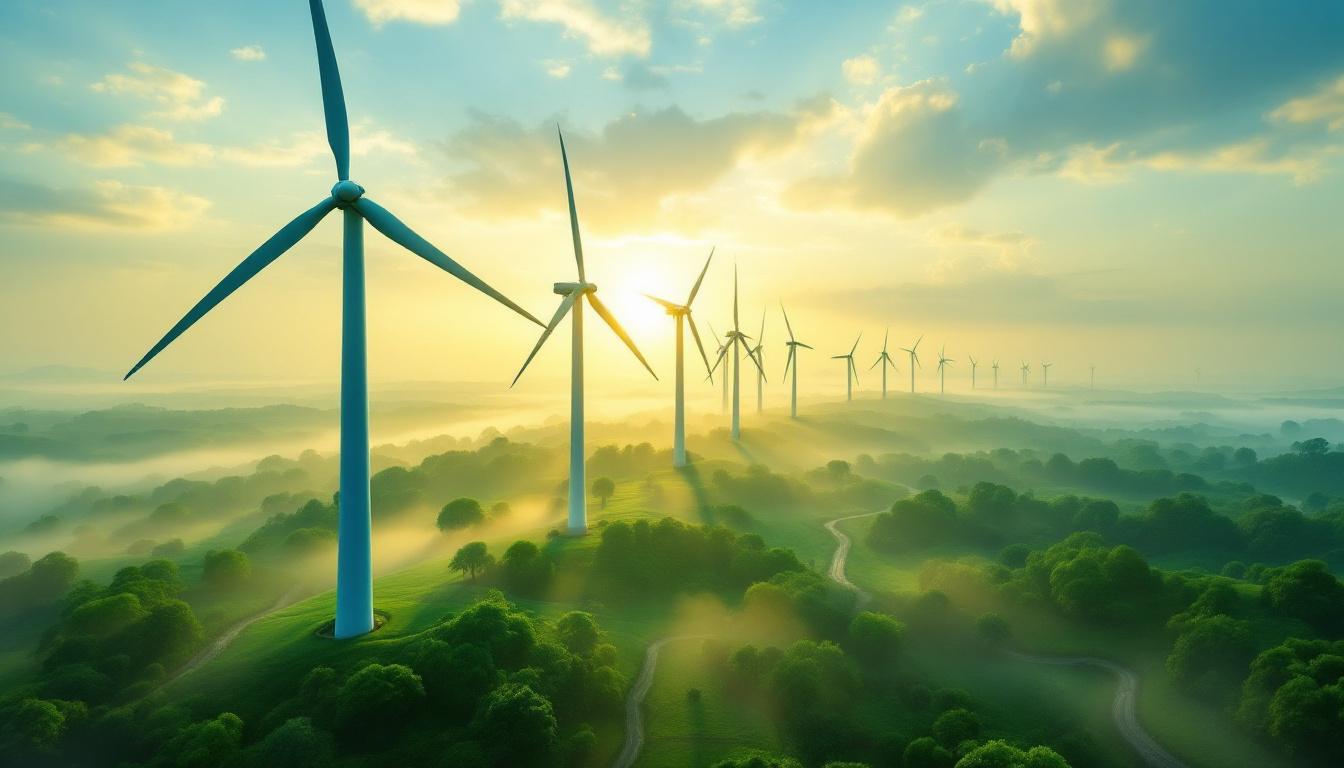
Data suggests China may have hit a historic milestone by stabilising or reducing its emissions for the first time in nearly two years, driven by rapid expansion in clean energy and electric vehicles, ahead of COP30.
New data indicates that China, the world’s largest carbon emitter, may have reached a historic environmental milestone by possibly hitting its peak emissions. An analysis compiled for Carbon Brief by the Centre for Research on Energy and Clean Air (CREA) reveals that China’s greenhouse gas emissions have been flat or declining for the past 18 months, a trend continuing into the third quarter of 2025. This flattening of emissions comes amid China’s aggressive expansion of clean energy capacity and rapid advancement in electric vehicle adoption.
The CREA-led study, which synthesises data from authoritative Chinese sources including the National Bureau of Statistics, the National Energy Administration, and the China Electricity Council, shows that power sector emissions remained steady or slightly declined in the third quarter of 2025 despite a 6.1% surge in electricity demand. This divergence is largely attributed to China’s remarkable renewable energy expansion. Over the first nine months of 2025, the country added 240 gigawatts (GW) of solar and 61 GW of wind capacity, year-on-year increases of 46% and 11%, respectively. These figures align with national government data reporting that newly installed solar power capacity more than doubled during the first half of 2025, rising 107.1% to 210 million kilowatts, while wind power grew by 98.9% to 50 million kilowatts. Projections anticipate China will sustain this rapid renewable expansion, with an average annual addition of 200-300 million kilowatts during the 15th Five-Year Plan period (2026–2030).
This explosive buildout of clean energy infrastructure has allowed China to meet all of its power demand growth through clean electricity in early 2025 while concurrently reducing fossil fuel generation and emissions. The nation’s contribution accounted for 55% of the global increase in solar generation and an 82% rise in wind generation during this period, reaffirming China’s position as the leading driver of the global green energy transition. Concurrently, China’s clean energy sector, encompassing renewables, nuclear power, energy storage, electric vehicles (EVs), and electricity grids, grew rapidly in 2024, representing over 10% of the economy with investments and sales reaching 13.6 trillion yuan ($1.9 trillion). These sectors expanded at three times the pace of the overall economy and contributed 26% of GDP growth, signalling their critical role in China’s decarbonisation pathway.
Transportation emissions are also showing promising declines, with oil-related emissions falling by 5% in the third quarter, driven by the expansion of EVs both domestically and globally. China’s EV manufacturers continue to solidify their global market share, further reducing reliance on fossil fuels in the transport sector.
Despite these significant gains, China’s emissions trajectory remains uneven across industrial sectors. Cement and steel production, two of the most carbon-intensive industries, have seen respective emissions decreases of 7% and 3%, yet chemical production emissions rose by 10%, partially offsetting overall reductions. The CREA analysis estimates that China’s total emissions were approximately 3% lower year-on-year by the end of September 2025, but whether this marks a sustained full-year decline hinges on emissions trends into the closing months of the year.
These developments carry substantial symbolic weight as world leaders convene for COP30 in Belém, Brazil. The narrative that other countries should delay climate action until China acts is increasingly outdated given the country’s unprecedented scale and speed of clean energy deployment. CREA’s lead analyst, Lauri Myllyvirta, highlighted the significance of China’s climate progress, stating that no other country is advancing clean energy and reducing carbon intensity as rapidly, considering the country’s economic size and renewable capacity additions.
However, there remains uncertainty around China’s ability to meet its 2020–2025 carbon intensity target completely, even with these strides. According to official statements, China continues to project substantial investment in renewable capacity, expecting to add between 430 and 500 GW of new renewables in 2025 alone, with renewable energy capacity anticipated to double by 2030 to surpass 3,000 GW. This ongoing commitment appears poised to accelerate China’s energy transition, countering international trade barriers and sustaining momentum during the upcoming 15th Five-Year Plan period.
In sum, while challenges remain in fully decarbonising heavy industries and chemical production, the emerging evidence suggests China’s era of unchecked emissions growth could be ending. If sustained, this would have profound implications for global climate efforts by potentially realigning emission trajectories worldwide and encouraging other nations to match China’s intensifying pace of clean energy deployment. As COP30 discussions unfold, these findings will undoubtedly influence the global discourse on climate responsibility and ambition.
- https://agreenerlifeagreenerworld.net/2025/11/12/cop30-china-peak-emissions/ – Please view link – unable to able to access data
- https://www.chinadaily.com.cn/a/202507/31/WS688ad8c3a310c26fd717cbcf.html – China’s newly installed wind and solar power capacity nearly doubled year-on-year during the first half of 2025, with new solar installations rising 107.1% to 210 million kilowatts and new wind power installations up 98.9% to 50 million kilowatts. This rapid growth underscores China’s accelerating commitment to its energy transition goals. The renewable energy sector is expected to maintain rapid growth, with average annual new installed capacity reaching 200-300 million kilowatts during the 15th Five-Year Plan period (2026-30).
- https://english.www.gov.cn/archive/statistics/202507/31/content_WS688ae199c6d0868f4e8f490d.html – China’s renewable energy sector experienced significant growth in the first half of 2025, with newly added power generation capacity reaching 290 million kilowatts. Solar installations increased by 107.1% year-on-year to 210 million kilowatts, and wind power installations rose by 98.9% to 50 million kilowatts. The country’s renewable energy sector is projected to maintain rapid growth, with average annual new installed capacity reaching 200-300 million kilowatts during the 15th Five-Year Plan period (2026-30).
- https://www.chinadaily.com.cn/a/202503/04/WS67c66945a310c240449d8748.html – In 2024, clean-energy technologies accounted for over 10% of China’s economy, with sales and investments worth 13.6 trillion yuan ($1.9 trillion). These sectors grew three times as fast as the overall economy, contributing 26% of all GDP growth. The clean-energy sectors include renewables, nuclear power, electricity grids, energy storage, electric vehicles (EVs), and railways, which are essential for decarbonizing China’s energy production and consumption.
- https://www.china.org.cn/world/Off_the_Wire/2025-11/01/content_118154189.shtml – China’s substantial investment and rapid technological progress have driven remarkable advances in renewable energy and clean technology, contributing significantly to the global green transition. In the first half of 2025, China met all of its power demand growth through clean electricity generation, while reducing fossil fuel generation and emissions. The country accounted for 55% of the global rise in solar generation and an 82% rise in wind generation, solidifying its position as a global leader in clean energy growth.
- https://www.chinadaily.com.cn/a/202507/24/WS68819e6ca310ad07b5d91bc1.html – China’s renewable energy capacity is projected to double by 2030, reaching over 3,000 gigawatts, highlighting the nation’s accelerating shift toward clean energy. In 2025, China is expected to add 430 to 500 gigawatts of new renewable energy capacity, driven by an accelerating energy transition and increasing international trade barriers. The country aims to maintain an average annual growth of 300 gigawatts during the 15th Five-Year Plan period (2026-30).
- https://english.www.gov.cn/english.www.gov.cn/news/202502/13/content_WS67ad61d6c6d0868f4e8ef9c0.html – China led the world in energy transition investment in 2024, accounting for two-thirds of the $2.1 trillion spent globally. The country’s spending focused on solar power, lithium batteries, electric vehicles, and power grids. With a 20% year-on-year growth, China contributed $134 billion of the $202 billion global investment increase in 2024. The country’s energy transition spending more than doubled that of any other nation, underscoring its commitment to clean energy development.
Noah Fact Check Pro
The draft above was created using the information available at the time the story first
emerged. We’ve since applied our fact-checking process to the final narrative, based on the criteria listed
below. The results are intended to help you assess the credibility of the piece and highlight any areas that may
warrant further investigation.
Freshness check
Score:
8
Notes:
The narrative presents recent data indicating a potential peak in China’s emissions, with a publication date of November 12, 2025. The earliest known publication date of substantially similar content is November 11, 2025, in a Reuters article titled ‘China’s CO2 emissions haven’t risen for 18 months, analysis finds’. This suggests the content is fresh, with minimal risk of being recycled. The report is based on a press release from the Centre for Research on Energy and Clean Air (CREA), which typically warrants a high freshness score. No discrepancies in figures, dates, or quotes were identified. The narrative includes updated data but does not recycle older material, justifying a higher freshness score. No similar content appeared more than 7 days earlier. ([reuters.com](https://www.reuters.com/sustainability/climate-energy/chinas-co2-emissions-havent-risen-18-months-analysis-finds-2025-11-11/?utm_source=openai))
Quotes check
Score:
9
Notes:
The narrative includes a direct quote from Lauri Myllyvirta, CREA’s lead analyst, stating, ‘Considering the size of China’s economy and how much clean energy it’s adding, no country is advancing clean energy and reducing carbon intensity as fast.’ This quote is identical to one found in the Reuters article published on November 11, 2025. The identical wording suggests the quote has been reused, which may indicate recycled content. ([reuters.com](https://www.reuters.com/sustainability/climate-energy/chinas-co2-emissions-havent-risen-18-months-analysis-finds-2025-11-11/?utm_source=openai))
Source reliability
Score:
7
Notes:
The narrative originates from ‘A greener life, a greener world’, a platform that appears to be a single-outlet narrative. This raises some uncertainty regarding the reliability of the source. The report is based on a press release from the Centre for Research on Energy and Clean Air (CREA), an independent research organisation known for its work on energy and air pollution. While CREA is reputable, the reliance on a single source for the report’s data may affect the overall reliability. ([en.wikipedia.org](https://en.wikipedia.org/wiki/Centre_for_Research_on_Energy_and_Clean_Air?utm_source=openai))
Plausability check
Score:
8
Notes:
The narrative presents plausible claims, such as China’s emissions potentially peaking and the country’s significant expansion of clean energy infrastructure. These claims are consistent with recent reports, including the Reuters article published on November 11, 2025, which also discusses China’s emissions trends and clean energy developments. The narrative lacks supporting detail from other reputable outlets, which could enhance its credibility. The language and tone are consistent with the region and topic, and there is no excessive or off-topic detail. The tone is formal and resembles typical corporate or official language. ([reuters.com](https://www.reuters.com/sustainability/climate-energy/chinas-co2-emissions-havent-risen-18-months-analysis-finds-2025-11-11/?utm_source=openai))
Overall assessment
Verdict (FAIL, OPEN, PASS): OPEN
Confidence (LOW, MEDIUM, HIGH): MEDIUM
Summary:
The narrative presents recent data suggesting a potential peak in China’s emissions, with a publication date of November 12, 2025. The content is fresh, with minimal risk of being recycled. However, the identical quote from Lauri Myllyvirta, CREA’s lead analyst, found in a Reuters article published on November 11, 2025, suggests potential reuse of content. The report relies on a press release from CREA, an independent research organisation, but originates from a single-outlet platform, raising some uncertainty regarding the reliability of the source. The claims are plausible and consistent with recent reports, but the lack of supporting detail from other reputable outlets affects the overall credibility. Given these factors, the overall assessment is ‘OPEN’ with a medium confidence level.
