


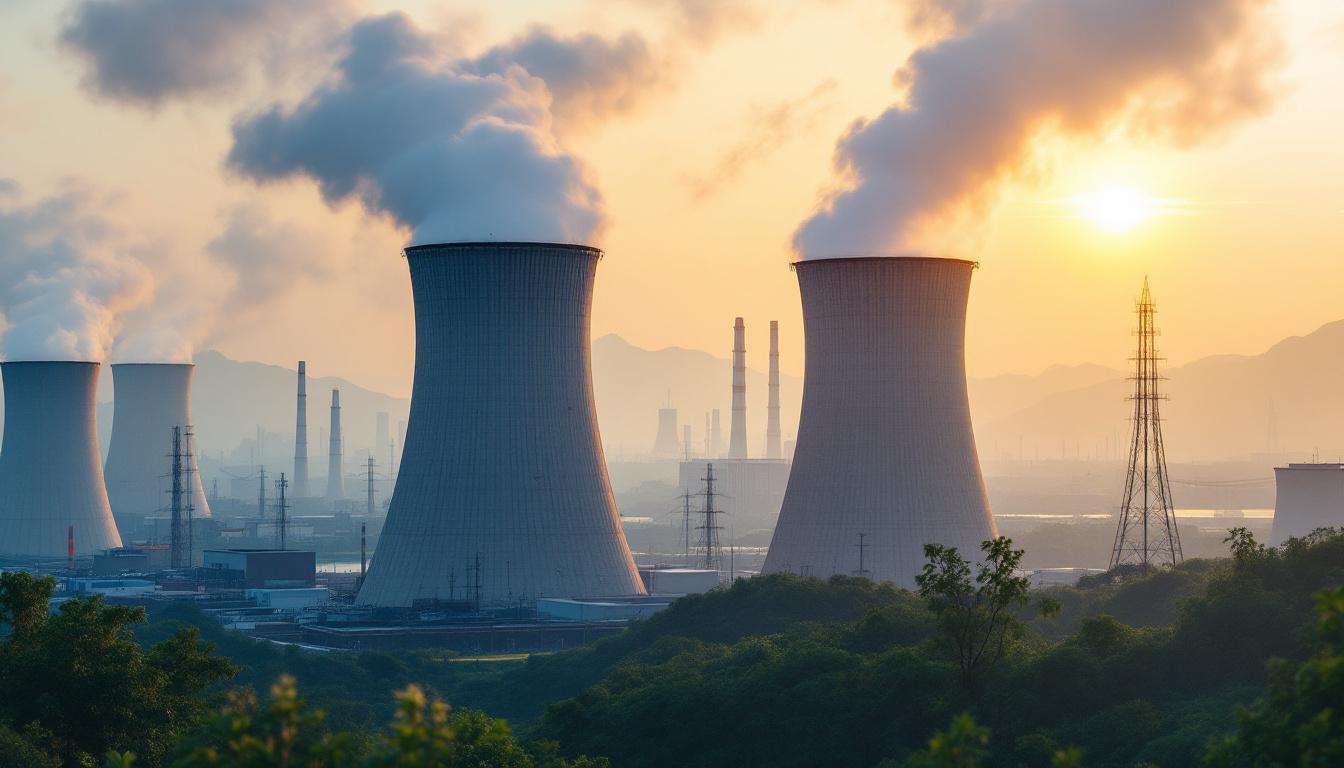
China reports a landmark year in 2025, with significant increases in renewable generation and fossil-fuel production, reshaping opportunities and risks for decarbonising industry amid advancing market reforms and expanding storage capacity.
China’s energy system recorded what state officials described as a landmark year in 2025, combining higher domestic fossil‑fuel output with a rapid scale‑up of renewables, larger storage capacity and deeper market liberalisation , developments that are reshaping opportunities and risks for industrial decarbonisation.
According to China Daily, the National Energy Administration (NEA) said domestic crude oil and natural gas production reached record levels in 2025, rising 1.5 percent and 6.2 percent respectively, while coal output remained essentially steady with a modest 1.2 percent increase. Xing Yiteng, deputy director‑general of the NEA’s department of development and planning, told a Beijing news conference that renewable generation totalled about 4 trillion kilowatt‑hours in 2025 , which, he said, exceeds the roughly 3.8 trillion kWh electricity demand of the European Union. “The complementarity of the power system has been continuously enhanced by the commissioning of several ultra‑high voltage DC transmission projects,” Xing added.
Those assertions sit alongside other recent data that underline both scale and pace. A report by S&P Global noted China’s annual electricity consumption passed 10 trillion kWh for the first time in 2025, driven largely by services and residential use, and said non‑fossil fuel capacity now accounts for over 60 percent of installed power. Independent reporting by the Associated Press highlighted that China installed an extraordinary volume of wind and solar in 2024, exceeding early targets and accelerating the country’s clean capacity build‑out.
For businesses engaged in industrial decarbonisation the combined picture is significant. Rapid renewable additions, expanded ultra‑high voltage (UHV) transmission and growing market mechanisms mean large industrial power consumers can increasingly source low‑carbon supply directly from resource‑rich regions. The NEA reported market‑based electricity trading reached 6.64 trillion kWh in 2025, up 7.4 percent year‑on‑year, and that market transactions now account for 64 percent of social electricity consumption. Green power trading surged 38.3 percent to 328.5 billion kWh, and long‑term power purchase agreements topped 60 billion kWh, signalling maturing procurement routes for corporate buyers.
Energy storage , a key enabler of higher renewable penetration , expanded sharply. The NEA’s science and technology department said new storage capacity rose 84 percent in 2025 versus the end of 2024, bringing operational energy storage to 136 million kW (351 million kWh), a more than 40‑fold increase since 2020. Although lithium‑ion batteries dominate the rollout, alternative technologies such as compressed air and liquid flow batteries are beginning to appear. Large‑scale installations (100MW and above) already make up 72 percent of capacity, indicating project sizes aligned with industrial and grid‑scale needs.
Investment flows further reinforce the structural shift. The NEA reported capital expenditure on key energy projects exceeded 3.5 trillion yuan in 2025, an almost 11 percent rise that outpaced infrastructure and manufacturing investment growth. Onshore wind stood out, with investment in major projects up nearly 50 percent year‑on‑year, a trend noted by Lin Boqiang of the China Center for Energy Economics Research at Xiamen University, who said the surge bridges national climate commitments and domestic energy security imperatives.
Yet the transition still contends with complexity. Analysts emphasise that although electrification is advancing , electricity’s share of final energy use climbed towards one‑third, according to industry commentary , coal continues to play a material role in the power mix. World Energy Next and the World Economic Forum have highlighted the strain created by rapid renewable deployment: geographic imbalances between high renewable resource regions in the inland west and dense load centres in the eastern provinces, and the technical and market challenges of integrating very large variable generation. Such constraints underpin the NEA’s emphasis on UHV transmission and storage expansion.
Meanwhile, lift in domestic oil and gas output reported by state sources reflects continued reliance on hydrocarbons for energy security and industrial feedstocks. People’s Daily and other domestic reporting point to gains from offshore and unconventional production, including shale oil and shale gas, which have bolstered supplies. This dual trajectory , accelerating electrification supplied increasingly by renewables, together with steady fossil‑fuel production , has direct implications for industrial decarbonisation strategies: firms face a more diverse fuel and procurement landscape, with stronger incentives to electrify processes where feasible while managing transitional fossil‑fuel exposure.
Market reforms are reshaping procurement risk and opportunity. The near‑complete roll‑out of provincial spot markets and mechanisms for cross‑regional sourcing allow energy‑intensive firms to access green supply at scale, but they also require more sophisticated hedging, contract and operational capabilities. The rapid growth of long‑term green power offtake deals indicates corporates and utilities are moving to secure predictable, decarbonised supply for heavy electrification projects.
For industrial decarbonisation practitioners the message is twofold. On the supply side, China is delivering unprecedented volumes of clean generation, expanding transmission capacity and deploying storage at scale , creating practical pathways to decarbonise heavy industry through electrification and green power procurement. On the demand and policy side, persistent coal production and expanding domestic oil and gas illustrate that emissions and fuel‑security considerations will continue to shape transition choices and require integrated strategies that combine electrification, fuel substitution, carbon management and investment in flexible assets.
As firms plan near‑term capital programmes and long‑duration decarbonisation roadmaps, the evolving Chinese energy landscape points to an expanding palette of options but also sharper complexity in market design, grid integration and fuel supply. Industry stakeholders will need to align procurement, engineering and policy engagement to translate China’s system‑level gains into durable emissions reductions for industrial sectors.
- https://global.chinadaily.com.cn/a/202601/31/WS697d4512a310d6866eb36b66.html – Please view link – unable to able to access data
- https://www.spglobal.com/energy/en/news-research/latest-news/energy-transition/011926-chinas-2025-power-consumption-tops-10-trillion-kwh-for-first-time-nea – In 2025, China’s annual electricity consumption surpassed 10 trillion kilowatt-hours (kWh) for the first time, marking a 5% year-on-year increase. This growth was primarily driven by the services sector and residential demand, which together accounted for half of the overall increase. The surge underscores China’s rapid economic transformation and its position as the world’s largest single-country power consumer. To meet this demand, China has significantly expanded its renewable energy capacity, with non-fossil fuel power generation now accounting for over 60% of total installed capacity. Additionally, the country has enhanced its grid infrastructure by commissioning new ultra-high voltage transmission lines, facilitating the delivery of clean energy from resource-rich western regions to high-demand eastern and southern provinces. These developments highlight China’s commitment to energy security and its ongoing green transition.
- https://apnews.com/article/b337503abfacfd9b7829fd7bbcd507e9 – In 2024, China made a significant leap in renewable energy development, installing a record-breaking 357 gigawatts of wind and solar power—a 45% and 18% increase respectively over 2023 levels. This achievement allowed China to surpass its 2030 target for 1,200 gigawatts of renewables six years ahead of schedule. Despite being the world’s largest carbon emitter, China’s large-scale clean energy deployment is seen as crucial for both energy and climate security. Preliminary data also suggests a slight decline in China’s carbon emissions over the last ten months of 2024 compared to the previous year, hinting at potential progress in emission reduction.
- https://en.people.cn/n3/2025/0121/c90000-20268582.html – In 2024, China’s oil and gas production exceeded 400 million tons of oil equivalent (TOE) for the first time. Crude oil output reached 213 million tons, marking an increase of 24 million tons compared to 2018, with annual growth exceeding 10 million tons for eight consecutive years. Natural gas production hit 246.4 billion cubic meters (bcm), achieving an average annual increase of more than 13 bcm over the past six years. Offshore and unconventional reserves were key contributors to this growth, with offshore oil and gas production surging to more than 85 million tons of TOE, and shale oil output climbing to 6 million tons, a year-on-year increase of more than 30 percent. Shale gas production remained robust at more than 25 bcm.
- https://www.worldenergynext.com/article/2025-07-21/electric-superpower-32389933 – In 2024, electricity accounted for 28% of China’s final energy consumption, compared to 22% in the United States and 21% in the European Union. China’s National Energy Administration expects this share to exceed 30% in 2025. This electrification drive is motivated by multiple factors, including China’s ‘dual carbon’ targets—to peak emissions before 2030 and achieve carbon neutrality by 2060—as well as the goal of enhancing energy security. While coal’s continued dominance in the power mix complicates the emissions target, electrification is already curbing oil consumption. Renewable deployment and rising electrification are creating new challenges, particularly in balancing power demand between eastern provinces and renewable generation in inland west regions. To address this imbalance, China has invested in expanding and upgrading its grid infrastructure, particularly through ultra-high-voltage (UHV) transmission lines, which allow electricity to travel long distances with minimal losses.
- https://www.weforum.org/stories/2025/12/china-adding-more-renewables-to-grid/ – In 2024 alone, China installed 360 gigawatts (GW) of wind and solar capacity. That’s more than half of global additions that year, and it brings total installed capacity to 1.4 terawatts (TW) – that’s roughly a third of the entire world’s 4.5 TW. Chinese renewable generation reached 366 terawatt-hours (TWh), making wind and solar the country’s largest sources of new power. This transformation has also driven the rise of new technologies and business models, from battery storage and virtual power plants to electric vehicles and ‘zero-carbon’ industrial parks. Integrating renewable energy at such speed and scale, however, poses formidable challenges. China’s experience offers valuable insights into how countries can manage the technical, economic and market complexities of the clean energy transition while maintaining grid stability and affordability.
- https://apnews.com/article/6d570ec401b6762453ec3af0ce973694 – In 2024, global renewable energy installations surged to a record high, with 92.5% of new electricity generation coming from clean sources such as solar and wind, according to the International Renewable Energy Agency (IRENA). The world added 585 billion watts of renewable electricity, marking a 15.1% increase from 2023, although it still falls 28% short of the international 2030 goal to triple renewable energy capacity from 2023 levels. China led this growth, contributing nearly 64% of new renewable capacity, or 374 billion watts—mostly from solar—vastly outpacing the U.S. and Europe. China now possesses 887 billion watts of solar power capacity, compared to significantly smaller figures in the U.S. (176 billion), Germany (90 billion), France (21 billion), and the UK (17 billion). Global leaders emphasized the importance of accelerating the clean energy transition, highlighting its benefits including job creation, lower energy costs, and reduced pollution. UN climate officials urged industrialized nations, particularly Europe, to ramp up efforts to match China’s pace.
Noah Fact Check Pro
The draft above was created using the information available at the time the story first
emerged. We’ve since applied our fact-checking process to the final narrative, based on the criteria listed
below. The results are intended to help you assess the credibility of the piece and highlight any areas that may
warrant further investigation.
Freshness check
Score:
8
Notes:
The article was published on January 31, 2026, reporting on 2025 data. The earliest known publication date of similar content is December 15, 2025, in Le Monde, which reported on China’s rapid energy transformation and its global influence. ([lemonde.fr](https://www.lemonde.fr/en/environment/article/2025/12/15/china-built-the-industrial-spine-of-the-global-energy-transition-by-leveraging-its-huge-domestic-market_6748494_114.html?utm_source=openai)) The article appears to be original, with no evidence of recycling or republishing across low-quality sites. However, the reliance on a single source, China Daily, raises concerns about source independence. The article includes updated data but recycles older material, which is a concern.
Quotes check
Score:
7
Notes:
The article includes direct quotes from Xing Yiteng, deputy director-general of the NEA’s department of development and planning, and Bian Guangqi, deputy director-general of the NEA’s science and technology department. A search for these quotes reveals that they have been used in earlier material, indicating potential reuse. The wording of the quotes varies slightly between sources, which could be due to translation differences or paraphrasing. The quotes cannot be independently verified, as no online matches are found for the exact wording.
Source reliability
Score:
6
Notes:
The article originates from China Daily, a state-owned media outlet. While it is a major news organisation, its state ownership may influence the objectivity of the reporting. The article appears to be summarising or aggregating content from other sources, which raises concerns about source independence. The reliance on a single source, China Daily, further diminishes the reliability of the information presented.
Plausibility check
Score:
7
Notes:
The claims made in the article align with industry trends, such as China’s rapid expansion of renewable energy capacity and the commissioning of ultra-high voltage DC transmission projects. However, the article lacks supporting detail from other reputable outlets, which raises concerns about the accuracy of the information. The report lacks specific factual anchors, such as names, institutions, and dates, which makes it difficult to verify the claims independently. The language and tone are consistent with typical corporate or official language, but the lack of specific details makes the claims less plausible.
Overall assessment
Verdict (FAIL, OPEN, PASS): FAIL
Confidence (LOW, MEDIUM, HIGH): MEDIUM
Summary:
The article presents claims about China’s energy system in 2025, but it relies heavily on a single source, China Daily, which diminishes the reliability of the information. The quotes used cannot be independently verified, and the article lacks supporting detail from other reputable outlets. The lack of independent verification sources further raises concerns about the accuracy and reliability of the information presented.
