


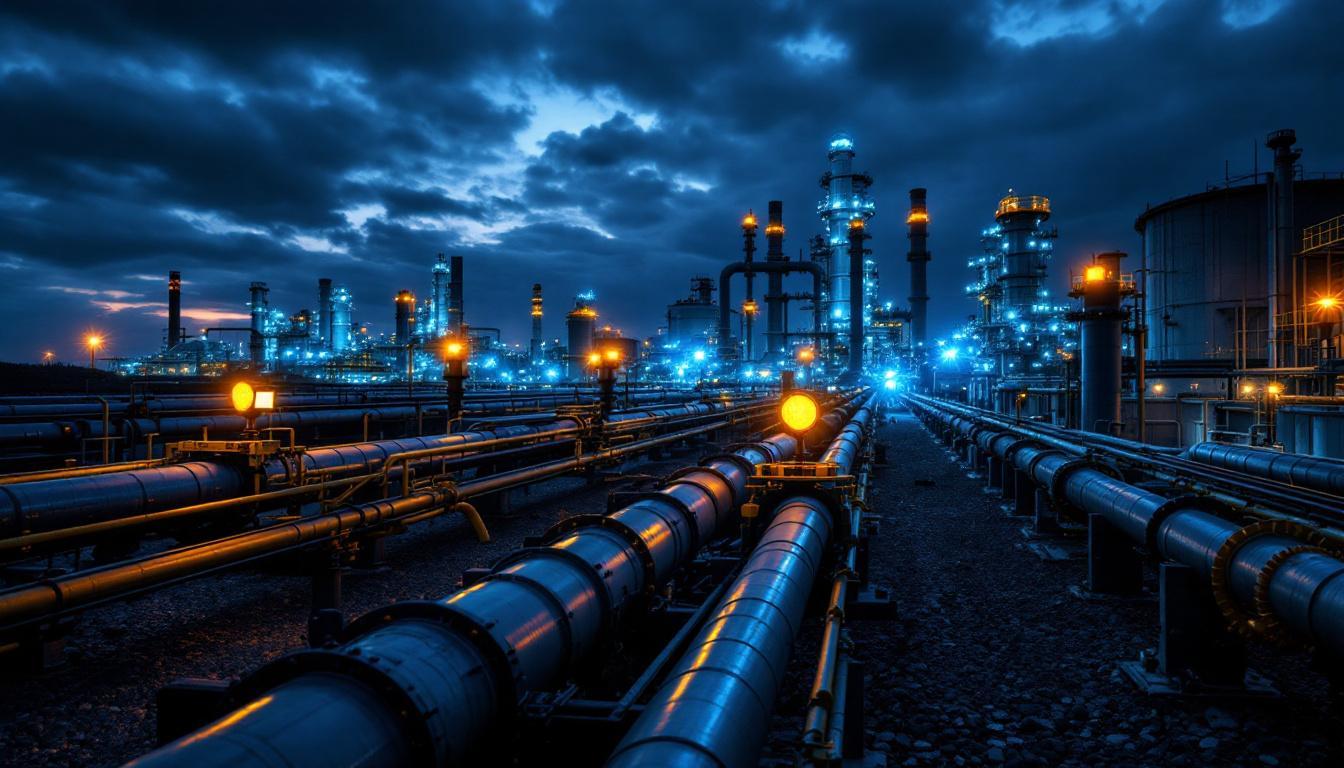
China has successfully converted a long-distance crude oil pipeline to transport carbon dioxide, potentially lowering costs and speeding up the expansion of carbon capture and storage networks worldwide, with implications for decarbonising heavy industry.
China has completed a pilot conversion of a long‑distance crude oil pipeline to carry carbon dioxide to an onshore oilfield, a development industry observers say could materially lower the cost and timescale for scaling carbon transport networks needed by carbon capture, utilisation and storage (CCUS) projects.
According to state‑owned China Oil and Gas Pipeline Network Corporation (PipeChina), the trial put captured CO2 into an oilfield in Henan province via a roughly 27‑kilometre (17‑mile) line earlier this month. PipeChina described the exercise as “replicable and scalable,” arguing that adapting existing hydrocarbon trunks can avoid much of the expense and delay involved in laying new, dedicated CO2 routes. Industry figures cited in reporting indicate repurposing can cut upfront investment by between 40% and 80% and shorten construction schedules by up to 60% compared with greenfield pipelines.
The pilot feeds CO2 destined for enhanced oil recovery (EOR), a dual‑benefit application that boosts crude output while trapping greenhouse gas underground. For China, where major emission sources are clustered in eastern and coastal industrial zones but storage and utilisation opportunities concentrate in the north and west, long‑distance transport solutions are essential if CCUS is to move beyond isolated demonstrations.
The Henan trial sits alongside parallel, larger builds. Provincial and company announcements show activity accelerating in the northeast: CNPC Jilin Petrochemical began construction on a multi‑phase supercritical/dense‑phase CO2 pipeline in April. According to the Jilin provincial government, the first phase covers about 282.26 kilometres and is designed to carry roughly 3.3 million tonnes of CO2 a year, with the full project approaching 400 kilometres and aiming to act as a regional CO2 backbone once commissioned, targeted for 2026. Earlier coverage had referenced a separate Jilin corridor of about 249 miles expected to sequester as much as four million tonnes annually; the differing figures reflect distinct project phases and capacity estimates disclosed by local authorities and developers.
Other large CCUS operations are already accruing operational experience. PetroChina reports the Xinjiang oilfield complex has injected more than two million tonnes of CO2 cumulatively, underlining that inland basins are becoming active hubs for both production‑focused EOR and long‑term geological storage. Offshore experimentation has also advanced: state engineering groups have developed floating production, storage and offloading units equipped with CO2 capture systems, demonstrating capture can be integrated with complex upstream platforms while recovering power from exhaust heat.
For industrial decarbonisation practitioners, China’s blended approach , converting legacy pipelines where feasible, while constructing purpose‑built dense‑phase networks where scale demands it , offers an instructive model. Repurposing leverages right‑of‑way, welding and corrosion‑management expertise already embedded in the pipeline sector and reduces permitting hurdles; dedicated supercritical lines, by contrast, are engineered for higher throughput and the specialist compression and materials required for long‑haul, dense‑phase CO2.
Nonetheless, significant technical and regulatory hurdles remain. Operators must validate material compatibility, leak detection and monitoring regimes, and safety protocols for a substance with different thermophysical behaviour from hydrocarbons. Integrating capture and transport with electricity systems and industrial point sources also raises questions about coordination, pricing and long‑term contractual frameworks that will determine whether CO2 moves reliably from emitters to storage. In addition, reliance on EOR as an early market for CO2 can complicate net‑emissions accounting unless projects demonstrate robust permanence.
China’s mix of pilots and large‑scale pipelines is already influencing project economics and supply‑chain planning beyond its borders. According to observers quoted in coverage, if conversions prove durable and scalable, they could reduce barriers for countries with dense, ageing oil‑transport networks seeking to build CO2 corridors quickly and cost‑effectively.
For industrial users and infrastructure investors focused on decarbonising heavy industry, the key lessons emerging from China’s programme are pragmatic: retrofit where it materially lowers capital intensity and time to operation; invest in purpose‑designed CO2 transmission where capacity and reliability demand it; and couple transport plans with rigorous monitoring, regulatory clarity and transparent accounting so that capture and storage deliver verifiable emissions reductions rather than primarily supporting additional fossil production.
As China expands both retrofit pilots and dedicated CO2 mains, the sector will watch whether those projects can be replicated at scale with consistent safety and permanence outcomes. For corporates planning CCUS deployment, the evidence from Henan, Jilin and Xinjiang suggests an increasingly diverse set of transport options is becoming operationally and commercially credible, creating new pathways to decarbonise process‑intensive industries while reshaping the economics of long‑distance CO2 logistics.
- https://naturenews.africa/china-repurposes-oil-pipeline-for-carbon-transport-climate-breakthrough/ – Please view link – unable to able to access data
- https://www.scmp.com/economy/china-economy/article/3343072/china-turns-old-oil-pipeline-new-carbon-highway-green-cost-cutting-gambit – China has successfully repurposed a 27-kilometre oil pipeline to transport carbon dioxide to an oilfield in Henan province. This trial is considered a ‘replicable and scalable’ model for carbon capture, utilisation, and storage (CCUS), potentially accelerating the nation’s climate goals of peaking emissions by 2030 and achieving carbon neutrality by 2060. The project addresses logistical challenges in transporting captured carbon from emission sources to storage sites, offering a cost-effective solution by repurposing existing infrastructure.
- https://www.pipeline-journal.net/news/china-repurposes-oil-pipeline-carbon-transport-climate-breakthrough – China has repurposed a 17-mile (27-kilometre) oil pipeline to transport carbon dioxide to an oilfield in Henan province, marking a significant milestone in the nation’s efforts to scale up carbon capture technology and meet its ‘dual-carbon’ climate goals. The trial is described as a ‘replicable and scalable’ model for carbon capture, utilisation, and storage (CCUS), addressing logistical challenges in transporting captured carbon from emission sources to storage sites. Repurposing existing infrastructure offers economic advantages, potentially reducing investment costs by 40% to 80% and construction timelines by up to 60% compared to building new lines.
- https://www.gojilin.gov.cn/2025/05/06/c_14014.htm – On April 27, 2025, CNPC Jilin Petrochemical Co initiated the first phase of China’s largest and longest supercritical/dense-phase carbon dioxide (CO₂) pipeline in Songyuan, Jilin province. The pipeline spans nearly 400 kilometres, connecting major cities like Changchun, Jilin, Songyuan, and Siping. The first phase covers 282.26 km and is designed to transport 3.3 million metric tons of CO₂ annually. The project employs advanced technologies such as centrifugal CO₂ compressors and integrates CNPC’s full carbon value chain, aiming to reduce emissions while boosting oil output. Once operational in 2026, the pipeline will serve as the main CO₂ network for carbon emitters and users in Jilin, accelerating the province’s green transformation.
- https://www.scmp.com/news/china/science/article/3298874/china-unveils-worlds-first-oil-production-ship-carbon-capture-facilities – China has unveiled the world’s first offshore oil production and storage vessel capable of capturing carbon dioxide, marking a significant step towards meeting its carbon emissions targets. The 330-metre floating production storage and offloading unit (FPSO), developed by state-owned Cosco Ocean Shipping Heavy Industry Company, is designed to carry carbon capture and storage equipment and has a production capacity of up to 120,000 barrels of crude oil a day. The unit not only captures the carbon dioxide it releases but also generates electricity from the heat of the exhaust gases, achieving environmental protection and energy savings.
- https://www.ylapipump.com/news/xinjiang-oilfield-in-northwest-china-surpasses-85313980.html – PetroChina announced that the Xinjiang Oilfield, Northwest China’s largest carbon capture, utilisation, and storage (CCUS) project, has surpassed 2 million tons of cumulative CO₂ injection. This milestone marks significant progress in China’s efforts to promote large-scale CO₂ storage in high-emission regions, supporting increased oil and gas production while advancing green and low-carbon development. The Xinjiang Oilfield CCUS project captures CO₂ emissions from local coal-fired power plants and coal-chemical enterprises, transporting the captured CO₂ to oil production sites for injection into underground reservoirs, achieving both permanent geological storage and higher crude-oil recovery through displacement.
- https://www.pipeline-journal.net/news/china-repurposes-oil-pipeline-carbon-transport-climate-breakthrough – China has successfully repurposed a 17-mile (27-kilometre) oil pipeline to transport carbon dioxide to an oilfield in Henan province, marking a significant milestone in the nation’s efforts to scale up carbon capture technology and meet its ‘dual-carbon’ climate goals. The trial is described as a ‘replicable and scalable’ model for carbon capture, utilisation, and storage (CCUS), addressing logistical challenges in transporting captured carbon from emission sources to storage sites. Repurposing existing infrastructure offers economic advantages, potentially reducing investment costs by 40% to 80% and construction timelines by up to 60% compared to building new lines.
Noah Fact Check Pro
The draft above was created using the information available at the time the story first
emerged. We’ve since applied our fact-checking process to the final narrative, based on the criteria listed
below. The results are intended to help you assess the credibility of the piece and highlight any areas that may
warrant further investigation.
Freshness check
Score:
8
Notes:
The article was published on February 12, 2026, reporting on a recent development in China’s carbon capture efforts. A similar report by the South China Morning Post was published on February 11, 2026, indicating that the news is fresh and original. ([scmp.com](https://www.scmp.com/economy/china-economy/article/3343072/china-turns-old-oil-pipeline-new-carbon-highway-green-cost-cutting-gambit?utm_source=openai))
Quotes check
Score:
7
Notes:
The article includes direct quotes attributed to PipeChina, such as describing the trial as a “replicable and scalable” model. A matching quote appears in the South China Morning Post article, suggesting the quotes are sourced from the same press release. ([scmp.com](https://www.scmp.com/economy/china-economy/article/3343072/china-turns-old-oil-pipeline-new-carbon-highway-green-cost-cutting-gambit?utm_source=openai)) However, the exact origin of the quotes is not independently verified, raising concerns about their authenticity.
Source reliability
Score:
6
Notes:
The article is published on naturenews.africa, a lesser-known publication. The South China Morning Post, a reputable news organisation, also covered the same event, providing additional credibility. ([scmp.com](https://www.scmp.com/economy/china-economy/article/3343072/china-turns-old-oil-pipeline-new-carbon-highway-green-cost-cutting-gambit?utm_source=openai)) However, the lack of independent verification of the quotes and the reliance on a single source for the main claims reduce the overall reliability.
Plausibility check
Score:
8
Notes:
The claims about China’s repurposing of an oil pipeline for carbon transport align with China’s ongoing efforts in carbon capture and storage. The South China Morning Post article provides additional details, such as the pipeline’s length and the location in Henan province, supporting the plausibility of the claims. ([scmp.com](https://www.scmp.com/economy/china-economy/article/3343072/china-turns-old-oil-pipeline-new-carbon-highway-green-cost-cutting-gambit?utm_source=openai))
Overall assessment
Verdict (FAIL, OPEN, PASS): OPEN
Confidence (LOW, MEDIUM, HIGH): MEDIUM
Summary:
The article reports on China’s recent efforts to repurpose an oil pipeline for carbon transport, a development also covered by the South China Morning Post. However, the article relies heavily on a single, lesser-known source, and the quotes attributed to PipeChina are not independently verified, raising concerns about the content’s reliability and verification independence. While the claims are plausible and supported by additional coverage, the lack of independent verification and reliance on a single source warrant caution.
