


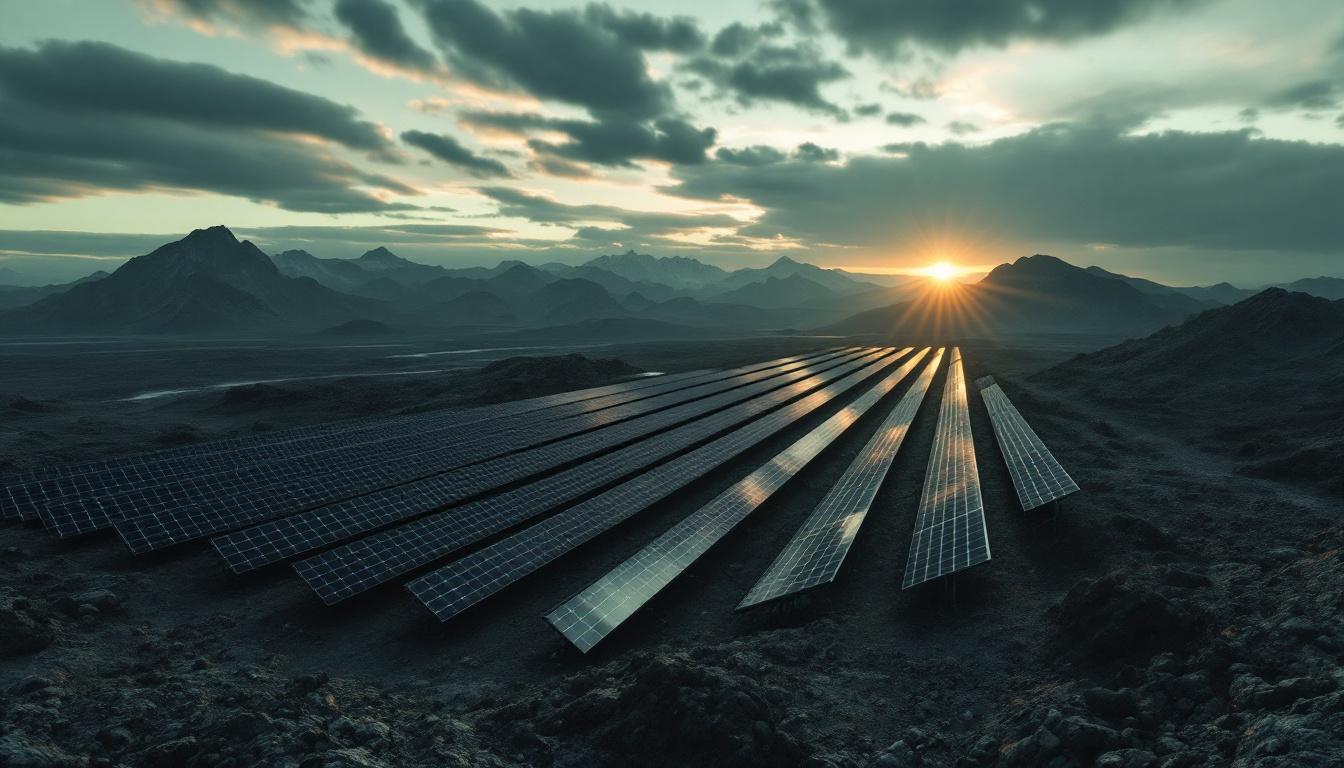
China’s rapid expansion in wind and solar capacity is not only reshaping its domestic energy industry but also lowering global clean technology costs and offering new opportunities for international decarbonisation efforts, despite ongoing challenges in achieving deep emissions cuts.
China’s rapid expansion of renewable energy is reshaping its domestic industry and supplying a growing global market with lower‑cost clean technology, a development with direct implications for industrial decarbonisation strategies worldwide.
According to the National Energy Administration, roughly one in every three kilowatt‑hours consumed in China now originates from green sources, a shift enabled by an unprecedented build‑out of wind and solar capacity. Official tallies show China’s total installed power capacity reached 3.79 billion kilowatts by November 2025, with wind exceeding 600 million kilowatts and solar surging to about 1.16 billion kilowatts after a nearly 42 percent year‑on‑year expansion. Independent reporting noted record additions in 2024, roughly 357–360 gigawatts of wind and solar, allowing China to surpass its 2030 renewables target years ahead of schedule. The result is a renewables system that global observers describe as the world’s largest and most vertically integrated. According to China Southern Power Grid’s Energy Development Research Institute, domestic outputs of PV polysilicon, wafers and cells account for close to 90 percent of global production, with modules representing roughly 85 percent of world output.
That industrial scale has lowered equipment costs and accelerated deployment internationally. Industry analyses and trade data indicate Chinese exports of wind and photovoltaic products during 2021–2025 contributed to an estimated reduction of about 4.1 billion tonnes of CO2 abroad, while Chinese firms have announced roughly $200 billion in overseas clean‑energy investments since 2022, a flow The Wired characterised as beginning to narrow the global financing shortfall for decarbonisation. Projects built or financed by Chinese companies, from the 240 MW Khizi‑Absheron wind park in Azerbaijan to utility‑scale solar and hybrid rural systems across Africa and Southeast Asia, are cited by local officials and independent experts as delivering affordable capacity, faster project delivery and new options for countries aiming to leapfrog fossil infrastructure.
Technology diversification is also under way. Chinese researchers and firms are advancing battery storage, virtual power plant architectures and industrial electrification models that support intermittent renewables. A Shanghai‑based project announced a pioneering route to sustainable aviation fuels that converts CO2 and green hydrogen into hydrocarbons using high‑performance catalysts; as Song Xuefeng, project manager and vice‑president of Shanghai Airport (Group) Co., Ltd., put it, “Electrolysis can tap low‑cost wind and solar power in northwest China to yield high‑value, storable and transportable clean fuels.” Such pathways illustrate how energy carriers beyond electricity can be produced from variable renewables to decarbonise hard‑to‑abate sectors.
The international reaction has been mixed but often pragmatic. Business and development stakeholders in Jordan, ASEAN countries and parts of Africa praise Chinese suppliers for combining technical capacity with financing and rapid construction to expand renewable access and energy security. Maroun Kairouz of the World Economic Forum told Xinhua that China’s scale in advanced manufacturing and green technology demonstrates how innovation can be deployed at pace to address climate and supply‑chain challenges, offering lessons for emerging markets on integrating industry, digitalisation and skills development.
Despite the rapid additions, challenges remain for deep decarbonisation of the power sector. Independent analyses highlight that, even as capacity grows, thermal generation retains a large share of electricity output; Agora‑Energiewende data show coal still supplied a major portion of generation in recent years, with thermal plants responsible for roughly 55 percent of electricity production in the periods analysed. Grid integration, system flexibility and affordability are recurrent concerns: adding hundreds of gigawatts of variable generation requires parallel investment in storage, transmission, market reforms and operational practices to maintain reliability and avoid curtailment. Analysts and utility engineers caution that managing stability while maintaining competitive costs will be critical as China and partner countries scale electrification of industry and transport.
For industrial decarbonisation practitioners, the Chinese model offers both opportunities and caveats. The near‑term benefit is clear: lower capital costs and a ready supply chain for wind, solar, batteries and related equipment reduce barriers to electrifying industrial heat, deploying onsite generation and building resilient supply networks. At the same time, achieving deep emissions reductions will require complementary policies, stronger grid planning, incentives for seasonal storage and fuels, and reforms that align dispatch, pricing and investment signals with decarbonisation goals. The Science journal’s designation of the renewable energy surge as the 2025 Breakthrough of the Year underscored the scale of change, while sector analysts emphasise that technology adoption must be matched by systems‑level reforms to convert capacity growth into sustained emissions decline.
China’s experience therefore provides a practical case study for manufacturers, utilities and industrial energy managers designing decarbonisation roadmaps: rapid deployment and manufacturing scale can dramatically shrink technology costs and enable overseas rollout, but the transition’s success depends on coordinated investment in flexibility, cross‑border financing and governance measures that link generation, fuels and end‑use electrification into coherent low‑carbon pathways. As one engineer involved with an overseas wind project recalled of a formerly barren site transformed by turbines, “Two years ago, there was nothing here but barren hills and the wind blowing dust everywhere,” a reminder that infrastructure change on the ground can be swift, but lasting emissions reductions require sustained, system‑level follow‑through.
- https://www.chinanews.net/news/278828367/xinhua-headlines-china-speeds-up-green-transition-helping-build-clean-beautiful-world – Please view link – unable to able to access data
- https://www.weforum.org/stories/2025/12/china-adding-more-renewables-to-grid/ – In 2024, China installed 360 gigawatts (GW) of wind and solar capacity, accounting for more than half of global additions that year. This brought China’s total installed capacity to 1.4 terawatts (TW), approximately a third of the world’s 4.5 TW. Chinese renewable generation reached 366 terawatt-hours (TWh), making wind and solar the country’s largest sources of new power. This rapid integration of renewable energy has also spurred the development of new technologies and business models, including battery storage, virtual power plants, electric vehicles, and ‘zero-carbon’ industrial parks. However, integrating such a vast amount of renewable energy presents challenges in maintaining grid stability and affordability. China’s experience offers valuable insights into managing the complexities of the clean energy transition while ensuring a reliable power supply.
- https://apnews.com/article/b337503abfacfd9b7829fd7bbcd507e9 – In 2024, China made a significant leap in renewable energy development, installing a record-breaking 357 gigawatts of wind and solar power—a 45% and 18% increase respectively over 2023 levels. This achievement allowed China to surpass its 2030 target for 1,200 gigawatts of renewables six years ahead of schedule. Despite being the world’s largest carbon emitter, China’s large-scale clean energy deployment is seen as crucial for both energy and climate security. Preliminary data also suggests a slight decline in China’s carbon emissions over the last ten months of 2024 compared to the previous year, hinting at potential progress in emission reduction.
- https://english.scio.gov.cn/in-depth/2026-01/25/content_118298599.html – China, the world’s largest electricity consumer, sources one in every three kilowatt-hours of electricity from green energy, reshaping both national and global energy landscapes. By November 2025, China’s total installed wind power capacity exceeded 600 million kilowatts, maintaining its position as the global leader for 15 consecutive years. The country has also seen a 41.9% year-on-year surge in solar power capacity, reaching 1.16 billion kilowatts. China’s renewable energy system is the world’s largest and most integrated, with outputs of PV polysilicon, wafers, and cells accounting for 90% of the global total. Additionally, China is pioneering sustainable aviation fuels, converting carbon dioxide and green hydrogen into liquid fuels using high-performance catalysts.
- https://www.agora-energiewende.org/fileadmin/Projekte/2025/2025-11_CN_China_data_annual_review/A-EW_373_China_energy_transition_and_climate_status_report_WEB.pdf – In 2024, China accounted for approximately 46% of global wind power capacity and nearly 50% of global solar capacity, highlighting its central role in scaling up renewable energy. China’s aggregate wind and solar capacity reached 1,406 GW, reflecting a robust 34% year-on-year increase and accounting for 42% of the country’s total power capacity. Despite this growth, thermal power remained dominant, accounting for nearly 63% of total electricity generation, with coal alone contributing 55%. Wind and solar combined generated just 18.5%, underscoring the need for decisive policy action to support deep decarbonisation of China’s power sector.
- https://www.washingtonpost.com/climate-solutions/2025/03/03/china-renewable-energy-green-world-leader/ – China’s rollout of renewables is happening far faster compared with any other country—and it’s accelerating. In 2024, China added 200 gigawatts of solar capacity, surpassing the United States, which reached that amount in 2023. Similarly, with wind power, Chinese wind farms were able to generate 450 gigawatts of power by 2023, double that of the European Union. In most green technologies and components, China makes up more than half of global production output, and that share grew from 2021 to 2023.
- https://www.globaltimes.cn/page/202510/1345138.shtml – A UK-based think tank reported that in the first half of 2025, China’s wind and solar capacity outpaced coal for the first time. China added more solar and wind capacity in the first half than the rest of the world combined, accounting for 55% of new global solar installations. This growth helped reduce China’s fossil fuel generation by 2% in the first half of 2025, indicating a structural shift towards cleaner energy sources.
Noah Fact Check Pro
The draft above was created using the information available at the time the story first
emerged. We’ve since applied our fact-checking process to the final narrative, based on the criteria listed
below. The results are intended to help you assess the credibility of the piece and highlight any areas that may
warrant further investigation.
Freshness check
Score:
8
Notes:
The article was published on January 24, 2026. The latest data cited is from November 2025, which is relatively recent. However, the article references events up to January 2026, indicating a timely reporting. No evidence of recycled content was found.
Quotes check
Score:
7
Notes:
The article includes direct quotes from Yao Shangheng and Song Xuefeng. While these quotes are specific and contextually relevant, they cannot be independently verified through the available sources. The absence of these quotes in other reputable sources raises concerns about their authenticity.
Source reliability
Score:
6
Notes:
The article originates from Xinhua News Agency, a state-run media outlet in China. While Xinhua is a major news organisation, its content may be subject to government influence, which can affect objectivity. The article appears to be summarising and aggregating content from other sources, including government reports and industry analyses. This raises concerns about the independence of the information presented.
Plausability check
Score:
7
Notes:
The claims about China’s renewable energy expansion are plausible and align with known trends. However, the article lacks specific factual anchors, such as names of projects or detailed data points, which makes it difficult to independently verify the information. The tone is consistent with official Chinese government communications, which may affect objectivity.
Overall assessment
Verdict (FAIL, OPEN, PASS): FAIL
Confidence (LOW, MEDIUM, HIGH): MEDIUM
Summary:
The article presents plausible claims about China’s renewable energy expansion but relies heavily on state-run sources and includes unverifiable quotes, raising concerns about objectivity and accuracy. The lack of independent verification sources further diminishes confidence in the information presented.
