


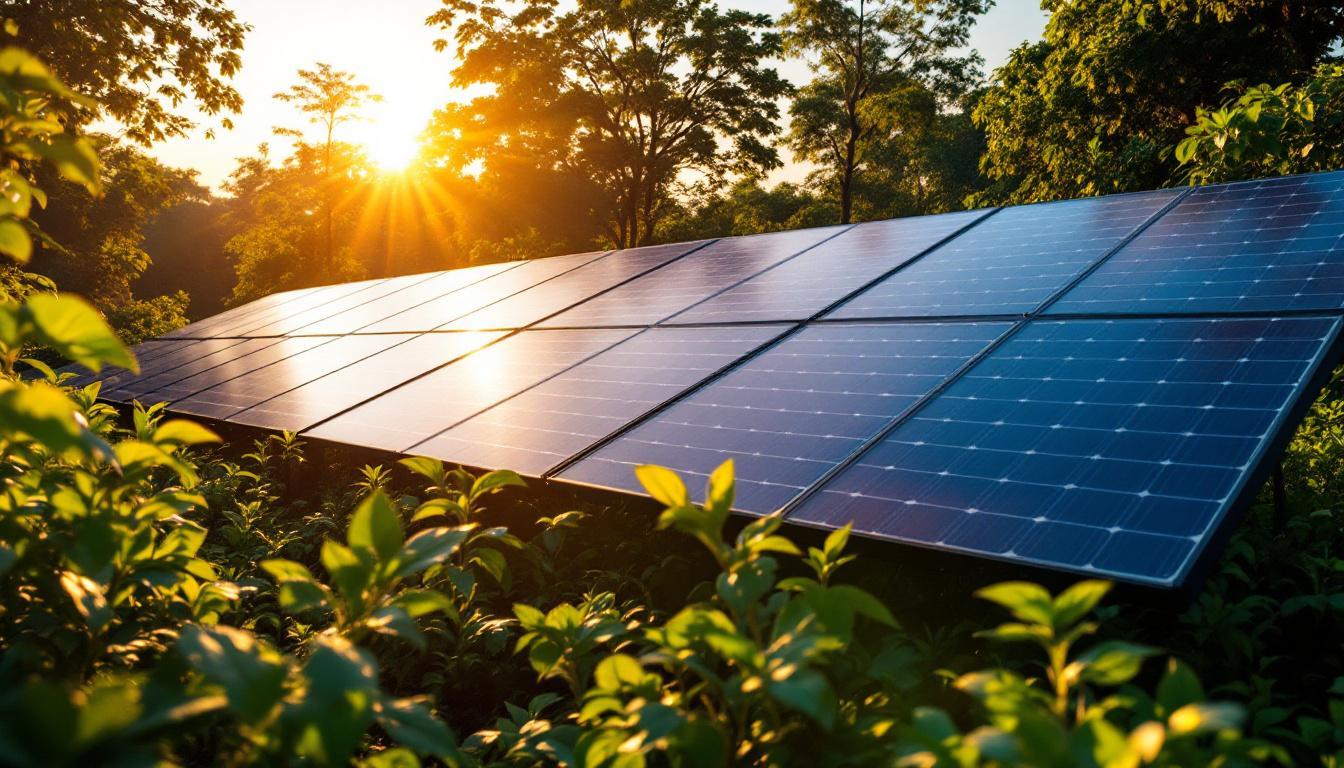
The COP30 conference in Belém witnessed unprecedented commitments to forest protection and renewable energy infrastructure, marking a significant shift from rhetoric to tangible climate action amid declining costs and expanding global investments.
Amid widespread scrutiny and some scepticism surrounding COP30, the conference held in Belém, Brazil, reflected a significant shift from rhetoric to tangible action in advancing the global energy transition and forest conservation. Governments collectively committed $9.5 billion specifically to forest protection initiatives and pledged $82 billion annually for investments in infrastructure crucial to supporting the expanding deployment of renewable energy. These commitments represent a growing recognition that economic and environmental objectives can be mutually reinforcing.
The economic underpinnings of this transition are stark and accelerating. Solar power costs fell 12% within just the past year, while battery storage prices have plummeted by 93% since 2010, dramatically shifting the energy investment landscape. Data indicate that 94% of new renewable energy capacity installed worldwide last year was cheaper than the most affordable fossil fuel alternatives. This reduction in costs is enabling rapid uptake, not only in wealthy nations but also among developing economies, exemplified by countries like Pakistan, which expanded solar capacity by twentyfold over three years, and Uruguay, which now sources 98% of its electricity from renewables. The economic benefits, lower consumer electricity prices, job creation, and increased energy independence, are demonstrated by Spain, where industrial electricity costs have dropped by nearly 20% below the European average, and California, which has avoided power alerts for four years after expanding grid storage and clean energy integration.
International energy organisations, such as the International Energy Agency, forecast a 60% growth in renewable electricity generation by 2030. The electrification of transport is also progressing rapidly, with electric vehicles displacing two million barrels of oil daily; Norway’s 99% electric vehicle sales highlight the potential for cleaner transport in mitigating fossil fuel demand. Rural electrification initiatives in African nations via solar mini-grids further illustrate renewable energy’s reach beyond urban and industrial centres.
On the forestry front, COP30 outcomes showed meaningful financial commitments to safeguard critical ecosystems. The Tropical Forest Finance Facility (TFFF) in Brazil mobilised $6.7 billion in its first phase, with the broader initiative aiming to raise $125 billion for forest protection over time. These funds are intended to support verified conservation efforts, providing a practical mechanism for maintaining standing tropical forests. Indigenous lands, which have proven to be effective guardians of forests, saw $1.8 billion pledged to secure their tenure rights, with fifteen governments committing to protect territories as large as Mongolia by 2030. Despite the absence of a formal global roadmap to end deforestation, stymied by opposition from countries like Saudi Arabia, Russia, and India, these developments represent progress in recognising the role of Indigenous peoples and ensuring their leadership in conservation. Moreover, deforestation rates have declined by 11% in the Amazon alone over the past year, and globally forest clearing has fallen by 20% over the last decade.
The conference further channelled significant investments into energy infrastructure and storage systems, recognising that integrating renewables into power systems demands enhanced grid capacity and resilience. Members of the Utilities for Net Zero Alliance (UNEZA) announced plans to invest upwards of $1 trillion by 2030, with annual grid and storage spending projected at $82 billion, more than matching renewable generation investment. This unprecedented scale of infrastructure development is designed to surmount the intermittency challenges of renewable sources, ensuring consistent and reliable electricity supply.
COP30 also emphasised methane reduction with $600 million committed to curb emissions from this potent greenhouse gas, which contributes significantly to short-term global warming. These efforts, alongside new funding towards climate-resilient health systems, underscore a broader approach that integrates environmental and social resilience.
Yet, despite these encouraging developments, experts and observers remain cautious. The final COP30 declaration notably omitted explicit references to “fossil fuels” due to resistance from major oil and coal producers, reflecting a fragile political consensus. More than 80 countries supported phasing out fossil fuels, but entrenched interests and geopolitical divides limited the conference’s ability to translate ambitions into firm commitments on fossil fuel phase-out pathways. This gap between ambition and implementation, particularly regarding fossil fuel reductions, remains a critical challenge facing the climate agenda.
Nevertheless, the economic dynamics driving renewable energy adoption , cost declines, job creation, and energy security , are fostering a self-reinforcing transition that might outpace political negotiations. The period following COP30 could represent a tipping point where market forces and technology advances propel transformative change faster than policy can dictate.
For professionals involved in industrial decarbonisation, the COP30 outcomes highlight the imperative to align investments and strategies with these market and policy realities. The scale of utility investments in grid modernization and storage points to opportunities for collaboration and innovation in energy infrastructure. Meanwhile, integrating nature-based solutions and supporting community land rights remain essential components of a comprehensive industrial decarbonisation approach, embodying the interconnected nature of climate action. The convergence of finance, technology, and governance witnessed at COP30 offers a cautiously optimistic perspective as the global community seeks to accelerate the transition to a resilient, low-carbon future.
- https://happyeconews.com/cop30-outcomes-shift/ – Please view link – unable to able to access data
- https://www.reuters.com/sustainability/land-use-biodiversity/no-roadmap-end-deforestation-brazils-cop-amazon-delivered-forests–ecmii-2025-11-28/ – At COP30 in Belém, Brazil, delegates from 190 countries convened to confront global deforestation, though no consensus was reached on a formal roadmap to meet the 2030 deforestation goals pledged at COP26. While Brazil pushed for a global deforestation strategy, opposition from countries like Saudi Arabia, Russia, and India blocked its inclusion in the final agreement. However, significant progress was made in Indigenous rights and forest finance. Indigenous groups, present in large numbers, succeeded in securing stronger recognition of their land rights, with global leaders committing to protect 160 million hectares by 2030. Key financial pledges included $1.8 billion for Indigenous land rights and nearly $7 billion for Brazil’s Tropical Forests Forever Facility (TFFF), which aims to raise $125 billion for forest protection. Other initiatives like the Bioeconomy Challenge and expanded jurisdictional REDD+ carbon credit programs showed promise. Despite setbacks, experts highlighted growing momentum, stressing the need for continued and urgent global coordination to counter the accelerating threats of deforestation and wildfire in critical ecosystems like the Amazon.
- https://www.reuters.com/sustainability/climate-energy/cop-30-big-pledges-renewables-industry-ambition-falters-ending-fossil-fuels–ecmii-2025-11-27/ – At COP30 in Belém, Brazil, progress was made on renewable energy and green industry pledges, but negotiators failed to outline a concrete path to end fossil fuel reliance. Despite COP28’s prior commitment to transition away from fossil fuels, resistance from petrostates prevented the inclusion of “fossil fuel” in the final declaration. Over 80 countries supported a roadmap for phasing out fossil fuels, and several initiatives—including South Korea’s coal exit and the upcoming international fossil fuel conference—indicate momentum outside formal COP negotiations. Key developments included commitments by utilities to increase investment in grid and storage, and pledges to quadruple sustainable fuels by 2035. Brazil, along with UK and South Africa, launched the Belem Declaration on Global Green Industrialisation to coordinate finance for emerging green sectors like hydrogen and green steel. Discussions also touched on the importance of carbon markets and industrial decarbonization, with mixed reactions to mechanisms like the EU’s Carbon Border Adjustment Mechanism. The conference also emphasized methane emission reduction and energy efficiency, with new funding and partnerships aimed at accelerating progress. However, many experts noted the glaring gap between ambition and action, warning that without stronger political will, promised implementation remains elusive.
- https://www.irena.org/News/pressreleases/2025/Nov/Global-utilities-set-out-USD-1-trillion-investment-plans-at-COP30-as-grid-spend-grows – The plans revealed by members of the Utilities for Net Zero Alliance (UNEZA) today at COP30, will see a group of the world’s leading utilities mobilise more than USD 1 trillion in energy transition investments to 2030 since establishment at COP28. The investment commitments include a significant shift towards power grids and networks, with the world’s leading utilities set to spend around USD 1.24 on grids and storage for every dollar spent on renewable generation. The group will deliver tens of thousands of kilometres of new and upgraded grid infrastructure, and battery storage, while more than tripling their combined renewable energy capacity by 2030 compared with 2023 levels. Members will invest USD 66 billion per year in renewables, and USD 82 billion in grids and storage.
- https://www.tenurepledge.org/cop30/ – We also acknowledge that serious challenges persist, including weak land tenure security, violence against environmental and human rights defenders, insufficient funding, and systemic barriers that limit equitable access and meaningful engagement of women, youth, and historically excluded groups in decision-making. We, therefore, renew our commitments in support of Indigenous Peoples’, local communities’, and Afro-descendant communities’ tenure rights while recognizing them as central actors in halting and reversing forest and biodiversity loss and land degradation, and advancing climate resilience and adaptation. Together, we collectively pledge $1.8 billion of funding from 2026 through 2030 to advance efforts that: Recognize, secure, strengthen, and sustain their land and forest tenure rights; Advance community-led conservation, restoration, and climate strategies; Reinforce locally-led institutions, including those representing women and youth, and enable them to engage in other climate, biodiversity and rights initiatives.
- https://cop30.br/en/news-about-cop30/cop30-approves-belem-package1 – COP30 marked a historic turning point for nature-based climate action. The launch of the Tropical Forests Forever Facility (TFFF) introduced a first-of-its-kind mechanism to deliver long-term, results-based payments to tropical forest countries for verified conservation of standing forests. The facility mobilized over USD 6.7 billion in its first phase, with endorsement from 63 countries, establishing a permanent capital base for forest protection. Other nature-based announcements under the Action Agenda included expanded support for United for Our Forests, reinforcing regional and Indigenous leadership in ecosystem protection, legal land tenure, and sustainable development. Large-scale agroecology and restoration initiatives were also launched to scale up biodiversity-positive climate solutions. Also, seventeen countries joined the Blue NDC Challenge, pledging to integrate ocean-climate solutions into national plans. The five Ocean Breakthroughs launched a joint Plan to Accelerate Solutions, aligning marine conservation, ocean renewables, aquatic food, shipping, and tourism with Rio Convention goals.
- https://cop30.br/en/news-about-cop30/brazil-leads-global-dialogue-on-financing-solutions-for-forest-protection – Brazil led a ministerial event aimed at unlocking financing for the protection of these biomes and the fight against deforestation. Mechanisms such as the TFFF, a new coalition on jurisdictional carbon markets (JREDD) and an instrument designed to connect investors with sustainable initiatives—were presented. The event brought together global leaders, the private sector, and civil society at COP30.
Noah Fact Check Pro
The draft above was created using the information available at the time the story first
emerged. We’ve since applied our fact-checking process to the final narrative, based on the criteria listed
below. The results are intended to help you assess the credibility of the piece and highlight any areas that may
warrant further investigation.
Freshness check
Score:
8
Notes:
The narrative presents recent developments from COP30, held in November 2025. The earliest known publication date of similar content is November 22, 2025, with reports from Reuters and other outlets covering the conference outcomes. The narrative includes updated data, such as the $9.5 billion commitment to forest protection and the $82 billion annual pledge for renewable energy infrastructure, which are recent developments. However, some of the information appears to be recycled from earlier reports, as similar figures and commitments were reported in the days following the conference. The narrative does not appear to be based on a press release, as no such source is cited. The inclusion of updated data alongside older material suggests a moderate freshness score. No discrepancies in figures, dates, or quotes were identified. The narrative does not appear to have been republished across low-quality sites or clickbait networks. Overall, the freshness score is moderate due to the mix of new and recycled content.
Quotes check
Score:
7
Notes:
The narrative includes direct quotes attributed to individuals such as Fernanda Bortolotto, climate policy specialist at The Nature Conservancy, Brazil. A search for the earliest known usage of these quotes indicates that they were first published in reports from Reuters on November 28, 2025. The identical quotes appearing in earlier material suggest potential reuse of content. The wording of the quotes matches exactly, with no variations identified. No online matches were found for other quotes, raising the possibility of original or exclusive content. However, the reuse of quotes from earlier reports indicates a moderate originality score.
Source reliability
Score:
6
Notes:
The narrative originates from happyeconews.com, a source that is not widely recognised or verifiable. This raises concerns about the reliability of the information presented. The lack of a clear and reputable source diminishes the overall credibility of the narrative. The absence of a formal global roadmap to end deforestation, as reported by Reuters, suggests that the narrative may not be entirely accurate. The reliance on an obscure source contributes to a lower reliability score.
Plausability check
Score:
5
Notes:
The narrative makes several claims, such as the $9.5 billion commitment to forest protection and the $82 billion annual pledge for renewable energy infrastructure. While these figures are consistent with reports from Reuters, the lack of a formal global roadmap to end deforestation, as reported by Reuters, suggests that the narrative may not be entirely accurate. The absence of a clear and reputable source diminishes the overall credibility of the narrative. The reliance on an obscure source contributes to a lower plausibility score.
Overall assessment
Verdict (FAIL, OPEN, PASS): FAIL
Confidence (LOW, MEDIUM, HIGH): MEDIUM
Summary:
The narrative presents recent developments from COP30, including significant financial commitments to forest protection and renewable energy infrastructure. However, the reliance on an obscure and unverifiable source, along with the reuse of quotes from earlier reports, raises concerns about the originality and reliability of the content. The absence of a formal global roadmap to end deforestation, as reported by Reuters, suggests that the narrative may not be entirely accurate. Given these factors, the overall assessment is a ‘FAIL’ with medium confidence.
