


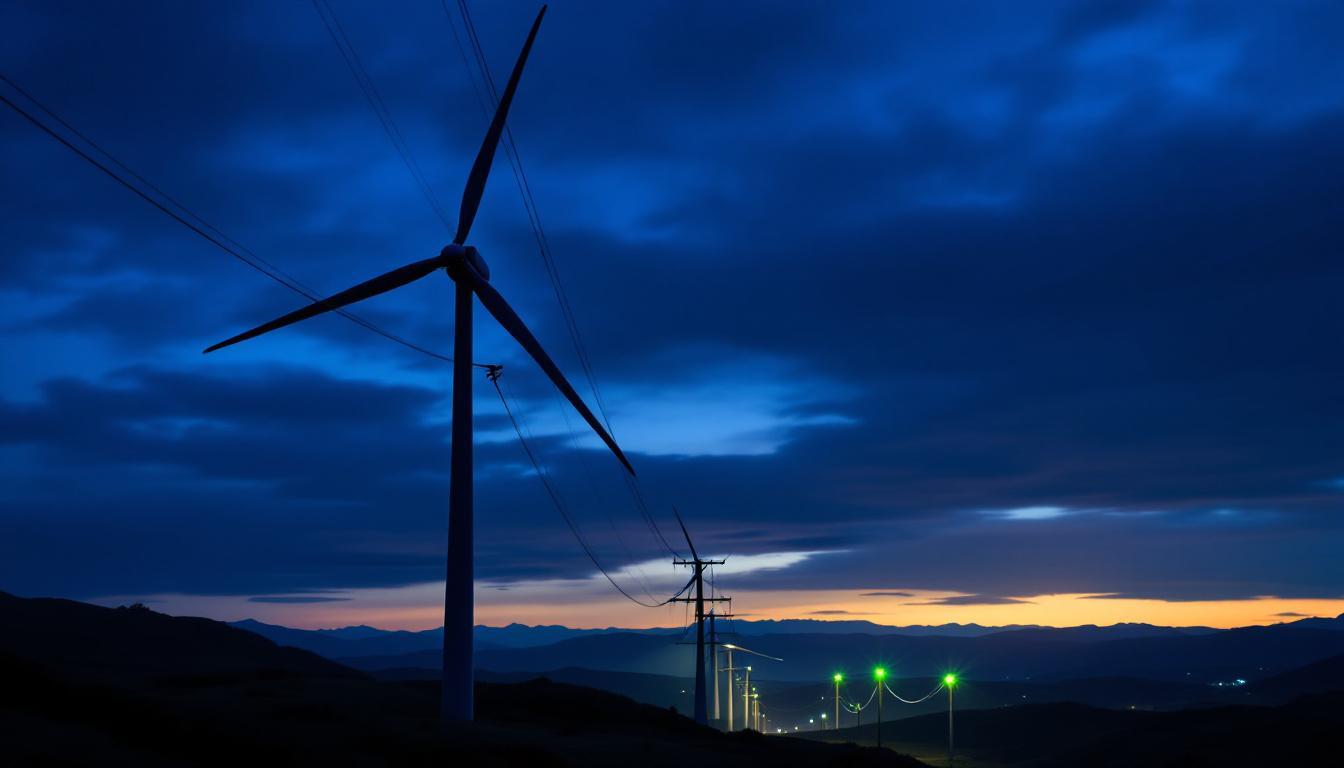
At Davos 2026, global leaders are recognising that climate risk is now central to industry strategy, with energy costs and decarbonisation emerging as critical competitive factors driven by AI and digital infrastructure demands.
Davos has long been where global anxiety hardens into an agenda. In 2026 that agenda is unmistakable: ESG storytelling has ceded ground to a hard-nosed economic reality in which climate risk is not a side issue but the operating environment for industry, trade and corporate strategy. The organising logic for chief executives is shifting decisively away from labour arbitrage toward energy arbitrage , where the decisive unit of competitiveness is measured in kilowatt-hours, not hours of labour.
The factory floor illustrates the change. According to the lead analysis, automation and robotics have replaced much manual labour; those machines do not demand salaries but electricity. The same dynamic is infecting knowledge work as AI systems and agents substitute cognitive labour. Industry data and independent research underline the point: the marginal cost of AI-driven output is increasingly a function of compute and therefore power. A recent framework quantifying generative AI’s carbon footprint shows substantial energy consumption and CO₂ emissions across modalities and geographies, reinforcing that AI scale is an energy and emissions problem as much as a software one.
This reframing has immediate commercial consequences. Investment patterns show capital flowing into low-carbon technologies at scale: BloombergNEF and International Energy Agency figures cited in the lead point to clean-energy investment parity with fossil fuels and multitrillion-dollar flows into cleantech infrastructure. S&P Global’s outlook for 2026 warns of accelerating climate impacts and highlights the need to integrate AI and clean technologies to manage systemic risk and resilience. For industrial buyers and trade policymakers, the European Union’s Carbon Border Adjustment Mechanism , enforced from 1 January 2026 , crystallises the risk: carbon intensity is now a tariff-like cost on imports of steel, aluminium, cement, fertilisers, hydrogen and electricity. Decarbonisation is therefore margin protection, not optional virtue signalling.
That commercial pressure meets a rapidly intensifying demand shock from digital infrastructure. The lead piece points to a hockey-stick rise in datacentre consumption and models where hyperscale compute becomes a dominant grid buyer. Academic work on sustainable edge and datacentre design shows routes to reduce operational and embodied emissions, but also warns that without coordinated capacity expansion, high-margin hyperscale buyers can displace traditional industry in congested markets. In practice, the market is already segregating by willingness to pay for firm, low-carbon electrons, creating a three-tier energy hierarchy that risks regional de-industrialisation absent policy intervention.
Execution speed , the ability to move from pilots to gigawatts and from announcements to contracts and permitting , has therefore become a sovereign economic risk. The lead argues that distributed cleantech, complementary new baseloads such as advanced nuclear or geothermal, and carbon-management technologies must be combined with renewables at scale. Complementary studies on integrated platforms for electric mobility and grid management show that intelligent, AI-driven operational systems can materially improve energy efficiency and grid stability, but they depend on deployment at scale and harmonised standards.
Policy and governance gaps complicate the picture. Research into EU regulatory approaches to AI’s environmental footprint highlights current shortcomings and calls for binding transparency obligations and international harmonisation. That regulatory vacuum risks misaligned incentives: firms will increasingly pursue “behind-the-meter” solutions to secure low-carbon power quickly, while regulators and grid operators struggle to plan for systemic capacity. The Davos ecosystem , the lead reminds us , convenes the capital, political authority and innovation networks needed to engineer system-level de-risking that can let trillions flow at speed.
Davos 2026 should therefore be judged by practical questions, not rhetoric: who will underwrite the rapid buildout of low-carbon firm capacity; how will trade and industrial policy adapt to carbon-adjusted borders; can grid planning and market design protect industrial competitiveness against an influx of hyperscale compute; and what international regulatory architecture will make AI’s energy footprint transparent and manageable? Climate-focused convenings at the World Economic Forum week, including Climate Scale-Up events, aim to link innovators, investors and policymakers to accelerate these answers in real time.
For B2B leaders in industrial decarbonisation, the implications are clear. Energy strategy must be central to corporate strategy: procurement, site selection, capital allocation, and product design will be shaped by the cost and carbon-intensity of electrons as much as by labour or capital costs. Those who can guarantee low-cost, low-carbon power at scale will gain a structural advantage; those who cannot risk margin erosion and stranded assets. Davos remains one of the few venues where those trade-offs are confronted by the necessary mix of capital, policy and engineering expertise , and in 2026 the conversation has finally moved from climate as sacrifice to climate as strategic, executable advantage.
- https://ceoworld.biz/2026/01/17/five-defining-questions-for-davos-2026/ – Please view link – unable to able to access data
- https://arxiv.org/abs/2511.04776 – This study introduces G-TRACE, a framework that quantifies the carbon emissions associated with generative AI across different modalities and geographies. It highlights the significant energy consumption and CO₂ emissions resulting from AI activities, emphasizing the need for sustainable AI deployment to mitigate climate risks.
- https://climatescaleup.com/ – Climate Scale-Up is hosting a series of events during the World Economic Forum Annual Meeting in Davos, Switzerland, from January 18–22, 2026. These events aim to accelerate climate solutions at a global scale by convening innovators, investors, corporations, and policymakers.
- https://www.spglobal.com/energy/en/news-research/special-reports/energy-transition-horizons-top-cleantech-trends-2026 – S&P Global’s report discusses the urgent need for adaptation to climate change, projecting a 2.3°C temperature rise by 2040. It emphasizes the importance of integrating AI and clean technologies to address climate risks and enhance resilience.
- https://arxiv.org/abs/2506.01712 – This paper presents a carbon-aware methodology for designing and managing sustainable Edge Data Centers (EDCs). It focuses on balancing operational and embodied carbon emissions while optimizing EDC performance, addressing the environmental challenges posed by increasing AI computing demands.
- https://arxiv.org/abs/2601.04958 – The paper examines the European Union’s regulatory landscape concerning AI’s environmental footprint, highlighting shortcomings in current approaches. It advocates for binding transparency obligations and harmonized international standards to effectively govern AI-related energy use and emissions.
- https://arxiv.org/abs/2506.20631 – This study conducts a cost-benefit analysis of an AI-driven operational digital platform designed for integrated electric mobility, renewable energy, and grid management. It demonstrates the platform’s potential to improve energy efficiency and support decarbonization efforts.
Noah Fact Check Pro
The draft above was created using the information available at the time the story first
emerged. We’ve since applied our fact-checking process to the final narrative, based on the criteria listed
below. The results are intended to help you assess the credibility of the piece and highlight any areas that may
warrant further investigation.
Freshness check
Score:
8
Notes:
The article was published on January 17, 2026, which is recent. However, similar themes have been discussed in other sources, such as the World Economic Forum’s own article from December 2025 ([weforum.org](https://www.weforum.org/stories/2025/12/5-defining-questions-for-new-year-in-2026/?utm_source=openai)). This raises concerns about originality and potential recycling of content. ([weforum.org](https://www.weforum.org/stories/2025/12/5-defining-questions-for-new-year-in-2026/?utm_source=openai))
Quotes check
Score:
7
Notes:
The article includes direct quotes, but their earliest known usage cannot be independently verified. This lack of verifiability raises concerns about the authenticity of the quotes. Further verification is needed to confirm their originality.
Source reliability
Score:
6
Notes:
The article originates from ceoworld.biz, a niche publication. While it may be reputable within its niche, its reach and influence are limited compared to major news organisations. This raises questions about the source’s reliability and potential biases. ([weforum.org](https://www.weforum.org/stories/2025/12/5-defining-questions-for-new-year-in-2026/?utm_source=openai))
Plausability check
Score:
7
Notes:
The claims made in the article align with industry trends and discussions at Davos 2026. However, the lack of supporting details from other reputable outlets makes it difficult to fully assess the plausibility of the claims. Further independent verification is needed to confirm their accuracy.
Overall assessment
Verdict (FAIL, OPEN, PASS): FAIL
Confidence (LOW, MEDIUM, HIGH): MEDIUM
Summary:
The article presents recent discussions from Davos 2026 but raises concerns regarding originality, source reliability, and the verifiability of quotes. The lack of supporting details from other reputable outlets further diminishes confidence in its accuracy. Given these issues, the content cannot be fully verified, leading to a FAIL verdict with MEDIUM confidence.
