


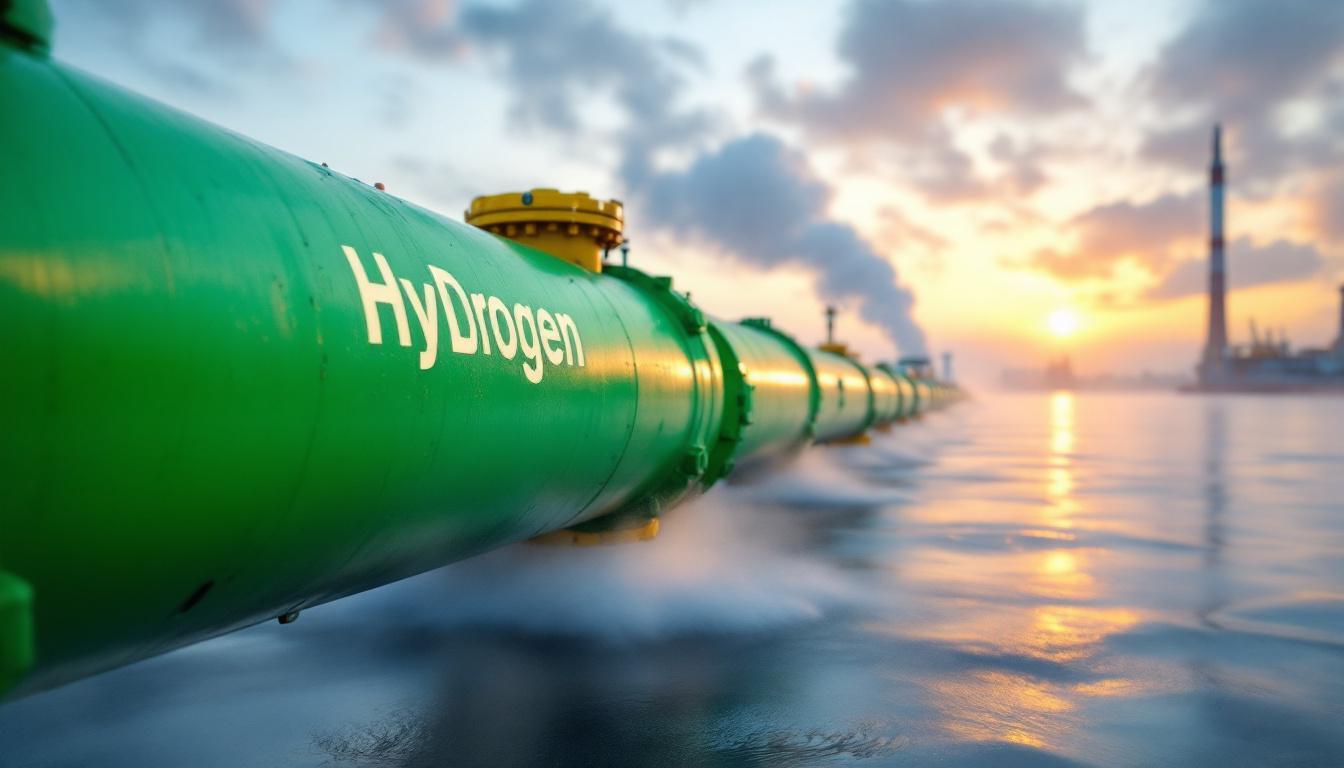
The Netherlands has advanced its national hydrogen backbone with the injection of RFNBO-certified green hydrogen into a key Rotterdam pipeline, marking a significant step towards industrial decarbonisation and regional energy security.
The first commercial-scale section of the Netherlands’ planned national hydrogen backbone has moved from blueprint to pipework, with 32 tonnes of RFNBO‑certified green hydrogen injected into a newly completed 32‑kilometre stretch running through Rotterdam. According to Hynetwork, the Gasunie subsidiary behind the scheme, the fill marks a practical milestone in establishing a transport corridor that will link import terminals, producers and storage with heavy industrial demand centres around the port.
The Rotterdam segment , routed between the Tweede Maasvlakte and Pernis , is being positioned as a test bed for shifting process feedstocks and heating away from fossil fuels. Industry observers note that large refinery and chemical sites in and around Pernis have limited low‑carbon options at scale today; a dedicated pipeline supplying renewable hydrogen could reduce scope‑one emissions and substitute fossil feedstocks without the downtime and inefficiency of road transport. Hynetwork says the hydrogen flow is RFNBO‑certified under EU rules, signalling the renewable origin required by many corporate purchasers and regulatory regimes.
Plug Power, contracted through public procurement to design the unloading and commissioning interface, supplied the specialised manifold and trailer connection system used for the initial injection. According to Plug Power, the equipment enabled three MEGC trailers to be connected simultaneously, accelerating transfer rates and demonstrating a practical logistics solution for initial supply volumes. The announcement highlights how international technology suppliers and Dutch pipeline engineering are being combined to resolve near‑term operational challenges.
Work on this first axis forms part of a broader plan to repurpose and extend existing gas corridors while laying new lines where necessary to assemble a roughly 1,200‑kilometre national network. Gasunie and Port of Rotterdam materials describe the project as the foundational leg of a longer chain that will tie seaports to inland industrial clusters, underground storage and cross‑border links into Belgium and Germany. The stated aim is to position Rotterdam as a European import and distribution hub that can help balance regional supply and bolster industrial energy security.
Timelines cited in public statements vary. Gasunie and Port of Rotterdam have said the network is expected to be operational in 2025, framing early commercial availability as part of national decarbonisation plans. Other reporting around testing and commissioning schedules indicates some stakeholders anticipate trial flows and final approvals extending into 2026. Hynetwork and project partners stress that safety checks, pressure testing and regulatory clearances remain prerequisites before routine deliveries to downstream customers commence.
The initiative also underlines the regulatory dependencies that will shape market uptake. National and EU regulators are still defining tariffs, connection rules, certification processes and safety standards for hydrogen networks; project proponents acknowledge that final investment decisions and customer bookings will depend on those frameworks being settled. Industry data shows clear demand signals from hard‑to‑abate sectors but purchasers require predictable access terms and certified supply before committing to fuel or feedstock conversions at scale.
Beyond emissions abatement, project stakeholders emphasise local economic benefits. Construction and commissioning have engaged welders, pipeline technicians, logistics personnel and safety specialists, while suppliers of high‑pressure valves, sensors and monitoring systems in the region have been used for key components. Port of Rotterdam materials note vocational providers are introducing hydrogen safety and maintenance training to prepare the workforce for operation and long‑term network upkeep.
For policymakers and industrial decision‑makers focused on decarbonisation pathways, the Rotterdam fill is significant because it demonstrates interoperability between import logistics, temporary trailer transfers and a fixed‑line distribution system. According to Hynetwork and Plug Power, the exercise resolved practical bottlenecks in trailer unloading and commissioning, but the volumes injected so far remain small relative to the quantities heavy industry will require as conversions scale.
If subsequent regulatory approvals and capacity bookings proceed on schedule, the pipeline will enable larger, sustained deliveries that reflect the ambitions laid out by the European Hydrogen Backbone initiative. For now, the project sits at the intersection of engineering delivery and policy development: it shows the technical feasibility of a dedicated hydrogen artery while underscoring that commercial operation at scale depends on national and EU rule‑making and the timely completion of safety and commissioning protocols.
- https://www.hydrogenfuelnews.com/green-hydrogen-pipeline-brings-rotterdam-closer-to-europes-energy-future/8574777/ – Please view link – unable to able to access data
- https://www.plugpower.com/plug-hydrogen-now-flowing-through-rotterdams-hynetwork-pipeline/ – Plug Power Inc. has completed the first hydrogen fill of Hynetwork’s 32-kilometer pipeline in Rotterdam, supplying 32 tonnes of RFNBO-certified renewable green hydrogen. This milestone marks the first major pipeline section of the Dutch hydrogen network to be filled, laying the foundation for Rotterdam’s role as a key hub in Europe’s hydrogen infrastructure. The project highlights the collaboration between Plug Power and Hynetwork to advance industrial decarbonisation and strengthen energy security in the region.
- https://www.hynetwork.nl/en/knowledge-base/article/first-32-kilometres-of-the-hydrogen-network-filled-with-green-hydrogen – Hynetwork, a subsidiary of Gasunie, has successfully filled the first 32-kilometer segment of the Dutch hydrogen network with 32 tonnes of RFNBO-certified green hydrogen. This achievement is a significant step towards establishing a national hydrogen infrastructure, connecting industrial sites, import terminals, and storage facilities. The project demonstrates the importance of collaboration with specialist partners to safely and efficiently build the required infrastructure for large-scale hydrogen transport.
- https://www.gasunie.nl/en/news/dutch-national-hydrogen-network-launches-in-rotterdam – Gasunie has announced the launch of the Dutch national hydrogen network, with the first section extending over 30 kilometers from the Tweede Maasvlakte to Pernis in Rotterdam. This network aims to connect industrial clusters to import terminals, storage facilities, and cross-border links to Germany and Belgium. The project is expected to be operational by 2025, marking a significant step in developing the hydrogen chain and reinforcing Rotterdam’s position as a major energy port in Europe.
- https://www.portofrotterdam.com/en/news-and-press-releases/national-hydrogen-network-begins-in-rotterdam – The Port of Rotterdam has initiated the first part of the national hydrogen network, extending over 30 kilometers from the Second Maasvlakte to Pernis. This network is expected to be operational by 2025 and will eventually span 1,200 kilometers, connecting seaports to major industrial clusters in the Netherlands and to hydrogen storage sites. The project aims to strengthen Rotterdam’s role as an international hub for hydrogen production and distribution, contributing to European energy autonomy.
- https://www.hynetwork.nl/en/knowledge-base/article/now-we-can-really-start-building-in-rotterdam – Hynetwork Services, a wholly-owned subsidiary of Gasunie, has received approval to commence construction of a new hydrogen pipeline in the Port of Rotterdam. This pipeline will serve as the backbone of the local hydrogen infrastructure and the first segment of the Hydrogen Network Netherlands. The project involves laying 32 kilometers of pipeline between the Tweede Maasvlakte and Pernis, with the goal of having the first hydrogen flow through the pipe by the end of 2025.
- https://en.portnews.ru/news/print/381184/ – Gasunie has completed the final weld on a 32-kilometer hydrogen pipeline in the Port of Rotterdam, marking the completion of the first section of the Netherlands’ national hydrogen network. The project now moves into testing, pre-commissioning, and commissioning phases, with the first hydrogen flows targeted for 2026. The pipeline is intended to connect industrial clusters to import terminals, storage facilities, and cross-border links to Germany and Belgium, supporting large-scale industrial decarbonisation and strengthening European energy security.
Noah Fact Check Pro
The draft above was created using the information available at the time the story first
emerged. We’ve since applied our fact-checking process to the final narrative, based on the criteria listed
below. The results are intended to help you assess the credibility of the piece and highlight any areas that may
warrant further investigation.
Freshness check
Score:
8
Notes:
The article reports on the completion of the first hydrogen fill in Rotterdam’s 32-kilometer pipeline, dated February 3, 2026. This event was also reported by other sources on February 4, 2026. The content appears to be original and not recycled from other news outlets. However, the article’s publication date is one day after the event, which may slightly affect its freshness. Additionally, the article includes information from a press release, which typically warrants a high freshness score. Nonetheless, the slight delay in publication and reliance on a press release suggest a moderate freshness score.
Quotes check
Score:
7
Notes:
The article includes direct quotes from Plug Power’s President and Chief Revenue Officer, Jose Luis Crespo, and Hynetwork’s Project Director, Sietse Wijnstra. These quotes are consistent with those found in other reports from February 4, 2026. However, the absence of independent verification for these quotes raises concerns about their authenticity. The reliance on a press release for these statements further diminishes the ability to independently verify the quotes.
Source reliability
Score:
6
Notes:
The article originates from Hydrogen Fuel News, a niche publication focusing on hydrogen energy. While it provides detailed information, the lack of broader coverage from major news organizations raises questions about the source’s reliability. The article also heavily relies on a press release from Plug Power, which may introduce bias. The absence of independent reporting or corroboration from other reputable sources further diminishes the source’s reliability.
Plausibility check
Score:
8
Notes:
The article describes the completion of the first hydrogen fill in Rotterdam’s pipeline, a development that aligns with previous reports from June 2023 and May 2025 about the construction of the hydrogen network in Rotterdam. The technical details provided are consistent with known industry practices. However, the reliance on a single source and the lack of independent verification for some claims introduce a degree of uncertainty.
Overall assessment
Verdict (FAIL, OPEN, PASS): FAIL
Confidence (LOW, MEDIUM, HIGH): MEDIUM
Summary:
The article reports on the completion of the first hydrogen fill in Rotterdam’s pipeline, a development that aligns with previous reports from June 2023 and May 2025 about the construction of the hydrogen network in Rotterdam. However, the article heavily relies on a press release from Plug Power, with no independent verification or corroboration from other reputable sources. The absence of independent reporting and the reliance on a single source diminish the overall credibility of the article. Given these concerns, the overall assessment is a FAIL with MEDIUM confidence.
