


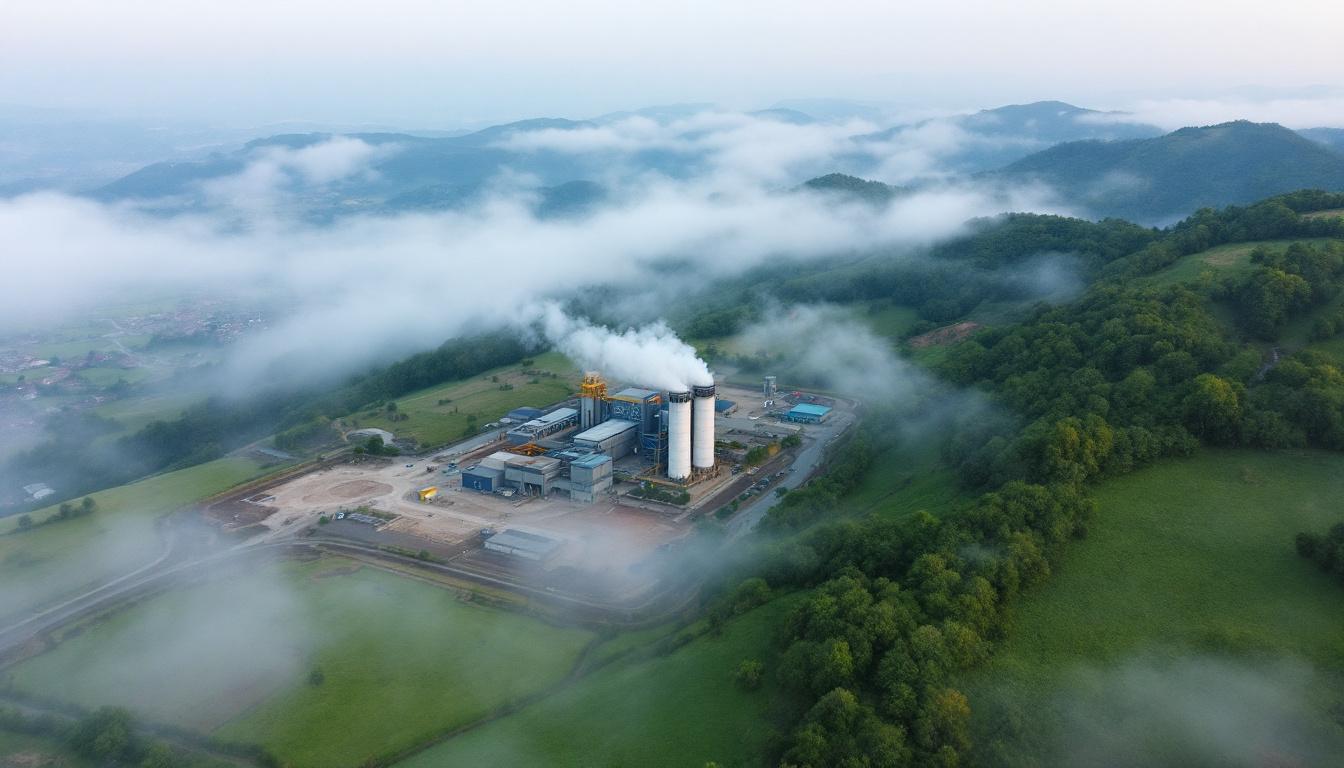
The European Bank for Reconstruction and Development invests €50 million in Çimsa to upgrade facilities with low-carbon calcium aluminate cement technology, supporting Türkiye’s net-zero ambitions and industrial sustainability.
The European Bank for Reconstruction and Development (EBRD) is advancing its support for industrial decarbonisation in Türkiye by providing a €50 million loan to Çimsa, a leading Turkish cement producer, to finance a significant upgrade and expansion of its production facilities aimed at reducing carbon emissions. This financing will be allocated to constructing a greenfield calcium aluminate cement (CAC) kiln, alongside decarbonisation upgrades for existing grey and white cement kilns at Çimsa’s Mersin plant.
Calcium aluminate cement is emerging as a crucial material in the cement sector’s shift towards sustainability, owing to its substantially lower carbon footprint compared to traditional grey cement. The adoption of CAC technology underlines a strategic move by Çimsa to reduce its environmental impact while maintaining competitive production capabilities. The company has embedded sustainability into its long-term strategy, aligning with the Science Based Targets initiative (SBTi) to guide its emission reduction efforts.
This investment is part of a broader decarbonisation roadmap that includes scaling the use of renewable energy and alternative fuels, reflecting wider industry trends towards net-zero targets. Türkiye has committed to achieving net zero carbon emissions by 2053, a goal that necessitates around US$10 billion in annual financing through 2030 for energy-intensive sectors like cement, steel, aluminium, and fertilisers.
The project also aligns with Türkiye’s Industrial Decarbonisation Investment Platform (TIDIP), which the EBRD describes as the world’s largest industrial decarbonisation programme. TIDIP provides critical policy guidance and low-carbon pathways tailored for hard-to-abate industrial sectors, fostering collaboration between private companies and financial institutions to accelerate decarbonisation investments.
Erdem Yasar, EBRD Deputy Head for Türkiye, emphasised that this partnership not only enhances Çimsa’s competitiveness but also promotes sustainability across the broader industry. He remarked that the initiative supports the cement sector’s transition to greener practices while demonstrating how industrial players can integrate environmental ambitions with smart financial strategies.
Complementing its financial support, the project introduces an internship programme aimed at local students and graduates, providing practical experience aligned with Çimsa’s sustainability and strategic objectives. This approach underlines the company’s commitment to fostering talent and building local capacity in sustainable industrial practices.
Çimsa’s CEO, Umut Zenar, stated in a company release that the project highlights their dedication to sustainable production and operational efficiency. The collaboration with the EBRD represents a key milestone in the company’s green transition journey, driving forward investments in solar power, waste heat recovery, and resource-efficient processes, as demonstrated by Çimsa’s earlier projects at its Eskisehir plant funded by another EBRD loan.
Since starting its investments in Türkiye in 2009, the EBRD has committed over €22 billion across more than 500 projects, primarily supporting private sector development including industrial decarbonisation efforts. The bank’s involvement in Türkiye is multifaceted, supporting not only environmental targets but also post-earthquake reconstruction funds and wider economic resilience initiatives.
The strategic financing model in Çimsa’s case also complements other EBRD transactions in the Turkish cement sector, including a recent US$50 million investment into a Eurobond issued by Çimko, a related cement company. This bond issuance is aimed at financing decarbonisation investments and refinancing existing liabilities, showcasing how capital market instruments can support sustainable industrial transformation.
In the broader landscape, the EBRD’s support for Türkiye’s cement industry exemplifies the challenges and opportunities in decarbonising hard-to-abate sectors. The industry’s reliance on energy-intensive clinker production makes innovation like CAC and waste heat recovery essential. The integration of renewable energy solutions and alternative fuels further underscores the multifaceted approach required to meet climate targets.
This collaboration between Çimsa and the EBRD sends a strong signal about the growing maturity of sustainability-focused industrial investments in Türkiye. It illustrates how financing, technology innovation, and capacity building can converge to create pathways toward a low-carbon industrial future in emerging economies, supporting both environmental goals and economic competitiveness.
- https://www.trend.az/business/4118602.html – Please view link – unable to able to access data
- https://www.ebrd.com/content/ebrd_dxp/uk/en/home/news-and-events/news/2025/ebrd-backs-cement-leader-in-push-for-low-carbon-future.html – The European Bank for Reconstruction and Development (EBRD) is providing a €50 million loan to Çimsa, a leading Turkish cement producer, to support its decarbonisation programme. The financing will fund a greenfield calcium aluminate cement (CAC) kiln and decarbonisation upgrades for existing grey and white cement kilns at Çimsa’s Mersin plant. CAC production has a significantly lower carbon footprint than traditional grey cement, making it a key element in reducing emissions in the cement sector. The project aligns with Türkiye’s Industrial Decarbonisation Investment Platform (TIDIP), the world’s largest industrial decarbonisation programme, which provides policy guidance and low-carbon pathways for hard-to-abate sectors including cement, steel, aluminium, and fertilisers. Erdem Yasar, EBRD Deputy Head for Türkiye, stated that the partnership supports both Çimsa’s competitiveness and broader industry sustainability. Çimsa CEO Umut Zenar added that the project underscores the company’s commitment to sustainable production and efficiency. The project also includes an internship programme to provide local students and graduates with hands-on experience in line with Çimsa’s strategic focus areas. Since 2009, the EBRD has committed over €22 billion in Türkiye across 502 projects and trade finance facilities, primarily in the private sector.
- https://www.ebrd.com/home/news-and-events/news/2025/ebrd-invests-in-cement-company-eurobond-in-tuerkiye.html – The European Bank for Reconstruction and Development (EBRD) is investing US$ 50 million in a Eurobond issued by Çimko Cimento ve Beton Sanayi, a joint stock company incorporated in Türkiye. Çimko will use the proceeds of the US$ 300 million Eurobond issue to finance its decarbonisation investment programme, as well as to refinance. The Eurobond will strengthen Çimko’s balance sheet and have a strong demonstration effect on other Turkish companies seeking to diversify their sources of funding in the capital markets. Çimko produces and sells cement, clinker, aggregate and ready-mixed concrete, with production facilities in Kahramanmaras, Adıyaman and Bartın. The company is owned by Sanko Holding, a leading Turkish industrial conglomerate mostly active in textiles, energy, cement and packaging. Sanko Holding is also one of the largest employers in Türkiye’s south-eastern earthquake-hit region, employing more than 15,000 people. The transaction is a key example of the EBRD’s continued commitment to a prior low-carbon pathways initiative, which seeks to decarbonise the country’s steel, aluminium, cement and fertiliser sectors. Erdem Mehmet Yasar, EBRD Deputy Head of Türkiye, said: “This transaction stands out not only for its advancement of the cement sector’s transition to greener practices, but also for the company’s exemplary approach to securing sustainable funding through capital markets. It is a model of how industrial players can align environmental ambition with smart financial strategy.” Çimko Chief Executive Officer Önder Kılıç said: “Çimko’s successful Eurobond issuance is strong testament to the international confidence in our company’s solid balance sheet, consistent operational performance and forward-looking strategic vision. Beyond reinforcing our financial structure, the proceeds of this transaction will enable further diversification of our funding sources. With these funds, we aim to accelerate our investments in renewable energy, energy efficiency and decarbonisation and make meaningful progress towards our sustainability goals. This issuance also marks the beginning of our collaboration with the EBRD. We believe this newly established relationship with the EBRD represents the foundation of a long-term strategic partnership, paving the way for many impactful, sustainability-focused projects in the years to come.” The EBRD is among Türkiye’s key investors, with almost €22 billion committed through 484 projects and trade finance limits since 2009, largely in the private sector.
- https://www.ebrd.com/home/news-and-events/news/2024/first-ebrd-loan-to-trkiyes-cement-sector-to-boost-lowcarbon-investments.html – The European Bank for Reconstruction and Development (EBRD) is providing a €25 million loan to Türkiye’s Cimsa to finance the company’s decarbonisation investment programme. The proceeds of the loan will finance the installation of a solar power plant, a waste heat recovery plant, a new silo and resource-efficiency process, and technology upgrades at the company’s Eskisehir plant. The EBRD is committed to align its activities with the goals of the Paris Agreement on climate change. Within this direction, the loan follows the launch of the “low-carbon pathway” (LCP) initiative, led by the EBRD, which focuses on the decarbonisation of energy-intensive industries such as steel, cement, aluminium, and fertiliser. Addressing climate change remains a significant goal for Türkiye, which has set itself a 2053 net-zero target. To reach net zero, Türkiye needs around US$ 10 billion in financing annually through 2030. Based on extensive engagement with sector associations and relevant stakeholders, the findings of the LCP study provide clear signals to private industry players, financiers and investors on the technology requirements and timing of decarbonisation investments, enabling greater understanding of the risks involved and informing the development of specific financing plans. The cement-sector LCP recommends various actions for the decarbonisation of the sector, including a reduction in clinker use in cement production, carbon capture, utilisation and storage technologies, waste heat recovery, alternative fuel use, green energy, and process improvement. EBRD Türkiye Deputy Head Erdem Yasar said: “the LCPs seek to enable private-sector representatives to set clear roadmaps for a net-zero future. We are pleased to see the very first step towards this in our partnership with Cimsa. As cement remains one of the most carbon-heavy industries, we are confident that this project will be exemplary in the sector and provide guidance to all players who seek to boost their green investments.” Cimsa, a leading player in producing and selling cement, clinker, ready-mix concrete and other construction materials, has a long-term strategy that combines global growth and green transition. The Science Based Targets Initiative recently validated the company’s commitments to carbon reduction. Çimsa CEO Umut Zenar said: “As Çimsa, we are determined to advance our sustainability goals and take important steps in our energy efficiency and decarbonization efforts. This collaboration with the EBRD represents a significant milestone in our journey towards a greener future.” “This loan will not only support our investments in our solar energy and waste heat recovery facilities, but will also increase our operational efficiency. We are proud to be the first cement company in Turkey to receive this type of financing from the EBRD, reflecting our commitment to leading the industry in sustainability initiatives. We would like to thank the EBRD for their trust and support in this important initiative.” The EBRD is one of Türkiye’s key investors, with more than €19.8 billion invested through 442 projects and trade finance limits since 2009, most of it in the private sector.
- https://www.turkiyetoday.com/business/ebrd-investments-in-turkiye-reach-22b-so-far-in-2025-says-vp-guyett-3209857 – The European Bank for Reconstruction and Development (EBRD) has provided €1.6 billion for reconstruction efforts in the regions affected by the February 2023 earthquakes, surpassing its earlier commitments. According to EBRD data as of 30 September 2025, the bank has supported 502 projects in Türkiye since it began investing in the country in 2009. Its cumulative investment totals €22.74 billion ($26.36 billion), with €20.84 billion disbursed or guaranteed to date. The current portfolio stands at €7.96 billion across 252 active operations, of which 84% is directed to the private sector. “We are pleased to have supported displaced people, contributed to housing needs, and helped enterprises—especially SMEs—regain momentum,” Guyett said. He stated that the bank is developing new initiatives for long-term support in the region, which still has areas requiring continued investment. Guyett said the EBRD has also decided to designate Istanbul as one of its regional centers and will expand staffing in the city.
- https://www.globalcement.com/news/item/19491-ebrd-decarbonisation-loan-for-cimsa – The European Bank for Reconstruction and Development (EBRD) is providing a €50 million loan to cement producer Çimsa to support its decarbonisation efforts. According to the EBRD, the financing will fund a calcium aluminate cement (CAC) kiln and decarbonisation upgrades for existing grey and white cement kilns at Çimsa’s Mersin plant. CAC production has a ‘significantly’ lower carbon footprint than traditional grey cement, according to the producer. The EBRD said that the project aligns with Türkiye’s Industrial Decarbonisation Investment Platform, the world’s largest industrial decarbonisation programme, which provides policy guidance and low-carbon pathways for hard-to-abate sectors, including cement. Erdem Yasar, EBRD Deputy Head for Türkiye, said that the partnership supports both Çimsa’s competitiveness and broader industry sustainability.
Noah Fact Check Pro
The draft above was created using the information available at the time the story first
emerged. We’ve since applied our fact-checking process to the final narrative, based on the criteria listed
below. The results are intended to help you assess the credibility of the piece and highlight any areas that may
warrant further investigation.
Freshness check
Score:
3
Notes:
The content appears to be a delayed or republished version of an earlier announcement from November 2024, with no new significant updates or information. The recent date provided (17 November 2025) suggests a substantial delay or republishing, which may impact the freshness score. The source, Trend.az, is not primarily recognized for original reporting, further affecting the content’s perceived freshness.
