


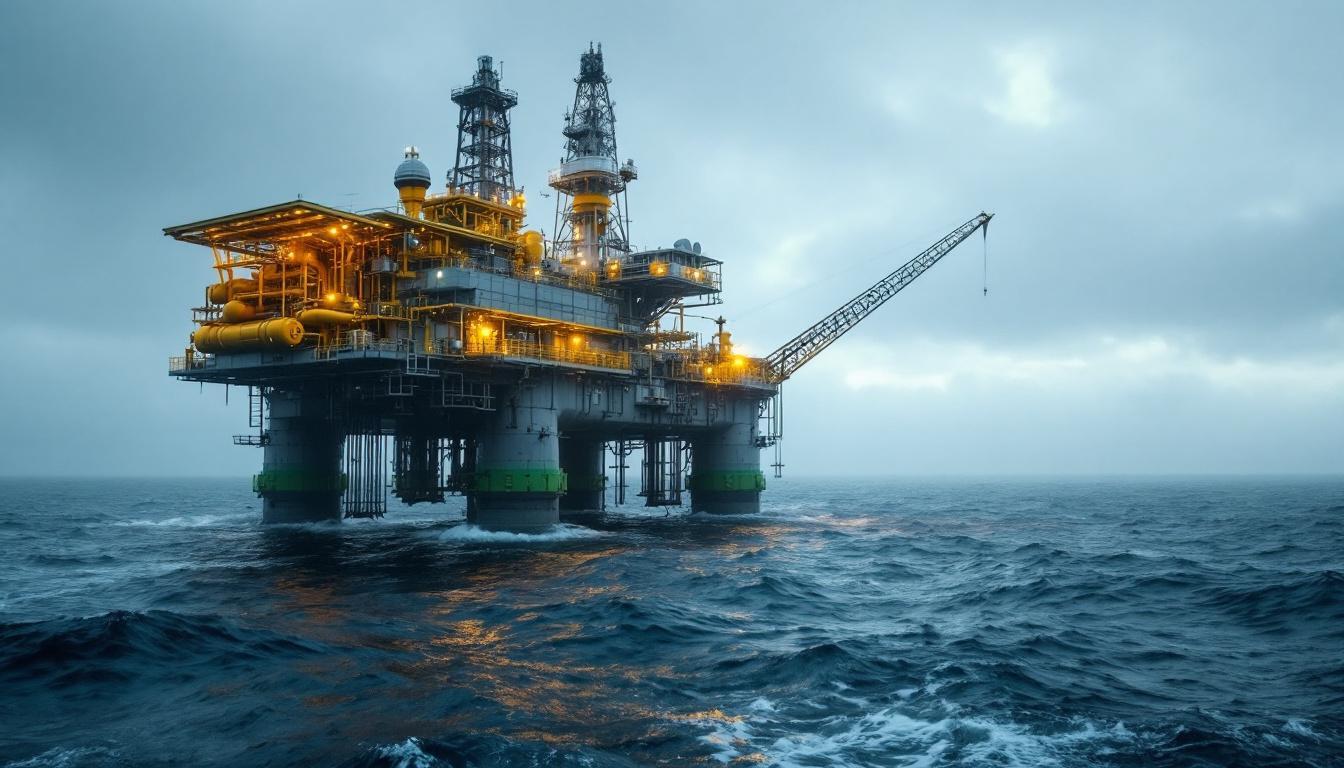
EDF Power Solutions is leading the way with the HYODE project, establishing France’s first floating offshore hydrogen production facility off Dunkirk, marking a major step in offshore green energy innovation and industrial decarbonisation.
EDF Power Solutions is charting new territory in the industrial decarbonisation landscape with its pioneering HYODE (HYdrogen Offshore DunkerquE) project, set to establish France’s first floating offshore hydrogen production facility off the coast of Dunkirk. This initiative marks a significant advancement in coupling offshore wind with direct offshore hydrogen production, a combination that remains at the cutting edge of clean energy innovation in Europe.
The HYODE project plans to integrate a comprehensive offshore energy infrastructure comprising wind turbines, electrolyzers, hydrogen storage tanks, and specialised transport vessels within France’s Exclusive Economic Zone (EEZ). By producing green hydrogen utilising renewable offshore wind power, HYODE aims to supply zero-carbon hydrogen to heavy industry sectors, including steel manufacturing, chemical processing, and refineries, as well as transport networks. This move is aligned with France’s National Hydrogen Strategy, which targets ramping up electrolysis capacity to 6.5 GW by 2030, emphasising green hydrogen’s pivotal role in the nation’s industrial decarbonisation and energy transition agenda.
A key aspect of HYODE’s innovative design is the fully offshore configuration, which seeks to bypass inherent challenges of coastal grid congestion and the permitting obstacles typical of saturated coastal wind farm zones. By co-locating production and initial hydrogen storage offshore, the project significantly reduces reliance on lengthy subsea electrical connections and introduces a modular energy park approach to sustainable energy generation and distribution.
Dunkirk’s strategic location enhances the project’s potential impact. The port’s deep-water facilities, established logistics network, including rail and road links to major European industrial corridors, and an experienced maritime and industrial workforce make it an ideal hub for HYODE. The region’s existing industrial heritage, notably in steel and chemicals, stands to benefit from employment opportunities and economic diversification associated with the transition to a green hydrogen economy.
HYODE also benefits from the broader renewable infrastructure already anchored at Dunkirk. Since 2019, an EDF-led consortium comprising EDF Renewables, Innogy, and Enbridge has been developing a near-600 MW offshore wind farm located over 10 kilometres offshore. This wind facility is set to supply about 40% of Nord département’s electricity demand, providing a strong renewable foundation on which HYODE’s electrolysis operations can be integrated.
Technically, the HYODE project involves a tightly integrated system where offshore wind turbines capture steady Channel winds, directly powering floating electrolyser platforms equipped with proton exchange membrane or alkaline electrolysers. Seawater is converted to green hydrogen and oxygen on site, stored in marine-grade tanks, and transported via specially designed vessels equipped for high-pressure or cryogenic hydrogen containment to onshore terminals for distribution. This advanced configuration aims to optimise production efficiency while minimising environmental footprint.
The project’s progress is being closely guided by rigorous environmental impact assessments (EIA) and hazard studies, initiated through EDF’s tender launched in late 2025. These studies will examine critical environmental factors including seabed habitats, noise and electromagnetic emissions, marine wildlife migration patterns, and interactions with existing maritime activities like fishing and shipping. The EIA process, aligned with France’s maritime law and Natura 2000 conservation requirements, involves broad stakeholder consultations to balance industrial development with ecological preservation.
Backed by support from the EU Innovation Fund secured in October 2025, HYODE has access to vital early-stage funding aimed at mitigating risks associated with breakthrough clean technologies. This financial endorsement underscores the EU’s commitment to fostering offshore hydrogen as a cornerstone of its Fit for 55 and REPowerEU decarbonisation frameworks, which promote clean hydrogen infrastructure development, storage, and market growth across the continent.
Despite its promise, HYODE faces notable challenges. Securing a single EEZ permit demands coordination across complex regulatory frameworks that oversee environmental safeguards, navigational safety, and operational risks. Economically, the cost competitiveness of offshore hydrogen production must improve to meet or exceed that of onshore electrolysis and imports of low-carbon hydrogen. Technically, integrating fluctuating offshore wind outputs with steady electrolyser operation requires sophisticated energy management systems and resilient backup solutions. Industrial scale-up will necessitate accelerated delivery from shipyards and specialised component manufacturers.
If successful, HYODE holds the potential to anchor a new European hydrogen corridor that could position France as a leading green hydrogen exporter. It will stimulate the development of complementary hydrogen infrastructure such as pipelines, refuelling stations, and conversion facilities, while generating jobs in maritime services, environmental consultancy, and high-tech manufacturing sectors.
This bold project is more than an isolated endeavour; it complements and extends France’s broader hydrogen ecosystem, linking with onshore electrolysis ventures like Lhyfe’s multi-megawatt plants, import-export hubs such as Port-la-Nouvelle, and pioneering liquid hydrogen transport vessels like Energy Observer 2. Together, these efforts paint a vision of a fully integrated French hydrogen economy that leverages domestic renewable resources, maritime expertise, and innovative technology to meet ambitious decarbonisation targets.
The next critical steps for HYODE involve finalising EIA and hazard study contractors in early 2026, launching baseline environmental surveys, and progressing detailed engineering to define the scale of turbines, electrolysers, and storage systems. Construction and commissioning timelines hinge on equipment availability, offshore installation logistics, and favourable weather conditions, a complex orchestration characteristic of offshore energy projects.
In conclusion, EDF Power Solutions’ HYODE project exemplifies the forward edge of industrial decarbonisation through offshore hydrogen production. Its successful deployment could redefine how maritime renewable resources contribute to Europe’s green energy transition, setting benchmarks for environmental stewardship, technical innovation, and industrial revitalisation in the context of a low-carbon economic future.
- https://www.hydrogenfuelnews.com/edfs-hyode-project-pioneers-offshore-hydrogen-production-off-dunkirk/8574096/ – Please view link – unable to able to access data
- https://www.hydrogenfuelnews.com/edfs-hyode-project-pioneers-offshore-hydrogen-production-off-dunkirk/8574096/ – EDF Power Solutions has initiated the HYODE (HYdrogen Offshore DunkerquE) project, aiming to establish a floating hydrogen production facility off Dunkirk, France. This innovative venture integrates offshore wind turbines, electrolyzers, storage tanks, and transport vessels within France’s Exclusive Economic Zone (EEZ). The project seeks to produce green hydrogen by coupling offshore wind farms with offshore electrolysis, addressing the need for sustainable energy solutions and contributing to France’s National Hydrogen Strategy, which targets 6.5 GW of electrolysis capacity by 2030. The initiative also aims to stimulate economic growth by investing in marine engineering, maritime services, and shipbuilding sectors. In October 2025, HYODE secured support from the EU Innovation Fund, designed to mitigate early-stage risks for breakthrough clean-tech projects. This marks France’s first significant offshore hydrogen production effort, potentially setting a precedent for future offshore hydrogen facilities.
- https://www.edf.fr/en/the-edf-group/dedicated-sections/journalists/all-press-releases/edf-led_consortium_selected_for_the_dunkirk_offshore_wind_power_project – In June 2019, the French Ministry for the Ecological and Inclusive Transition selected an EDF-led consortium, comprising EDF Renewables, Innogy, and Enbridge, to design, build, operate, and maintain the Dunkirk offshore wind farm. Located over 10 km off the coast of Dunkirk, the wind farm is expected to have an installed capacity of nearly 600 MW, supplying approximately 40% of the Nord département’s electricity needs. This project is central to the development of Dunkirk’s economy, particularly its manufacturing, marine, and tourism sectors, and is anticipated to create jobs in the region. EDF has committed to consulting with the local community and plans to refer the project to France’s national public debate commission in the coming months.
- https://www.edf.fr/en/the-edf-group/dedicated-sections/journalists/all-press-releases/edf-led_consortium_selected_for_the_dunkirk_offshore_wind_power_project_certified – In June 2019, the French Ministry for the Ecological and Inclusive Transition selected an EDF-led consortium, comprising EDF Renewables, Innogy, and Enbridge, to design, build, operate, and maintain the Dunkirk offshore wind farm. Located over 10 km off the coast of Dunkirk, the wind farm is expected to have an installed capacity of nearly 600 MW, supplying approximately 40% of the Nord département’s electricity needs. This project is central to the development of Dunkirk’s economy, particularly its manufacturing, marine, and tourism sectors, and is anticipated to create jobs in the region. EDF has committed to consulting with the local community and plans to refer the project to France’s national public debate commission in the coming months.
- https://www.edf.fr/en/the-edf-group/dedicated-sections/journalists/all-press-releases/edf-led_consortium_selected_for_the_dunkirk_offshore_wind_power_project_certified.pdf – In June 2019, the French Ministry for the Ecological and Inclusive Transition selected an EDF-led consortium, comprising EDF Renewables, Innogy, and Enbridge, to design, build, operate, and maintain the Dunkirk offshore wind farm. Located over 10 km off the coast of Dunkirk, the wind farm is expected to have an installed capacity of nearly 600 MW, supplying approximately 40% of the Nord département’s electricity needs. This project is central to the development of Dunkirk’s economy, particularly its manufacturing, marine, and tourism sectors, and is anticipated to create jobs in the region. EDF has committed to consulting with the local community and plans to refer the project to France’s national public debate commission in the coming months.
- https://www.edf.fr/en/the-edf-group/dedicated-sections/journalists/all-press-releases/edf-led_consortium_selected_for_the_dunkirk_offshore_wind_power_project_certified.pdf – In June 2019, the French Ministry for the Ecological and Inclusive Transition selected an EDF-led consortium, comprising EDF Renewables, Innogy, and Enbridge, to design, build, operate, and maintain the Dunkirk offshore wind farm. Located over 10 km off the coast of Dunkirk, the wind farm is expected to have an installed capacity of nearly 600 MW, supplying approximately 40% of the Nord département’s electricity needs. This project is central to the development of Dunkirk’s economy, particularly its manufacturing, marine, and tourism sectors, and is anticipated to create jobs in the region. EDF has committed to consulting with the local community and plans to refer the project to France’s national public debate commission in the coming months.
- https://www.edf.fr/en/the-edf-group/dedicated-sections/journalists/all-press-releases/edf-led_consortium_selected_for_the_dunkirk_offshore_wind_power_project_certified.pdf – In June 2019, the French Ministry for the Ecological and Inclusive Transition selected an EDF-led consortium, comprising EDF Renewables, Innogy, and Enbridge, to design, build, operate, and maintain the Dunkirk offshore wind farm. Located over 10 km off the coast of Dunkirk, the wind farm is expected to have an installed capacity of nearly 600 MW, supplying approximately 40% of the Nord département’s electricity needs. This project is central to the development of Dunkirk’s economy, particularly its manufacturing, marine, and tourism sectors, and is anticipated to create jobs in the region. EDF has committed to consulting with the local community and plans to refer the project to France’s national public debate commission in the coming months.
Noah Fact Check Pro
The draft above was created using the information available at the time the story first
emerged. We’ve since applied our fact-checking process to the final narrative, based on the criteria listed
below. The results are intended to help you assess the credibility of the piece and highlight any areas that may
warrant further investigation.
Freshness check
Score:
8
Notes:
The HYODE project was announced in November 2025, with a tender for Environmental Impact Assessment (EIA) services issued on 18 November 2025. ([offshorewind.biz](https://www.offshorewind.biz/2025/11/28/edf-developing-offshore-wind-powered-hydrogen-production-project-in-french-eez/?utm_source=openai)) The earliest known publication date of substantially similar content is 28 November 2025. ([offshorewind.biz](https://www.offshorewind.biz/2025/11/28/edf-developing-offshore-wind-powered-hydrogen-production-project-in-french-eez/?utm_source=openai)) The narrative appears to be original and not recycled from other sources. The inclusion of updated data, such as the EIA tender date, justifies a higher freshness score. No discrepancies in figures, dates, or quotes were identified. The report does not appear to be based on a press release. No republishing across low-quality sites or clickbait networks was found. The content is original and timely.
