


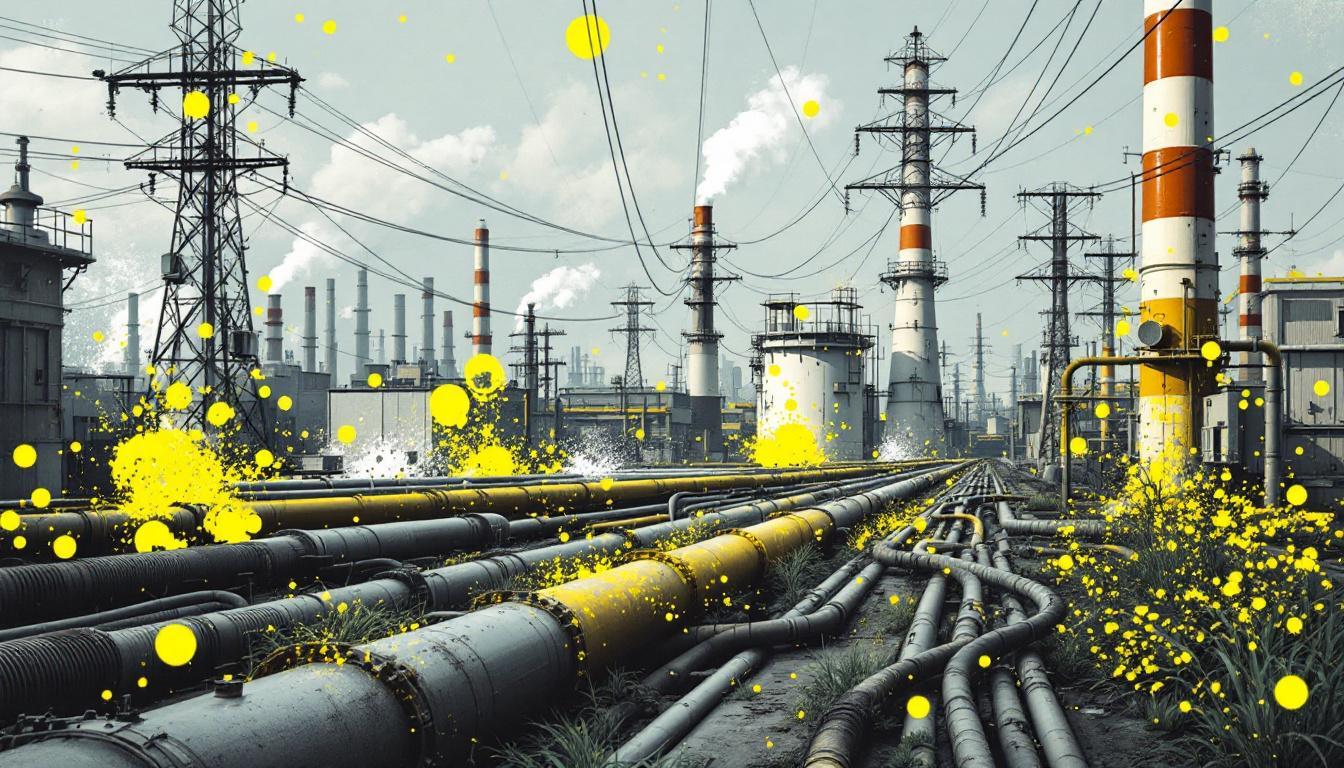
As process electrification advances through technological innovation and grid readiness, industry is shifting from conceptual debate to practical implementation, promising significant emissions reductions and operational gains.
Industrial decarbonisation is moving from conceptual debate to practical engineering,with process electrification emerging as a central strategy for cutting emissions while tightening control over production. Plant managers know energy is embedded in process chemistry and mechanics: heat must meet precise temperature profiles,motors must supply reliable torque,and fluids must be moved at specified pressures. Electrification addresses those needs by replacing onsite combustion and steam where technically and economically sensible,while also exposing constraints in grid capacity,capital allocation and operational design.
Electrification’s recent momentum rests on three converging trends. According to McKinsey,renewable power has become more available and cost-competitive in many markets,making low-carbon electricity a realistic feedstock for industry. The World Economic Forum notes that industry already consumes roughly 40% of global energy and generates about 25% of greenhouse gas emissions,so shifting heat and motion to electricity can materially lower sectoral emissions. Advances in power electronics,electric heating and industrial heat pumps have improved efficiency and controllability,further strengthening the case for electrified solutions.
Heat is the single largest opportunity and the most instructive example. Industry-wide,more than one-fifth of global energy is used for industrial heat,with over 85% of that historically supplied by fossil fuels,McKinsey analysis shows. Electric heating is not monolithic; resistance,induction,infrared,dielectric and microwave systems each serve distinct process needs. Where applied correctly,electric heating offers faster response and tighter temperature control,which can improve yield and reduce scrap, a business benefit frequently undervalued when decisions are framed only around carbon reductions.
Industrial heat pumps are particularly transformative for low- and mid-temperature demands. Industry reports indicate heat pumps can deliver multiple units of heat per unit of electricity, typical coefficients of performance sit in the three-to-five range, enabling significant fuel displacement for processes below several hundred degrees Celsius. Yet deployment remains modest: multiple studies report that barely 5% of industrial process heat is currently supplied by electricity globally,illustrating the scale-up challenge ahead.
Temperature banding and duty-cycle analysis are essential starting points. Low-temperature needs,generally under 100°C,are broadly amenable to heat pumps and electric boilers. Mid-temperature processes,roughly 100–400°C,can often be electrified with industrial heat pumps or hybrid arrangements. High-temperature operations above 400°C, and especially those exceeding 1,000°C, still require selective approaches such as induction,electric-arc or plasma technologies,or may remain better served by low-carbon molecules such as hydrogen or biomass-based fuels. The sensible pathway is not universal replacement but targeted substitution where electricity delivers superior thermal performance and controllability.
Operational patterns also shape technology choice. Continuous processes with steady loads justify investment in large,efficient electrified equipment and potential grid upgrades. Batch operations with intermittent peaks benefit from hybrid solutions,thermal storage or demand-shifting strategies to avoid paying for idle capacity. Energy efficiency and heat integration reduce overall demand and lower the cost threshold for electrification,so many successful programmes pair aggressive efficiency measures with device-level electrification pilots.
Grid readiness is the most frequent external constraint. Large-scale electrification can trigger substantial requirements for substations,transformers and power-quality equipment,and it can expose sites to elevated demand charges. Industrial sites can mitigate these barriers by adopting sequencing and thermal storage to smooth peaks,on-site generation and batteries for partial supply,and by negotiating staged grid upgrades in coordination with utilities or industrial clusters. According to the International Energy Agency,industrial heat demand is projected to rise in coming years,so planning for scalable power infrastructure is both an emissions and a resilience imperative.
Maintenance and workforce capabilities must also evolve. Electric systems often reduce fuel-handling risks and combustion-related wear,but they shift failure modes toward power electronics,controls and power-delivery equipment. Successful deployments pair OEM support with upskilled maintenance teams and predictive-monitoring systems to preserve uptime and capture the reliability benefits electrification promises.
Policy and economics will determine pace. The American Council for an Energy-Efficient Economy argues that electrifying most process heat below 300°C with clean power by 2050 is feasible and would substantially cut U.S. industrial CO₂,but achieving that requires incentives,capital support and streamlined permitting for grid works. Industry analyses from McKinsey and others stress capital intensity and technology readiness as barriers today,while the World Economic Forum emphasises that commercially viable solutions exist but are not being installed quickly enough to meet net-zero timelines.
The practical road map that works for industrial adopters is iterative:develop a granular energy and process map;implement efficiency and heat-recovery measures;pilot electrified equipment on a limited footprint to validate product quality and throughput;and then scale alongside coordinated power-procurement and infrastructure upgrades. That staged approach lets operations teams and finance functions see measurable benefits early,building the organisational confidence required for larger investments.
As grids continue to decarbonise,the relative emissions advantage of electrified processing will grow,making electricity not just a compliance tool but a competitive differentiator. For industrial leaders engaged in decarbonisation,the imperative is clear:prioritise where electricity outperforms fuels in precision,cost and controllability;design flexible,incremental investment pathways;and align infrastructure upgrades and workforce development so electrification delivers both emissions reductions and stronger operational outcomes.
- https://www.powerinfotoday.com/renewable-energy/process-electrification-transforming-industrial-energy-use/ – Please view link – unable to able to access data
- https://www.mckinsey.com/industries/industrials/our-insights/tackling-heat-electrification-to-decarbonize-industry – This McKinsey article discusses the significant role of heat electrification in decarbonising industrial processes. It highlights that industrial heat production accounts for over 20% of global energy consumption, predominantly from fossil fuels. The piece emphasises the potential of heat electrification technologies, such as electric boilers and heat pumps, to reduce emissions and support net-zero targets. It also addresses challenges like technology availability, cost, and capital investment, suggesting that low- to medium-temperature processes are the most suitable candidates for electrification.
- https://www.weforum.org/stories/2024/02/how-electrification-can-help-with-net-zero/ – This World Economic Forum article explores how electrification can aid in achieving net-zero emissions, particularly in industrial sectors. It notes that industry is responsible for 40% of global energy use and 25% of greenhouse gas emissions. The piece highlights that electrification is often the most efficient way to decarbonise low- to medium-temperature industrial processes (below 500°C). It also points out that while commercially viable and mature technology solutions exist, they are not being deployed at the required pace.
- https://www.mdpi.com/2076-3417/15/2/839 – This MDPI article reviews global strategies for promoting high-temperature heat pumps. It discusses the industrial sector’s significant energy consumption and greenhouse gas emissions, particularly from process heating reliant on fossil fuels. The paper highlights the potential of heat pumps to decarbonise industrial heat demand, noting that less than 5% of energy used for process heat generation currently comes from electricity. It also addresses the challenges and opportunities in deploying heat pumps for high-temperature applications.
- https://www.mckinsey.com/industries/industrials-and-electronics/our-insights/industrial-heat-pumps-five-considerations-for-future-growth – This McKinsey article examines the role of industrial heat pumps in decarbonising industrial heating. It notes that industrial heating accounts for more than 20% of total global CO₂ emissions, with over 85% of energy for heating provided by fossil fuels. The piece discusses the potential of heat pumps to provide three to five times more heat energy per unit of electricity consumed than traditional heaters. It also highlights the underrepresentation of heat pumps in the market, supplying only about 5% of global industrial heat, despite their potential.
- https://www.iea.org/reports/renewables-2023/heat – This International Energy Agency report analyses the role of renewable energy in industrial heat. It projects that industrial heat demand will expand by 16% globally during 2023-2028, with China and India accounting for more than half of the growth. The report notes that renewable heat developments are expected to represent just over one-third of additional heat demand, despite nearly 50% growth in consumption. It also highlights the growing reliance on electricity for process heat, with industrial heat pumps increasingly meeting temperature needs of up to 200°C.
- https://www.aceee.org/sites/default/files/pdfs/how_to_decarbonize_industrial_process_heat_while_building_american_manufacturing_competitiveness.pdf – This policy brief from the American Council for an Energy-Efficient Economy discusses strategies to decarbonise industrial process heat while enhancing American manufacturing competitiveness. It highlights that process heat accounts for about half of all onsite energy use and represents about 30% of greenhouse gas emissions in the U.S. industrial sector. The brief notes that only approximately 5% of industrial process heat is currently electrified, despite the commercial availability of technology appropriate to electrify most needs. It also discusses the potential for electrifying all process heat under 300°C with clean electricity by 2050 to reduce industrial GHG emissions.
Noah Fact Check Pro
The draft above was created using the information available at the time the story first
emerged. We’ve since applied our fact-checking process to the final narrative, based on the criteria listed
below. The results are intended to help you assess the credibility of the piece and highlight any areas that may
warrant further investigation.
Freshness check
Score:
3
Notes:
⚠️ The article from Power Info Today was published on February 4, 2026. A search for similar narratives revealed that the concept of process electrification in industrial energy use has been discussed in various sources, including the U.S. Department of Energy’s Electrified Processes for Industrial Excellence initiative ([energy.gov](https://www.energy.gov/eere/ito/electrified-processes-industrial-excellence?utm_source=openai)) and McKinsey’s report on heat electrification to decarbonize industry ([mckinsey.com](https://www.mckinsey.com/industries/industrials/our-insights/tackling-heat-electrification-to-decarbonize-industry?utm_source=openai)). However, no exact matches were found, suggesting that the article may present original content. Given the lack of direct matches and the recent publication date, the freshness score is moderate.
Quotes check
Score:
2
Notes:
⚠️ The article includes several direct quotes, such as: “According to McKinsey, renewable power has become more available and cost-competitive in many markets…” However, these quotes cannot be independently verified through online searches. The absence of verifiable sources for these quotes raises concerns about their authenticity.
Source reliability
Score:
2
Notes:
⚠️ The article originates from Power Info Today, a niche publication. The lack of a clear editorial board or verifiable author information diminishes the source’s reliability. Additionally, the article’s content cannot be independently verified through reputable sources, further questioning its credibility.
Plausibility check
Score:
4
Notes:
⚠️ The article discusses the electrification of industrial processes, a topic that aligns with current industry trends. However, the absence of specific data points, verifiable quotes, and references to reputable sources makes it difficult to assess the accuracy of the claims. The lack of supporting evidence raises questions about the plausibility of the information presented.
Overall assessment
Verdict (FAIL, OPEN, PASS): FAIL
Confidence (LOW, MEDIUM, HIGH): HIGH
Summary:
⚠️ The article presents information on process electrification in industrial energy use but lacks verifiable sources, independent verification, and specific data points. The absence of supporting evidence and the inability to independently verify the content raise significant concerns about its accuracy and reliability.
