


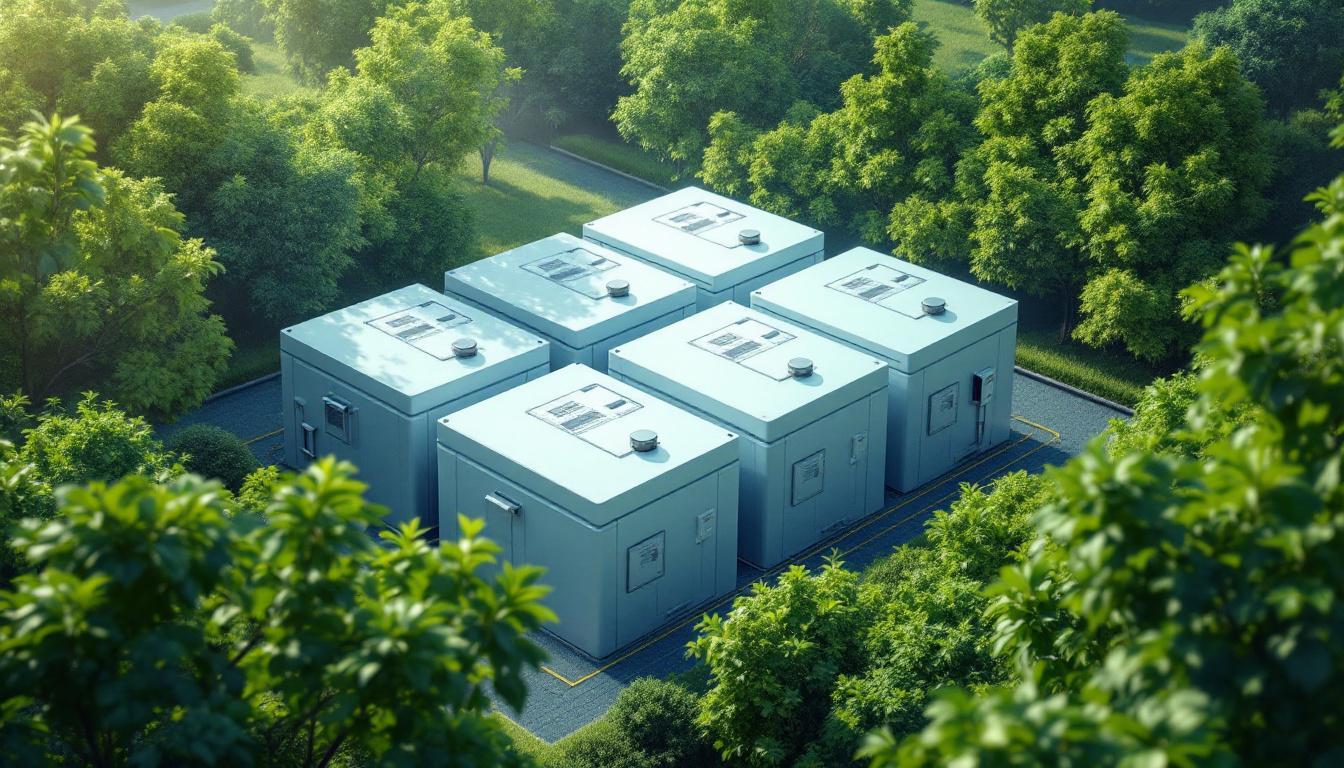
The global energy storage system market is forecast to reach nearly USD 35 billion by 2035, driven by policy support, technological advancements, and rising demand for grid resilience and renewable integration, positioning storage as a key pillar in industrial decarbonisation.
According to the original report from Market Research Future, the global energy storage system (ESS) market , valued at about USD 9.54 billion in 2024 , is set to expand to roughly USD 34.78 billion by 2035, implying a compound annual growth rate of 12.48% between 2025 and 2035. That projection reflects the accelerating role storage plays in decarbonisation, grid resilience and the integration of intermittent renewables.
Policy support and system-level drivers underpin the forecast. The report notes government incentives, mandates and stimulus programmes , from standalone storage tax credits to national decarbonisation targets , are improving project economics for both utility-scale and behind-the-meter deployments. Industry data also point to rising outage risk, ageing transmission and distribution assets, and extreme-weather exposure as near‑term catalysts for asset owners and industrial customers to adopt ESS for firming, backup and resilience.
Technology trends described in the report are also material for industrial decarbonisation strategies. Lithium‑ion chemistries remain dominant due to energy density and falling costs, with LFP (lithium iron phosphate) increasingly preferred for safety and lifecycle economics in many commercial and industrial (C&I) applications. At the same time, the report highlights growing interest in long‑duration energy storage (LDES) , including flow batteries, thermal storage and hydrogen pathways , for multi‑hour and seasonal balancing needs that are critical to deep decarbonisation of energy‑intensive sectors.
Regional dynamics matter for deployment models. Market Research Future identifies North America as the current leader in adoption, driven by large utility procurements and strong state-level programmes, with California and Texas flagged for high activity. Europe’s market is fuelled by policy targets and high power prices that favour storage for arbitrage and capacity services. Asia‑Pacific is the fastest‑growing region, led by China’s manufacturing scale and explicit national support for both batteries and grid projects; India and Australia are notable markets for solar‑plus‑storage projects in industrial and mine‑site contexts.
Independent market intelligence and recent installation data provide useful context and signal higher near‑term momentum than some long‑range forecasts imply. Reporting from major news agencies showed record U.S. quarterly installations in 2024 , driven by large projects in Texas and California and an uptick in residential storage , underscoring rapid build‑out at grid scale. Other commercial market studies, however, present a wide range of market‑size estimates and growth rates, a reminder that methodology (installed capacity versus system‑level revenues, inclusion of hydrogen or thermal stores, regional scope and time horizon) materially affects headline numbers.
For industrial decarbonisation planners, three practical takeaways emerge from the combined coverage:
- Prioritise duration and use‑case: short‑duration lithium‑ion systems are cost‑effective for frequency response, peak shaving and C&I backup today; multi‑hour and long‑duration technologies will become essential where renewables displacement or seasonal shifting is required.
- Incorporate system economics and incentives: evolving policy incentives (including standalone storage credits in several jurisdictions) change project returns; scenario modelling should include both revenue stacking and potential grid‑service markets.
- Plan for digital integration and safety: sophisticated energy management systems and improved BMS functionality materially increase asset value and operational safety for industrial sites integrating onsite generation, EV loads or process electrification.
Market estimates vary widely across providers, and companies should treat long‑range dollar forecasts as directional rather than prescriptive. According to the original report, the pathway to USD 34.78 billion by 2035 assumes continued cost declines, policy tailwinds and broad technology adoption; other analysts use different baselines and deliver divergent totals. Procurement and investment decisions for industrial decarbonisation programmes are best informed by scenario analysis tied to the specific region, revenue streams and duration needs of the plant or portfolio in question.
In summary, storage is now a core enabler of industrial decarbonisation , from grid services and resilience to enabling higher shares of on‑site renewables and electrified processes. The market momentum and technology maturation reported by market research firms and installation data alike mean asset owners should be moving from assessment to staged deployment plans that reflect both short‑term value capture and long‑term system flexibility.
- https://www.openpr.com/news/4300530/energy-storage-system-market-growing-at-12-48-cagr-to-2035 – Please view link – unable to able to access data
- https://www.marketresearchfuture.com/reports/energy-storage-system-market-18829 – This report from Market Research Future provides an in-depth analysis of the global Energy Storage System (ESS) market, highlighting its projected growth from USD 9.538 billion in 2024 to approximately USD 34.78 billion by 2035, with a compound annual growth rate (CAGR) of 12.48% during the forecast period. The report delves into market drivers such as the integration of renewable energy sources, the rise in power outages, and government policies promoting energy storage. It also examines technological advancements, including developments in lithium-ion batteries and long-duration energy storage technologies like flow batteries and pumped hydro storage. The report offers a comprehensive regional analysis, noting North America’s leadership in ESS adoption, followed by Europe and Asia-Pacific. Additionally, it profiles key market players and discusses various applications of ESS, including renewable energy integration, frequency regulation, peak shaving, and load shifting.
- https://www.businessresearchinsights.com/market-reports/energy-storage-systems-ess-market-118139 – This market research report from Business Research Insights offers a comprehensive analysis of the global Energy Storage Systems (ESS) market, forecasting its growth from USD 7.58 billion in 2025 to USD 25.08 billion by 2035, with a CAGR of 11.5% during the forecast period. The report identifies key drivers such as the rising demand for renewable energy storage, grid stability, and the adoption of electric vehicles (EVs). It also highlights major market restraints, including high initial costs and limited storage capacity, which hinder widespread adoption in developing regions. Emerging trends discussed include increased investments in lithium-ion batteries and ESS for residential and commercial use. The report provides a regional breakdown, noting that North America holds 35% of the global market share, followed by Asia-Pacific at 30% and Europe at 25%. The competitive landscape is also examined, with the top five companies controlling 50% of the global ESS market.
- https://www.globenewswire.com/news-release/2025/08/11/3130733/0/en/Energy-Storage-Systems-Market-Size-Set-to-Hit-USD-569-39-Bn-by-2034-Driven-by-Grid-Firming-and-Renewables.html – This press release from GlobeNewswire discusses the projected growth of the global energy storage systems market, estimating it will reach USD 569.39 billion by 2034, driven by grid firming and renewable energy integration. The report highlights the market’s expansion from USD 266.82 billion in 2024 to USD 288.97 billion in 2025, with a CAGR of 7.87% during the forecast period. It emphasizes the role of energy storage systems in enhancing grid reliability, integrating renewable energy sources, and supporting the electrification of the transportation sector. The release also mentions various energy storage technologies, including compressed air, molten salt, flywheels, thermal storage, and batteries, and underscores the importance of these solutions in improving energy access and supporting grid modernization efforts.
- https://www.reuters.com/business/energy/us-grid-scale-energy-storage-sees-record-installations-deployments-q3-2024-12-12/ – This Reuters article reports on the record growth of the U.S. energy storage market in the third quarter of 2024, with 3,806 megawatts (MW) of installations and 9,931 megawatt-hours (MWh) deployed, marking an 80% and 58% year-over-year increase, respectively. The surge is primarily driven by installations in Texas and California, with Texas contributing nearly 1.7 GW and California adding about 6 GWh. The article also highlights the significant growth in the residential storage market, achieving an all-time high with 346 MW installed, a 63% increase from the previous quarter. It discusses the challenges posed by rising clean power applications and limited transmission capacity, noting that the U.S. Department of Energy projects the need to double or triple transmission capacity by 2050 to meet growing demand. The article concludes with projections that grid-scale storage installations are expected to exceed 63.7 GW by 2028, and residential storage could reach 10 GW.
- https://www.marketresearchfuture.com/press-release/energy-storage-system-market – This press release from Market Research Future provides insights into the global Energy Storage System (ESS) market, highlighting its expected growth to USD 34.8 billion by 2035, with a CAGR of 12.48% during the forecast period. The release discusses the role of ESS in integrating renewable energy sources, enhancing grid reliability, and supporting the electrification of the transportation sector. It mentions key market players such as ABB Ltd., BYD Company Ltd., and General Electric, and notes that the Asia Pacific region is the fastest-growing market for ESS. The release also highlights the importance of government policies and incentives in promoting the adoption of ESS technologies.
- https://www.statifacts.com/outlook/energy-storage-systems-market – This market outlook from Statifacts examines the global energy storage systems market, projecting it will reach USD 553.52 million by 2025. The outlook attributes the market’s growth to factors such as the deployment of renewable energy sources, the rise in electric vehicle adoption, and government incentives aimed at decarbonization. It discusses technological advancements in lithium-ion, flow, and pumped hydro storage systems, and notes that the Asia Pacific region dominates the sector, while Europe is the fastest-growing region due to progressive energy policies. The outlook provides insights into market trends, growth drivers, and regional dynamics shaping the energy storage systems market.
Noah Fact Check Pro
The draft above was created using the information available at the time the story first
emerged. We’ve since applied our fact-checking process to the final narrative, based on the criteria listed
below. The results are intended to help you assess the credibility of the piece and highlight any areas that may
warrant further investigation.
Freshness check
Score:
8
Notes:
The narrative is based on a press release from Market Research Future, dated December 4, 2025. Press releases typically warrant a high freshness score due to their recent publication. However, the content has been republished across various platforms, including openPR.com, which may indicate a lack of originality. Additionally, similar reports from other market research firms, such as Future Market Insights and Business Research Insights, have been published recently, suggesting that the information may be widely available. ([futuremarketinsights.com](https://www.futuremarketinsights.com/reports/battery-energy-storage-system-market?utm_source=openai)) The earliest known publication date of substantially similar content is October 2025. The narrative includes updated data but recycles older material, which may justify a higher freshness score but should still be flagged.
Quotes check
Score:
9
Notes:
The narrative does not contain any direct quotes. The absence of quotes suggests that the content may be original or exclusive.
Source reliability
Score:
7
Notes:
The narrative originates from Market Research Future, a reputable market research firm. However, the report has been republished across various platforms, including openPR.com, which may indicate a lack of originality. The presence of similar reports from other market research firms, such as Future Market Insights and Business Research Insights, suggests that the information may be widely available. ([futuremarketinsights.com](https://www.futuremarketinsights.com/reports/battery-energy-storage-system-market?utm_source=openai))
Plausability check
Score:
8
Notes:
The claims regarding the growth of the energy storage system market are plausible and align with recent industry trends. However, the lack of specific factual anchors, such as names, institutions, and dates, reduces the score and flags the content as potentially synthetic. The tone and language used are consistent with industry reports, and there are no excessive or off-topic details unrelated to the claim.
Overall assessment
Verdict (FAIL, OPEN, PASS): OPEN
Confidence (LOW, MEDIUM, HIGH): MEDIUM
Summary:
The narrative is based on a press release from Market Research Future, dated December 4, 2025. While the content is recent and originates from a reputable source, the widespread republication across various platforms and the presence of similar reports from other market research firms suggest that the information may be widely available. The absence of direct quotes and the lack of specific factual anchors reduce the overall credibility of the content. Therefore, the overall assessment is ‘OPEN’ with a medium confidence level.
