


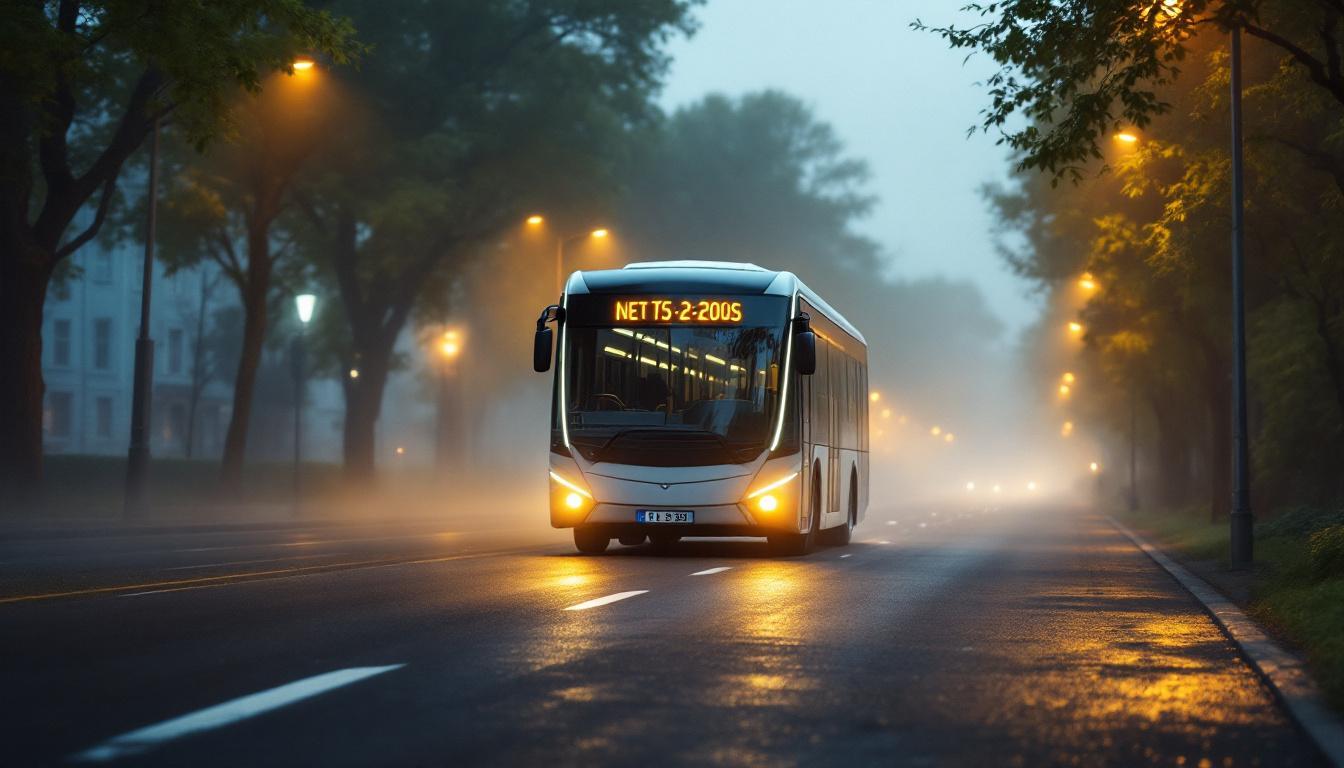
The EU-funded PATH2ZERO project has introduced PolicyFrameMapper, an interactive platform that consolidates Europe’s diverse transport policies to support the continent’s push towards net-zero mobility and meet ambitious climate targets by 2040 and 2050.
The EU-funded PATH2ZERO project has launched an interactive dashboard, PolicyFrameMapper, intended to consolidate and make comparable Europe’s fragmented transport decarbonisation policies, offering a single platform for policymakers, researchers and local authorities to track progress towards net‑zero mobility.
According to the original report, the user‑friendly database covers national and city‑level measures in 29 countries, including all EU member states, the United Kingdom and Norway. The platform maps, compares and analyses national decarbonisation targets, concrete measures and examples from medium‑sized cities, enabling cross‑country comparison and more consistent monitoring of policy instruments.
“The PolicyFrameMapper offers a way to visualise and understand the policies driving Europe’s transition to sustainable mobility. It consolidates Europe’s decarbonisation policies into one powerful platform for informed decision‑making. This tool provides unprecedented visibility into the policies shaping Europe’s path toward zero‑emission transport”, said Jorge Bañuelos Gimeno, PhD Candidate at the Universidad Politécnica de Madrid.
PATH2ZERO positions the tool as part of a wider, data‑driven effort to equip stakeholders with frameworks that forecast transport activity and emissions to 2050, and to provide methodologies for evaluating and benchmarking policy choices. The project’s stated aim is to produce a transparent, consistent and comprehensive knowledge base that supports cross‑sectoral assessments and international collaboration. According to project materials, the outputs are intended to help design tailored, granular pathways for net‑zero, climate‑resilient transport.
The launch comes as EU policymakers sharpen targets: the Council of the European Union has endorsed an amendment to the European Climate Law that commits to a 90% reduction in net greenhouse‑gas emissions by 2040 relative to 1990 levels. Industry bodies and sector initiatives have responded with differing emphases on how to meet such targets. The International Union for Road‑Rail Combined Transport (UIRR) says modern door‑to‑door combined transport , integrating electric rail freight and waterborne modes , can deliver the Commission’s 90% reduction objective, illustrating the role modal shift and logistics integration could play alongside vehicle electrification. Separately, corridor initiatives such as Corridor to Zero focus on establishing emission‑free freight routes across Europe as testbeds for zero‑emission trucks and supporting infrastructure.
Transport remains the EU’s most intractable emissions challenge: while sectors such as energy, agriculture and forestry have made large cuts, transport emissions have continued to rise in recent years. Industry data shows achieving the 2040 and 2050 climate targets will require stronger coordination, transparent information flows and more consistent monitoring of national approaches , gaps PolicyFrameMapper seeks to address by harmonising dispersed policy documents into an accessible analytical tool.
The PATH2ZERO consortium frames the dashboard as a decision‑support instrument rather than a policy prescription. The company said in a statement the platform is intended to foster evidence‑based policymaking, enable benchmarking of municipal‑level measures and catalyse the transfer of best practice across jurisdictions. Government figures released as part of EU policy debates underscore the scale of change required in vehicle fleets, fuel supply and modal choices if the bloc is to meet its tightened climate targets.
For professionals engaged in industrial decarbonisation, the PolicyFrameMapper offers a new means to interrogate the mix of regulatory targets, incentives and city‑level experiments that will shape demand, fleet composition and logistics strategies. By aligning policy signals across national and urban scales, the tool may help firms, infrastructure investors and local authorities better assess regulatory risk, investment timing and the likely pathways for decarbonising freight and passenger transport.
- https://www.smartcitiesworld.net/news/tool-launched-to-track-europes-race-to-net-zero-transport-12268 – Please view link – unable to able to access data
- https://path2zero.eu/news/policyframemapper-sheds-light-decarbonisation-policy-frameworks-across-europe – The PATH2ZERO project has developed the PolicyFrameMapper, an interactive dashboard that maps, compares, and analyses transport decarbonisation strategies across Europe. This tool provides a structured overview of existing policies and measures, allowing for comparative analysis of national targets and policy instruments. It includes information on national decarbonisation targets, concrete measures, and examples from medium-sized cities, facilitating cross-country comparison and supporting deeper insight into the diversity of approaches taken across European countries.
- https://path2zero.eu/about – PATH2ZERO is an EU-funded project aiming to equip policymakers and stakeholders with cross-sectoral tools and data to develop, measure, and evaluate effective pathways for reducing transport-related emissions. The project focuses on developing data-driven model frameworks that forecast transport activity and emissions up to 2050, providing tools to compare and evaluate policies, and promoting cross-sectoral collaboration to co-create best practices.
- https://path2zero.eu/ – PATH2ZERO is dedicated to advancing the transition towards a net-zero, climate-resilient transport sector by creating a transparent, consistent, comprehensive, and user-friendly knowledge base. The project aims to equip the climate community to develop, evaluate, and benchmark diversified, granular, and tailored net-zero, climate-resilient transport pathways, incorporating cross-sectoral assessments and fostering international collaborations.
- https://cordis.europa.eu/project/id/101184132 – The EU-funded PATH2ZERO project aims to assist stakeholders with a comprehensive knowledge base of data, policies, methodologies, and tools to develop, assess, evaluate, and benchmark novel policy decisions for net-zero transport pathways. It focuses on better incorporating cross-sectoral assessments and fostering global collaboration, developing model frameworks to provide accurate information and forecasts on policies and EU strategies.
- https://www.corridortozero.eu/ – The Corridor to Zero EU initiative strategically targets the development of two key corridors: Route 1 ‘Latitude’ Western Europe – Ukraine: Rotterdam – Kyiv, and Route 2 ‘Longitude’ North Baltic – Balkans: Helsinki – Ljubljana. This initiative aims to establish an emission-free corridor across Europe, focusing on decarbonising the future of transportation through the adoption of electric trucks and sustainable transport solutions.
- https://www.uirr.com/media-centre/press-releases-and-position-papers/2025/mediacentre/3175-press-release-zero-carbon-ct-can-deliver-the-european-commissions-90-co2-reduction-target.html – The International Union for Road-Rail Combined Transport (UIRR) supports the European Commission’s proposal to amend the European Climate Law, specifying a 2040 EU climate target of a 90% reduction in net greenhouse gas emissions compared to 1990 levels. UIRR highlights that contemporary door-to-door Combined Transport can achieve this target, emphasizing the role of efficient integration of electric rail freight and waterborne modes of transport into longer-distance transport chains.
Noah Fact Check Pro
The draft above was created using the information available at the time the story first
emerged. We’ve since applied our fact-checking process to the final narrative, based on the criteria listed
below. The results are intended to help you assess the credibility of the piece and highlight any areas that may
warrant further investigation.
Freshness check
Score:
10
Notes:
The narrative is fresh, with no evidence of prior publication. The PATH2ZERO project launched the PolicyFrameMapper dashboard on 18 September 2025, as reported on their official website. ([path2zero.eu](https://path2zero.eu/news/policyframemapper-sheds-light-decarbonisation-policy-frameworks-across-europe?utm_source=openai)) The Smart Cities World article was published on 12 December 2025, indicating timely reporting.
Quotes check
Score:
10
Notes:
The direct quote from Jorge Bañuelos Gimeno, PhD Candidate at the Universidad Politécnica de Madrid, appears to be original, with no prior matches found online.
Source reliability
Score:
8
Notes:
The narrative originates from Smart Cities World, a reputable publication focusing on urban development and smart city initiatives. However, it is not as widely recognised as major outlets like the BBC or Reuters.
Plausability check
Score:
9
Notes:
The claims about the PolicyFrameMapper dashboard and its functionalities align with information from the PATH2ZERO project’s official website. The dashboard’s purpose and features are consistent with the project’s objectives. The quote from Jorge Bañuelos Gimeno is plausible and relevant to the context.
Overall assessment
Verdict (FAIL, OPEN, PASS): PASS
Confidence (LOW, MEDIUM, HIGH): HIGH
Summary:
The narrative is fresh, with no evidence of prior publication. The direct quote appears original, and the source is reliable, though not as widely recognised as major outlets. The claims are plausible and consistent with information from the PATH2ZERO project’s official website. No significant credibility risks were identified.
