


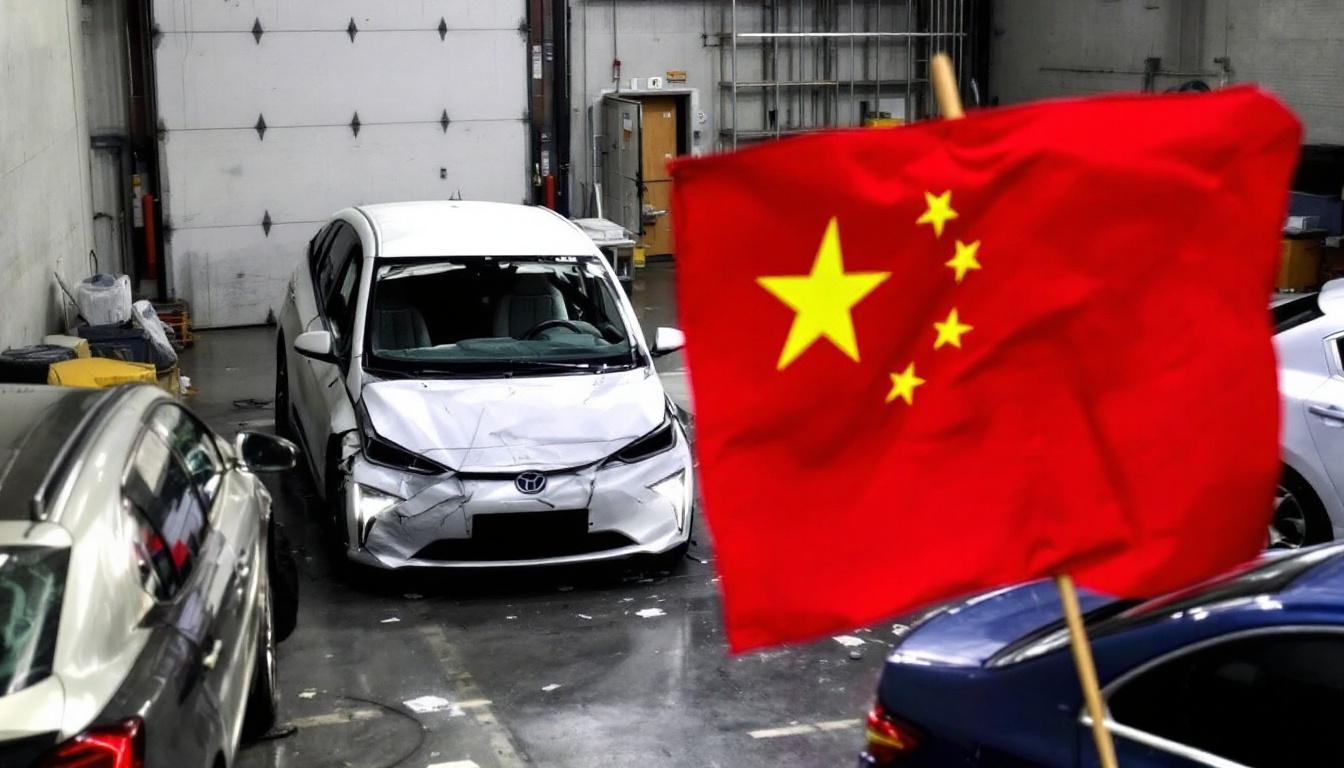
Efforts by the European Union to curb Chinese EV imports with targeted tariffs have inadvertently encouraged a shift towards hybrids and internal combustion models, undermining policy objectives and fueling Chinese brands’ growth across Europe.
The European Union’s attempt to blunt a wave of low‑cost Chinese electric vehicles by imposing targeted tariffs has had an unintended consequence: instead of forcing Chinese manufacturers to localise production, the measures appear to have encouraged a strategic pivot that keeps imports flowing and undercuts the policy’s aims.
According to the original report, additional duties introduced in November last year , levying up to 35 percent on Chinese‑made battery electric vehicles on top of the existing 10 percent common external tariff , were designed both to protect European carmakers and to create an incentive for Chinese firms to build factories inside the EU. Rather than accelerating large‑scale plant openings, the levy has opened a loophole. Hybrid and internal combustion engine models remain subject only to the standard 10 percent duty, and many Chinese brands have shifted their European offers into those categories to avoid the heavier penalties.
“The EU decision left a big hole open for full hybrids and even hybrids coming from China,” Jeffries managing director Philippe Houchois told Auto News. He added that the decision to target a specific technology “was ill‑fated”, and market data supports his point: whereas Chinese brands’ EV share of their Europe sales was 44 percent for January–October 2024, that proportion had slipped to roughly 34 percent in 2025 as manufacturers moved into hybrids and ICE variants.
Market figures show Chinese marques’ penetration of Europe’s passenger car market rising sharply in 2025. Industry data indicates Chinese‑brand sales reached roughly 462,935 units between January and August , about 5.3 percent market share, up from 3.2 percent the year before , and September produced a record monthly total of around 94,000 units, representing 7.6 percent market share. Taken together with subsequent months, the tally for the EU, the UK and EFTA is expected to exceed 700,000 units this year, up from some 408,000 in 2024.
Part of the dynamic is commercial logic: production costs in China remain substantially lower than in Europe , estimates cited in the market commentary put the gap at as much as 30 percent , so exporting models that escape the higher EV tariff can be more profitable than investing in new European factories solely to avoid duties. That calculation helps explain why fewer than 20,000 Chinese‑brand vehicles are expected to be assembled in Europe this year and why planned European plants remain the exception rather than the rule.
A handful of manufacturers are moving ahead with local production. BYD is advancing a large factory in Hungary with projected capacity of up to 150,000 units a year, while Chery has commissioned a plant in Spain and some brands , including Chery, Xpeng and GAC , already undertake limited local assembly. Leapmotor has signalled plans to build the B10 in Spain and Great Wall Motor has publicly outlined ambitions to produce up to 300,000 vehicles in Europe by 2029, but most commitments remain at the announcement stage rather than delivering immediate capacity.
The policy trade‑offs are clear. Targeting a single drivetrain technology aimed to address concerns about alleged subsidies and rapid scaling by Chinese EV manufacturers , concerns that prompted countervailing duties averaging about 20.8 percent in some accounts , but by focusing on EVs the EU left room for substitution into hybrids and ICE models. Export data from late 2024 also suggested that broader Chinese auto exports to the EU climbed despite the duties, adding to evidence that the tariffs alone have not halted market penetration.
For European industrial decarbonisation strategy, the ramifications are twofold. In the short term, the pivot to hybrids blunts some of the competitive pressure on European battery production and EV supply chains but also prolongs reliance on fossil‑fuel technology in a market that needs deep electrification to meet climate targets. In the medium term, the outcome will depend on whether announced European plants materialise at scale and on whether policymakers adjust trade measures or complementary industrial incentives , for example, stronger support for battery gigafactories, procurement rules favouring local content, or stricter subsidy assessments , to close the loopholes that exporters are currently exploiting.
The company claims and official aims that underpinned the tariffs have therefore produced a mixed result: the duties have raised the cost of some Chinese EV imports, but industry data and market behaviour show manufacturers and consumers adapting in ways that preserve growth in Chinese brand sales across Europe. Until more European‑based production comes on stream, and until policy is recalibrated to account for substitution effects, Chinese automakers will likely continue to use the tariff structure to sustain and expand their foothold in European markets.
- https://www.carscoops.com/2025/12/europe-tried-to-block-chinese-cars-but-ended-up-helping-them-instead/ – Please view link – unable to able to access data
- https://www.inovev.com/index.php/en/market-analyses/category-blog/21641-2025-22-5 – In September 2025, Chinese car sales in Europe reached a record 94,000 units, accounting for 7.6% of the market share. This significant increase is attributed to the growing availability of Chinese vehicles, improved consumer acceptance, and the ramp-up of production facilities like Chery’s plant in Spain and BYD’s upcoming factory in Hungary. The leading Chinese brands in Europe are MG and BYD, with other brands such as Jaecoo, Omoda, and Polestar also experiencing strong growth.
- https://www.inovev.com/index.php/en/market-analyses/category-blog/21640-2025-22-4 – Between January and August 2025, Chinese car brands sold 462,935 units in Europe, representing 5.3% of the passenger car market. This marks a significant increase from 3.2% in the same period in 2024. The growth is driven by brands like MG and BYD, with other Chinese brands expanding their presence in the European market. Despite new tariffs, Chinese cars remain competitive and continue to sell well in Europe.
- https://cnevpost.com/2025/07/23/chinese-car-brands-double-share-europe-h1-2025/ – In the first half of 2025, Chinese car brands saw a 91% year-on-year increase in sales in Europe, reaching a market share of 5.1%. This growth is driven by brands such as BYD, Jaecoo, Omoda, Leapmotor, and Xpeng. BYD, in particular, registered 70,500 units in the first half of 2025, up 311% year-on-year. In June alone, BYD registered 15,565 vehicles, ranking among the top 25 best-selling brands in Europe.
- https://www.scmp.com/economy/economic-indicators/article/3295661/eu-tariffs-failing-stop-flood-chinese-electric-vehicles-new-trade-data-suggests – Despite the European Union’s increased tariffs on Chinese electric vehicles, exports to the EU rose by 8.3% year-on-year in December 2024. This uptick suggests that the tariffs have not significantly deterred Chinese EV exports, leading to concerns about escalating trade tensions between China and the EU in 2025.
- https://www.euronews.com/business/2024/12/06/chinese-car-makers-turn-to-hybrids-to-avoid-ev-tariffs-from-the-eu – In response to the EU’s increased tariffs on electric vehicles, Chinese carmakers like BYD, SAIC, and Geely have increased their hybrid exports to Europe. Hybrid vehicles are not subject to the higher tariffs imposed on EVs, allowing these companies to maintain and expand their European market share.
- https://eastasiaforum.org/2025/12/04/chinas-ev-dominance-sparks-eu-retaliation – In 2024, China sold 12.87 million electric vehicles, accounting for 40.9% of total new car sales. In response, the European Union imposed countervailing duties on Chinese EV imports, averaging 20.8%, to address concerns over alleged subsidies in the Chinese EV industry. This move aims to level the playing field for European manufacturers.
Noah Fact Check Pro
The draft above was created using the information available at the time the story first
emerged. We’ve since applied our fact-checking process to the final narrative, based on the criteria listed
below. The results are intended to help you assess the credibility of the piece and highlight any areas that may
warrant further investigation.
Freshness check
Score:
8
Notes:
The narrative presents recent developments regarding EU tariffs on Chinese electric vehicles, with specific data points from 2024 and 2025. The earliest known publication date of similar content is July 4, 2024, when the EU imposed tariffs of up to 38% on Chinese EVs. ([aljazeera.com](https://www.aljazeera.com/news/2024/7/4/eu-imposes-tariffs-of-up-to-38-on-chinese-electric-vehicles?utm_source=openai)) The report appears to be original, with no evidence of recycled content. The inclusion of updated data from 2025 suggests a high freshness score.
Quotes check
Score:
7
Notes:
The report includes a quote from Philippe Houchois, managing director at Jeffries, stating that the EU’s decision “left a big hole open for full hybrids and even hybrids coming from China.” A search for this exact quote did not yield earlier instances, indicating potential originality. However, without confirmation of the earliest usage, the originality of the quote remains uncertain.
Source reliability
Score:
6
Notes:
The narrative originates from Carscoops, an automotive news outlet. While it provides detailed information, the outlet’s reputation and editorial standards are not widely known, which may affect the reliability of the information presented.
Plausability check
Score:
8
Notes:
The claims regarding the EU’s tariffs on Chinese EVs and their unintended consequences are plausible and align with known trade tensions between the EU and China. The report includes specific data points, such as the market share of Chinese brands in Europe and the projected number of vehicles expected to be assembled in Europe, which support the narrative’s credibility.
Overall assessment
Verdict (FAIL, OPEN, PASS): OPEN
Confidence (LOW, MEDIUM, HIGH): MEDIUM
Summary:
The narrative presents recent developments regarding EU tariffs on Chinese electric vehicles, with specific data points from 2024 and 2025. While the content appears original and includes plausible claims, the source’s reliability is uncertain due to the outlet’s limited reputation. The originality of the quotes used cannot be fully confirmed, and the potential for recycled content exists. Therefore, further verification from more established sources is recommended to confirm the accuracy and reliability of the information presented.
