


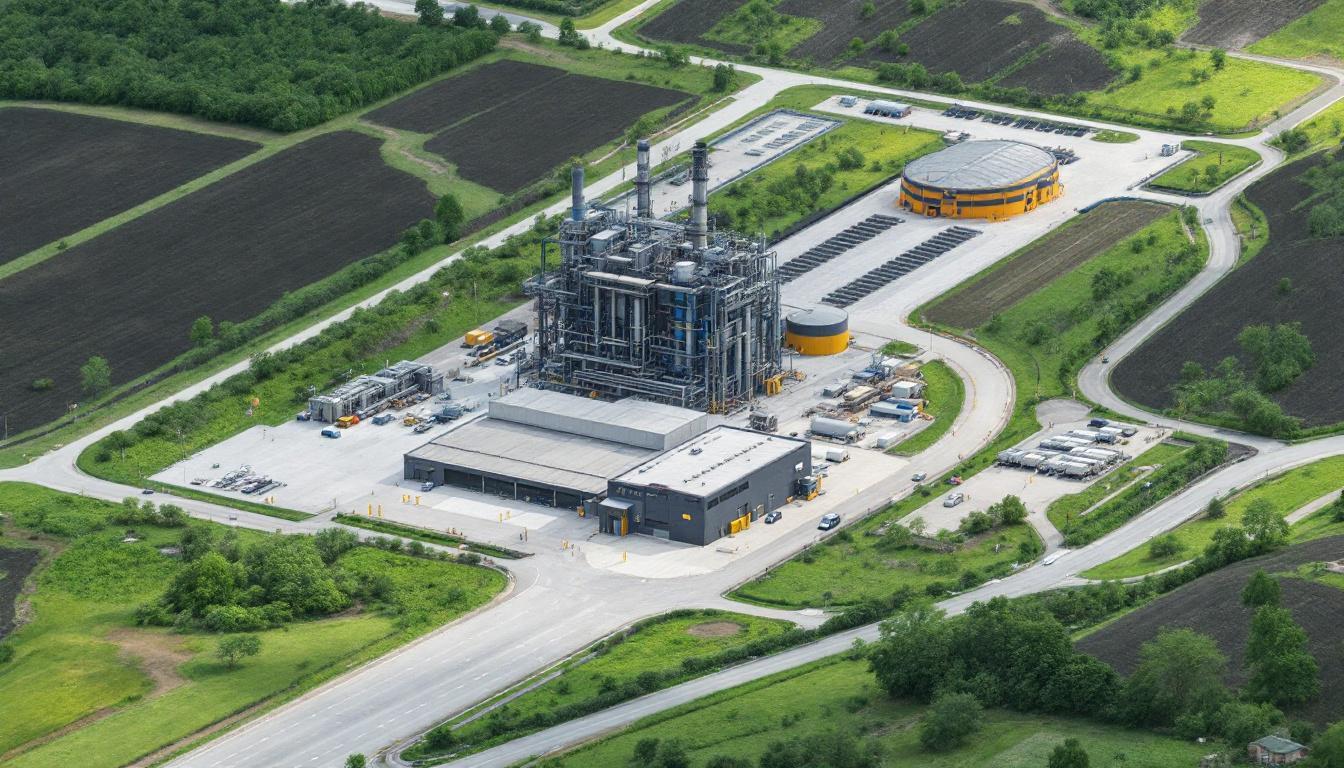
Europe’s push to decarbonise heavy industry advances with tightened carbon border policies and financial measures, but industry stakeholders warn of implementation challenges and the need for clearer long-term policies to secure competitive and sustainable growth.
Europe’s drive to decarbonise heavy industry has moved from policy aspiration to a make-or-break condition for long-term industrial survival and strategic autonomy, yet the path remains politically and technically fraught. French and European manufacturers, investors and civil-society actors argue that a predictable, progressively tightening carbon-pricing framework is essential to attract the capital needed to retrofit steel, cement, chemicals and other foundational sectors and to build the supply chains for low-carbon technologies.
Since 2005 the EU Emissions Trading System has required industrial emitters to surrender allowances matching their CO₂ emissions, though many exposed sectors historically received large allocations free of charge. According to industry critics, that practice weakened the price signal that drives investment in emissions cuts. Policymakers have sought to correct this by phasing out free allocations and substituting a border carbon charge to prevent carbon leakage and level the playing field for European producers.
That border mechanism, the EU’s Carbon Border Adjustment Mechanism, completed a transitional reporting phase in which importers logged embedded emissions, and has been reinforced and broadened in recent months. The European Commission proposed tightening CBAM and expanding its product scope on 17 December 2025, introducing measures to close circumvention routes and setting up a temporary support scheme to shield vulnerable EU producers while rewarding cleaner suppliers globally, the Commission said in a press release. The definitive system began on 1 January 2026, covering a first tranche of carbon‑intensive goods and signalling a firmer carbon price for trade-exposed sectors.
Industry response has been mixed. According to reporting in Le Monde and other outlets, many manufacturers and trade groups welcome the ambition but warn that delaying the phase‑out of free allowances would undermine investment signals and send projects, and jobs, abroad. At the same time business leaders and trade associations have flagged practical challenges with CBAM’s implementation: reliably verifying CO₂ footprints of imports, distinguishing recycled from virgin material and preventing fraud remain significant hurdles, a December 2025 review by the Commission acknowledged.
Brussels is attempting to balance competitiveness and climate objectives amid wider economic unease. The EU’s emergency competitiveness plan, presented in February 2025, pledged a €100 billion decarbonisation fund and measures to cut energy costs, accelerate permitting and centralise purchasing of strategic raw materials, according to EU documents. Observers note the fund is limited compared with independent estimates of required investment and that parts of the package, such as narrowed sustainability reporting, have provoked internal controversy.
Political negotiations have also altered the timetable for transitional relief. Industry sources reported that the European Council approved an adjustment allowing importers to buy CBAM certificates to cover 2026 emissions from February 2027, a concession intended to give businesses more time to adapt. That measure, and proposals to expand CBAM’s coverage to include additional downstream steel and aluminium‑intensive products, underline the uncertainty firms must factor into project finance and long‑range planning.
For industrial decarbonisation to succeed at scale, policy credibility must be matched by targeted public support, accessible finance and clear technical standards. Project developers and cleantech investors need long horizons and stable price expectations to commit to capital‑intensive electrolytic processes, alternative cements, hydrogen infrastructures and industrial heat solutions. Without that predictable regulatory backbone, France and the EU risk losing the industrial capacity and technological leadership that decarbonisation is intended to secure, while exposing themselves to both higher import costs and strategic dependence.
Industry and policy actors now face two linked tests: deliver a carbon‑pricing trajectory that reliably rewards low‑emission production, and couple it with pragmatic financial and regulatory instruments that lower the execution risk of major industrial decarbonisation projects. The outcome will determine whether Europe can translate climate ambition into resilient, competitive industrial renewal.
- https://www.lemonde.fr/idees/article/2026/02/26/la-decarbonation-est-la-condition-de-la-survie-industrielle-et-de-l-autonomie-strategique-europeenne_6668404_3232.html – Please view link – unable to able to access data
- https://www.lemonde.fr/en/economy/article/2025/12/31/europe-rolls-out-new-carbon-border-tax-but-industry-leaders-remain-unconvinced_6748965_19.html – On January 1, 2026, the European Union implemented the Carbon Border Adjustment Mechanism (CBAM), a new tax on CO₂ emissions targeting imports of carbon-intensive goods such as steel, cement, aluminum, and fertilizers. This move aims to level the playing field for European manufacturers and curb “carbon leakage”—where companies relocate production to countries with laxer emissions rules. The CBAM will initially affect 303 products, representing 3% of EU imports, but could expand to cover an additional €55 billion in goods, including semi-finished and manufactured items. Industry leaders voice concerns about implementation challenges, fraud risks, and the potential for inefficiencies. Verifying CO₂ levels in imports and distinguishing recycled material are notable issues. While CBAM could generate €15 billion annually, many see the reforms as inadequate and poorly timed. An expanded CBAM now under negotiation could take effect by 2028. Some sectors, particularly agriculture-related ones like fertilizer, have received more lenient treatment. Overall, industries remain skeptical about the mechanism’s effectiveness and fear a dual financial burden from rising carbon costs and reduced subsidies.
- https://taxation-customs.ec.europa.eu/carbon-border-adjustment-mechanism_en – The European Union’s Carbon Border Adjustment Mechanism (CBAM) entered its transitional phase on October 1, 2023, requiring importers to report greenhouse gas emissions embedded in their imports without the need to buy and surrender certificates. Initially, CBAM applies to imports of certain goods and selected precursors whose production is carbon-intensive and at significant risk of carbon leakage, including cement, iron and steel, aluminium, fertilisers, electricity, and hydrogen. This transitional period serves as a pilot and learning phase for all stakeholders, aiming to collect useful information on embedded emissions to refine the methodology for the definitive period.
- https://taxation-customs.ec.europa.eu/news/commission-strengthens-carbon-border-adjustment-mechanism-2025-12-17_en – On December 17, 2025, the European Commission proposed measures to close loopholes and strengthen the efficacy of the EU’s Carbon Border Adjustment Mechanism (CBAM) in response to industry feedback. Starting January 1, 2026, CBAM’s scope will expand to include specific steel and aluminium-intensive downstream products, while closing loopholes to prevent circumvention. A temporary support scheme is being introduced to protect EU producers vulnerable to carbon leakage, rewarding cleaner companies globally and fostering a fair, competitive environment. The Commission also published a report reviewing CBAM’s contribution in addressing carbon leakage and fostering global carbon pricing during the transitional period from October 2023 to the end of 2025.
- https://europa.eu/newsroom/ecpc-failover/pdf/ip-25-3088_en.pdf – The European Commission’s press release from December 17, 2025, outlines the strengthening of the Carbon Border Adjustment Mechanism (CBAM). Starting January 1, 2026, CBAM’s scope will expand to include specific steel and aluminium-intensive downstream products, while closing loopholes to prevent circumvention. A temporary support scheme is being introduced to protect EU producers vulnerable to carbon leakage, rewarding cleaner companies globally and fostering a fair, competitive environment. The Commission also published a report reviewing CBAM’s contribution in addressing carbon leakage and fostering global carbon pricing during the transitional period from October 2023 to the end of 2025.
- https://www.lemonde.fr/en/economy/article/2025/02/26/eu-presents-emergency-competitiveness-plan_6738589_19.html – Facing economic stagnation compared to the U.S. and China, the European Union unveiled an emergency competitiveness plan led by Commission President Ursula von der Leyen. Under pressure from Germany and France, the plan aims to reduce Europe’s high energy costs, streamline bureaucracy for businesses, and aid industrial decarbonization without abandoning the Green Deal. It includes a €100 billion decarbonization fund—partially drawn from existing funds—and calls for energy purchase guarantees and faster infrastructure approvals. Sector-specific support will begin with the automotive, steel, and chemical industries. However, the plan lacks strong financial backing and coherence compared to Mario Draghi’s 2024 Competitiveness Report, which estimated the need for €480 billion in annual investments. Brussels also proposed centralized purchasing of critical raw materials and implemented public procurement rules to favor decarbonized and locally produced content. The plan’s deregulation aspects include weakening corporate due diligence obligations and narrowing sustainability reporting to larger companies (1,000+ employees), sparking internal Commission debates and likely controversy in the European Parliament. Whether von der Leyen can maintain her centrist majority or face pressure from the rising far-right will shape the plan’s future.
- https://www.spglobal.com/energy/en/news-research/latest-news/energy-transition/052725-carbon-border-tax-simplification-advances-with-european-council-approval – The European Council has approved changes to the Carbon Border Adjustment Mechanism (CBAM), allowing importers to purchase CBAM certificates starting in February 2027 rather than from January 1, 2026, to cover the emissions embedded in their imports for 2026. This adjustment provides businesses more time to adapt to the new carbon pricing mechanism. The proposal also includes a 50 million tonne de minimis threshold that would exempt 90% of importers while still covering 99% of CO₂ emissions from key industrial imports. CBAM imposes a carbon tariff on emissions-intensive commodities imported by the EU, including aluminium, cement, electricity, fertilisers, hydrogen, and iron and steel, aiming to level the playing field for EU companies, as most exporting countries do not have a carbon price as high as the EU Emissions Trading System or lack a price on emissions altogether.
Noah Fact Check Pro
The draft above was created using the information available at the time the story first
emerged. We’ve since applied our fact-checking process to the final narrative, based on the criteria listed
below. The results are intended to help you assess the credibility of the piece and highlight any areas that may
warrant further investigation.
Freshness check
Score:
8
Notes:
The article was published on 26 February 2026, making it current. However, the content heavily references prior developments, such as the EU Emissions Trading System (ETS) and the Carbon Border Adjustment Mechanism (CBAM), which have been subjects of previous reports. This reliance on earlier information raises concerns about the originality of the content. Additionally, the article’s focus on policy developments and industry reactions suggests it may be based on a press release, which typically warrants a high freshness score but also indicates potential recycling of content.
Quotes check
Score:
6
Notes:
The article includes direct quotes from industry leaders and policymakers. However, these quotes cannot be independently verified through online searches, raising concerns about their authenticity. The absence of verifiable sources for these quotes diminishes the credibility of the article.
Source reliability
Score:
7
Notes:
The article is published by Le Monde, a reputable French newspaper. However, the heavy reliance on unverified quotes and potential recycling of content from press releases diminishes the overall reliability of the source. The lack of independent verification for key claims further undermines the article’s trustworthiness.
Plausibility check
Score:
7
Notes:
The article discusses the EU’s efforts to decarbonise heavy industry and the implementation of CBAM, which are plausible and align with known EU policies. However, the lack of independent verification for key claims and the reliance on unverified quotes raise questions about the accuracy of the information presented.
Overall assessment
Verdict (FAIL, OPEN, PASS): FAIL
Confidence (LOW, MEDIUM, HIGH): MEDIUM
Summary:
The article presents current information on the EU’s decarbonisation efforts and the implementation of CBAM. However, it heavily relies on unverified quotes and potential recycling of content from press releases, raising concerns about its originality and the accuracy of its claims. The lack of independent verification for key information further diminishes the article’s credibility. Given these issues, the content cannot be fully trusted without further verification.
