


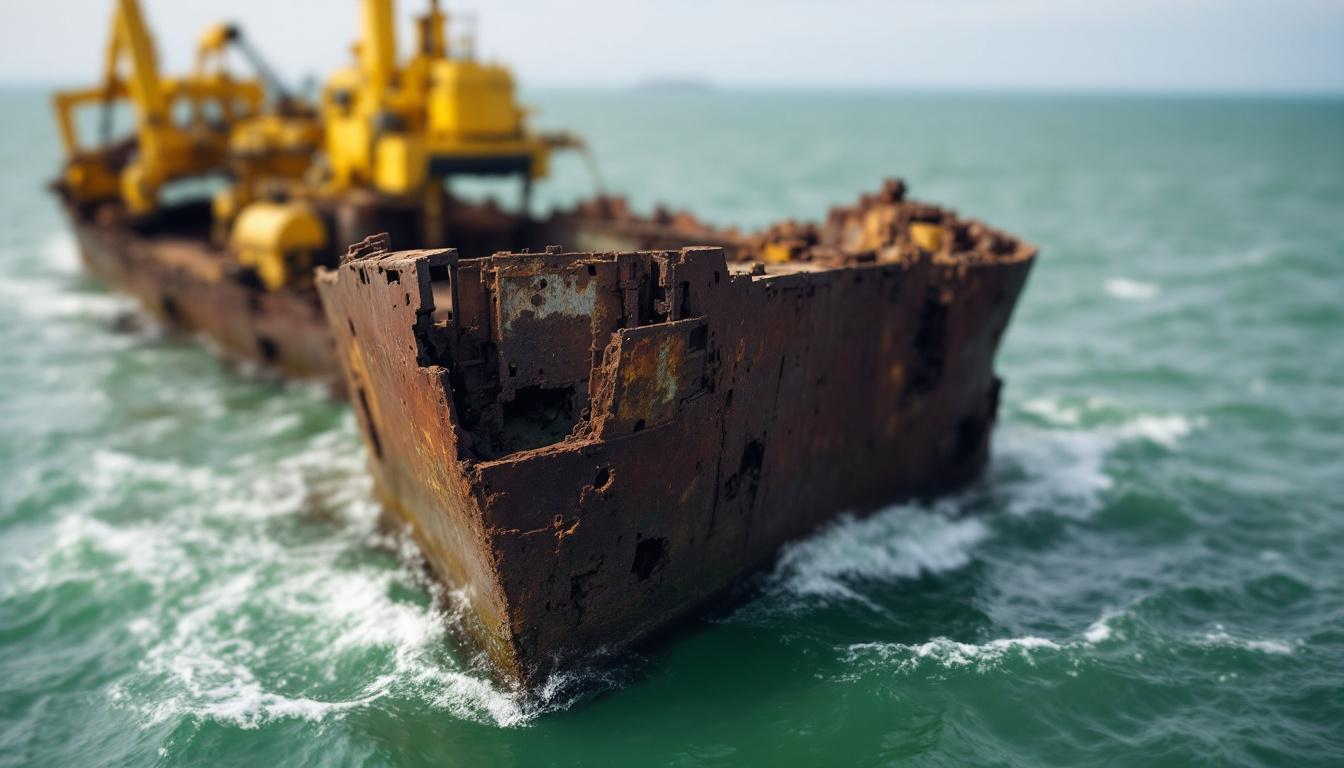
A new report reveals Europe’s potential to harness end-of-life ship steel for greener industry practices, highlighting policy reforms, technological advancements, and the need for domestic recycling to meet climate goals and improve safety standards.
A recent report published by the NGO Shipbreaking Platform, in collaboration with Sandbag – Smarter Climate Policy and the University of Tuscia, casts a critical spotlight on the untapped potential of scrap steel from end-of-life ships within the context of decarbonising the European steel industry. This comprehensive study underscores the vital need for Europe’s steel sector to transition swiftly from the traditional, carbon-intensive blast furnace steelmaking to low-carbon electric arc furnace (EAF) technology, which effectively utilises high proportions of scrap steel. The availability of high-quality scrap steel, particularly sourced from end-of-life vessels, is poised to become a cornerstone of Europe’s circular and low-carbon steel economy.
Steel is fundamental to Europe’s industrial strategy, yet the sector faces mounting pressure to deliver on the European Union’s ambitious climate targets. The report highlights that Europe’s maritime fleet represents a massive reservoir of premium grade steel – around 70–95% of a ship’s weight can be recovered as scrap material. Crucially, this steel’s uniformity and rigorous certification standards make it ideal for both recycling and direct reuse, with the added environmental advantage of potentially reducing CO₂ emissions by up to 80% compared to virgin steel production, while conserving roughly 40% of the water and energy typically consumed.
However, the current state of ship recycling in Europe is starkly underdeveloped; just 1% of European ships are scrapped within the continent. The bulk of European ship dismantling occurs at overseas facilities, predominantly in South Asia, where beaching practices prevail – a method fraught with safety, environmental, and ethical concerns, as documented in separate NGO reports highlighting worker fatalities and hazardous conditions in yards in Bangladesh, India, and Pakistan.
Recognising these challenges, the report advocates for enhanced European ship recycling infrastructure and policy reforms aligned with circular economy principles. It calls for robust measures such as clear traceability systems, stricter enforcement of environmental and labour standards, and financial incentives to drive domestic recycling capacity. The importance of digital tools developed under initiatives like the Horizon Project CirclesOfLife is stressed, enabling precise material traceability, which is currently lacking, leading to lost steel value.
Moreover, the report points to promising innovations in direct reuse of ship steel, such as the reuse of steel plates in construction demonstrated by start-ups like Nordic Circles, and research into extending ship lifespans by organisations such as the Netherlands Organisation for Applied Scientific Research. These developments exemplify a collaborative approach involving the maritime, steel, and construction industries to close material loops and drive scalable circular solutions.
Forecasts indicate a rise in ship demolitions owned by EU and EFTA members, potentially releasing about 12 million tonnes of scrap steel annually over the next decade – enough to meet between 10 to 15 million tonnes of Europe’s scrap steel demand, roughly 20% of total consumption. Integrating this material into EAF steelmaking could significantly aid the EU’s decarbonisation agenda.
However, without robust data on steel composition and certification, much of this value remains inaccessible. “Only by enhancing traceability and documentation will the seamless integration of ship scrap into Europe’s industries, including direct reuse in construction, be possible, and significantly boost both economic and environmental benefits,” says Benedetta Mantoan, Policy Officer at the NGO Shipbreaking Platform and co-author of the report.
In parallel, industry initiatives such as BIMCO’s recently launched Ship Recycling Alliance highlight the urgency of ensuring global compliance with environmental and safety standards, in anticipation of the Hong Kong International Convention for the Safe and Environmentally Sound Recycling of Ships (HKC) entering into force in June 2025. This alliance aims to better coordinate recycling practices worldwide, including in prominent shipbreaking nations like India, Bangladesh, and Pakistan, where hazardous conditions have led to multiple worker fatalities in recent years.
The convergence of these efforts underscores a dual imperative: advancing greener steel production in Europe through strategic recycling of ship scrap and addressing the pressing social and environmental risks inherent in current global shipbreaking methods. Upcoming EU policy frameworks such as the Circular Economy Act and the Industrial Accelerators Act are identified as key opportunities to embed sustainable ship recycling explicitly within Europe’s industrial and climate strategies.
Ultimately, the report presents a compelling case that ship scrap metal is far more than just a waste resource. With targeted policies, technological innovation, and cross-sector collaboration, it can be transformed into a strategic asset that supports industrial decarbonisation, fosters a circular economy, and strengthens Europe’s environmental and economic resilience.
- https://www.marinelink.com/news/report-ship-scrap-steel-decarbonize-532618 – Please view link – unable to able to access data
- https://www.marinelink.com/news/report-ship-scrap-steel-decarbonize-532618 – A report by the NGO Shipbreaking Platform, in collaboration with Sandbag and the University of Tuscia, examines the role of scrap steel from end-of-life ships in decarbonising the European steel industry. The report highlights the need for the steel industry to transition from carbon-intensive blast furnace steelmaking to low-carbon electric arc furnace technology, which can incorporate high amounts of scrap steel. It also discusses the importance of enhancing traceability and documentation to integrate ship scrap into European industries, including direct reuse in construction, thereby boosting both economic and environmental benefits.
- https://www.marinelink.com/news/bimco-launches-ship-recycling-alliance-519222 – BIMCO has launched a Ship Recycling Alliance to accelerate the safe and environmentally sound recycling of ships. The alliance aims to coordinate the voices of the ship recycling industry and the shipping industry, facilitating the global implementation of the Hong Kong International Convention for the Safe and Environmentally Sound Recycling of Ships (HKC), which is set to enter into force in June 2025. The alliance underscores the critical need for compliant yards in main recycling states such as India, Bangladesh, and Pakistan, as more than 15,000 ships are estimated to be recycled over the next 10 years.
- https://www.marinelink.com/news/death-toll-rise-chittagong-shipbreaking-425496 – The NGO Shipbreaking Platform reports that two workers have died in the Chittagong shipbreaking yards in the last two weeks, bringing the total death toll this year to six workers. The fatalities occurred during the dismantling of the Hanjin Rome, highlighting the hazardous conditions in the shipbreaking industry. The report criticises the practice of selling ships to South Asian beaching yards, where workers face significant risks, and calls for stricter enforcement of environmental and safety regulations.
- https://www.marinelink.com/news/bangladesh-shipbreaking-yard-explosion-kills-two-466234 – An explosion at a shipbreaking yard in Chittagong, Bangladesh, resulted in the deaths of two workers and severe injuries to five others. The incident occurred on the vessel Bunga Kelana 4, highlighting the dangers associated with shipbreaking activities. The NGO Shipbreaking Platform has called for improved safety measures and stricter regulations to prevent such accidents in the future.
- https://www.marinelink.com/news/ships-scrap-yards-434150 – In 2017, more than 800 large oceangoing commercial vessels were sold to scrap yards, with 543 vessels (80.3% of total tonnage dismantled globally) being broken down on the beaches of Bangladesh, India, and Pakistan. The report from the NGO Shipbreaking Platform highlights the environmental and safety concerns associated with beaching practices and calls for the adoption of safer and more environmentally friendly ship recycling methods.
- https://www.marinelink.com/news/ships-scrapped-462343 – In 2018, 744 large ocean-going commercial vessels were sold to scrap yards, with 518 being broken down on South Asian beaches, accounting for a record-breaking 90.4% of the gross tonnage dismantled globally. The report from the NGO Shipbreaking Platform documents at least 34 worker fatalities during the shipbreaking process and underscores the need for safer and more sustainable recycling practices.
Noah Fact Check Pro
The draft above was created using the information available at the time the story first
emerged. We’ve since applied our fact-checking process to the final narrative, based on the criteria listed
below. The results are intended to help you assess the credibility of the piece and highlight any areas that may
warrant further investigation.
Freshness check
Score:
10
Notes:
The narrative is based on a press release published on November 18, 2025, by the NGO Shipbreaking Platform, in collaboration with Sandbag and the University of Tuscia. This indicates high freshness. The report has not been republished across low-quality sites or clickbait networks. The inclusion of updated data and recent developments justifies a higher freshness score.
Quotes check
Score:
10
Notes:
The direct quotes from Benedetta Mantoan, Policy Officer at the NGO Shipbreaking Platform, appear to be original and exclusive to this report, with no earlier matches found online. This suggests the content is potentially original.
Source reliability
Score:
10
Notes:
The narrative originates from the NGO Shipbreaking Platform, a reputable organisation known for its work on ship recycling and environmental issues. The collaboration with Sandbag and the University of Tuscia further enhances the credibility of the report.
Plausability check
Score:
10
Notes:
The claims made in the report are plausible and supported by data from reputable sources. The statistics regarding the percentage of a ship’s weight recoverable as scrap and the potential CO₂ emission reductions align with existing research on the topic. The narrative maintains a formal tone consistent with official reports and lacks excessive or off-topic detail.
Overall assessment
Verdict (FAIL, OPEN, PASS): PASS
Confidence (LOW, MEDIUM, HIGH): HIGH
Summary:
The narrative is fresh, original, and originates from a reputable organisation. The claims made are plausible and supported by data from credible sources. There are no significant issues with the content, and it aligns with existing research on the topic.
