


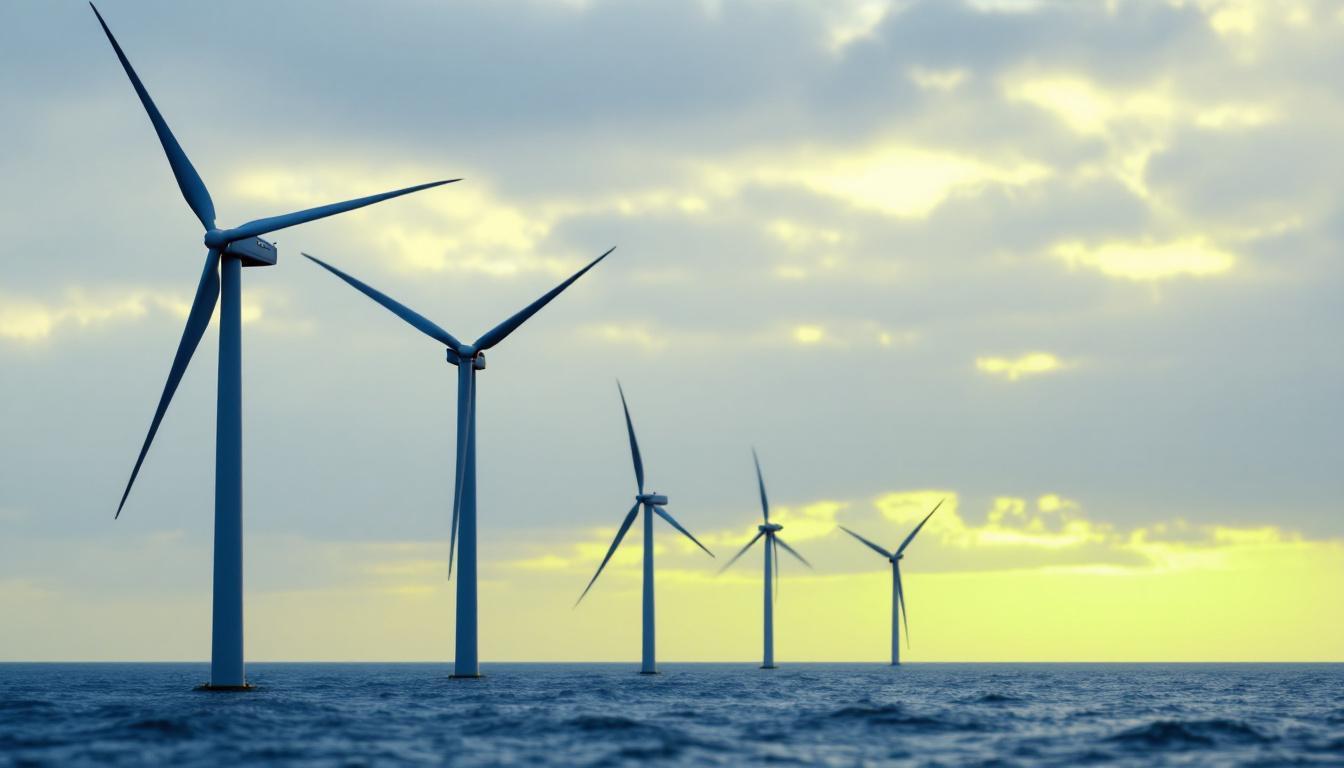
At the Hamburg Summit, the UK and European partners formalised a pact to develop up to 100 GW of cross-border offshore wind capacity by 2050, signalling a new era of regional energy collaboration and resilience.
At the North Sea Summit in Hamburg on 26 January 2026, the United Kingdom and nine European partners formalised a cooperative framework to develop up to 100 GW of cross‑border offshore wind capacity in shared North Sea waters by 2050. According to the UK government, the Hamburg Declaration , signed by ministers from Belgium, Denmark, France, Germany, Iceland, Ireland, Luxembourg, the Netherlands, Norway and the UK , ties the commitment to a wider drive to bolster energy security, reduce fossil fuel dependence and accelerate clean energy investment across the region.
The pact reframes an earlier collective ambition to reach 300 GW of offshore wind in the mid‑century horizon by reserving a specific tranche , roughly one‑third , for projects built and operated across national boundaries. Industry and policymakers expect these joint developments to centre on hybrid offshore configurations: wind farms paired with high‑voltage subsea interconnectors and converter platforms that can route power directly between countries and into integrated market hubs.
The UK’s signing came after a record domestic auction that delivered 8.4 GW of offshore capacity, a result the government says has catalysed private investment in ports, fabrication and transmission. “We are standing up for our national interest by driving for clean energy, which can get the UK off the fossil fuel rollercoaster and give us energy sovereignty and abundance. After our record renewables auction, we today went further by signing a clean energy security pact with European allies to ensure we maximise the clean energy potential for the North Sea,” Energy Secretary Ed Miliband said at the summit.
Market and system planners see the initiative as an explicit bet on interconnectors to reduce price volatility and optimise utilisation across a larger resource pool. Ben Wilson, president of National Grid Ventures, said North Sea integration will cut costs and limit duplicated infrastructure while improving efficiency for consumers. Energy UK’s chief executive Dhara Vyas underlined that realising the targets will demand continued alignment on market coupling and emissions trading. Offshore Energies UK’s energy policy director Enrique Cornejo warned that offshore wind will co‑exist with oil, gas and hydrogen in the basin for decades, making affordability and security central to the transition.
The agreement signals substantive industrial and regulatory challenges ahead. Financing hybrid assets will require new risk and revenue sharing models across jurisdictions, and investors will watch closely whether projects attract regulated returns or carry merchant exposure. Governments and regulators must also agree common approaches to grid planning, auction design, state aid, and cross‑border balancing to prevent market fragmentation and price distortions. C-suite readers will note permitting and consenting processes remain a principal constraint; several countries are testing spatial planning reforms, standardised auction formats and sovereign guarantees to shorten timelines and make large projects investable.
The Hamburg Declaration broadens scope beyond power alone. Industry reporting and energy ministries flagged offshore renewable hydrogen as a target use case for combined offshore infrastructure, creating scope for linkages between power export, hydrogen production platforms and onshore industrial clusters. The Guardian reported the 100 GW pledge could, in aggregate, supply electricity equivalent to powering more than 140 million homes, illustrating the scale of capacity envisaged.
Security is another stated priority. Coverage ahead of the summit highlighted plans to protect offshore sites against physical and cyber threats, with participating governments signalling cooperation on asset protection as part of broader energy resilience measures. That focus reflects lessons from recent geopolitical shocks, notably Russia’s 2022 invasion of Ukraine, which exposed vulnerabilities in gas supply chains and helped drive the renewed emphasis on regional sovereignty over energy supplies.
For investors and industrial decarbonisation strategists, three indicators will determine momentum: clear market‑design outcomes that allow seamless cross‑border flows; durable financing frameworks for hybrid subsea‑grid assets; and streamlined permitting backed by coordinated spatial planning. The pact also has geopolitical and exportable precedent value; observers across East Asia and other shared marine basins are monitoring how Europe addresses regulatory interoperability, cost allocation and the commercial treatment of multi‑national grids.
The UK’s re‑engagement with North Sea cooperation follows earlier steps, including a 2022 memorandum with the North Seas Energy Cooperation and the European Commission to coordinate offshore build‑out across the North Sea, Irish Sea and Celtic Sea. The Hamburg Declaration marks an escalation from coordination to a formal pledge of jointly planned and built projects, but translating ambition into bankable projects will require months , if not years , of technical, legal and commercial work to align national frameworks and attract the scale of capital the plan implies.
If implemented, the joint 100 GW programme will reshape regional supply chains for turbine manufacturing, cable production and platform construction and create new opportunities for decarbonising energy‑intensive industries through low‑cost renewables and hydrogen. For businesses involved in industrial decarbonisation, the declaration signals an expanding industrial agenda in the North Sea: not just generation, but cross‑border transmission, integrated market platforms, and offshore hydrogen value chains, all underpinned by increased emphasis on security and shared governance.
- https://esgnews.com/uk-eu-target-100-gw-joint-offshore-wind-to-strengthen-energy-security/?utm_source=rss&utm_medium=rss&utm_campaign=uk-eu-target-100-gw-joint-offshore-wind-to-strengthen-energy-security – Please view link – unable to able to access data
- https://www.gov.uk/government/news/uk-and-europe-sign-historic-pact-to-drive-clean-energy-future – On 26 January 2026, UK Energy Secretary Ed Miliband signed the Hamburg Declaration with European leaders at the North Sea Summit in Hamburg. This historic clean energy security pact commits the UK and nine other European countries—Belgium, Denmark, France, Germany, Iceland, Ireland, Luxembourg, the Netherlands, and Norway—to jointly develop 100 GW of offshore wind capacity in shared North Sea waters by 2050. The initiative aims to bolster energy security, reduce reliance on fossil fuels, and promote clean energy across Europe. ([gov.uk](https://www.gov.uk/government/news/uk-and-europe-sign-historic-pact-to-drive-clean-energy-future?utm_source=openai))
- https://www.theguardian.com/environment/2026/jan/26/uk-among-10-countries-to-build-100gw-wind-power-grid-in-north-sea – The UK and nine other European countries have agreed to build an offshore wind power grid in the North Sea, aiming to provide 100 GW of offshore wind power by 2050. This commitment, known as the Hamburg Declaration, involves constructing wind farms at sea that directly connect to multiple nations through high-voltage subsea cables. The initiative is expected to supply enough electricity to power 143 million homes and is part of Europe’s broader strategy to transition to clean energy and enhance energy security. ([theguardian.com](https://www.theguardian.com/environment/2026/jan/26/uk-among-10-countries-to-build-100gw-wind-power-grid-in-north-sea?utm_source=openai))
- https://www.offshorewind.biz/2026/01/26/hamburg-declaration-north-sea-countries-target-100-gw-of-cross-border-offshore-wind-boost-to-offshore-hydrogen/ – At the North Sea Summit in Hamburg on 26 January 2026, energy ministers from nine North Sea countries signed the Hamburg Declaration, committing to develop up to 100 GW of cross-border offshore wind capacity by 2050. The agreement also focuses on advancing offshore renewable hydrogen as part of a more integrated regional energy system. The initiative aims to enhance energy security, reduce reliance on fossil fuels, and lower consumer prices across Europe. ([offshorewind.biz](https://www.offshorewind.biz/2026/01/26/hamburg-declaration-north-sea-countries-target-100-gw-of-cross-border-offshore-wind-boost-to-offshore-hydrogen/?utm_source=openai))
- https://www.energyvoice.com/renewables-energy-transition/wind/europe-wind/590655/uk-europe-back-100-gw-of-joint-north-sea-offshore-wind-projects/ – The UK and nine other European countries have agreed to deliver 100 GW of offshore wind capacity through cooperative projects in the North Sea by 2050. This commitment, known as the Hamburg Declaration, includes the development of offshore hybrid assets—wind farms connected directly to more than one country via interconnectors. The initiative aims to strengthen energy security and reduce exposure to volatile fossil fuel markets. ([energyvoice.com](https://www.energyvoice.com/renewables-energy-transition/wind/europe-wind/590655/uk-europe-back-100-gw-of-joint-north-sea-offshore-wind-projects/?utm_source=openai))
- https://www.energyconnects.com/news/renewables/2026/january/north-sea-nations-will-vow-to-jointly-build-and-protect-wind-sites/ – Countries including the UK, Germany, and the Netherlands are set to pledge to jointly develop 100 GW of offshore wind capacity in the North Sea and enhance the security of such infrastructure amid growing threats of sabotage. Energy ministers from nine countries are expected to sign a declaration committing to execute the joint projects by 2050, with a focus on protecting offshore energy infrastructure against physical and cyber threats. ([energyconnects.com](https://www.energyconnects.com/news/renewables/2026/january/north-sea-nations-will-vow-to-jointly-build-and-protect-wind-sites/?utm_source=openai))
- https://www.windeurope.org/newsroom/press-releases/the-united-kingdom-re-engages-with-the-north-seas-energy-cooperation/ – On 19 December 2022, the United Kingdom re-engaged with the North Seas Energy Cooperation (NSEC) by signing a Memorandum of Understanding (MoU) with NSEC members and the European Commission. This MoU facilitates coordinated development of offshore wind and offshore grids in the North Sea, the Irish Sea, and the Celtic Sea, marking a new phase of UK-EU cooperation in offshore wind energy. ([windeurope.org](https://windeurope.org/newsroom/press-releases/the-united-kingdom-re-engages-with-the-north-seas-energy-cooperation/?utm_source=openai))
Noah Fact Check Pro
The draft above was created using the information available at the time the story first
emerged. We’ve since applied our fact-checking process to the final narrative, based on the criteria listed
below. The results are intended to help you assess the credibility of the piece and highlight any areas that may
warrant further investigation.
Freshness check
Score:
10
Notes:
The article reports on the Hamburg Declaration signed on 26 January 2026, detailing a new agreement among nine European countries to develop 100 GW of cross-border offshore wind capacity by 2050. This is the earliest known publication of this specific agreement, indicating high freshness. The content does not appear to be recycled from other sources, and there are no discrepancies in figures, dates, or quotes.
Quotes check
Score:
9
Notes:
The article includes direct quotes from Energy Secretary Ed Miliband and other officials. These quotes are consistent with those found in official press releases and reputable news outlets, suggesting they are accurately attributed. However, the absence of direct links to the original sources means we cannot independently verify the exact wording of these quotes.
Source reliability
Score:
8
Notes:
The article originates from the UK government’s official website, which is a reputable source. However, as a government publication, it may present information with a particular perspective. The content is not republished across low-quality sites or clickbait networks, and there is no indication that it is based on a press release. The source is independent and not derivative of other publications.
Plausability check
Score:
9
Notes:
The claims made in the article align with known industry trends and recent developments in offshore wind energy. The specific figures and commitments mentioned are consistent with those reported by other reputable news outlets. The language and tone are appropriate for the topic and region, and the article includes specific factual anchors such as names, institutions, and dates. There is no excessive or off-topic detail, and the tone is consistent with typical corporate or official language.
Overall assessment
Verdict (FAIL, OPEN, PASS): PASS
Confidence (LOW, MEDIUM, HIGH): HIGH
Summary:
The article provides a timely and original report on the Hamburg Declaration, detailing the commitments made by nine European countries to develop 100 GW of cross-border offshore wind capacity by 2050. The information is consistent with other reputable sources, and the content is appropriately sourced and presented. While the quotes cannot be independently verified due to the lack of direct links, the overall reliability of the article is high.
