


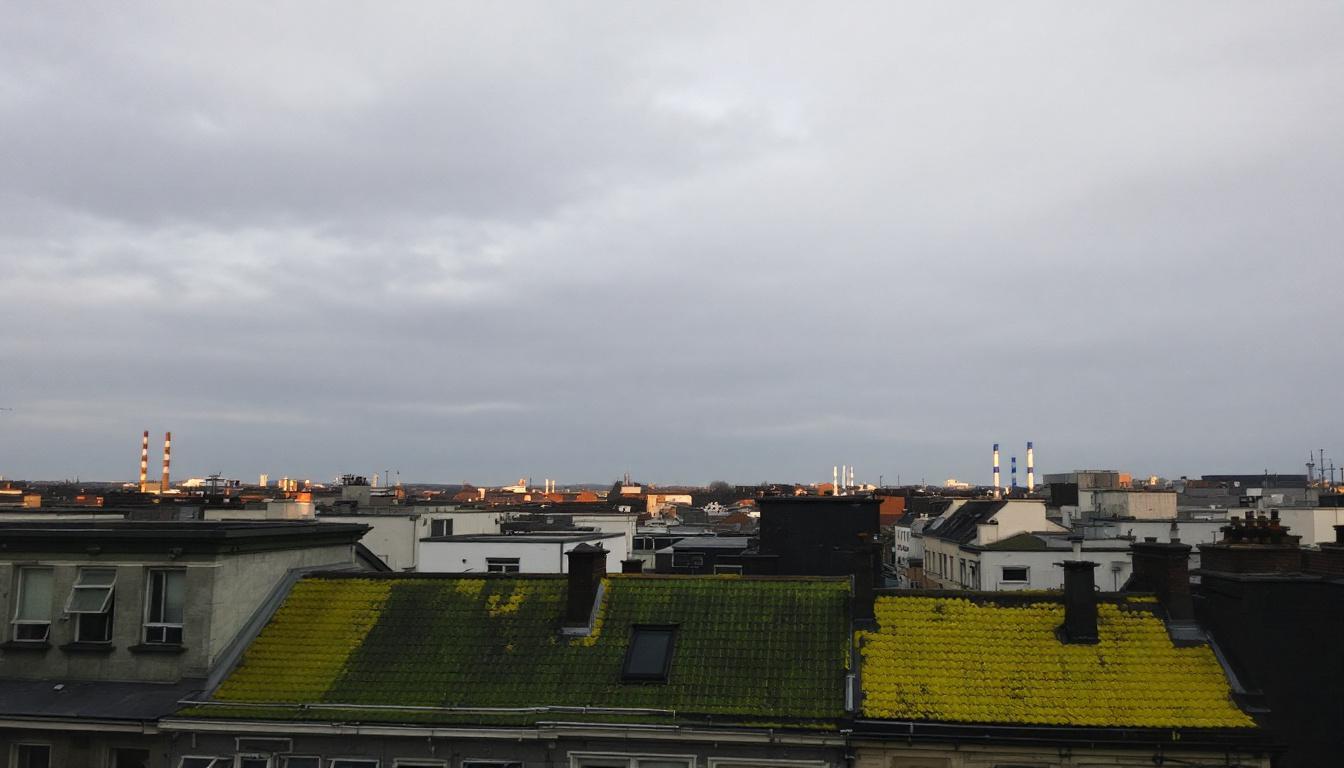
A new analysis highlights the potential for lightweight solar modules to access over 85 GW of European rooftop capacity, transforming underused industrial and commercial buildings into key players in the continent’s decarbonisation efforts amid evolving policies and innovative technologies.
Across Europe’s industrial and commercial roofscape lies a large, underused source of clean energy that simple scale models fail to capture: thousands of older warehouses, distribution centres and retail sheds whose structures cannot safely bear the weight of conventional solar panels. New analysis from the Becquerel Institute, published by pv magazine, estimates that more than 85 GW of rooftop PV capacity across Europe is effectively inaccessible today without a different approach to module weight and installation technique.
Becquerel’s assessment combines building‑level mapping with country‑specific factors such as roof type, construction vintage, renovation rates and local snow‑load rules. The institute concludes roughly 38 GW of opportunity sits on industrial roofs and another 48 GW on commercial buildings, capacity that could be realised using modules that reduce per‑square‑metre mass by around half compared with standard glass modules. For asset owners facing roofs that would otherwise require costly structural reinforcement, the relevant economic comparison is often lightweight PV versus no on‑site generation at all, rather than lightweight versus conventional panels.
The timing of that opportunity is being shaped by both policy and market drivers. According to ManagEnergy, an EU study indicates rooftop PV could supply as much as 40% of Europe’s electricity by 2050 if deployment accelerates, reinforcing the strategic role of distributed generation in decarbonisation plans. Meanwhile the revised Energy Performance of Buildings Directive, finalised in 2024, has pushed Member States towards tighter obligations on on‑site renewables for commercial assets; national transposition timetables mean many building owners will soon face concrete solarisation requirements that cannot be met by carports or ground‑mount solutions alone. In parallel, volatility in wholesale power markets since 2022 has hardened the commercial case for hedging energy spend with behind‑the‑meter solar capacity.
Technology and supply chains are evolving to meet that demand. Lightweight modules are available in rigid and flexible formats and across cell technologies, with some thin‑film and organic PV products specifically engineered for low load‑bearing roofs. Heliatek, for example, has developed organic modules weighing as little as 2 kg/m² that carry IEC certifications and a 20‑year warranty, targeting facades and fragile roofs. LONGi’s Light Design modules, marketed for fragile rooftops, reduce mass relative to conventional single‑glass panels and are engineered to meet front‑ and rear‑load and hail resilience standards, reflecting a trend towards certifying lightweight solutions for heavy‑duty field conditions. Dutch manufacturer Solarge has also pushed lightweight PERC designs with lower lifecycle carbon footprints and recyclability ambitions, indicating manufacturers are integrating sustainability and circularity into product roadmaps.
The supplier landscape is diversifying. Becquerel tracks around 20 lightweight module producers across Europe, with notable activity in Germany, France, Austria, Italy, the Netherlands and Poland. Several firms have announced capacity expansion plans while Chinese suppliers continue to compete on price; that mix is prompting buyers and financiers to scrutinise durability, warranty terms and installation protocols. ResearchAndMarkets projects large nominal market growth in the lightweight rooftop segment over the coming decade, signalling investor interest but also the need for rigorous bankability evidence as volumes scale.
Durability and installation practice remain the pivotal variables for project risk. Lightweight approaches frequently rely on adhesive bonding, bespoke surface preparation and close attention to roof‑membrane compatibility, rather than the standard racking and ballast systems common to heavy modules. Industry experience shows that when manufacturers couple certified modules with trained installers and robust quality control regimes, long‑term performance can meet conventional bankability expectations. For lenders and corporate buyers, the critical due diligence extends beyond module datasheets to include installation methodology, warranty enforcement mechanisms and roof‑integration details such as drainage, cable routing and maintenance access.
Beyond classic rooftop arrays, low‑mass PV expands application scope. Building‑integrated products can be incorporated into cladding and roofing systems, while vehicle‑integrated PV offers mass and form‑factor advantages for commercial fleets and mobile assets. Infrastructure use cases, canopies, shelters and lightly loaded canopies, add further volume potential and diversify the routes to market for manufacturers and installers.
Policy support for domestic supply chains is also providing momentum. European industrial initiatives such as the Net Zero Industry Act and follow‑on industrial acceleration measures are beginning to shape procurement and public support in favour of locally manufactured components. Several Member States are implementing manufacturing incentives aligned with those frameworks, which could improve commercial certainty for European producers of lightweight modules even if change will be gradual.
For owners of older C&I buildings, energy managers and project developers, the practical implications are clear. Greater emphasis on lightweight technologies expands the addressable rooftop inventory, turning structurally constrained assets from stranded opportunities into potential on‑site generation. For capital providers, understanding which manufacturers have demonstrable track records in grid‑connected commercial installations, and the installation partners that can execute to bankable standards, will be central to underwriting pipelines.
Europe’s rooftop PV transition is entering a less obvious phase: the next gigawatts will not come from the sites that were easiest to develop but from those that require tailored technology, tighter integration with building practice and careful risk management. If the market and policy levers identified by Becquerel Institute and others play out, lightweight PV could convert a substantial share of that 85+ GW latent potential into installed capacity, helping industrial and commercial operators reduce exposure to volatile electricity markets while accelerating decarbonisation of a sector that remains central to Europe’s climate targets.
- https://www.pv-magazine.com/2026/03/11/lightweight-pv-modules-could-unlock-more-than-85-gw-of-untapped-rooftop-potential-in-europe/ – Please view link – unable to able to access data
- https://www.pv-magazine.com/2026/03/11/lightweight-pv-modules-could-unlock-more-than-85-gw-of-untapped-rooftop-potential-in-europe/ – The article discusses Europe’s significant untapped rooftop solar potential, estimated at over 85 GW, primarily due to structural limitations of existing commercial and industrial buildings. It highlights the role of lightweight photovoltaic (PV) modules, which are up to 50% lighter than conventional panels, in overcoming these constraints. The piece also touches upon the impact of regulatory changes, such as the revised Energy Performance of Buildings Directive (EPBD), and economic factors like energy price volatility, which are driving the adoption of lightweight PV solutions across Europe.
- https://www.pv-magazine.com/2024/06/13/heliatek-develops-lightweight-organic-pv-module-for-low-load-bearing-roofs-facades/ – Heliatek, a German organic PV manufacturer, has introduced a new series of lightweight organic PV modules designed for low-load-bearing rooftops and facades. The Heliasol 436-2000-CFE-45-600V panels are IEC 61215 and IEC 61730 certified, offering a 20-year lifetime warranty. These modules, weighing 2 kg/m², are suitable for structures that cannot support the weight of traditional PV panels, providing a viable solution for integrating solar energy into buildings with limited load-bearing capacity.
- https://managenergy.ec.europa.eu/managenergy-discover/managenergy-news/rooftop-solar-could-supply-40-eu-electricity-2050-2026-02-23_en – A recent EU-wide study indicates that rooftop solar photovoltaics (PV) could generate up to 40% of Europe’s electricity by 2050. The analysis reveals that rooftops across the EU’s 271 million buildings could host up to 2.3 terawatts peak (TWp) of solar capacity, producing approximately 2,750 terawatt-hours (TWh) annually. This underscores the transformative potential of rooftop PV in Europe’s clean energy transition, highlighting a major untapped opportunity for cleaner, decentralised energy systems.
- https://eu.longi.com/blog/safety-first-unlocking-solar-on-fragile-rooftops-and-how-lightweight-modules-make-installation-safe-and-feasible – LONGi’s ‘Light Design’ modules are engineered for safety and long-term reliability on fragile rooftops. Weighing only 16.3 kg, these modules are up to 32% lighter than conventional single-glass panels, making them suitable for buildings with limited load-bearing capacity. They are certified to withstand significant front and rear loads, as well as hail impact, ensuring reliable operation even under harsh weather conditions. This innovation enables the integration of solar energy into structures previously deemed unsuitable for conventional PV installations.
- https://www.businesswire.com/news/home/20250625619646/en/Europe-Lightweight-Rooftop-Solar-PV-Markets-2024-2025-2034-with-Focus-on-Commercial-and-Industrial-Installations—ResearchAndMarkets.com?feedref=JjAwJuNHiystnCoBq_hl-Ypx8OuIA-qqxXAfOC1go22PU1fv-fCAtwybrddq94az7dI9_69nqXXndEkzoNy31peBvhKXN8xoKDPrCnMXhC58cMd5Jhr97vTYoLZQbGkSFja_QkRbjKVqSkUPuEMBEw%3D%3D – The ‘Europe Lightweight Rooftop Solar PV Market: Focus on Commercial and Industrial Installation’ report projects the market will reach 1,037.7 GW by 2034, up from 704.1 GW in 2024, growing at a compound annual growth rate (CAGR) of 3.96%. The expansion is driven by strong regulatory support for renewable energy, regional sustainability goals, and advances in materials research. Lightweight PV systems, which are 30-60% lighter than traditional panels, are ideal for buildings with limited roof capacity, particularly in urban areas.
- https://www.pv-magazine.com/2023/06/02/solarge-launches-lightweight-perc-modules-with-low-carbon-footprint/ – Dutch solar manufacturer Solarge has unveiled a new line of lightweight monocrystalline PERC modules for rooftop applications. The Solo series offers power outputs between 470 W and 520 W, with efficiencies ranging from 17.4% to 19.2%. These panels are designed for circularity and can be fully recycled at the end of their 25-year lifespan, boasting carbon footprints 25% and 60% lower than conventional modules. This innovation aligns with the growing demand for sustainable and efficient solar solutions in the European market.
Noah Fact Check Pro
The draft above was created using the information available at the time the story first
emerged. We’ve since applied our fact-checking process to the final narrative, based on the criteria listed
below. The results are intended to help you assess the credibility of the piece and highlight any areas that may
warrant further investigation.
Freshness check
Score:
10
Notes:
The article was published today, March 11, 2026, and presents original analysis from the Becquerel Institute, indicating high freshness and originality.
Quotes check
Score:
10
Notes:
The article does not contain direct quotes, suggesting that all information is paraphrased or original, which is a positive aspect for verification.
Source reliability
Score:
8
Notes:
The article is published by pv magazine, a reputable source in the photovoltaic industry. However, the Becquerel Institute, while known, is a niche organisation, which may limit the breadth of their data and perspectives.
Plausibility check
Score:
9
Notes:
The claims about the untapped potential of lightweight PV modules in Europe are plausible and align with industry trends. However, the exact figures and projections should be cross-verified with independent sources to ensure accuracy.
Overall assessment
Verdict (FAIL, OPEN, PASS): PASS
Confidence (LOW, MEDIUM, HIGH): MEDIUM
Summary:
The article presents original and timely information on the potential of lightweight PV modules in Europe. While the source is reputable, the reliance on data from the Becquerel Institute, which authored the piece, necessitates independent verification of the claims made. The plausibility of the claims is high, but cross-referencing with other independent sources is recommended to ensure accuracy and mitigate potential bias.
