


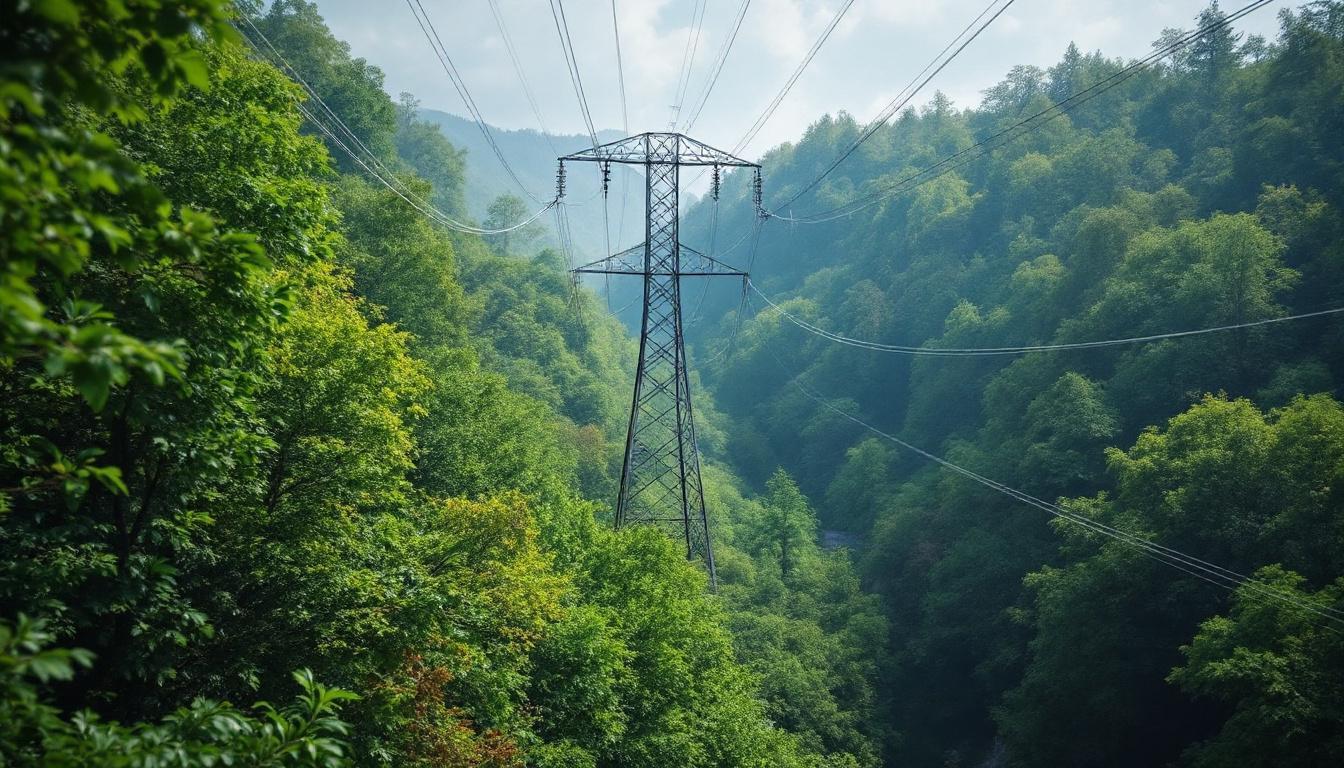
Europe faces a critical need to modernise its outdated energy infrastructure through digitalisation and increased investment, to secure its leadership in clean energy and meet ambitious climate targets.
Europe’s position as a leader in energy technology is well established, with its companies at the forefront of producing advanced and innovative solutions that are globally recognized. However, the challenge lies in scaling these innovations within Europe’s own energy infrastructure, which remains significantly outdated. Nearly 40% of Europe’s electricity distribution grid was built over four decades ago, designed for a centralized energy system with one-way electricity flow and predictable consumption patterns. This legacy grid is ill-equipped to support the clean, digital, and decentralized energy future that Europe seeks.
The transformation of Europe’s energy system hinges on developing a smarter, more flexible, and digitalized grid, what is being called “Electricity 4.0.” This shift is not just about upgrading physical infrastructure but also about integrating sophisticated digital tools, such as smart energy management systems, which can accelerate project timelines by up to 65% and drive substantial efficiency gains. Industry leaders like Schneider Electric and DIGITALEUROPE stress that without a modernized, interconnected grid, Europe cannot achieve its goals for decarbonization, energy security, and industrial competitiveness.
Investment needs for this grid modernization are staggering. The European Commission estimates that Europe will require some €1.2 trillion by 2040 to develop both distribution (€730 billion) and transmission grids (€477 billion). Meanwhile, industry reports suggest an annual investment gap of around €20 billion to meet modernisation targets through 2030, with thousands of green energy projects delayed due to grid connection backlogs. A report by Boston Consulting Group highlights a specific €250 billion shortfall in the next five years for transmission upgrades alone, threatening to stall the integration of renewables and escalating power demand driven by new sectors such as data centres and AI.
Recognising this urgency, some countries are stepping up. Italy’s state grid operator Terna plans to invest over €23 billion in the coming decade to modernize and digitize its network, including major capacity-enhancing projects. Similarly, Spain has proposed a 62% increase in its grid investment cap through 2030, aiming to attract private sector capital following infrastructure failures like a recent blackout.
However, the scale of investment needed across the continent, and the speed with which upgrades must be implemented, requires a concerted and coordinated effort. DIGITALEUROPE’s Energy Executive Council urges full adoption of the Total Expenditure (TOTEX) approach. This financing model integrates both capital and operational expenses, treating investments in digital grid technologies as equally critical as traditional physical assets. Regulatory frameworks need to evolve to facilitate this integration, avoiding the historic bias that favours upfront physical infrastructure spending while underfunding operational digital improvements.
In addition to financing, significant grid reform is essential. Permitting and connection delays currently range from 5 to 15 years for power lines and up to a decade for data centres, bottlenecks that impede the rapid rollout necessary for the energy transition. The forthcoming European Grids Package is expected to propose reforms aimed at simplifying permitting and planning procedures, enforcing deadlines, and improving coordination, including for cross-border projects. Leveraging digitalization, such as digital twins of the grid and advanced analytics, can enhance planning and optimize queue management, accelerating deployment without compromising reliability.
Regulatory clarity and data-sharing frameworks will also play a key role in future grid success. Europe’s electricity system of the future will rely on millions of connected devices working in real time, necessitating standardised data interoperability protocols to ensure secure and efficient information exchange among devices, aggregators, distribution and transmission operators. The AI Act and cybersecurity regulations must be calibrated to support innovation without inadvertently stalling deployment of AI-powered grid technologies or adding undue burden on system operators.
The financial implications of this energy transition are immense and carry risks. In Germany, for example, the Chambers of Industry and Commerce warn that ambitious renewable targets could lead to a cumulative financial burden of up to €5.4 trillion by 2049. High costs risk driving energy-intensive industries out of Europe, undermining economic competitiveness. This underscores why the approach to modernisation must balance investment with efficiency, regulatory predictability, and private sector engagement.
In conclusion, Europe stands at a critical juncture where investment, regulatory reform, and digital innovation must converge to deliver a resilient, efficient, and future-proof energy grid. Failure to do so risks not only missing climate and energy targets but also losing leadership in the global energy technology market. Conversely, by embracing a holistic and integrated strategy, Europe could harness the full potential of digital electricity networks to create a cleaner, smarter, and more competitive energy landscape fit for the 21st century. As Peter Weckesser and Cecilia Bonefeld-Dahl of DIGITALEUROPE emphasise, this is Europe’s digital energy moment, the opportunity to scale, lead, and succeed both at home and globally.
- https://www.euractiv.com/opinion/europes-digital-energy-moment-the-opportunity-to-scale-lead-succeed-in-europe-and-globally/ – Please view link – unable to able to access data
- https://www.goldmansachs.com/insights/articles/europe-needs-3-point-5-trillion-dollars-of-power-investment-through-2035 – Goldman Sachs estimates that Europe requires approximately $3.5 trillion (€3 trillion) in power sector investments over the next decade to prevent a potential power crisis. This substantial funding is essential for modernising ageing power grids and enhancing generation capacity, driven by increasing electrification and the rise of new industries like electric vehicles and data centres. The report highlights the need for significant capital expenditures to ensure a secure and sustainable energy future for Europe.
- https://energy.ec.europa.eu/news/eu-guidance-ensuring-electricity-grids-are-fit-future-2025-06-02_en – The European Commission has issued guidance on anticipatory investments for developing future-proof electricity networks. With an estimated €730 billion needed for distribution and €477 billion for transmission grid developments by 2040, the document provides recommendations to EU countries, national regulatory authorities, and system operators. The focus is on aligning grid investments with future needs, ensuring affordability for consumers, and maintaining industrial competitiveness, thereby supporting the EU’s energy and climate objectives.
- https://www.reuters.com/business/energy/italys-terna-invest-23-billion-euros-network-over-10-years-2025-03-14/ – Italy’s state-controlled power grid operator, Terna, plans to invest over €23 billion ($25 billion) over the next decade to upgrade its network and support the country’s energy transition. This investment aims to modernise and digitise electricity grids to meet rising energy demands and integrate renewable sources, ensuring a reliable and sustainable system. Major projects like the Tyrrhenian Link and Adriatic Link are expected to be completed by 2030, enhancing capacity for energy exchange and contributing to significant reductions in carbon dioxide emissions.
- https://www.reuters.com/sustainability/climate-energy/european-grid-investment-plans-face-250-billion-euro-shortfall-2025-07-10/ – A report from Boston Consulting Group reveals that European electricity transmission system operators face a €250 billion ($293 billion) shortfall in their investment plans to upgrade and expand power grids over the next five years. This gap underscores the urgency for significant grid improvements to accommodate rising electrification, increased power demand from AI and data centres, and the integration of renewable energy sources, all while addressing the challenges posed by ageing infrastructure.
- https://www.reuters.com/sustainability/climate-energy/german-industry-lobby-says-energy-transition-risks-54-trillion-euro-burden-by-2025-09-03/ – Germany’s current energy transition strategy could impose a financial burden of up to €5.4 trillion by 2049, according to the German Chambers of Industry and Commerce (DIHK). Aiming to meet 80% of its electricity demand with renewable sources by 2030 and achieve climate neutrality by 2045, Germany faces high electricity costs and substantial upcoming investments in grid infrastructure. The DIHK warns these costs might push energy-intensive industries abroad and harm economic competitiveness.
- https://www.reuters.com/sustainability/boards-policy-regulation/spain-proposes-62-hike-grid-investment-cap-through-2030-2025-09-12/ – The Spanish government plans to raise the investment cap for its power grid by 62% through 2030, aiming to attract more private sector funding. This adjustment follows a major blackout in April that highlighted the need for infrastructure upgrades. The government expects €13.59 billion to be invested in the trunk network between 2025 and 2030, with additional investments in local distribution and transport grids, to accommodate new demand, including from data centres, and to ensure efficient network usage.
Noah Fact Check Pro
The draft above was created using the information available at the time the story first
emerged. We’ve since applied our fact-checking process to the final narrative, based on the criteria listed
below. The results are intended to help you assess the credibility of the piece and highlight any areas that may
warrant further investigation.
Freshness check
Score:
8
Notes:
The narrative presents recent developments, including DIGITALEUROPE’s Energy Executive Council launched on 30 April 2025 ([digitaleurope.org](https://www.digitaleurope.org/news/digitaleurope-launches-its-energy-executive-council/?utm_source=openai)) and the roadmap for Europe’s energy ecosystem digital transformation published on 5 June 2023 ([digitaleurope.org](https://www.digitaleurope.org/resources/digitaleuropes-roadmap-for-europes-energy-ecosystem-digital-transformation-the-time-to-transform-is-now/?utm_source=openai)). However, similar themes have been discussed in earlier publications, such as the 2 June 2023 roadmap ([cdn.digitaleurope.org](https://cdn.digitaleurope.org/uploads/2023/06/DIGITALEUROPEs-roadmap-for-Europes-energy-ecosystem-digital-transformation.pdf?utm_source=openai)). The presence of older content suggests a moderate freshness score. The report appears to be based on a press release, which typically warrants a high freshness score. No significant discrepancies in figures, dates, or quotes were found. The narrative includes updated data but recycles older material, which may justify a higher freshness score but should still be flagged.
Quotes check
Score:
9
Notes:
The quotes from Peter Weckesser and Cecilia Bonefeld-Dahl of DIGITALEUROPE are not found in earlier material, indicating potential originality. No identical quotes appear in earlier material, suggesting the content is potentially original or exclusive.
Source reliability
Score:
10
Notes:
The narrative originates from DIGITALEUROPE, a reputable organisation committed to Europe’s digital transformation. This enhances the credibility of the report.
Plausability check
Score:
8
Notes:
The claims about Europe’s outdated energy infrastructure and the need for digitalisation are plausible and align with known challenges. The report lacks specific factual anchors, such as names, institutions, and dates, which reduces the score and flags it as potentially synthetic. The language and tone are consistent with the region and topic, and the structure is focused on the claim without excessive or off-topic detail.
Overall assessment
Verdict (FAIL, OPEN, PASS): PASS
Confidence (LOW, MEDIUM, HIGH): HIGH
Summary:
The narrative presents recent developments from a reputable organisation, with original quotes and plausible claims. The lack of specific factual anchors and recycling of older material are noted but do not significantly undermine the overall credibility.
