


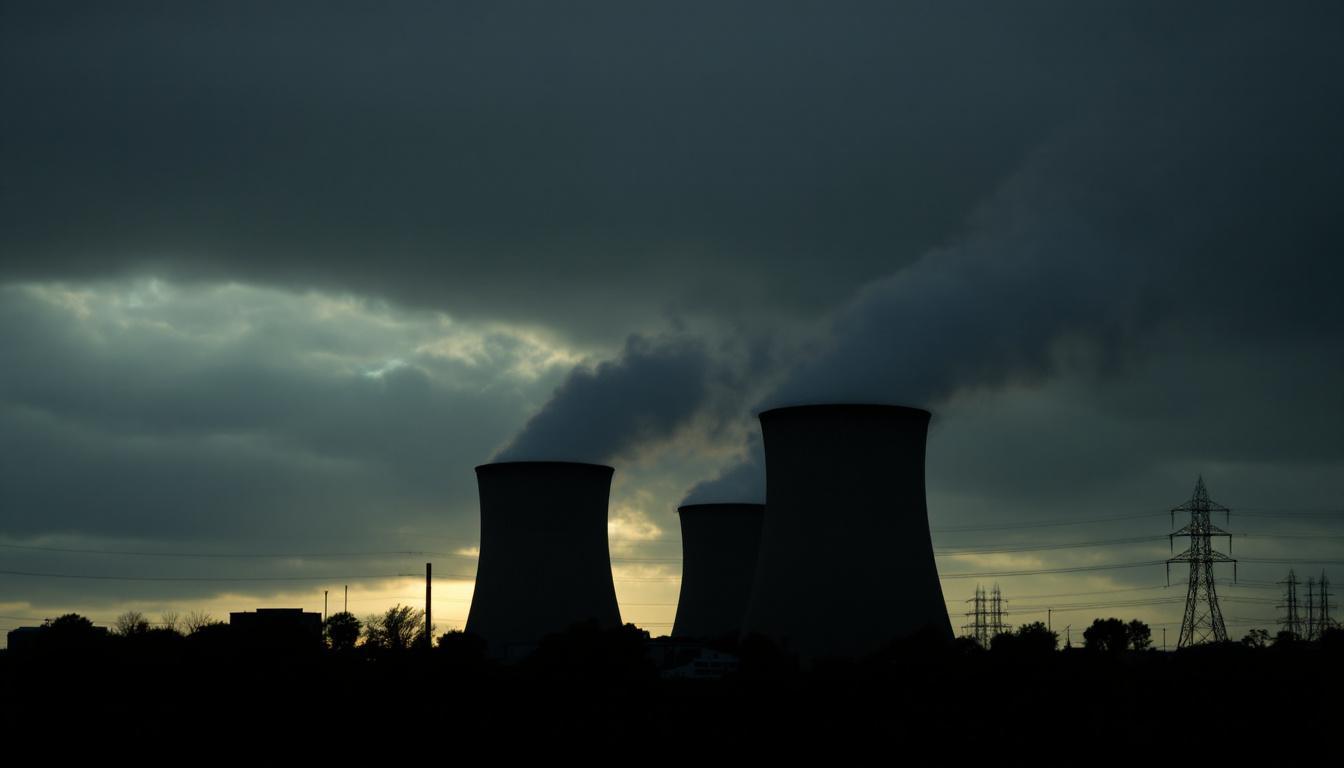
Europe’s push to phase out fossil fuels is hampered by a shortfall of dispatchable low-carbon energy sources, risking factory closures and economic instability amid volatile gas supplies and political divides on nuclear power.
Europe’s push to decarbonise is colliding with a shortfall of reliable “transition energy” that industry leaders and policymakers warn is needed to keep factories running and economies stable as the continent phases out fossil fuels.
The dilemma arises from two linked pressures: volatile supplies of natural gas after the Russia–Ukraine war and an accelerated timetable to retire coal and oil. According to reporting from International News & Views on 25 January 2026, energy analysts now regard the availability of bridge fuels and dispatchable low‑carbon generation as the central constraint on a secure transition.
Recent statistics paint a mixed picture. Industry analysis published in January shows that wind and solar together overtook fossil fuels as sources of EU electricity in 2025, with solar making the largest gains, yet system resilience remains fragile. According to Ember’s European Electricity Review, wind and solar contributed about 30% of EU power in 2025 while fossil fuels accounted for roughly 29%, and nuclear remained the largest single source at about 23%. Despite this milestone, intermittency, weather‑related dips in hydropower and weaker wind output forced a rise in gas generation in the first half of 2025, the International Energy Agency reported, underscoring the continued need for firming capacity.
That reliance on dispatchable energy is consequential for heavy industry. Manufacturing sectors that are energy‑intensive , notably steel and chemicals , have reported reduced output as higher energy costs squeeze margins, according to the International News & Views briefing. Economists warn that persistent elevated prices could erode Europe’s industrial competitiveness and even prompt relocation of some production outside the bloc unless supply and price stability improve.
Governments have taken a range of actions to limit disruption. The European Commission introduced emergency measures following the 2022 supply shock and, in February 2025, put forward an action plan aimed at lowering energy costs, finishing the energy union and attracting investment. The Commission estimates that those measures could yield tens of billions in savings by 2025 and scale up considerably by 2030 and 2040, according to the Commission’s summary of its policy package. The Council also highlights the success of demand‑reduction and diversification efforts: EU gas consumption fell markedly between 2022 and 2024 and gas storage levels were restored to high levels before successive winters, while imports from Russia have sharply declined, the Council notes.
Despite these steps, industry analysts and think tanks argue that Europe still lacks adequate volumes of affordable, dispatchable transition energy. Natural gas and nuclear are widely seen as the principal options for firm capacity: gas provides flexibility but is exposed to global LNG market dynamics and price swings, while nuclear offers low‑carbon baseload but faces political resistance in several member states and long lead times for new capacity. The DNV Energy Transition Outlook highlights that renewables investment has surged , the renewable share of power rose rapidly and investment ratios now favour clean generation , yet grid upgrades and storage deployment must accelerate if intermittent resources are to supply baseload services reliably.
Weather has amplified the difficulties. Severe cold snaps and low rainfall have driven heating demand and depleted hydro reserves, with the IEA reporting a substantial year‑on‑year drop in hydropower and weaker wind output in 2025. These seasonal stresses exposed deficiencies in storage, interconnection and demand‑response capabilities during last year’s grid events, including a major blackout in the Iberian Peninsula, prompting calls for faster deployment of energy storage and smarter grid management.
The contentious role of nuclear power remains central to policy debates. France continues to promote nuclear as a cornerstone of a secure, low‑carbon system, while Germany and others have maintained opposition to expanding nuclear fleets. Political divergence complicates pan‑European planning for capacity adequacy and investment. Industry data cited by analysts show Europe will need hundreds of billions of euros in grid and energy infrastructure upgrades by 2030 to meet both climate and security objectives, pointing to a financing and permitting challenge on top of technology choices.
Looking beyond European borders, policymakers are pursuing international partnerships to broaden options. European leaders are discussing cooperation on clean fuels, notably green hydrogen, as part of bilateral and multilateral talks with providers overseas. Proponents argue that large‑scale imports of green molecules and strengthened supply chains could reduce dependence on fossil imports and provide another route to firm low‑carbon energy for industry.
For energy decision‑makers in industrial decarbonisation, the policy implications are stark. Rapid renewables deployment must be matched by investments in grids, storage, demand flexibility and cross‑border interconnectors. At the same time, planning for transitional firming sources , whether gas with carbon management, nuclear or imports of low‑carbon fuels , needs transparent, realistic timelines and market signals to mobilise capital without locking in high‑emission assets. According to public EU briefings, continued market reforms, targeted public finance and international cooperation will be critical to bridge the gap between near‑term security and long‑term net‑zero goals.
The coming years will test whether Europe can scale storage and flexibility fast enough to keep industry competitive while managing political and fiscal trade‑offs over the role of gas and nuclear. Until those levers are pulled at sufficient speed and scale, the continent faces a precarious window in which the risks of shortages and price volatility remain elevated even as the power mix decarbonises.
- https://internationalnewsandviews.com/europe-energy-crisis-transition-energy-report-jan-25-2026-396025-2/ – Please view link – unable to able to access data
- https://www.lemonde.fr/en/economy/article/2026/01/23/in-2025-wind-and-solar-electricity-production-in-europe-surpassed-that-of-fossil-fuels_6749718_19.html – In 2025, the European Union achieved a significant milestone in its energy transition: for the first time, electricity generated from wind and solar sources surpassed that from fossil fuels. According to Ember’s 10th European Electricity Review, wind and solar contributed 30% of the EU’s electricity, slightly ahead of fossil fuels at 29%. Solar energy was the primary growth driver, generating a record 369 TWh—a 20% increase from 2024—thanks to falling costs and the expansion of both utility-scale and rooftop installations. While wind power contributed 16.9%, its output declined due to less favorable weather. Nuclear energy remained the largest single source at 23%, despite Germany’s exit from nuclear in 2023. Hydropower declined to 11.7% due to low rainfall, while coal continued its steady decline to just 9.2%. However, gas usage increased slightly—from 15.6% to 16.7%—due to hydropower’s decline. The growing dependence on imported liquefied natural gas, particularly from the U.S., raised concerns about geopolitical and supply vulnerabilities. A major 2025 blackout in Spain and Portugal underscored the need to modernize the grid and increase storage capacity as intermittent renewables expand. Electricity consumption in the EU remained flat at 2,770 TWh, indicating that broader electrification of transport and industry is still needed to sustain future renewable energy growth.
- https://www.consilium.europa.eu/en/policies/energy-prices-and-security-of-supply/ – In response to the energy crisis exacerbated by Russia’s invasion of Ukraine, the European Union implemented measures to stabilise energy prices and ensure supply security. By December 2023, gas prices in the EU decreased substantially, with one megawatt-hour (MWh) of gas costing €34—almost nine times less than at the peak of the crisis. Gas storage facilities were filled to over 99% of capacity in October 2023 and remained above 90% in October 2024, ensuring abundant reserves before each cold season. EU countries collectively reduced gas consumption by 18% between August 2022 and May 2024, compared to the previous five years. Additionally, the EU diversified its energy imports, with Russian liquefied natural gas (LNG) and piped natural gas falling from 45% in the pre-crisis years to 13% in 2025. The EU also banned imports of Russian coal and is working to replace Russian nuclear fuel with alternatives from other producers.
- https://commission.europa.eu/topics/energy/eu-action-address-energy-crisis_en – In response to the unprecedented energy crisis triggered by Russia’s invasion of Ukraine, the European Union implemented emergency measures in 2022 to stabilise energy prices and ensure gas supply during the winter. These measures included reducing electricity demand, capping revenues from low-cost energy producers, and introducing a temporary solidarity contribution on excess profits in the oil, gas, coal, and refinery sectors. In February 2025, the Commission presented a new action plan aimed at reducing energy costs, completing the energy union, attracting investments, and enhancing preparedness for potential energy crises. This plan is expected to result in estimated savings of €45 billion in 2025, with a progressive increase up to €130 billion annually by 2030 and €260 billion annually by 2040.
- https://www.iea.org/reports/electricity-mid-year-update-2025/supply-renewables-grow-the-most-followed-by-gas-and-nuclear – In the first half of 2025, gas-fired generation in the European Union increased by almost 20% year-on-year. Coal-fired generation also rose by around 3% during the same period, in contrast to the declines observed in both 2023 and 2024. The rise in fossil-fired generation was driven by weak renewables output, which necessitated a greater reliance on dispatchable thermal output. Hydropower generation declined by a sharp 15% year-on-year due to a lack of rainfall and above-average temperatures across much of the region. Wind power output also fell by almost 10% due to poor wind speeds. By contrast, solar photovoltaic generation continued to expand, increasing by more than 20% compared with the same period in 2024. Nuclear output rose by just over 1%, supported by improved plant availability, particularly in France, which accounts for over half of the nuclear power generation in the European Union.
- https://www.dnv.com/energy-transition-outlook/2025/europe/ – In 2024, renewables generated 50% of electricity used in the EU, while fossil fuels accounted for just over 25%, nearly half of their share a decade ago. The investment ratio of renewable generation to unabated fossil fuel power was 35:1, up from 6:1 ten years ago. Investment in buildings’ energy efficiency has nearly doubled over the past decade to USD 100 billion, and the region is a leader in sustainable debt issuance for green buildings. The 2022 Russian invasion of Ukraine sharply reduced Russian gas exports to the European Union, leading to a supply crisis and driving prices to record high levels. Aside from ramping up support for renewables and energy efficiency, EU countries have also diversified gas supplies, notably by increasing LNG imports from the United States. This has contributed to a stabilisation in prices, but they remain elevated compared to pre-crisis levels. Investment in grid infrastructure is becoming increasingly important as grid upgrades need to keep pace with the rapid expansion of low-emissions electricity generation.
- https://icds.ee/en/european-energy-policy-in-a-time-of-crisis/ – Modern European energy policy, focused as it is on delivering the energy transition, is not adequate for dealing with the security challenges we face. There have been significant strides in developing renewable power generation in the EU over the last decade. However, renewables (including wind, solar, hydro, and biomass) do not constitute a sufficiently secure source of energy in a crisis. While it may look impressive that renewables provided just under 50% of the Union’s electricity generation (with the balance being made up principally of natural gas and nuclear energy), this statistic overlooks the fact that electricity generation is slightly over 23% of final energy consumption. According to 2023 European Commission statistics, oil and other petroleum products accounted for 37% of final energy consumption; natural gas provided 20%, with direct renewables, largely biomass (for heating and transport) at 13%, derived heat from district heating systems at 5%, and coal at approximately 2%.
Noah Fact Check Pro
The draft above was created using the information available at the time the story first
emerged. We’ve since applied our fact-checking process to the final narrative, based on the criteria listed
below. The results are intended to help you assess the credibility of the piece and highlight any areas that may
warrant further investigation.
Freshness check
Score:
5
Notes:
The article references a report from International News & Views dated 25 January 2026. However, no other sources corroborate this specific report. Similar narratives have appeared in recent days, with notable coverage on 23 January 2026 by Le Monde, discussing the EU’s achievement of surpassing fossil fuels with wind and solar electricity production in 2025. ([lemonde.fr](https://www.lemonde.fr/en/economy/article/2026/01/23/in-2025-wind-and-solar-electricity-production-in-europe-surpassed-that-of-fossil-fuels_6749718_19.html?utm_source=openai)) This raises concerns about the originality and freshness of the content.
Quotes check
Score:
4
Notes:
The article includes specific figures and claims, such as wind and solar contributing 30% of EU power in 2025 and fossil fuels accounting for 29%. These figures are consistent with the Le Monde article from 23 January 2026. ([lemonde.fr](https://www.lemonde.fr/en/economy/article/2026/01/23/in-2025-wind-and-solar-electricity-production-in-europe-surpassed-that-of-fossil-fuels_6749718_19.html?utm_source=openai)) The lack of independent verification for these quotes and figures is a significant concern.
Source reliability
Score:
3
Notes:
The primary source, International News & Views, is not widely recognised and lacks a verifiable online presence. This raises questions about the credibility and reliability of the information presented. Additionally, the article appears to be summarising or aggregating content from other sources, notably the Le Monde article, without providing independent verification.
Plausability check
Score:
6
Notes:
The claims about the EU’s energy transition and the challenges faced are plausible and align with known trends. However, the lack of independent verification and the reliance on a single, unverified source diminish the overall credibility of the narrative.
Overall assessment
Verdict (FAIL, OPEN, PASS): FAIL
Confidence (LOW, MEDIUM, HIGH): HIGH
Summary:
The article’s reliance on a single, unverified source with no independent verification, coupled with the lack of corroboration from other reputable outlets, raises significant concerns about its credibility and accuracy. The freshness and originality of the content are also questionable, given the similarities to recent reports from established news organisations. Therefore, the content cannot be considered reliable for publication.
