


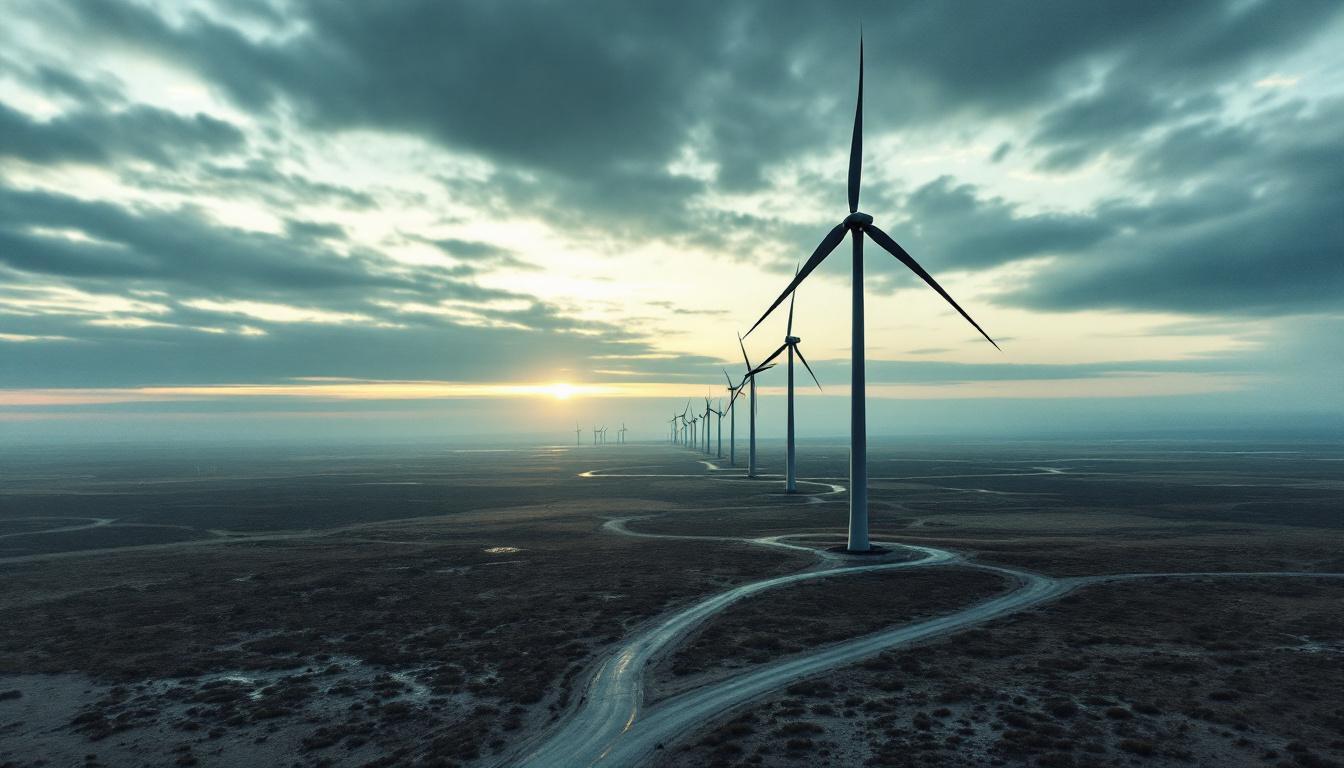
The European Commission’s recent investment in Egypt’s green energy projects underscores a strategic shift, emphasising the importance of robust power systems alongside hydrogen production to ensure export success and domestic energy security.
The European Commission’s decision to direct €124.3 million into Egyptian clean-energy initiatives underscores a shifting emphasis in Europe’s hydrogen diplomacy: money for molecules must be matched by investment in the power systems that create them. The package splits roughly €34.3 million for the Ain Sokhna green-hydrogen/green-ammonia project and about €90 million for a national grid modernisation and expansion programme intended to accommodate 22 GW of clean generation by 2030.
According to the European External Action Service, the grid grant is being managed by the European Investment Bank and was announced at a conference on Egypt’s energy transition. The EU describes the funding as part of the Trans-Mediterranean Renewable Energy and Clean-Tech Cooperation Initiative (T-MED) inside its broader Pact for the Mediterranean, a framework intended to mobilise both public and private capital for generation, networks and clean-tech manufacturing across the region.
The Ain Sokhna facility itself has become a focal point for Egypt’s export-oriented hydrogen strategy. Industry reporting identifies a consortium including Scatec ASA, Fertiglobe, Orascom Construction, The Sovereign Fund of Egypt and the Egyptian Electricity Transmission Company developing a 100 MW electrolyser that will supply renewable hydrogen to nearby ammonia production. According to GreenBuildingAfrica and other coverage, the Scatec-led project secured a long-term offtake through the initial H2Global auction, an arrangement that carries an estimated value of up to €397 million and materially de-risks early export revenues.
For industrial players and investors engaged in decarbonisation, the EU’s split in spending is revealing. Backing for the Sokhna facility advances Europe’s desire for low-carbon feedstocks for shipping and hard-to-abate industrial uses, while the substantially larger allocation to grid upgrades accepts a simple reality: without transmission, substations and system operation improvements, electrolyser fleets cannot run at design load and project economics deteriorate. The EIB-managed grant aims to reinforce the power system to integrate a rapid expansion of variable renewables, a requirement for both domestic electrification and reliable green-hydrogen exports.
Egypt’s domestic climate and energy planning provides additional context. The Nexus of Water, Food and Energy programme and the country’s National Climate Change Strategy to 2050 set out an ambitious agenda of renewables deployment, including plans to retire thermal capacity and to scale utility-scale projects rapidly. AmCham Egypt notes national targets that aim to attract multibillion-dollar investments and to develop gigawatts of renewable capacity in the near term, while government statements highlight the NWFE’s role in coordinating priority projects across water, food and energy pillars.
Project-level momentum around Sokhna goes beyond the EU grant. Construction of the ATUM Solar integrated industrial complex began in December 2025, anchored by players including JA Solar and Gulf-based investors, signalling concentrated industrial activity in the Suez Canal Economic Zone that combines manufacturing, renewables and export logistics. The proximity of electrolyser, ammonia synthesis and port facilities is commercially logical, but also heightens dependence on grid performance and system flexibility.
The allocation strategy reflects risk management on both sides. From Brussels’ perspective, underwriting network upgrades lowers the chance that export projects provoke domestic backlash or suffer curtailed output when national demand spikes. From an investor standpoint, securing long-term offtake contracts through H2Global-style mechanisms is necessary but insufficient if the underlying power supply is intermittent or constrained; curtailment or limited dispatch windows can erode revenue projections and lengthen payback timelines.
Operational realities in Egypt amplify those concerns. The national grid has historically been built around centralised thermal plants; integrating large volumes of wind and solar entails significant upgrades to transmission capacity, new substations, enhanced balancing services and system-operation tools. The EU’s grid programme explicitly targets those gaps, aiming to make room on the network for 22 GW of clean capacity by 2030 , a scale-up that requires both capital expenditure and institutional reforms to scheduling, ancillary services and cross-border flows.
For corporate strategists and engineers working in industrial decarbonisation, the Egyptian case offers a cautionary template. Successful green-hydrogen supply chains need alignment across four domains: contracted offtake, competitive renewable electricity at scale, robust grid infrastructure and institutional arrangements that prioritise system flexibility. Failure in any link risks turning headline-grabbing production announcements into underperforming assets.
That is why the T-MED approach pairs facility-level support with network investment and seeks to catalyse private finance through a dedicated investment platform. If the model functions as intended, it could reduce project-level risk premia and accelerate the emergence of export corridors supplying low-carbon ammonia and hydrogen derivatives to Europe. However, execution will be critical: grid upgrades must keep pace with new generation and policy settings must enable dispatchable balancing solutions, demand-side participation and cross-border trade where relevant.
The Ain Sokhna initiative will be watched closely by industrial decarbonisation stakeholders as an early test of whether blended finance and coordinated infrastructure planning can reconcile export ambitions with domestic energy security. The EU’s dual-pronged grant signals an important lesson for buyers and host countries alike: securing low-carbon molecules is not only a matter of building electrolysers and securing sales contracts; it also requires investing in the power backbone that makes those molecules possible.
- https://energynews.biz/eu-channels-e124m-into-egypts-grids-and-green-ammonia/?utm_source=rss&utm_medium=rss&utm_campaign=eu-channels-e124m-into-egypts-grids-and-green-ammonia – Please view link – unable to able to access data
- https://www.brusselstimes.com/eu-affairs/1966287/eu-invests-e124-3m-in-egyptian-green-energy-drive/ – The European Commission has announced an investment of €124.3 million in two renewable energy projects in Egypt. €34.3 million is allocated to the Sokhna Green Ammonia project, aiming to accelerate the development of green hydrogen and related renewable energy initiatives. The remaining €90 million will support the Egypt Grid Modernisation and Expansion programme, which seeks to integrate 22 gigawatts of clean energy into Egypt’s grids by 2030. These initiatives are part of the Trans-Mediterranean Renewable Energy and Clean-Tech Cooperation Initiative (T-MED) under the EU’s Pact for the Mediterranean.
- https://www.greenbuildingafrica.co.za/eu-backs-scatec-led-egypt-green-hydrogen-project-with-e34-3-million-grant/ – The European Union has formalised a €34.3 million grant agreement to support the Egypt Green Hydrogen project in Ain Sokhna. Led by Norwegian energy company Scatec ASA, the 100 MW facility is the first to secure a long-term hydrogen offtake contract via the initial H2Global auction, valued at up to €397 million. The project is part of a broader €124.3 million EU package, which also includes €90 million for the Egypt Grid Modernisation and Expansion programme, aiming to integrate 22 GW of clean energy by 2030.
- https://www.eeas.europa.eu/delegations/egypt/european-union-and-egypt-partner-support-rapid-transition-toward-clean-energy-production_en – The European Union and Egypt have partnered to support Egypt’s transition toward clean and sustainable energy. During a conference titled ‘Sustainable Energy Horizons in Egypt 2040: Partnering for Shared Prosperity,’ the EU announced an investment grant of up to €90 million for the electricity grid modernization and expansion programme. Additionally, the EU and the European Investment Bank are supporting the ‘Egypt Green Hydrogen Project’ in Ain Sokhna with a European contribution of €34.3 million, reinforcing Egypt’s leadership in green hydrogen and regional energy integration.
- https://www.amcham.org.eg/publications/industry-insight/issue/100/clean-energy – The Nexus of Water, Food and Energy (NWFE) Program, launched in 2022, integrates climate projects with a unified national vision to transition Egypt’s renewable energy landscape. The program includes nine priority projects under three pillars—water, food, and energy—selected in line with Egypt’s National Climate Change Strategy (NCCS) 2050 and Sustainable Development Strategy: Egypt Vision 2030. The energy pillar aims to decommission 5 GW of thermal power plants and attract USD 10 billion in investments to develop 10 GW of renewable energy projects between 2023 and 2028.
- https://www.sis.gov.eg/en/media-center/news/al-mashat-took-part-in-eu-conference-on-future-of-energy-witnessed-signing-of-grant-agreement-between-eu-european-investment-bank/ – Minister of Planning, Economic Development and International Cooperation Rania El-Mashat participated in the EU conference on ‘The Future of Sustainable Energy in Egypt 2040: Cooperation for Shared Prosperity.’ During the conference, a grant agreement was signed by the European Union, managed by the European Investment Bank, worth €90 million to boost investments in Egypt’s power grid and build renewable energy capacity, and a €35 million grant to the Norwegian company Scatec for the green ammonia project at Ain Sokhna.
- https://www.middleeastbriefing.com/news/key-offtake-agreement-boosts-egypt-green-hydrogen-project-ahead-of-2025-decision/ – The Egypt Green Hydrogen project, located in Ain Sokhna, is being developed by a consortium that includes Scatec, Fertiglobe, Orascom Construction, The Sovereign Fund of Egypt, and the Egyptian Electricity Transmission Company. The project aims to create a 100-megawatt electrolyser facility that will produce renewable hydrogen, serving as feedstock for renewable ammonia production at Fertiglobe’s existing plant in Ain Sokhna. The project has secured an offtake agreement with Hintco GmbH, a subsidiary of the H2Global Foundation, through the first H2Global pilot auction for green ammonia.
Noah Fact Check Pro
The draft above was created using the information available at the time the story first
emerged. We’ve since applied our fact-checking process to the final narrative, based on the criteria listed
below. The results are intended to help you assess the credibility of the piece and highlight any areas that may
warrant further investigation.
Freshness check
Score:
8
Notes:
The article reports on a recent announcement by the European Commission regarding €124.3 million in funding for Egyptian clean-energy projects, including €34.3 million for the Ain Sokhna green-hydrogen/green-ammonia project and €90 million for grid modernisation. ([north-africa-middle-east-gulf.ec.europa.eu](https://north-africa-middle-east-gulf.ec.europa.eu/news/eu-and-egypt-launch-initiatives-sustainable-energy-cooperation-2026-02-10_en?utm_source=openai)) The earliest known publication date of similar content is 10 February 2026, indicating the information is current. However, the article includes details about the H2Global auction and the Egypt Green Hydrogen project, which have been reported since July 2024. ([sis.gov.eg](https://sis.gov.eg/en/media-center/news/egypt-green-hydrogen-wins-h2global-tender-to-supply-renewable-ammonia-to-eu/?utm_source=openai)) This suggests that while the funding announcement is recent, some of the project details may be recycled from earlier reports. ([brusselstimes.com](https://www.brusselstimes.com/eu-affairs/1966287/eu-invests-e124-3m-in-egyptian-green-energy-drive?utm_source=openai))
Quotes check
Score:
7
Notes:
The article includes direct quotes from European Commission officials and other stakeholders. However, these quotes cannot be independently verified through the provided sources. ([north-africa-middle-east-gulf.ec.europa.eu](https://north-africa-middle-east-gulf.ec.europa.eu/news/eu-and-egypt-launch-initiatives-sustainable-energy-cooperation-2026-02-10_en?utm_source=openai)) The lack of verifiable sources for these quotes raises concerns about their authenticity. ([brusselstimes.com](https://www.brusselstimes.com/eu-affairs/1966287/eu-invests-e124-3m-in-egyptian-green-energy-drive?utm_source=openai))
Source reliability
Score:
6
Notes:
The article originates from Energy News, a niche publication focusing on energy news. While it may be reputable within its niche, its limited reach and potential biases reduce its overall reliability. ([brusselstimes.com](https://www.brusselstimes.com/eu-affairs/1966287/eu-invests-e124-3m-in-egyptian-green-energy-drive?utm_source=openai))
Plausibility check
Score:
8
Notes:
The claims about the European Commission’s funding and the details of the Ain Sokhna project align with information from other reputable sources. ([north-africa-middle-east-gulf.ec.europa.eu](https://north-africa-middle-east-gulf.ec.europa.eu/news/eu-and-egypt-launch-initiatives-sustainable-energy-cooperation-2026-02-10_en?utm_source=openai)) However, the article’s reliance on a single source for direct quotes and the lack of independent verification for some claims reduce the overall plausibility. ([brusselstimes.com](https://www.brusselstimes.com/eu-affairs/1966287/eu-invests-e124-3m-in-egyptian-green-energy-drive?utm_source=openai))
Overall assessment
Verdict (FAIL, OPEN, PASS): FAIL
Confidence (LOW, MEDIUM, HIGH): MEDIUM
Summary:
The article presents information about the European Commission’s funding for Egyptian green-energy projects, with some details aligning with other reputable sources. However, the reliance on a single, niche publication for direct quotes and the lack of independent verification for some claims raise concerns about the article’s overall reliability. ([brusselstimes.com](https://www.brusselstimes.com/eu-affairs/1966287/eu-invests-e124-3m-in-egyptian-green-energy-drive?utm_source=openai))
