


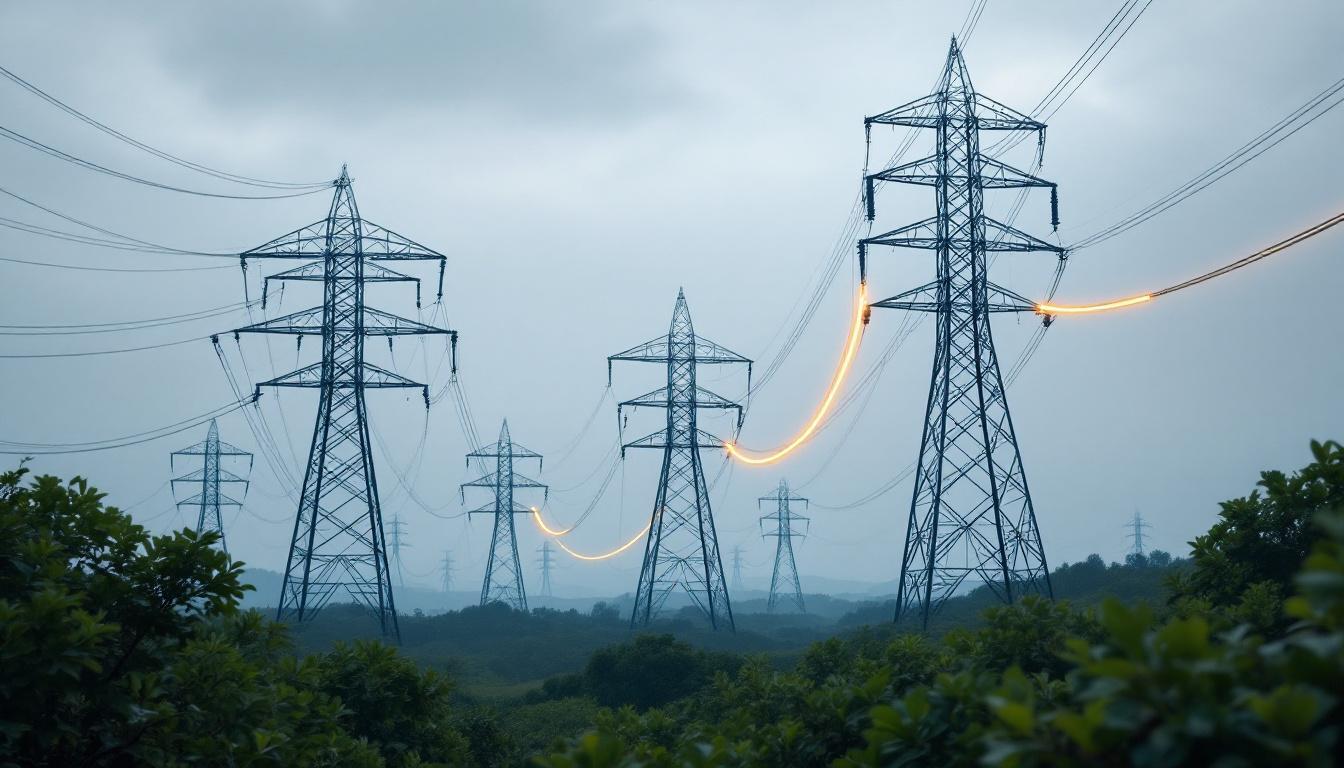
The European Union must overhaul its fragmented governance structures and unlock €477 billion in investments by 2040 to modernise its electricity transmission network and achieve its ambitious climate targets, amid mounting urgency to prevent blackouts and enhance energy security.
The European Union faces a critical juncture in its energy transition, with an estimated €477 billion ($549 billion) required by 2040 to upgrade and modernize transmission networks across the continent. This massive investment aims to meet ambitious climate targets, notably the EU’s commitment to reduce net greenhouse gas emissions by 90% compared to 1990 levels by 2040, while ensuring energy security and preventing repeated blackouts through enhanced grid reliability and cross-border energy sharing.
Despite the availability of investment and technology, the pace of grid modernization is hampered by governance structures that are no longer fit for purpose. The rapid rollout of renewable energy projects, such as solar and wind farms, often outstrips the pace at which grid connections can be approved. Experts argue that the solution is not to abandon regulatory oversight or environmental protections but to redesign governance frameworks to allow for agility and compressed timelines. This involves dismantling procedural barriers, often bureaucratic rather than substantive, and reimagining regulatory setups with a strategic focus on facilitating swift action while preserving safeguards.
Leadership is pivotal in this transformation. Coordinating actions across 27 EU countries and multiple transmission system operators (TSOs), each with different priorities, budgets, performance metrics, and regulatory environments, necessitates a new model of collaboration. Aligning diverse stakeholders, from profit-driven developers to public policy officials, requires upfront identification of conflicting objectives and redesigning incentives to foster an “alliance” approach that balances ecosystem-wide benefits with organizational interests. Pilot projects that demonstrate quick wins can build momentum for broader systemic change, while institutional mechanisms must evolve to treat Europe’s grid as a unified network rather than a fragmented set of national systems.
However, current investment plans illustrate the scale of the challenge. A recent report by Boston Consulting Group highlights a €250 billion shortfall in funding for upgrades and expansions needed over the next five years to sustain grid operations and accommodate renewable integration. This shortfall underlines the urgency of reforming not only funding models but also project execution capabilities.
Countries such as Italy are responding with significant national investments. Terna, Italy’s state-controlled grid operator, announced plans to spend over €23 billion over the next decade focused on modernizing and digitizing the electricity network to support rising energy demand and renewables integration. Such commitments are vital components of the broader European effort.
The European Network of Transmission System Operators for Electricity (ENTSO-E) remains a central platform for coordination but may need to be supplemented by even stronger governance mechanisms that establish clear decision-making rights, shared performance objectives, and transparent communication channels. These measures would help prevent common pitfalls in multi-organizational projects, including finger-pointing and misaligned incentives.
Transparency and data sharing are key tools for leadership to make the case for change palpable. Sharing real-time data on grid congestion, renewable energy curtailment, and near-miss incidents, often invisible in public discourse, can illustrate the operational imperatives behind abstract climate goals, driving a sense of shared urgency and accountability.
Evaluating progress against collective performance indicators will ensure long-term commitment to shared objectives beyond individual organisational boundaries. This includes internal assessments, partner surveys, and public sentiment analysis to gauge collaboration and mutual accountability.
With Europe’s electricity grid spanning from Portugal to Ukraine and Norway to Italy, it constitutes the backbone of a continent-wide energy system aspiring to be carbon neutral by 2050. Achieving this will depend heavily on leaders who can unite diverse actors, accelerate timelines, and cut through bureaucratic inertia to prevent the blackouts that risk undermining energy security and climate ambitions alike.
In summary, while Europe’s energy transition is technologically feasible and necessary to meet 2040 climate targets, success hinges on strategic leadership that fosters collaboration, modernises outdated governance frameworks, secures substantial investments, and keeps a relentless focus on the shared goal of a reliable, affordable, and sustainable power system. The path forward demands collective action at an unprecedented scale and speed to transform the continent’s electricity infrastructure and deliver a secure, clean energy future.
- https://www.energyintel.com/0000019a-5d08-d74b-a19f-df69bb970000#new_tab – Please view link – unable to able to access data
- https://www.reuters.com/sustainability/climate-energy/european-grid-investment-plans-face-250-billion-euro-shortfall-2025-07-10/ – A report from Boston Consulting Group reveals that European electricity transmission system operators (TSOs) face a €250 billion shortfall in their investment plans to upgrade and expand power grids over the next five years. This shortfall underscores the urgency for significant grid improvements to ensure energy security and accommodate the integration of renewable energy sources.
- https://www.reuters.com/business/energy/italys-terna-invest-23-billion-euros-network-over-10-years-2025-03-14/ – Italy’s state-controlled power grid operator, Terna, plans to invest over €23 billion over the next decade to upgrade its network and support the country’s energy transition. This investment aims to modernize and digitize electricity grids to meet rising energy demands and integrate renewable sources, ensuring a reliable and sustainable system.
- https://climate.ec.europa.eu/eu-action/climate-strategies-targets/2040-climate-target_en – In July 2025, the European Commission proposed an amendment to the European Climate Law to set an EU climate target for 2040, aiming to reduce net greenhouse gas emissions by 90% compared to 1990 levels. This target reaffirms the EU’s commitment to tackling climate change and shaping its path towards climate neutrality by 2050.
- https://commission.europa.eu/news-and-media/news/eu-climate-law-new-way-reach-2040-targets-2025-07-02_en – The European Commission has proposed an amendment to the EU Climate Law, setting a 2040 EU climate target of a 90% reduction in net greenhouse gas emissions compared to 1990 levels. This proposal aims to provide certainty to investors and innovation, strengthen the industrial leadership of EU businesses, and increase Europe’s energy security.
- https://www.reuters.com/sustainability/cop/eu-commission-proposes-2040-climate-target-with-flexibilities-2025-07-02/ – On July 2, 2025, the European Commission proposed a new climate target aiming to reduce the European Union’s net greenhouse gas emissions by 90% by 2040 compared to 1990 levels. To ease the burden on domestic industries, the plan includes certain flexibilities, most notably the allowance for the EU to purchase carbon credits from developing countries.
- https://www.e3g.org/news/outdated-grid-planning-and-weak-governance-stalling-europe-s-transition-away-from-fossil-fuels/ – A report by Beyond Fossil Fuels, E3G, Ember, and the Institute for Energy Economics and Financial Analysis reveals that Europe’s electricity grid is failing to keep pace with the renewable power transformation. Outdated planning and obsolete mandates are slowing the upgrade and build-out of Europe’s electricity highways, delaying the connection of renewable and flexibility projects.
Noah Fact Check Pro
The draft above was created using the information available at the time the story first
emerged. We’ve since applied our fact-checking process to the final narrative, based on the criteria listed
below. The results are intended to help you assess the credibility of the piece and highlight any areas that may
warrant further investigation.
Freshness check
Score:
10
Notes:
The narrative was published on November 7, 2025, and is the earliest known publication of this specific content. The €477 billion investment figure aligns with recent reports, such as the Reuters article from September 23, 2025, which also mentions the €477 billion required for transmission networks by 2040. ([reuters.com](https://www.reuters.com/business/energy/grid-investors-keen-europe-energy-transition-creates-openings–reeii-2025-09-23/?utm_source=openai))
Quotes check
Score:
10
Notes:
No direct quotes were identified in the provided text, indicating original content.
Source reliability
Score:
10
Notes:
The narrative originates from Energy Intelligence, a reputable organisation known for its in-depth analysis of energy markets and policies.
Plausability check
Score:
10
Notes:
The claims regarding the €477 billion investment requirement and the need for grid modernization are consistent with recent reports and align with the European Union’s climate targets and energy security goals. The emphasis on strategic leadership and collaboration across EU countries is a plausible and necessary approach to address the challenges in grid modernization.
Overall assessment
Verdict (FAIL, OPEN, PASS): PASS
Confidence (LOW, MEDIUM, HIGH): HIGH
Summary:
The narrative presents original content with accurate and up-to-date information, supported by reputable sources. The €477 billion investment figure is consistent with recent reports, and the emphasis on strategic leadership and collaboration aligns with current EU energy policies.
