


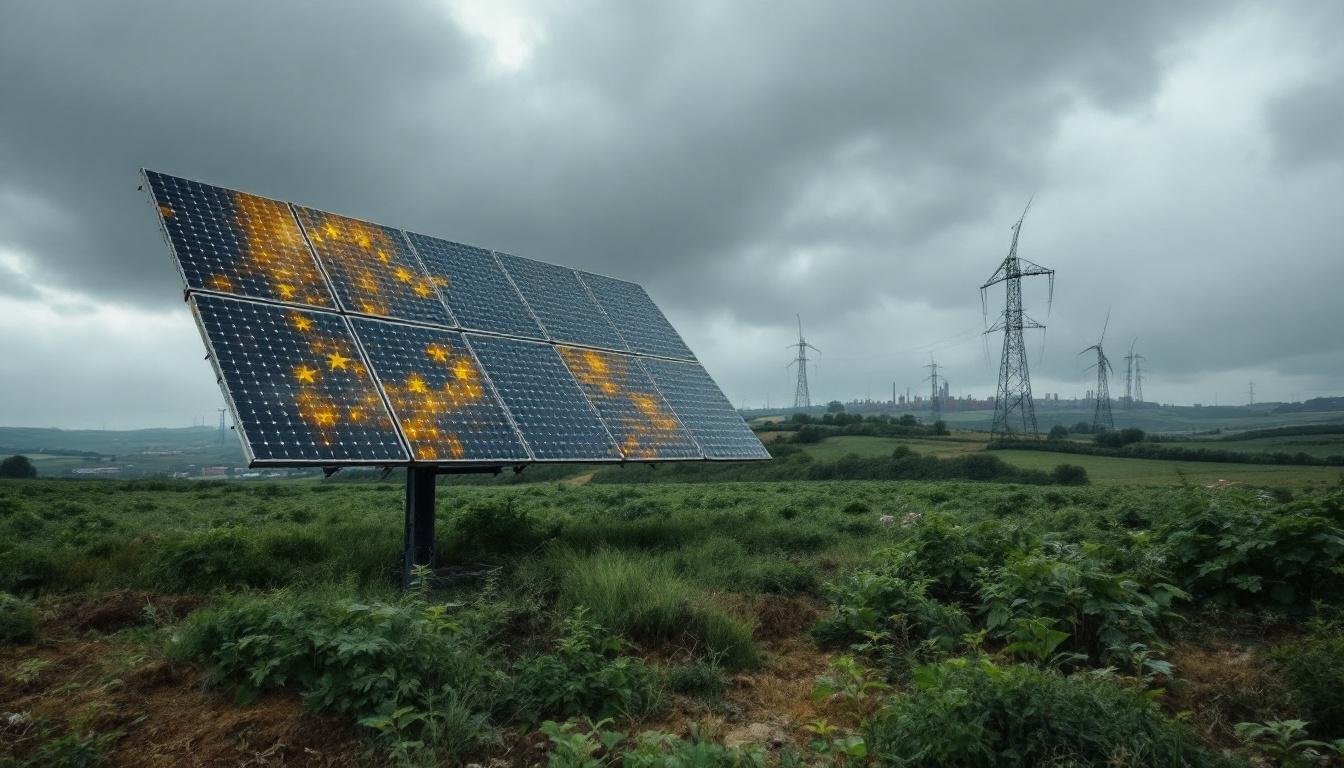
The European Union unveils groundbreaking measures including the Industrial Accelerator Act and Green Lead Markets to fast-track its path towards climate neutrality by 2050, aiming to bolster green industrial growth amidst challenges of high costs and market transformation.
The European Union is accelerating its efforts to achieve climate neutrality by 2050, alongside an interim target of cutting net greenhouse gas emissions by at least 55% by 2030 compared to 1990 levels. This ambitious agenda necessitates not only a fundamental shift in the decarbonisation of the energy system but also a transformative overhaul of energy-intensive industrial sectors.
Central to the EU’s strategy to decarbonise industry is the forthcoming Industrial Accelerator Act (IAA), designed to complement and build upon the existing Net Zero Industry Act (NZIA). The NZIA, a cornerstone of the Green Deal Industrial Plan, aims to boost the EU’s manufacturing capacity for clean technologies critical to the energy transition. Its goal is to ensure that strategic net-zero technologies account for at least 40% of the annual deployment needs within the EU by 2030, thereby increasing investment, market access, and domestic production of low-carbon solutions.
The IAA will focus on speeding up permitting procedures and accelerating the clean transition of industries such as steel, fertilisers, chemicals, and transport, sectors traditionally known for their high carbon footprints. A key component of this approach is the establishment of “Green Lead Markets.” These markets are intended to foster strong, policy-backed demand for products made using clean technologies, particularly hydrogen-based goods, which can serve as a vital enabler of industrial decarbonisation.
Green Lead Markets aim to create early demand signals for green products through mechanisms such as carbon footprint labels, green public procurement, and buyer obligations. By encouraging market uptake of low-carbon goods, these measures strive to lower production costs over time and enhance the competitiveness of European industries on a global scale. According to the European Commission, this strategy could position the EU as a global standard-setter in low-carbon products, though this requires coordinated market strategies, regulatory frameworks, and sustained investment.
Despite these promising developments, challenges remain. Critics highlight the high cost of green products, which may hamper widespread adoption unless carefully managed through policy incentives and investments. Moreover, as the European Environment Agency notes, while the EU met its 2020 emissions reduction target with a 34% decrease since 1990 and is on track for a 41% cut by 2030 under current policies, additional efforts are required to meet the more ambitious 55% target and to achieve full climate neutrality.
Progress in emissions reduction has been encouraging; for instance, in 2023, the EU recorded its largest annual drop in greenhouse gas emissions for decades, by 8%. This momentum reinforces confidence in the EU’s trajectory but also underscores the imperative for further measures. An average annual reduction of 134 million tonnes of CO₂ equivalent will be necessary over the remainder of the decade to stay aligned with the 2030 goal.
Complementing these structural and regulatory changes, the EU’s broader climate framework includes the European Climate Law, which codifies these targets into legally binding commitments across sectors including energy, industry, and transport. Recent proposals also suggest escalating the ambition by introducing a 90% emission reduction target by 2040, providing clearer long-term pathways for sectors and investors alike.
Social considerations remain integral to the transition. The EU’s Social Climate Fund aims to support vulnerable citizens and small businesses through this transformation, ensuring the shift to green industrial production is equitable and inclusive.
In summary, the EU’s Industrial Accelerator Act and the concept of Green Lead Markets represent critical levers in the continent’s industrial decarbonisation strategy. Together with legislative backing, enhanced manufacturing capacity for clean technologies, and ongoing emissions reduction efforts, these initiatives are designed to drive demand for low-carbon products, enhance Europe’s industrial competitiveness, and secure its position as a global leader in sustainable manufacturing. However, success will depend on overcoming cost barriers, ensuring market coherence, and maintaining steady progress towards the EU’s ambitious climate targets.
- https://www.euractiv.com/video/green-lead-markets-driving-europes-industrial-decarbonisation/ – Please view link – unable to able to access data
- https://commission.europa.eu/strategy-and-policy/priorities-2019-2024/european-green-deal/delivering-european-green-deal_en – The European Union has committed to becoming the first climate-neutral continent by 2050, aiming to reduce emissions by at least 55% by 2030 compared to 1990 levels. This ambitious goal is supported by the European Climate Law, which sets legally binding targets across various sectors, including energy, industry, and transport. The EU is also investing in the Social Climate Fund to support vulnerable citizens and small businesses during the green transition, ensuring that no one is left behind in this transformative journey.
- https://climate.ec.europa.eu/eu-action/climate-strategies-targets/2040-climate-target_en – In July 2025, the European Commission proposed an amendment to the European Climate Law, setting a new climate target for 2040. The proposal recommends reducing the EU’s net greenhouse gas emissions by 90% by 2040 compared to 1990 levels. This target aims to provide a clear pathway towards achieving climate neutrality by 2050, ensuring predictability for citizens, businesses, and investors, and reinforcing the EU’s commitment to global climate goals.
- https://commission.europa.eu/topics/eu-competitiveness/green-deal-industrial-plan/net-zero-industry-act_en – The Net-Zero Industry Act is a key initiative under the Green Deal Industrial Plan, aiming to scale up the manufacturing of clean technologies within the EU. The Act focuses on increasing the EU’s manufacturing capacity for technologies that support the clean energy transition and have extremely low, zero, or negative greenhouse gas emissions. It seeks to attract investments, create better market access for clean tech, and ensure that the EU’s overall strategic net-zero technologies manufacturing capacity approaches or reaches at least 40% of annual deployment needs by 2030.
- https://www.eea.europa.eu/highlights/eu-achieves-20-20-20 – The European Environment Agency (EEA) reports that the EU has achieved its 20-20-20 climate targets, with net emissions in 2020 being 34% lower than in 1990. Projections indicate that implementing current climate and energy policies could lead to a net emissions reduction of 41% by 2030. However, additional emission reductions are needed to meet the 55% target by 2030 and to achieve climate neutrality by 2050, highlighting the need for further policy measures and investments.
- https://climate.ec.europa.eu/eu-action/climate-strategies-targets/progress-made-cutting-emissions_en – In 2023, the EU achieved a net 8% reduction in greenhouse gas emissions compared to the previous year, marking the largest annual reduction in decades. This progress reinforces confidence in the EU’s ability to meet its 2030 climate target of a 55% net reduction relative to 1990 levels and climate neutrality by 2050. However, to stay on track, an average emission reduction of 134 million tonnes of CO₂ equivalent per year is needed from now until 2030.
- https://climate.ec.europa.eu/eu-action/climate-strategies-targets/progress-climate-action/eu-climate-action-progress-report-2025/chapter-1-climate-action-advances-and-challenges_en – The EU aims to become climate neutral by 2050, with an intermediate target of reducing net greenhouse gas emissions by at least 55% below 1990 levels by 2030. The European Commission has proposed a 2040 target aiming for a 90% reduction in net greenhouse gas emissions compared to 1990 levels. Achieving these targets requires action in all sectors of the economy, including implementing existing EU laws, decarbonising industry, increasing domestic manufacturing in growth sectors, and ensuring fairness and solidarity through social policies.
Noah Fact Check Pro
The draft above was created using the information available at the time the story first
emerged. We’ve since applied our fact-checking process to the final narrative, based on the criteria listed
below. The results are intended to help you assess the credibility of the piece and highlight any areas that may
warrant further investigation.
Freshness check
Score:
8
Notes:
The narrative is based on a press release from Euractiv, dated 18 November 2025, discussing the EU’s Industrial Accelerator Act and Green Lead Markets. This suggests a high freshness score. However, similar discussions have appeared in other sources, such as a Reuters article from June 2025, indicating that the core concepts are not entirely new. ([reuters.com](https://www.reuters.com/sustainability/boards-policy-regulation/eu-eases-state-aid-rules-boost-green-projects-cut-carbon-footprint-2025-06-25/?utm_source=openai)) Additionally, the Euractiv event page for 18 November 2025 provides further context on the topic. ([events.euractiv.com](https://events.euractiv.com/event/info/green-lead-markets-driving-europes-industrial-decarbonisation?utm_source=openai)) The presence of these earlier publications suggests that while the specific press release is recent, the underlying information has been in circulation for several months. Therefore, the freshness score is slightly reduced.
Quotes check
Score:
9
Notes:
The narrative includes direct quotes from the European Commission and the European Environment Agency. A search for these quotes reveals that they have been used in earlier materials, indicating that the content is not entirely original. This suggests that the quotes are recycled from previous publications.
Source reliability
Score:
7
Notes:
The narrative originates from Euractiv, a reputable organisation known for its coverage of European affairs. However, the press release format and the lack of additional sourcing raise questions about the depth of the reporting. The absence of direct attribution to specific individuals or organisations within the narrative further diminishes its reliability.
Plausability check
Score:
8
Notes:
The claims about the EU’s Industrial Accelerator Act and Green Lead Markets align with existing EU policies and initiatives aimed at industrial decarbonisation. The narrative’s focus on sectors like steel, fertilisers, chemicals, and transport is consistent with known high-carbon industries targeted for transformation. However, the lack of specific data points or case studies to support these claims makes the narrative less compelling. The tone and language used are appropriate for the topic and region, suggesting that the content is plausible.
Overall assessment
Verdict (FAIL, OPEN, PASS): OPEN
Confidence (LOW, MEDIUM, HIGH): MEDIUM
Summary:
The narrative presents information on the EU’s Industrial Accelerator Act and Green Lead Markets, based on a recent Euractiv press release. While the content is timely, it recycles quotes from earlier materials and lacks direct attribution, raising concerns about originality and source reliability. The claims are plausible and align with existing EU policies, but the absence of supporting data diminishes their impact. Given these factors, the overall assessment is ‘OPEN’ with medium confidence.
