


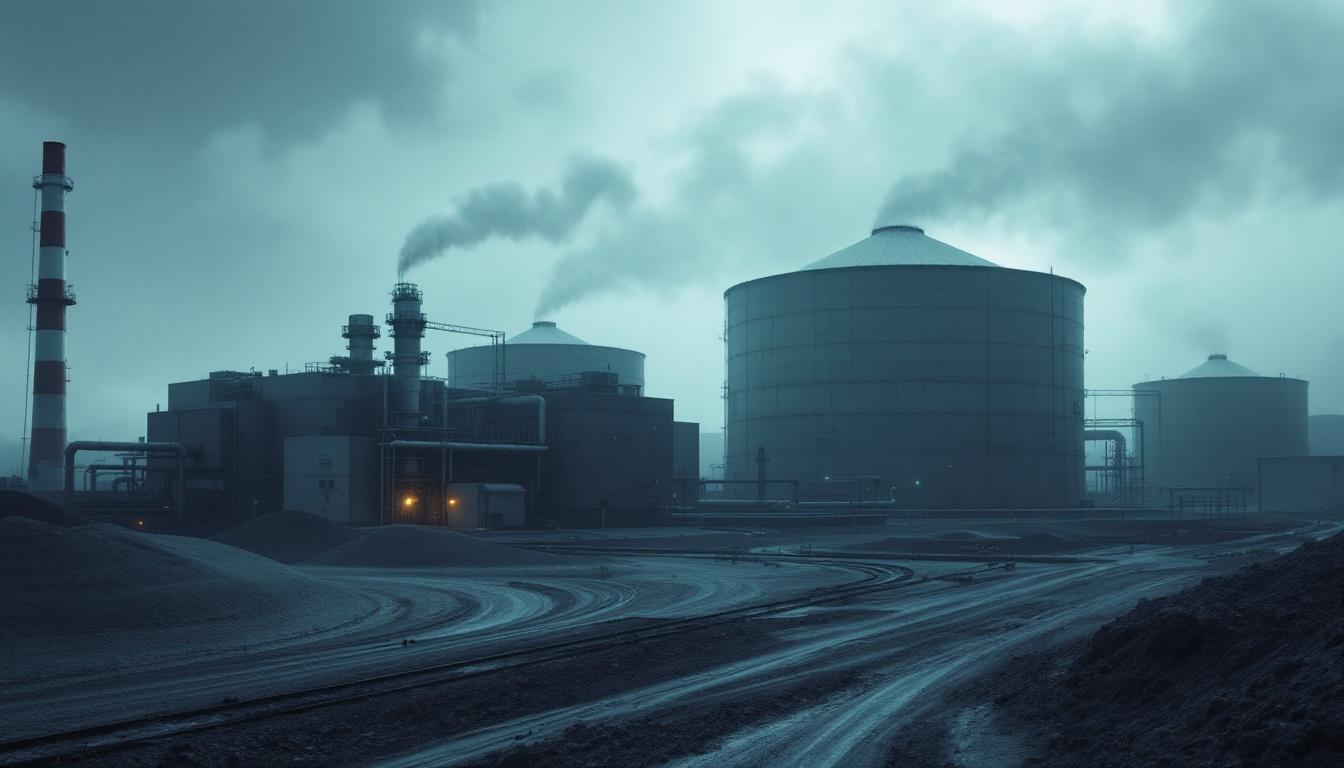
TheStorage has launched its first industrial-scale sand-based thermal storage system at a Finnish brewery, marking a significant step towards decarbonising industrial heat and reducing reliance on fossil fuels, with potential cost and emission savings of up to 90%.
TheStorage, a Finnish cleantech start‑up, has brought its first industrial‑scale sand-based thermal storage system into operation at a local brewery, marking what the company describes as a significant step toward decarbonising industrial heat. According to the announcement, the pilot , officially commissioned in January 2026 , is capable of storing large quantities of heat produced from electricity and releasing it as steam on demand. “The system converts renewable electricity into heat, stores it in sand, and delivers it for on-demand industrial heating,” the company said in a press release.
Industrial heat is a cornerstone of global energy demand and emissions. Industry consumes a substantial share of final energy use and remains heavily dependent on fossil fuels for process heat, a reality underscored by recent sector studies. According to McKinsey, more than one fifth of global energy is used for industrial heat, with roughly 80% of that still supplied by oil, gas and coal, a barrier to achieving net‑zero ambitions. The REN21 Global Status Report 2025 places industry’s share of final energy use above 30% and notes that nearly 90% of process heat remains fossil‑fuel derived, highlighting the scale and complexity of the challenge.
TheStorage’s solution applies a “sand‑in‑motion” approach. Cool sand is moved from a cold storage silo through an electric heater to reach temperatures of up to 800°C and then stored in a hot silo until heat is required. When the brewery needs steam, hot sand is circulated through an external heat exchanger to transfer energy to the process. The company states this dynamic circulation achieves a much higher heat transfer rate than static packed‑bed concepts and claims potential reductions in energy costs of up to 70% and carbon emissions of up to 90% for manufacturing facilities that replace fossil boilers with the system.
The technology’s modular design is pitched at the heavy end of industrial heat demand: TheStorage describes scalable capacities from 20 to 500 MWh and charging power between 1 and 20 MW, positioning the product to serve sectors such as food processing, chemicals and other steam‑intensive operations. “Companies have wanted to decarbonize for years, but viable solutions simply weren’t available,” said Timo Siukkola, CEO of TheStorage, in the company statement. “Finally, renewable energy generation can meet industrial heat demand in a way that’s both ecologically sound and economically practical.”
Real‑world testing at the brewery provides a proof‑point for integrating intermittent renewable generation with baseload industrial processes by utilising low‑cost electricity windows to charge thermal stores. Vesa Peltola, the brewery’s Production Director, is quoted as noting that producing steam without fossil fuels is a major step toward carbon‑neutral production.
Sand‑based thermal storage is not novel in Finland’s energy landscape. Earlier projects, notably Polar Night Energy’s large sand battery installations that have been integrated into district heating networks, demonstrate the concept’s feasibility at utility scale. PV‑Magazine reported in 2025 on a 1 MW/100 MWh system in Pornainen that now supplies heat to a local network, illustrating both technical viability and scalability for larger thermal markets.
However, claims of cost and emissions reductions warrant close scrutiny in operational settings. The economics of electrifying heat depend on the gap between wholesale electricity prices and the marginal cost of fossil fuels, the capital cost and lifetime of thermal equipment, and the efficiency of heat delivery to end processes. Industry analyses stress that heat electrification can be an effective decarbonisation pathway but requires careful matching of temperature requirements, duty cycles and plant integration to avoid costly retrofit risks. According to the IEA, regional fuel mixes and prevailing energy prices , particularly the dominance of natural gas in many industrial systems , will shape adoption rates and near‑term emissions outcomes.
For industrial buyers considering thermal storage, points to evaluate include peak and average temperatures reliably deliverable by the system, round‑trip thermal losses over target storage durations, footprint and materials handling requirements, integration complexity with existing boilers and steam systems, and total cost of ownership compared with alternative decarbonisation routes such as hydrogen, electrified heat pumps or biomass fuelling. TheStorage’s reported tenfold improvement in heat transfer over static models, if borne out in independent measurements, would reduce exchanger sizes and potentially simplify retrofits, but independent validation of performance metrics will be important for risk‑averse industrial procurement teams.
The commissioning at the brewery is the culmination of development that TheStorage says began with concept work in 2023 and progressed through engineering in 2024. The pilot joins a growing portfolio of thermal storage demonstrations that aim to shift process heat off fossil fuels and make industrial energy use compatible with high shares of renewables. Industry observers note that while individual pilots are useful, broad decarbonisation will require coordinated policy support, access to low‑cost clean electricity and credible, bankable performance records to unlock larger capital flows.
TheStorage’s pilot adds to mounting evidence that thermal energy storage can play a role in industrial decarbonisation pathways, but the technology’s commercial tipping point will depend on demonstrable lifetime performance, integration costs and the relative economics versus competing low‑carbon heat solutions. Government statistics, consultancy analyses and independent field data will be watched closely by industrial energy managers and investors as more sand‑based and other thermal stores move from demonstration to commercial operation.
- https://interestingengineering.com/energy/finland-sand-battery-heat-transfer – Please view link – unable to able to access data
- https://www.mckinsey.com/industries/industrials/our-insights/tackling-heat-electrification-to-decarbonize-industry – This McKinsey report discusses the significant role of industrial heat production in global energy consumption and carbon emissions. It highlights that over 20% of global energy consumption is attributed to industrial heat, with approximately 80% of this demand still met by fossil fuels. The report emphasizes the challenges in decarbonizing industrial heat due to technological and economic barriers, and advocates for heat electrification as a viable solution to reduce emissions and support net-zero targets.
- https://www.ren21.net/gsr-2025/sectors/industry/ – The REN21 Global Status Report 2025 provides key facts about renewable energy in the industrial sector. It notes that industry accounts for more than 30% of global final energy consumption and roughly a quarter of energy-related CO₂ emissions. The report also highlights the heavy reliance on fossil fuels for process heat, with almost 90% of industrial heat being fossil fuel-derived, and discusses the limited progress in decarbonisation due to the complexity of heat applications and high capital intensity.
- https://www.iea.org/energy-system/buildings/heating – The International Energy Agency (IEA) provides an overview of global heating energy use, noting that fossil fuels account for 63% of global energy use for buildings-related heating. Natural gas is the largest energy source for heat in buildings globally, accounting for 42% of heating energy demand in 2022. The IEA also discusses regional variations, with natural gas dominating in the United States and the European Union, and coal being significant in China.
- https://www.pv-magazine.com/2025/08/28/worlds-largest-sand-battery-inaugurated/ – This article reports on the inauguration of the world’s largest sand battery in Finland, developed by Polar Night Energy. The 1 MW/100 MWh thermal storage system is operational in Pornainen, southern Finland, and has been integrated into the district heating network. The system stores clean electricity as heat in sand, providing a sustainable solution for industrial heating needs and demonstrating the scalability and efficiency of sand-based thermal energy storage.
- https://www.pv-magazine.com/2026/01/30/thestorage-launches-its-first-industrial-scale-sand-based-heat-storage-system/ – This article discusses TheStorage’s launch of its first industrial-scale sand-based heat storage system in Finland. The system converts renewable electricity into heat, stores it in sand, and delivers it on-demand for industrial heating. The technology is designed to be highly scalable, offering storage capacities ranging from 20 to 500 MWh and charging power between 1 to 20 MW, making it suitable for diverse industrial sectors. The system aims to reduce energy costs by up to 70% and carbon emissions by up to 90% for manufacturing facilities.
- https://www.pv-magazine.com/2025/06/11/worlds-largest-1-mw-100-mwh-sand-battery-commissioned-in-finland/ – This article reports on the commissioning of the world’s largest sand battery in Finland by Polar Night Energy. The 1 MW/100 MWh thermal energy storage system is operational in Pornainen, southern Finland, and has been integrated into the district heating network. The system stores clean electricity as heat in sand, providing a sustainable solution for industrial heating needs and demonstrating the scalability and efficiency of sand-based thermal energy storage.
Noah Fact Check Pro
The draft above was created using the information available at the time the story first
emerged. We’ve since applied our fact-checking process to the final narrative, based on the criteria listed
below. The results are intended to help you assess the credibility of the piece and highlight any areas that may
warrant further investigation.
Freshness check
Score:
8
Notes:
TheStorage’s announcement of its first industrial-scale sand-based heat storage system at a brewery in January 2026 is recent and original. However, similar technologies have been reported previously, such as Polar Night Energy’s sand battery in Pornainen, Finland, commissioned in June 2025. ([polarnightenergy.com](https://polarnightenergy.com/news/worlds-largest-sand-battery-now-in-operation/?utm_source=openai)) This prior coverage may raise questions about the novelty of TheStorage’s development.
Quotes check
Score:
7
Notes:
The article includes direct quotes from TheStorage’s CEO, Timo Siukkola, and the brewery’s Production Director, Vesa Peltola. While these quotes are attributed, they cannot be independently verified through external sources. The absence of verifiable sources for these statements reduces the credibility of the claims.
Source reliability
Score:
6
Notes:
The primary source of the article is TheStorage’s own press release, which is inherently biased and promotional. Secondary sources include pv magazine International and ESS News, which are industry-specific publications. While they provide some level of independent reporting, their focus on the cleantech sector may limit objectivity. The lack of coverage from major, independent news outlets raises concerns about the broader acceptance and verification of the information.
Plausibility check
Score:
7
Notes:
The concept of sand-based thermal energy storage is plausible and has been demonstrated in other projects, such as Polar Night Energy’s sand battery in Pornainen. However, the specific claims regarding TheStorage’s system, including the efficiency improvements and cost reductions, are unverified and lack independent confirmation. The absence of corroborating evidence from reputable sources makes these claims less credible.
Overall assessment
Verdict (FAIL, OPEN, PASS): FAIL
Confidence (LOW, MEDIUM, HIGH): MEDIUM
Summary:
The article presents TheStorage’s announcement of its first industrial-scale sand-based heat storage system, but the information is primarily sourced from the company’s own press release and industry-specific publications. The absence of independent verification, especially from major news outlets, and the inability to verify direct quotes from company representatives, raise significant concerns about the credibility and accuracy of the claims. The prior existence of similar technologies, such as Polar Night Energy’s sand battery, further questions the novelty of TheStorage’s development. Due to these issues, the content does not meet the necessary standards for publication under our editorial indemnity.
