


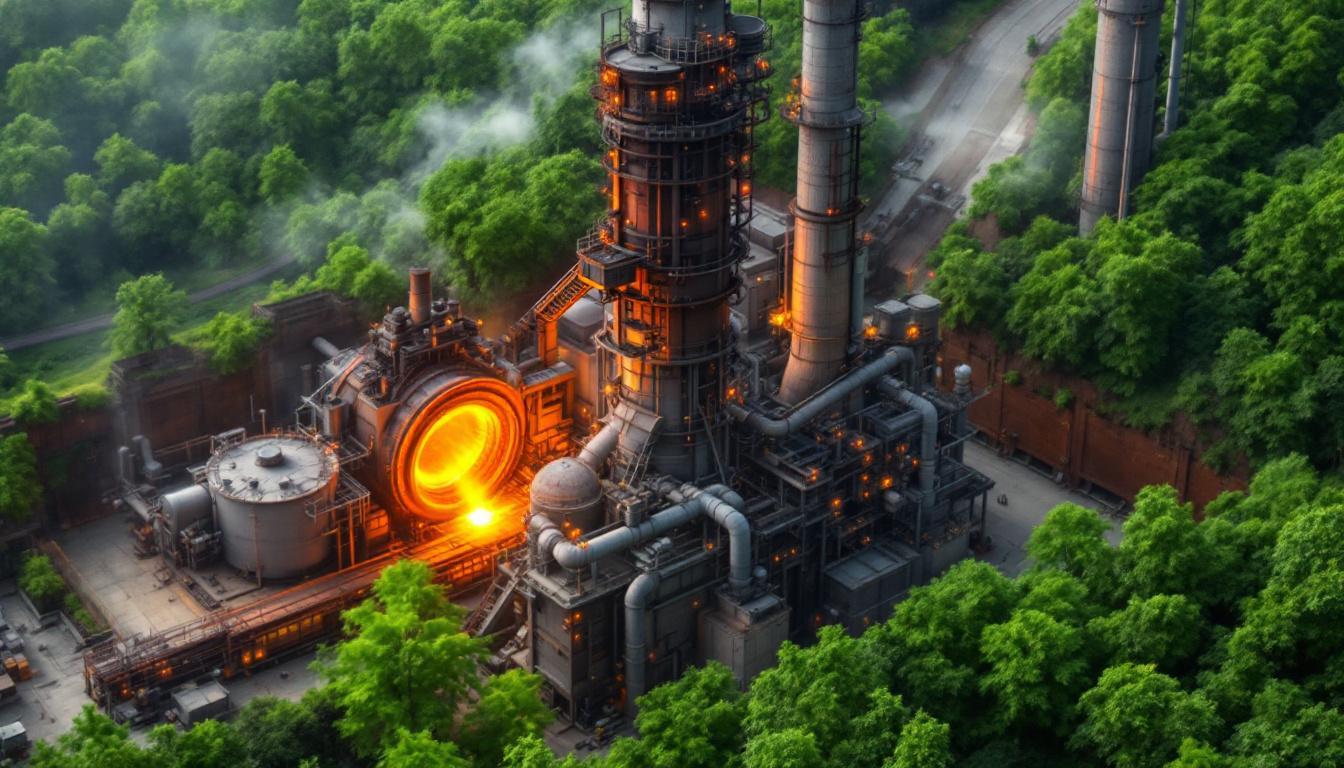
The Finnish iron and steel sector is experiencing a seismic shift from traditional blast furnaces to electric arc furnaces and hydrogen-based routes, compelling investors and owners to recalibrate valuation strategies, investment narratives, and financial due diligence to align with decarbonisation goals.
The Finnish iron and steel industry is at the centre of a generational shift: established capacity and engineering excellence are being recalibrated around a rapid transition to fossil-free production. According to SSAB, the sector is replacing blast furnaces with electric arc furnace-based mini-mills and experimenting with hydrogen-based routes to iron, moves that promise materially lower CO2 footprints but also reshape cost structures, asset valuations and deal dynamics for buyers and sellers. For owners seeking a sale or for investors allocating capital, three interdependent capabilities are now decisive: robust valuation, an investor-grade pitch narrative, and forensic financial due diligence.
Valuation in this environment must be both technical and forward-looking. Traditional approaches such as discounted cash flow (DCF) remain core to capture long-horizon transition projects , for example conversion to Electric Arc Furnaces or hydrogen-reduced iron feedstocks , while market multiple benchmarks still provide useful cross-checks against global peers. According to SSAB and industry partners, the emergence of HYBRIT and planned mini-mill investments in Luleå and Raahe materially alter long-term cashflow profiles and terminal value assumptions, so valuations must explicitly price transition capex, stranded-asset risk and timing of regulatory impacts such as the EU Emissions Trading System (ETS). Asset-based appraisals should model replacement cost, remaining useful life and decommissioning liabilities for heavy plant, and quantify any “green premium” arising from demonstrable fossil-free capability or proximity to low-cost renewable power.
The pitch deck for a Finnish steel business must translate technical transformation into an investment story. Institutional investors and sovereign wealth funds focus on sustainability credentials, pathway-to-zero emissions and the credibility of execution. According to SSAB’s public roadmap and the HYBRIT initiative, demonstrable delivery , pilot throughput, validated hydrogen-reduced iron output, or committed power contracts for EAF operations , is what moves capital. Equally important for a B2B audience is clear presentation of operational strengths: skilled Nordic workforces, automation, access to Baltic logistics, supply-contract durability and exposure to higher-margin specialised steels such as those used in offshore wind or advanced engineering.
Financial due diligence (FDD) is the stress test that separates plausible claims from contingent liabilities. In steel, Quality of Earnings adjustments must neutralise commodity-cycle distortions, inventory accounting effects and one-off family or owner-related expenses; buyers must insist on back-testing EBITDA normalisations against iron ore and electricity volatility. FDD should also focus on CAPEX histories to detect under-investment, pension and environmental provisions, contingent liabilities from legacy coke-based processes, and the commercial terms that govern feedstock supply and power. Industry partners such as AFRY and SSAB have emphasised that plant conversions and mini-mill projects carry multi-year capex profiles and interdependent supply-chain risks; these must be modelled under multiple scenarios to assess liquidity and covenant resilience.
Tax, regulatory and contractual structuring matter more now than before. The interplay of EU ETS costs, potential carbon-credit revenues, transfer-pricing rules and cross-border withholding regimes can change after-tax returns materially. Vendors seeking to preserve value should consider pre-sale remediation: cleaning up reported EBITDA, documenting R&D and patent protections for high-strength steel applications, and securing forward-power arrangements or offtake commitments where possible. Buyers should demand transparent schedules for transition capex and clear allocation of cost overruns in sale documents.
Practical dealcraft follows from these technical imperatives. For many transactions, a hybrid valuation methodology that layers DCF scenarios (base, transition, accelerated green-adoption) with market multiples for comparable specialised-steel manufacturers provides the most credible range. A pitch deck that foregrounds measured sustainability milestones, validated pilot outputs and repeatable margin pools will fetch better traction with global capital. And a FDD that delivers a clean, auditable picture of working capital, normalized earnings and off-balance-sheet exposures reduces price erosion during negotiation.
The recent case of a specialised-component mill in Oulu illustrates this sequence: separating legacy earnings from high-growth green-steel lines, applying a higher multiple to R&D-driven revenue and delivering a vendor due diligence package that normalised owner-related costs yielded a materially higher sale price and smoother negotiations. That example aligns with broader industry evidence: SSAB’s HYBRIT work and public statements on converting Swedish and Finnish sites into EAF-based mini-mills show that demonstrable progress on fossil-free production materially improves buyer confidence.
For executives and advisers working on Finnish steel transactions the immediate takeaway is straightforward: treat valuation, pitch and due diligence as integrated, strategic tools rather than discrete administrative tasks. Accurate, scenario-based financial models, investor-ready narratives that prove rather than promise decarbonisation, and meticulous FDD that anticipates transition-specific liabilities will determine which deals close and at what multiples as the industry moves from conventional to fossil-free steelmaking.
- https://aviaanaccounting.com/valuation-pitch-deck-and-financial-due-diligence-services-for-iron-steel-manufacturing-business-in-finland/ – Please view link – unable to able to access data
- https://www.ssab.com/en/company/about-ssab/ssabs-transformation – SSAB, a leading steel manufacturer, is undergoing a significant transformation to achieve fossil-free steel production. The company plans to replace all its blast furnaces in Sweden and Finland with electric arc furnaces powered by electricity, marking a substantial shift in steelmaking processes. This initiative aims to reduce carbon emissions and enhance production efficiency, aligning with global sustainability goals. The transformation includes building new mini-mills in Luleå, Sweden, and Raahe, Finland, to support the transition to fossil-free steelmaking.
- https://www.ssab.com/en/news/2024/08/hybrit-six-years-of-research-paves-the-way-for-fossilfree-iron-and-steel-production-on-an-industrial – The HYBRIT initiative, a collaboration between SSAB, LKAB, and Vattenfall, has achieved a significant milestone in developing fossil-free iron and steel production. After six years of research, the project has demonstrated the viability of using fossil-free hydrogen and electricity to replace coal and coke in steelmaking. This advancement is expected to reduce Sweden’s CO₂ emissions by over 10% and Finland’s by 7%. The pilot plant in Luleå has produced over 5,000 tonnes of hydrogen-reduced iron, with customers already utilizing the fossil-free steel in various applications.
- https://afry.com/en/competence/green-steel – AFRY is actively involved in decarbonising the steel industry by developing new fossil-free production methods. The company is part of SSAB’s transformation into a fossil-free steelmaker by 2045 at the Raahe Steel plant in Finland. AFRY’s green steel manufacturing process focuses on using electricity and non-fossil fuels, significantly reducing CO₂ emissions compared to conventional steel production. This approach aims to create near-zero CO₂ emissions, addressing the steel industry’s substantial contribution to global carbon dioxide emissions.
- https://www.ssab.com/en/company/about-ssab/the-earth-calls-for-action – SSAB has committed to transforming all its sites to fossil-free steel production, aiming to produce high-quality steels with a significantly reduced carbon footprint. The company plans to replace all five blast furnaces in Sweden and Finland with more flexible and cost-efficient mini-mills that run on electricity. This transformation is expected to contribute to a considerable reduction in CO₂ emissions and position SSAB for higher profitability in the evolving steel market.
- https://www.ssab.com/en/news/2021/07/ssab-has-launched-an-extensive-research-project-in-finland-to-replace-fossil-fuels-with-renewable-en – SSAB has initiated an extensive research project in Finland, named ‘FFS – Towards Fossil-free Steel,’ to explore solutions for producing fossil-free steel and eliminate the use of fossil energy. The project involves collaboration with industrial and research partners to develop green forms of energy, such as hydrogen, biochar, and biogas, for the steel industry. It also focuses on studying the smelting of hydrogen-reduced sponge iron in electric arc furnaces and the manufacture of fossil-free lime, aiming to support SSAB’s goal of carbon neutrality by 2045.
- https://www.ffs2.fi/wp-content/uploads/2024/02/SSAB-Europe-Oy_julkinen-kuvaus.pdf – SSAB is undertaking a strategic roadmap to revolutionize iron and steelmaking, aiming to be the first steel company to deliver fossil-free steel to the market by 2026 and largely eliminate carbon dioxide emissions from its operations by around 2030. The plan includes transforming SSAB Raahe and Luleå integrated steel plants into mini-mill type production units with electric arc furnace-based production, utilizing HYBRIT sponge iron and scrap as raw materials, and phasing out old production facilities based on fossil carbon.
Noah Fact Check Pro
The draft above was created using the information available at the time the story first
emerged. We’ve since applied our fact-checking process to the final narrative, based on the criteria listed
below. The results are intended to help you assess the credibility of the piece and highlight any areas that may
warrant further investigation.
Freshness check
Score:
8
Notes:
The narrative presents recent developments in the Finnish steel industry, particularly focusing on the HYBRIT initiative and its implications for valuation and due diligence. The latest information from August 2024 indicates that HYBRIT has achieved significant milestones, including the production of hydrogen-reduced iron with superior characteristics compared to traditional methods. ([ssab.com](https://www.ssab.com/en/news/2024/08/hybrit-six-years-of-research-paves-the-way-for-fossilfree-iron-and-steel-production-on-an-industrial?utm_source=openai)) However, the article also references earlier developments, such as the establishment of the world’s first production plant for fossil-free sponge iron in Gällivare in March 2021. ([ssab.com](https://www.ssab.com/en-us/news/2021/03/hybrit-ssab-lkab-and-vattenfall-to-begin-industrialization-of-future-fossilfree-steelmaking-by-estab?utm_source=openai)) This combination of recent and older information suggests that while the core content is current, some sections may have been updated or recycled from previous publications. ([ssab.com](https://www.ssab.com/en/news/2025/01/hybrit-honoured-with-world-economic-forum-gaea-award-in-davos?utm_source=openai))
Quotes check
Score:
7
Notes:
The narrative includes direct quotes from industry leaders, such as Martin Pei, Chief Technology Officer at SSAB, and Jan Moström, President and CEO at LKAB. These quotes are consistent with statements made in previous press releases from 2024 and 2021, indicating that they have been reused in this context. ([ssab.com](https://www.ssab.com/en/news/2024/08/hybrit-six-years-of-research-paves-the-way-for-fossilfree-iron-and-steel-production-on-an-industrial?utm_source=openai))
Source reliability
Score:
6
Notes:
The narrative originates from Aviaan Accounting, a firm that offers valuation, pitch deck, and financial due diligence services. While the firm appears to be a legitimate business, it does not have a widely recognized public presence or extensive online footprint, which raises questions about its credibility and the potential for biased reporting.
Plausability check
Score:
8
Notes:
The claims regarding the Finnish steel industry’s transition to fossil-free production and the role of the HYBRIT initiative are plausible and align with information from reputable sources. ([ssab.com](https://www.ssab.com/en/news/2024/08/hybrit-six-years-of-research-paves-the-way-for-fossilfree-iron-and-steel-production-on-an-industrial?utm_source=openai)) However, the narrative’s focus on valuation and due diligence services may be seen as self-serving, potentially affecting its objectivity.
Overall assessment
Verdict (FAIL, OPEN, PASS): CONDITIONAL
Confidence (LOW, MEDIUM, HIGH): MEDIUM
Summary:
The narrative provides a timely overview of the Finnish steel industry’s shift towards fossil-free production and the associated valuation and due diligence considerations. However, the reuse of quotes from earlier press releases and the firm’s limited public presence raise concerns about the originality and objectivity of the content. While the information is plausible and not behind a paywall, the potential biases and lack of independent verification suggest a medium level of confidence in its reliability. ⚠️
