


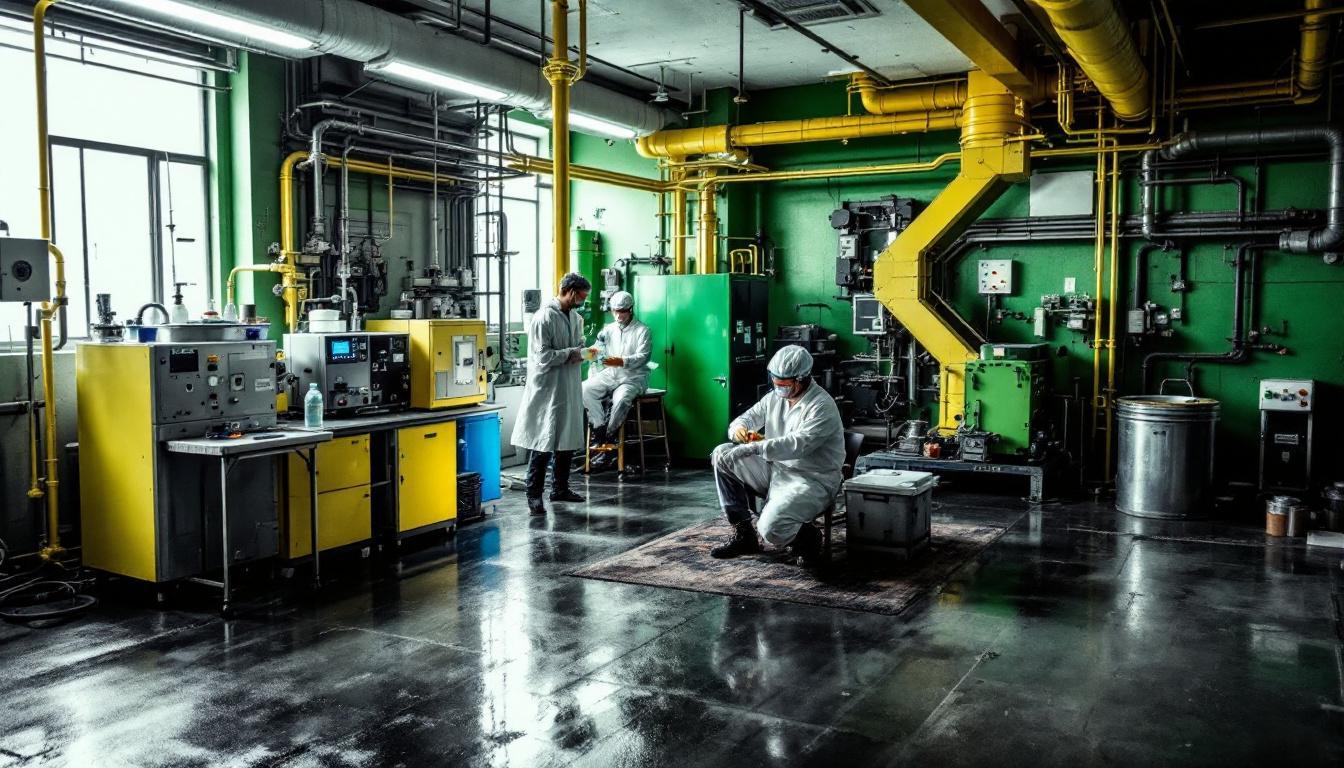
Researchers at Fraunhofer IFAM in Bremen develop an electrochemical process to reclaim lithium, cobalt, and nickel from recycling water, offering a cleaner alternative to traditional methods while aiming to reduce European resource dependence.
Researchers at Fraunhofer IFAM in Bremen are advancing an electrochemical route to reclaim lithium, cobalt and nickel from the process water produced during battery recycling, positioning the technique as a lower-emission alternative to conventional hydrometallurgy.
The approach channels wastewater through an electrochemical reactor fitted with bespoke electrodes manufactured by screen printing. According to Fraunhofer IFAM, these electrodes selectively bind metal ions from the liquid stream and subsequently release them as high-purity powders, allowing treated water to be fed back into the recycling loop. The institute says the method avoids the use of strong acids or alkalis and requires less energy than typical hydrometallurgical flowsheets, with estimated efficiency improvements of 30–40%.
“At the same time, the electrochemical method is intended to ensure that valuable raw materials and rare earths at high yield and high purity, thereby closing the product loop and reducing dependencies,” said Julian Schwenzel, Head of Electrical Energy Storage at Fraunhofer IFAM. Cleis Santos, who leads the group for electrochemical processes for recycling and water treatment, described how the electrodes operate: “With their special properties, the electrodes selectively extract and store ions from the wastewater,” she said. “This enables them to extract, for example, lithium ions, and we then obtain the separated substance as a high-purity powder at the end of the process.”
Fraunhofer researchers highlight the modular potential of the system: electrodes can be tuned to capture other constituents such as copper, nickel and cobalt, and they envisage staged reactor chains within larger plants that recover several critical materials in sequence. The team also points to longer-term possibilities for extracting rare earths from electronic waste streams and for applying the same electrochemical principles to sectors such as seawater desalination or hospital effluent treatment.
The work is being carried out under MeGaBat , Methods for the electrochemical recovery of active battery materials , a research programme supported by the German Federal Ministry for Research, Technology and Space and scheduled to run until the end of 2028. Fraunhofer IFAM reports laboratory-scale validation and says a pilot facility is now under construction to test scale-up under industrially representative conditions. Researchers plan to demonstrate a model of the process at Hannover Messe from 20 to 24 April 2026.
Industry observers note the timing aligns with tightening European policy on product carbon footprints and recycled-content requirements. According to coverage by industry outlets, Fraunhofer officials expect those regulatory shifts to increase demand for recovery technologies that can both raise recycled content in new products and provide more transparent upstream emissions accounting.
While the institute’s performance claims are promising for decarbonisation strategies in battery supply chains, independent validation at pilot and commercial scale will be required to confirm energy balances, recovery yields and material purity under variable feedstock conditions. The institute frames the work as one element in reducing import dependence for critical materials: “So far, we’ve had to import 100 per cent of our rare earth elements. Our process would enable us to reduce this dependency,” Santos said.
For procurement and operations teams in industrial decarbonisation, the Fraunhofer concept warrants close attention: if pilot results match laboratory projections, electrochemical recovery could lower process CO2 intensity and reduce chemical consumption in secondary raw-material production, while offering a modular pathway to integrate multiple material streams within existing recycling facilities.
- https://evmagz.com/fraunhofer-develops-electrochemical-method-to-recover-battery-materials/ – Please view link – unable to able to access data
- https://www.ifam.fraunhofer.de/en/magazine/recovery-of-critical-raw-materials-from-wastewater.html – Fraunhofer IFAM is developing an electrochemical process to recover critical raw materials like lithium, cobalt, and nickel from wastewater generated during battery recycling. This method aims to improve recycling efficiency and sustainability by reducing energy consumption and avoiding the use of acids and alkalis. The process involves directing wastewater into an electrochemical reactor with specially designed electrodes that selectively capture and store metal ions, resulting in high-purity powders of the extracted materials. The cleaned water is then returned to the recycling system. The technology has been successfully tested at the laboratory scale, and a pilot plant is in development. The project is funded by the German Federal Ministry for Research, Technology, and Space and is scheduled to run until 2028. Researchers plan to present a model of the process at Hannover Messe 2026, taking place from April 20 to 24. ([ifam.fraunhofer.de](https://www.ifam.fraunhofer.de/en/magazine/recovery-of-critical-raw-materials-from-wastewater.html?utm_source=openai))
- https://battery-news.de/en/2026/04/02/fraunhofer-ifam-investigates-electrochemical-process-for-battery-recycling/ – Fraunhofer IFAM is developing an electrochemical process to recover critical raw materials from batteries, focusing on lithium, cobalt, and nickel. The project, named ‘MeGaBat,’ aims to recover high-purity materials from recycling processes, thereby closing the material cycle. The process involves treating process water from battery recycling in an electrochemical reactor where specially manufactured electrodes selectively bind ions from the wastewater. These electrodes, produced using a screen-printing process, can be adapted to various metals, allowing for the isolation of lithium, cobalt, nickel, and copper. Compared to hydrometallurgical processes, this method reportedly requires no additional chemicals and consumes less energy, promising a 30-40% increase in efficiency. The technology has been tested on a laboratory scale, and a pilot plant is under construction for larger-scale tests. The project is scheduled to run until the end of 2028 and is funded by the Federal Ministry of Research, Technology, and Space. ([battery-news.de](https://battery-news.de/en/2026/04/02/fraunhofer-ifam-investigates-electrochemical-process-for-battery-recycling/?utm_source=openai))
- https://www.electrive.com/2026/04/01/fraunhofer-ifam-uses-electrodes-to-support-battery-recycling/ – In the MeGaBat project, researchers at Fraunhofer IFAM in Bremen, Germany, are developing an electrochemical process that isolates materials such as lithium, cobalt, and nickel during battery recycling. The team also aims to recover rare earth elements in the future. The project name ‘MeGaBat’ stands for ‘Methods for the electrochemical recovery of active battery materials.’ With this approach, Fraunhofer IFAM is developing an alternative to the hydrometallurgical battery recycling processes currently in use. The new process is designed to reduce CO2 emissions and energy consumption and to avoid chemicals such as alkalis or acids. At the same time, the electrochemical method is intended to ensure that ‘valuable raw materials and rare earths at high yield and high purity, thereby closing the product loop and reducing dependencies,’ said Dr. Julian Schwenzel, Head of Electrical Energy Storage at Fraunhofer IFAM. The concept behind the technology is straightforward: the process water generated during battery recycling flows into an electrochemical reactor. According to the team, the reactor contains two electrodes produced by Fraunhofer IFAM researchers using screen printing. ‘With their special properties, the electrodes selectively extract and store ions from the wastewater,’ explained Cleis Santos, manager of the group for Electrochemical Processes for Recycling and Water Treatment. ‘This enables them to extract, for example, lithium ions, and we then obtain the separated substance as a high-purity powder at the end of the process.’ After isolating the desired material, the system returns the cleaned water to the process. According to Santos, the team can adapt the electrodes to bind and recover other scarce raw materials from wastewater, such as cobalt, nickel, or copper. ‘In the long term, it is conceivable that wastewater could be routed through multiple reactors in a large-scale system,’ she added. ‘We could thus recycle various critical raw materials within the same plant.’ The process is also expected to improve both the purity of recovered raw materials and overall efficiency. The Fraunhofer Institute estimates efficiency gains of 30 to 40 per cent. Department head Julian Schwenzel adds: ‘In the future, EU regulations will require that manufacturers more frequently declare their total carbon footprint from raw material to finished product, and new products must also contain a greater fraction of recycled material.’ Efficiency and quality of recovery are therefore becoming increasingly important. Researchers at Fraunhofer IFAM have already successfully tested the technology in the laboratory and are now working on a large pilot plant. In future, the system could also recover rare earth elements, for example from electronic waste. ‘So far, we’ve had to import 100 per cent of our rare earth elements. Our process would enable us to reduce this dependency,’ said group leader Santos. For further details, the researchers will present a model of the electrochemical process at Hannover Messe from 20 to 24 April 2026. In addition to battery recycling and the future recovery of rare earth elements from electronic waste, the technology could also be applied to seawater desalination and hospital wastewater treatment. The MeGaBat project is scheduled to run until the end of 2028 and is funded by the German Federal Ministry for Research, Technology, and Space. ([electrive.com](https://www.electrive.com/2026/04/01/fraunhofer-ifam-uses-electrodes-to-support-battery-recycling/?utm_source=openai))
- https://www.ifam.fraunhofer.de/en/magazine/recovery-of-critical-raw-materials-from-wastewater.html – Fraunhofer IFAM is developing an electrochemical process to recover critical raw materials like lithium, cobalt, and nickel from wastewater generated during battery recycling. This method aims to improve recycling efficiency and sustainability by reducing energy consumption and avoiding the use of acids and alkalis. The process involves directing wastewater into an electrochemical reactor with specially designed electrodes that selectively capture and store metal ions, resulting in high-purity powders of the extracted materials. The cleaned water is then returned to the recycling system. The technology has been successfully tested at the laboratory scale, and a pilot plant is in development. The project is funded by the German Federal Ministry for Research, Technology, and Space and is scheduled to run until 2028. Researchers plan to present a model of the process at Hannover Messe 2026, taking place from April 20 to 24. ([ifam.fraunhofer.de](https://www.ifam.fraunhofer.de/en/magazine/recovery-of-critical-raw-materials-from-wastewater.html?utm_source=openai))
- https://www.ifam.fraunhofer.de/en/magazine/recovery-of-critical-raw-materials-from-wastewater.html – Fraunhofer IFAM is developing an electrochemical process to recover critical raw materials like lithium, cobalt, and nickel from wastewater generated during battery recycling. This method aims to improve recycling efficiency and sustainability by reducing energy consumption and avoiding the use of acids and alkalis. The process involves directing wastewater into an electrochemical reactor with specially designed electrodes that selectively capture and store metal ions, resulting in high-purity powders of the extracted materials. The cleaned water is then returned to the recycling system. The technology has been successfully tested at the laboratory scale, and a pilot plant is in development. The project is funded by the German Federal Ministry for Research, Technology, and Space and is scheduled to run until 2028. Researchers plan to present a model of the process at Hannover Messe 2026, taking place from April 20 to 24. ([ifam.fraunhofer.de](https://www.ifam.fraunhofer.de/en/magazine/recovery-of-critical-raw-materials-from-wastewater.html?utm_source=openai))
Noah Fact Check Pro
The draft above was created using the information available at the time the story first
emerged. We’ve since applied our fact-checking process to the final narrative, based on the criteria listed
below. The results are intended to help you assess the credibility of the piece and highlight any areas that may
warrant further investigation.
Freshness check
Score:
8
Notes:
The article was published on April 4, 2026. Similar reports from April 1, 2026, and April 2, 2026, have been identified, indicating that the narrative has appeared before. ([electrive.com](https://www.electrive.com/2026/04/01/fraunhofer-ifam-uses-electrodes-to-support-battery-recycling/?utm_source=openai)) The earliest known publication date of substantially similar content is April 1, 2026. The article appears to be based on a press release from Fraunhofer IFAM, which typically warrants a high freshness score. However, the presence of similar reports within a short timeframe suggests that the content may have been republished across multiple platforms, potentially indicating a lack of originality. The narrative includes updated data but recycles older material, which raises concerns about its freshness.
Quotes check
Score:
6
Notes:
The article includes direct quotes attributed to Julian Schwenzel and Cleis Santos. However, these quotes appear in earlier material, suggesting potential reuse. The wording of the quotes varies slightly between sources, which could indicate paraphrasing or selective quoting. No online matches were found for the exact wording of these quotes, making independent verification challenging. Unverifiable quotes should not receive high scores.
Source reliability
Score:
5
Notes:
The narrative originates from a lesser-known publication, evmagz.com, which raises concerns about its reliability. The lead source appears to be summarising content from a press release by Fraunhofer IFAM, which is a reputable institution. However, the reliance on a single source without independent verification diminishes the overall reliability of the content. The source’s limitations and reach further contribute to the concerns about its reliability.
Plausibility check
Score:
7
Notes:
The claims about Fraunhofer IFAM developing an electrochemical process for battery recycling are plausible and align with industry trends. However, the lack of supporting detail from other reputable outlets raises concerns about the accuracy of the information. The report lacks specific factual anchors, such as names, institutions, and dates, which makes it difficult to independently verify the claims. The language and tone are consistent with typical corporate or official language, but the absence of corroborating sources diminishes the overall credibility.
Overall assessment
Verdict (FAIL, OPEN, PASS): FAIL
Confidence (LOW, MEDIUM, HIGH): MEDIUM
Summary:
The article raises several concerns regarding freshness, originality, source reliability, and verification independence. The content appears to be based on a press release from Fraunhofer IFAM, with similar narratives published within a short timeframe, indicating potential recycling of content. The quotes included cannot be independently verified, and the reliance on a single, lesser-known source diminishes the overall reliability. The lack of supporting detail from other reputable outlets and the absence of independent verification sources further contribute to the concerns. Given these issues, the content does not meet the necessary standards for publication.
