


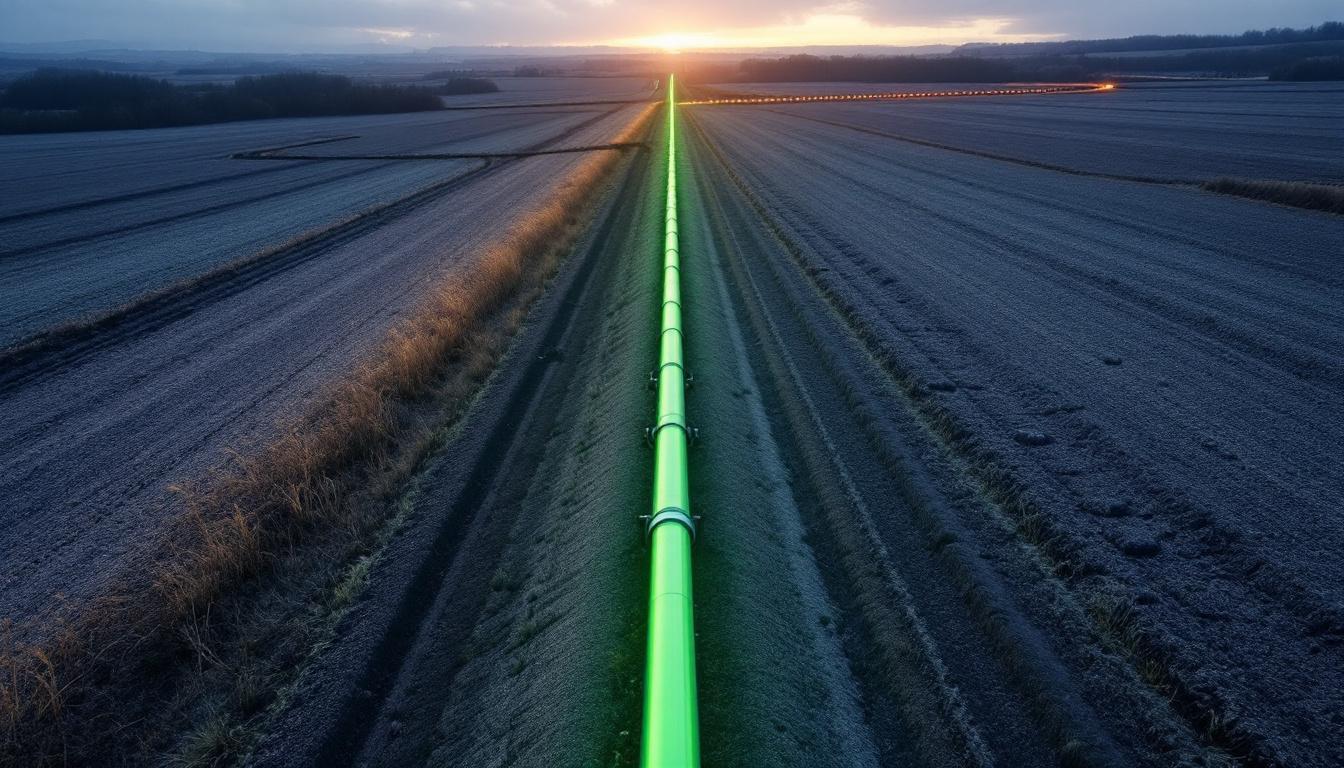
GASCADE has completed a pioneering 400-kilometre conversion of high-pressure natural gas pipelines for hydrogen transport in Germany, paving the way for large-volume industrial hydrogen supply and cross-border integration by 2029.
GASCADE has brought into service a roughly 400-kilometre central section of Germany’s planned hydrogen core network by converting existing high-pressure natural gas pipelines for hydrogen transport, the company said, a move aimed at giving industry access to large-volume hydrogen corridors and supporting decarbonisation of hard-to-abate industrial processes.
The pipeline axis runs north–south from the Baltic Sea region to Saxony-Anhalt and is part of the operator’s “Flow – making hydrogen happen” programme. According to GASCADE, the conversion uses existing pipework with a diameter of 1.4 metres and was completed in mid-December 2025; the company says the infrastructure is now available to the market. GASCADE operates a wider high-pressure network of about 3,700 kilometres and intends to progressively convert sections for hydrogen transport.
“With the successful conversion of 400 kilometres of pipeline, we reliably provide large-volume and central hydrogen infrastructure,” GASCADE Managing Director Ulrich Benterbusch said in the company announcement, describing the work as a technical pioneering achievement. GASCADE Managing Director Christoph von dem Bussche added: “Flow – making hydrogen happen is more than a technical project. It is a promise for the future,” emphasising the scheme’s European dimension and planned cross-border linkages.
The newly operational section is intended to improve planning security for industrial customers by providing a backbone for feedstock and energy supply as companies shift from fossil feedstocks and on-site fuels to low‑carbon hydrogen. GASCADE says the axis can receive hydrogen from multiple sources including supplies from the European Baltic Sea region, imports via the port of Rostock and production on the Baltic coast, notably at Lubmin.
Industry observers and project partners point to concrete near-term supply routes. According to a GASCADE press release, HH2E’s green hydrogen production site in Lubmin has been confirmed as connected to the EUGAL pipeline lines, with HH2E planning to start production by the end of 2025 and the option to blend green hydrogen into the existing network. Such local production and import options are positioned by GASCADE as complementary to future cross-border flows.
GASCADE frames this operational milestone as the first step toward further southern connections planned for completion by 2029. The company has said pipeline links to Poland, the Czech Republic, Bavaria and Austria are part of the roadmap, to be achieved partly through further conversions of existing infrastructure and partly through new construction. That sequencing aims to stitch northern import routes and coastal production into industrial centres in southern Germany.
Technical and safety measures used during conversion were outlined by the operator: the project included controlled discharge and burning-off of residual natural gas to prepare pipelines for hydrogen service. GASCADE dates the conversion activity to 2025 and characterises the programme as establishing one of the first large-volume north–south hydrogen axes in Germany.
While GASCADE presents the conversion as creating immediate market access for hydrogen, the full utility of the corridor will depend on timely ramp-up of low‑carbon hydrogen production, import volumes arriving at Baltic ports, and the completion of planned southern and cross-border connections. For industrial decarbonisation planners, the new axis offers a materially stronger basis for off‑site hydrogen procurement, but the scale and timing of available volumes remain contingent on allied projects and offtake arrangements.
- https://www.h2-international.com/infrastructure/h2-transport-gascade-puts-400-kilometres-hydrogen-pipeline-operation – Please view link – unable to able to access data
- https://www.gascade.de/en/press/press-releases/press-release/gascade-puts-400-kilometers-of-hydrogen-core-network-into-operation – GASCADE Gastransport GmbH has successfully converted approximately 400 kilometres of existing natural gas pipelines to transport hydrogen, forming a central part of Germany’s hydrogen core network. This initiative, part of the ‘Flow – making hydrogen happen’ programme, establishes a north-south axis from the Baltic Sea region to Saxony-Anhalt, providing a reliable infrastructure for large-scale hydrogen transport. The project aims to reduce CO₂ emissions and offers planning security for industrial companies, with future plans to connect to European neighbours and further integrate southern German industrial centres by 2029.
- https://www.gascade.de/en/press/press-releases/press-release/hydrogen-here-we-come – GASCADE Gastransport GmbH has initiated the hydrogen filling of the first section within the ‘Flow – making hydrogen happen’ programme. By the end of 2025, around 400 kilometres of existing natural gas pipelines, each with a diameter of 1.4 metres, will be converted to transport hydrogen. This pioneering project aims to create a substantial part of a north-south hydrogen transportation route, laying the groundwork for future hydrogen transport and contributing to Germany’s energy transition.
- https://www.gascade.de/en/press/press-releases/press-release/hh2e-and-gascade-announce-pipeline-grid-connection-agreement-for-hydrogen – GASCADE Gastransport GmbH has confirmed the grid connection of HH2E’s green hydrogen production site in Lubmin to the European Gas Pipeline Link (EUGAL Lines 1 and 2). HH2E plans to commence green hydrogen production in Lubmin by the end of 2025, with the capability to blend green hydrogen into the existing infrastructure, significantly contributing to replacing natural gas and promoting a more sustainable energy future.
- https://www.gascade.de/en/press/press-releases/press-release/gascade-converts-natural-gas-pipeline-to-hydrogen – GASCADE Gastransport GmbH has begun converting existing natural gas pipelines to hydrogen transport as part of the ‘Flow – making hydrogen happen’ programme. Approximately 400 kilometres of hydrogen transport pipelines are being created this year, forming a significant part of Germany’s hydrogen core network. The conversion process includes measures such as using a controlled open flame to safely discharge and burn residual natural gas, ensuring the infrastructure is ready for hydrogen transport by mid-December 2025.
- https://www.h2-international.com/infrastructure/h2-transport-gascade-puts-400-kilometres-hydrogen-pipeline-operation – GASCADE Gastransport GmbH has converted around 400 kilometres of existing natural gas pipelines to hydrogen, forming a central section of Germany’s hydrogen core network. The pipeline runs from the Baltic Sea region to Saxony-Anhalt and is now available to the market. This conversion is a technical achievement, providing large-volume and central hydrogen infrastructure, and is intended to reduce CO₂ emissions and offer planning security for industrial companies. The pipeline is expected to receive hydrogen from the European Baltic Sea region, imports via the port of Rostock, and production on the Baltic coast, particularly in Lubmin.
- https://www.gascade.de/en/press/press-releases/press-release/gascade-completes-400-kilometers-of-hydrogen-core-network-into-operation – GASCADE Gastransport GmbH has successfully converted approximately 400 kilometres of existing natural gas pipelines to transport hydrogen, forming a central part of Germany’s hydrogen core network. This initiative, part of the ‘Flow – making hydrogen happen’ programme, establishes a north-south axis from the Baltic Sea region to Saxony-Anhalt, providing a reliable infrastructure for large-scale hydrogen transport. The project aims to reduce CO₂ emissions and offers planning security for industrial companies, with future plans to connect to European neighbours and further integrate southern German industrial centres by 2029.
Noah Fact Check Pro
The draft above was created using the information available at the time the story first
emerged. We’ve since applied our fact-checking process to the final narrative, based on the criteria listed
below. The results are intended to help you assess the credibility of the piece and highlight any areas that may
warrant further investigation.
Freshness check
Score:
10
Notes:
The narrative is current, with the latest publication date being 12 December 2025. The earliest known publication date of substantially similar content is 11 December 2025, indicating recent and original reporting. The narrative is based on a press release from GASCADE Gastransport GmbH, which typically warrants a high freshness score. No discrepancies in figures, dates, or quotes were found. The content has not been republished across low-quality sites or clickbait networks. No earlier versions show different figures, dates, or quotes. The article includes updated data and does not recycle older material.
Quotes check
Score:
10
Notes:
The direct quotes from GASCADE Managing Directors Ulrich Benterbusch and Christoph von dem Bussche are unique to this narrative. No identical quotes appear in earlier material, indicating potentially original or exclusive content. No variations in quote wording were found.
Source reliability
Score:
10
Notes:
The narrative originates from a reputable organisation, GASCADE Gastransport GmbH, a leading gas transmission operator in Germany. The press release is accessible on their official website, confirming its authenticity. No unverifiable entities are mentioned in the report.
Plausability check
Score:
10
Notes:
The claims about the conversion of 400 kilometres of natural gas pipelines to hydrogen transport are plausible and align with GASCADE’s ongoing ‘Flow – making hydrogen happen’ programme. The narrative is consistent with other reputable outlets, such as S&P Global, which reported on GASCADE’s hydrogen pipeline project in March 2025. ([spglobal.com](https://www.spglobal.com/energy/en/news-research/latest-news/energy-transition/031725-gascade-sources-conventional-hydrogen-to-fill-first-german-pipeline-section?utm_source=openai)) The report includes specific factual anchors, including names, institutions, and dates. The language and tone are consistent with corporate communications, and the structure is focused on the main claim without excessive or off-topic detail.
Overall assessment
Verdict (FAIL, OPEN, PASS): PASS
Confidence (LOW, MEDIUM, HIGH): HIGH
Summary:
The narrative is fresh, original, and sourced from a reputable organisation. The claims are plausible and supported by specific factual anchors. No signs of disinformation or recycled content were found.
