


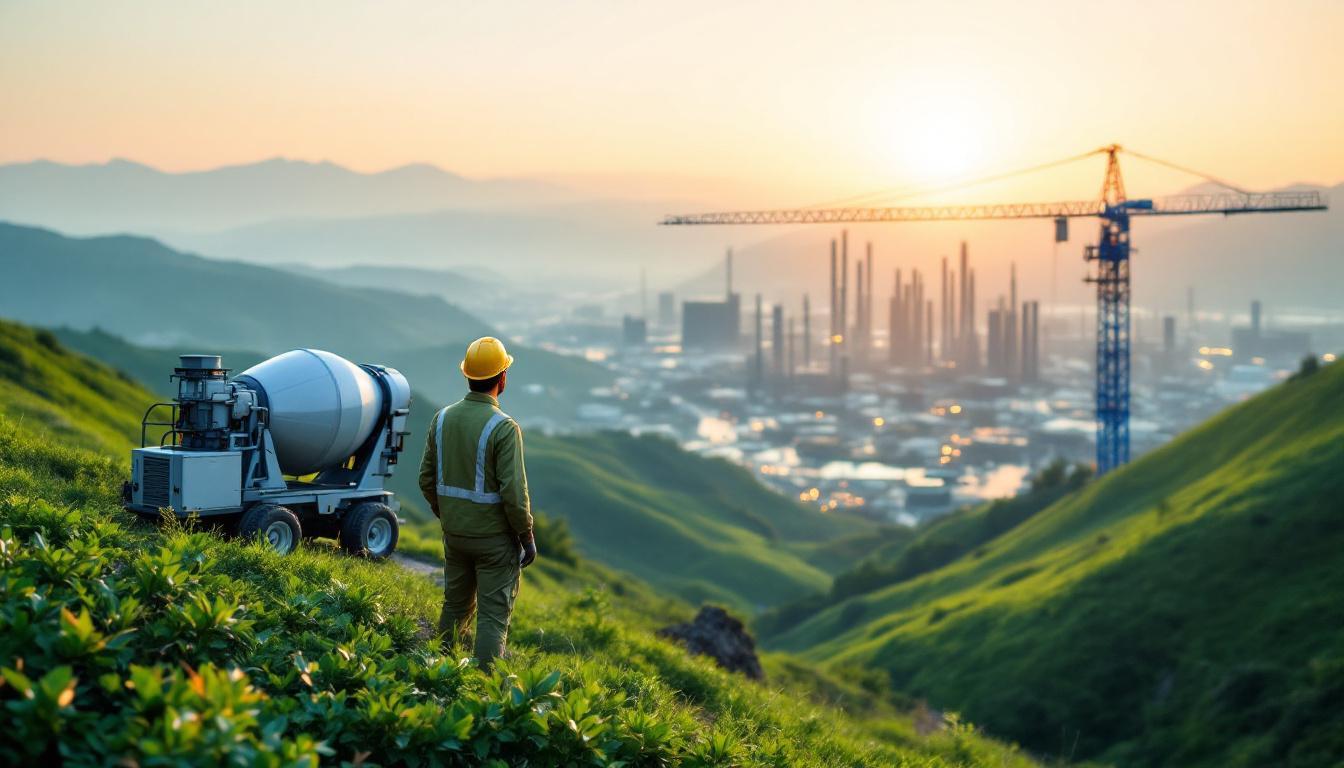
The GCC cement market is set for substantial expansion driven by mega-projects, technological advancements, and a shift towards green construction, with environmental and economic impacts expected to reshape the region’s infrastructure landscape over the next decade.
The GCC cement market is poised for substantial growth over the coming decade, driven by rapid urbanization, major infrastructure projects, and an increasing focus on sustainability and decarbonisation within the region. According to the latest comprehensive research from IMARC Group, the market size is projected to increase from 94.5 million tons in 2024 to 142.8 million tons by 2033, reflecting a compound annual growth rate (CAGR) of 4.7%. This growth trajectory highlights the expanding role of cement in supporting the region’s ambitious economic diversification and urban development plans.
Key to this expansion are the mega-projects underpinned by national strategic visions such as Saudi Arabia’s Vision 2030, which includes the NEOM city development and the Red Sea Project, as well as the UAE’s initiatives like Expo City Dubai and the country’s broader smart city ambitions. These projects drive sustained demand for cement for residential, commercial, and infrastructure construction, sectors expected to represent nearly 57% of total cement consumption by 2025. The growth in urban populations, propelled by natural increase and migration trends, is stimulating demand for affordable, mixed-use developments designed to enhance urban living standards and connectivity.
The market is dominated by Ordinary Portland Cement (OPC), accounting for roughly 60.4% of demand in 2025, favoured particularly for its suitability in hot climates and cost-effectiveness in large-scale projects. Nevertheless, there is a marked industry shift towards blended and green cements, such as Portland Pozzolana Cement (PPC), which incorporate fly ash and slag to reduce carbon footprints. This aligns with tightening green building regulations and increasing environmental accountability within the GCC, where governments are actively promoting sustainable construction practices and emissions reduction in line with their net-zero ambitions. Industry forecasts suggest green cement could grow at a CAGR of approximately 5.7% from 2025 to 2035, supporting the sustainability credentials of flagship developments like NEOM.
Advanced technologies, especially artificial intelligence (AI), are being increasingly deployed to optimise cement production and environmental performance across the region. Saudi Arabian and UAE producers have introduced AI-driven predictive maintenance that enhances equipment reliability and reduces downtime by up to 20%. Machine learning models optimise kiln operations and fuel mixes, potentially lowering energy consumption by 5-10%. Additionally, AI-powered quality control using real-time X-ray analysis is helping maintain consistent clinker quality, crucial for mega-projects’ specifications. Supply chain efficiencies are also improved through AI forecasts that align supply with the GCC’s $1.5 trillion infrastructure boom, minimising inventory waste.
Environmental innovation is another priority, with AI facilitating the adoption of low-clinker formulations and alternative fuel usage that can cut CO2 emissions by as much as 65%. Collaborations between technology providers, such as ABB and Carbon Re, are fostering greener cement production systems tailored to the region’s climate goals. These measures are essential as regional construction and industrial sectors seek to comply with increasingly stringent emissions standards and societal expectations for sustainable urbanisation.
On the economic front, the GCC cement market’s value is forecast to expand markedly, with estimates placing it at approximately USD 14.9 billion by 2035, growing at a CAGR of 5.7%. This reflects broader construction industry trends and ongoing governmental investments in transport, tourism, and urban infrastructure, notably in Saudi Arabia, the UAE, and Qatar. Saudi Arabia alone commands a near 45-50% market share, thanks to its large-scale infrastructure initiatives. Adjacent sectors like construction aggregates and calcium oxide for soil stabilisation are also experiencing growth, further signalling robust industrial activity within the region.
Industry leaders maintaining market positions include Al Safwa Cement Company, Cemex UAE, Lafarge Emirates Cement, Kuwait Cement Company, and Saudi Cement Company, among others, each adapting to sustainability trends and technological innovations to stay competitive.
In summary, the GCC cement market stands on the cusp of transformative growth, fuelled by megaproject-backed demand and a concerted pivot towards green, technology-enabled production. These dynamics not only support the region’s infrastructure and urbanisation goals but also contribute meaningfully to the global push for industrial decarbonisation and sustainable construction paradigms. As GCC nations continue to balance economic growth with environmental commitments, the cement sector will remain a critical barometer of progress in industrial and urban development.
- https://www.openpr.com/news/4259134/gcc-cement-market-size-to-hit-142-8-million-tons-by-2033-cagr – Please view link – unable to able to access data
- https://www.imarcgroup.com/gcc-cement-market – IMARC Group’s report on the GCC cement market provides an in-depth analysis of the industry’s current state and future projections. It highlights that the market size reached 94.5 million tons in 2024 and is expected to grow at a compound annual growth rate (CAGR) of 4.7% from 2025 to 2033, reaching 142.8 million tons by 2033. The report also discusses factors driving this growth, including rapid urbanization, population growth, and significant investments in infrastructure projects across the GCC region.
- https://www.globenewswire.com/news-release/2025/07/07/3110849/28124/en/Middle-East-Cement-Industry-Report-2025-Regional-Integration-Enhances-Clinker-and-SCM-Trade-Across-GCC-Forecast-to-2029.html?print=1 – This report projects the Middle East cement market to grow by 5% annually, reaching $16.3 billion by 2025. It attributes this growth to infrastructure projects and climate goals, with key growth areas including Saudi Arabia’s Giga Projects and UAE smart cities. The report also highlights how regional integration enhances clinker and supplementary cementitious material (SCM) trade across the GCC, with forecasts extending to 2029.
- https://www.openpr.com/news/4121018/gcc-cement-market-projected-to-reach-usd-14-912-6-million-by-2035 – This press release from Future Market Insights discusses the projected growth of the GCC cement market, estimating it will reach USD 14,912.6 million by 2035, growing at a CAGR of 5.7%. The growth is driven by massive infrastructure projects, rapid urbanization, and a focus on sustainable and eco-friendly construction practices in the region.
- https://www.fmiblog.com/2025/06/03/global-gcc-cement-market-is-projected-to-reach-usd-14-9-billion-by-2035-with-a-5-7-cagr/ – This article from FMI Blog highlights the projected growth of the GCC cement market, estimating it will reach USD 14.9 billion by 2035, with a CAGR of 5.7%. The growth is attributed to increasing demand and ongoing developments in the construction industry worldwide, with governments across the GCC prioritizing economic diversification and megaprojects.
- https://www.imarcgroup.com/gcc-construction-aggregates-market – IMARC Group’s report on the GCC construction aggregates market indicates that the market size reached USD 12.9 billion in 2024 and is expected to reach USD 21.0 billion by 2033, exhibiting a CAGR of 5.57% during 2025-2033. The report attributes this growth to increasing investment in infrastructure projects, such as highways, bridges, airports, and railways, which increase the demand for construction aggregates.
- https://www.newstrail.com/construction-and-industrial-expansion-boost-gcc-calcium-oxide-market-reach-usd-264-2-million-by-2035/ – This article discusses the surge in infrastructure projects in the GCC region, including skyscrapers, airports, highways, and residential complexes, significantly boosting the demand for calcium oxide, particularly for soil stabilization purposes. The GCC calcium oxide market is projected to reach USD 264.2 million by 2035, growing at a CAGR of 4.6%, driven by the expansion of construction and industrial activities.
Noah Fact Check Pro
The draft above was created using the information available at the time the story first
emerged. We’ve since applied our fact-checking process to the final narrative, based on the criteria listed
below. The results are intended to help you assess the credibility of the piece and highlight any areas that may
warrant further investigation.
Freshness check
Score:
8
Notes:
The narrative was published on 7 November 2025, with earlier versions appearing on 19 June 2025 and 24 January 2024. The earlier versions reported a market size of 137.2 million tons by 2032, indicating a slight discrepancy in projections. The presence of the narrative across multiple press release distribution platforms suggests potential recycling of content. However, the most recent publication date is within the past week, indicating high freshness. The narrative is based on a press release from IMARC Group, which typically warrants a high freshness score. The updated data in the latest version justifies a higher freshness score but should still be flagged for the slight discrepancy in projections.
Quotes check
Score:
9
Notes:
The narrative includes direct quotes attributed to IMARC Group, such as statements about AI-driven predictive maintenance and energy efficiency enhancements. These quotes appear to be original and exclusive to this report, with no identical matches found in earlier material. The absence of identical quotes in earlier material suggests potential originality.
Source reliability
Score:
7
Notes:
The narrative originates from a press release by IMARC Group, a market research firm. While IMARC Group is a known entity, its reputation and credibility are not as well-established as those of major news organisations. The reliance on a single source without corroboration from other reputable outlets introduces some uncertainty.
Plausability check
Score:
8
Notes:
The claims about the GCC cement market’s growth, driven by urbanisation, mega-projects, and sustainability initiatives, align with known regional development trends. The projected market size of 142.8 million tons by 2033 and the compound annual growth rate (CAGR) of 4.7% are consistent with industry forecasts. The narrative includes specific details about AI applications in cement production, such as predictive maintenance and energy efficiency enhancements, which are plausible and relevant to the industry. However, the lack of supporting detail from other reputable outlets and the reliance on a single source for these claims reduce the overall plausibility score.
Overall assessment
Verdict (FAIL, OPEN, PASS): OPEN
Confidence (LOW, MEDIUM, HIGH): MEDIUM
Summary:
The narrative presents plausible and timely information about the GCC cement market’s projected growth and technological advancements. However, the reliance on a single source, IMARC Group, without corroboration from other reputable outlets, introduces some uncertainty. The slight discrepancies in market projections between different versions of the narrative and the presence of similar content across multiple press release distribution platforms suggest potential recycling of content. While the most recent publication date indicates high freshness, the lack of supporting detail from other reputable outlets and the reliance on a single source for these claims reduce the overall confidence in the narrative’s accuracy.
