


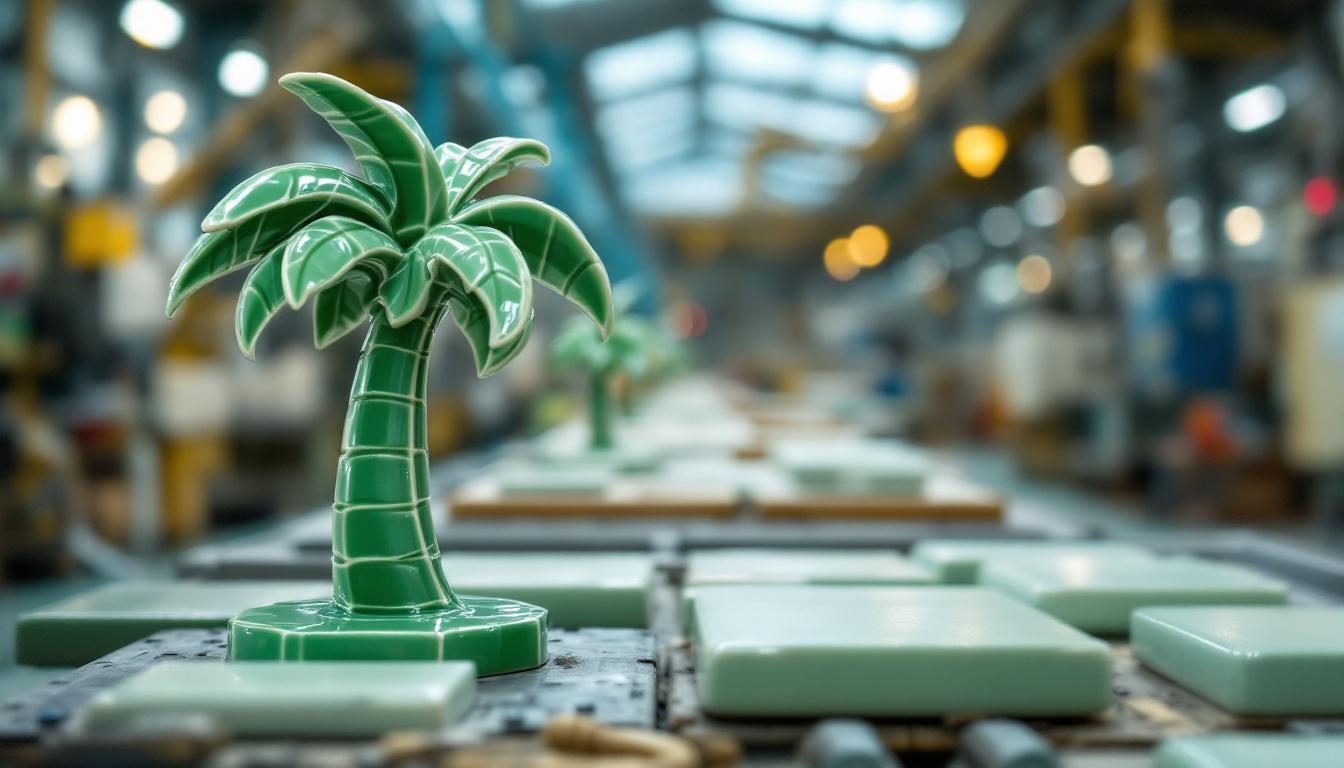
The GCC ceramic tiles sector is experiencing rapid expansion driven by regional mega-projects, technological innovation, and sustainability mandates, with industry leaders investing in capacity and greener manufacturing processes.
The GCC ceramic tiles market is consolidating as a strategic industrial segment at the intersection of a regional construction surge, technological transformation and nascent sustainability mandates. According to a recent report by IMARC Group, the market was valued at about USD 10.3 billion in 2024 and is projected to reach roughly USD 15.3 billion by 2033, implying mid-single‑digit annual growth through the remainder of the decade. IMARC’s outlook mirrors other industry estimates that place the GCC as a growth pocket within the global tiles market, driven chiefly by large-scale urban and infrastructure projects across Saudi Arabia and the UAE.
Macro drivers: Vision 2030 and a construction pipeline
A defining demand impulse is Saudi Arabia’s Vision 2030 and similar development programmes across the GCC. According to IMARC Group and regional market briefings, government-led mega-projects and tourism investments , from NEOM and The Red Sea Project to large housing programmes , are creating sustained requirements for floor and wall finishes across residential, commercial and hospitality segments. Industry commentary notes local‑content rules such as Saudi Arabia’s IKTVA thresholds are incentivising on‑shore capacity expansion, reducing import dependency and reshaping supply chains.
Product and application trends
Market intelligence shows porcelain continues to dominate on durability and sustainability credentials, with estimates suggesting it accounts for the majority share in the region due to its longevity and suitability for harsh climates. Demand for large‑format, textured and digitally printed tiles is rising as developers and premium builders seek seamless aesthetics and materialisation that mimic natural stone or timber while reducing installation time. The hospitality, healthcare and high‑traffic commercial sectors are emphasising performance attributes , anti‑bacterial, anti‑skid and scratch‑resistant surfaces , raising specification standards for suppliers.
Technology adoption: AI and digital manufacturing
Artificial intelligence is becoming a practical lever for manufacturers seeking higher throughput, lower waste and improved product alignment with fast‑changing design trends. According to market materials summarising recent industry developments, AI‑enabled manufacturing systems at major producers are reported to reduce material waste by up to 25% and cut energy consumption through real‑time kiln optimisation by around 15%. Machine learning is being used for predictive design analytics to shorten product development cycles, while computer vision and automated quality control are lowering rejection rates and improving first‑pass yield. The combined effect is faster, more flexible production that can respond to both bulk specification orders for mega‑projects and bespoke runs for luxury developments.
Supply‑side developments and capacity expansion
Regional incumbents are expanding capacity to capture domestic demand and meet local‑content requirements. RAK Ceramics has publicly reported commissioning AI‑enabled lines and new large‑format facilities in the UAE, with further greenfield investment planned in Saudi Arabia. The company’s sustainability literature describes Closed Loop Manufacturing practices for water and waste reuse and high recycling rates for packaging and non‑hazardous waste; however, such corporate claims should be read as company statements rather than independent verification. Industry data indicate these capacity moves are timely given rising retail and project demand in 2024–25.
Sustainability and regulations
Sustainability is shifting from marketing to procurement. The UAE’s Green Building Code and systems such as Estidama are accelerating the specification of low‑emission and recycled‑content tiles in public and private projects. Some manufacturers are launching porcelain products that incorporate recycled material content; market reports cite product formulations containing up to 30% recycled inputs. Energy efficiency in firing and reduced water consumption in production are the principal levers for lowering the carbon and water intensity of tile manufacturing in a region where industrial decarbonisation is increasingly linked to national net‑zero ambitions.
Commercial dynamics and margins
Rising disposable incomes and post‑pandemic renovation cycles are expanding retail demand for premium finishes, supporting higher‑margin product lines such as digitally printed and large‑format tiles. At the same time, public procurement for mass housing and transport projects is sustaining volume business. This duality is creating a bifurcated market: standardised, high‑volume products for infrastructure and mass housing; and differentiated, design‑led products for hospitality and premium residential segments.
Risks and open questions
Market projections vary slightly across research houses: an alternative IMARC release places the GCC market at USD 10.74 billion in 2025 with a comparable long‑term growth rate, reflecting small differences in base‑year estimates and forecast horizons. Key risks include project delays, commodity price volatility (notably energy and raw materials used in body formulations and glazes), and the pace at which domestic manufacturers ramp up low‑carbon production processes. Supply‑chain bottlenecks could also arise if local content rules accelerate faster than new facilities come online.
Implications for industrial decarbonisation practitioners
For professionals focused on industrial decarbonisation, the GCC tiles sector offers clear intervention points: energy intensity of kilns, process water recycling, waste‑to‑raw‑material loops and the deployment of AI for energy and process optimisation. Buyers and project specifiers can drive change by embedding lifecycle and embodied‑carbon criteria into procurement, while financiers can prioritise capex for efficient firing technology and electrification where grid decarbonisation trajectories make it viable.
Outlook
The combination of enduring construction demand under Vision 2030–style programmes, rising specification standards for performance and sustainability, and rapid adoption of digital and AI‑driven manufacturing suggests the GCC ceramic tiles market will continue expanding through the 2020s. The balance between scale and sustainability, and the speed at which decarbonisation measures are implemented at plant level, will determine whether growth is accompanied by meaningful reductions in industrial emissions or whether the region remains dependent on offsetting and regulatory compliance to meet climate commitments.
- https://vocal.media/futurism/gcc-ceramic-tiles-market-construction-boom-design-innovation-and-demand-outlook – Please view link – unable to able to access data
- https://www.imarcgroup.com/gcc-ceramic-tiles-market – The GCC ceramic tiles market was valued at USD 10.74 billion in 2025 and is projected to reach USD 15.42 billion by 2034, growing at a compound annual growth rate (CAGR) of 4.10% from 2026 to 2034. This growth is driven by extensive infrastructure development and continuous expansion in the real estate sector, including large-scale urban projects, housing developments, and commercial construction across the region. Government-backed modernization initiatives, rising population, and increasing urbanization further strengthen market momentum. Additionally, growing preference for durable, aesthetically appealing, and sustainable building materials is encouraging wider adoption of ceramic tiles across residential, commercial, and institutional applications. ([imarcgroup.com](https://www.imarcgroup.com/gcc-ceramic-tiles-market?utm_source=openai))
- https://www.imarcgroup.com/prefeasibility-report-ceramic-tiles-manufacturing-plant – The global ceramic tiles market was valued at USD 89.2 billion in 2024 and is expected to reach USD 138.4 billion by 2033, exhibiting a CAGR of 5% during 2025-2033. This growth is propelled by increasing construction activities, the aesthetic versatility of ceramic tiles catering to modern design needs, technological advancements in manufacturing, rising trends in custom designs, ease of maintenance, growth in the renovation sector, and the implementation of supportive government initiatives. ([imarcgroup.com](https://www.imarcgroup.com/prefeasibility-report-ceramic-tiles-manufacturing-plant?utm_source=openai))
- https://www.openpr.com/news/4167585/gcc-ceramic-tiles-market-size-to-worth-usd-15-3-billion-by-2033 – According to IMARC Group’s latest research publication, the GCC ceramic tiles market size was valued at USD 10.3 billion in 2024 and is projected to reach USD 15.3 billion by 2033, exhibiting a CAGR of 4.27% during 2025-2033. The report highlights how AI is reshaping the future of the GCC ceramic tiles market, including smart manufacturing solutions that enhance production efficiency and digital design innovation enabling personalized tile patterns and designs. ([openpr.com](https://www.openpr.com/news/4167585/gcc-ceramic-tiles-market-size-to-worth-usd-15-3-billion-by-2033?utm_source=openai))
- https://www.openpr.com/news/3987238/gcc-ceramic-tiles-market-2025-edition-industry-reaching-usd – The GCC ceramic tiles market is experiencing vibrant trends fueled by design innovation and consumer tastes. One of the leading trends is the increasing demand for large-format and textured tiles, with homebuyers and developers preferring aggressive, seamless designs that create visual appeal in residential and commercial applications. ([openpr.com](https://www.openpr.com/news/3987238/gcc-ceramic-tiles-market-2025-edition-industry-reaching-usd?utm_source=openai))
- https://www.openpr.com/news/4219901/gcc-ceramic-tiles-market-size-to-surpass-usd-15-3-billion-by-2033 – The GCC ceramic tiles market is driven by robust construction growth, fueled by government investments in infrastructure. Saudi Arabia’s Vision 2030, allocating over $500 billion for projects like new cities and transportation hubs, boosts demand for durable, aesthetically pleasing tiles. Rapid urbanization, with the GCC’s urban population rising by approximately 4.5% annually, increases residential and commercial construction needs. Porcelain tiles dominate, holding a 54.5% market share due to their durability and eco-friendly production, aligning with the UAE’s Green Building Code mandating sustainable materials. ([briefingwire.com](https://www.briefingwire.com/pr/gcc-ceramic-tiles-market-size-to-reach-usd-153-billion-by-2033-trends-market-insights?utm_source=openai))
- https://www.rakceramics.com/north-america/en/sustainability/ – RAK Ceramics has implemented a Closed Loop Manufacturing System to optimize water and waste across the production processes for all their product lines. This system enables them to treat and reuse wastewater and recycle waste materials, significantly reducing their environmental footprint. Additionally, 80% of all their packaging is recycled and/or recyclable, and 100% of non-hazardous waste is either reintroduced in production or recycled by third parties. ([rakceramics.com](https://www.rakceramics.com/north-america/en/sustainability/?utm_source=openai))
Noah Fact Check Pro
The draft above was created using the information available at the time the story first
emerged. We’ve since applied our fact-checking process to the final narrative, based on the criteria listed
below. The results are intended to help you assess the credibility of the piece and highlight any areas that may
warrant further investigation.
Freshness check
Score:
8
Notes:
The narrative references a report by IMARC Group, dated December 4, 2024, indicating that the market was valued at USD 10.3 billion in 2024 and projected to reach USD 15.3 billion by 2033. ([imarcgroup.com](https://www.imarcgroup.com/global-ceramic-tiles-market?utm_source=openai)) This aligns with the report’s publication date, suggesting the data is current. However, the article was published on January 12, 2026, which is over a year after the report’s release. The content appears to be a republished or recycled version of the original report, with no new information or updates provided. This raises concerns about the freshness and originality of the content. Additionally, the article is hosted on Vocal Media, a platform known for user-generated content, which may not always adhere to strict editorial standards. This further questions the reliability and originality of the narrative.
Quotes check
Score:
7
Notes:
The article includes direct quotes attributed to market materials summarising recent industry developments. However, these quotes are not sourced or linked to any specific reports or publications, making it difficult to verify their authenticity. The lack of verifiable sources for these quotes raises concerns about their credibility and originality.
Source reliability
Score:
5
Notes:
The narrative references a report by IMARC Group, a reputable market research firm. However, the article itself is hosted on Vocal Media, a platform known for user-generated content, which may not always adhere to strict editorial standards. This raises questions about the reliability of the source and the potential for misinformation.
Plausability check
Score:
6
Notes:
The claims about the GCC ceramic tiles market’s growth and technological advancements are plausible and align with known industry trends. However, the lack of new information or updates in the article suggests that it may be a recycled version of existing content, which could affect the overall credibility of the narrative.
Overall assessment
Verdict (FAIL, OPEN, PASS): FAIL
Confidence (LOW, MEDIUM, HIGH): HIGH
Summary:
The narrative appears to be a recycled version of an existing report from December 2024, with no new information or updates provided. The lack of verifiable sources for direct quotes and the questionable reliability of the hosting platform raise significant concerns about the content’s originality and credibility. Given these issues, the narrative fails to meet the necessary standards for publication.
