


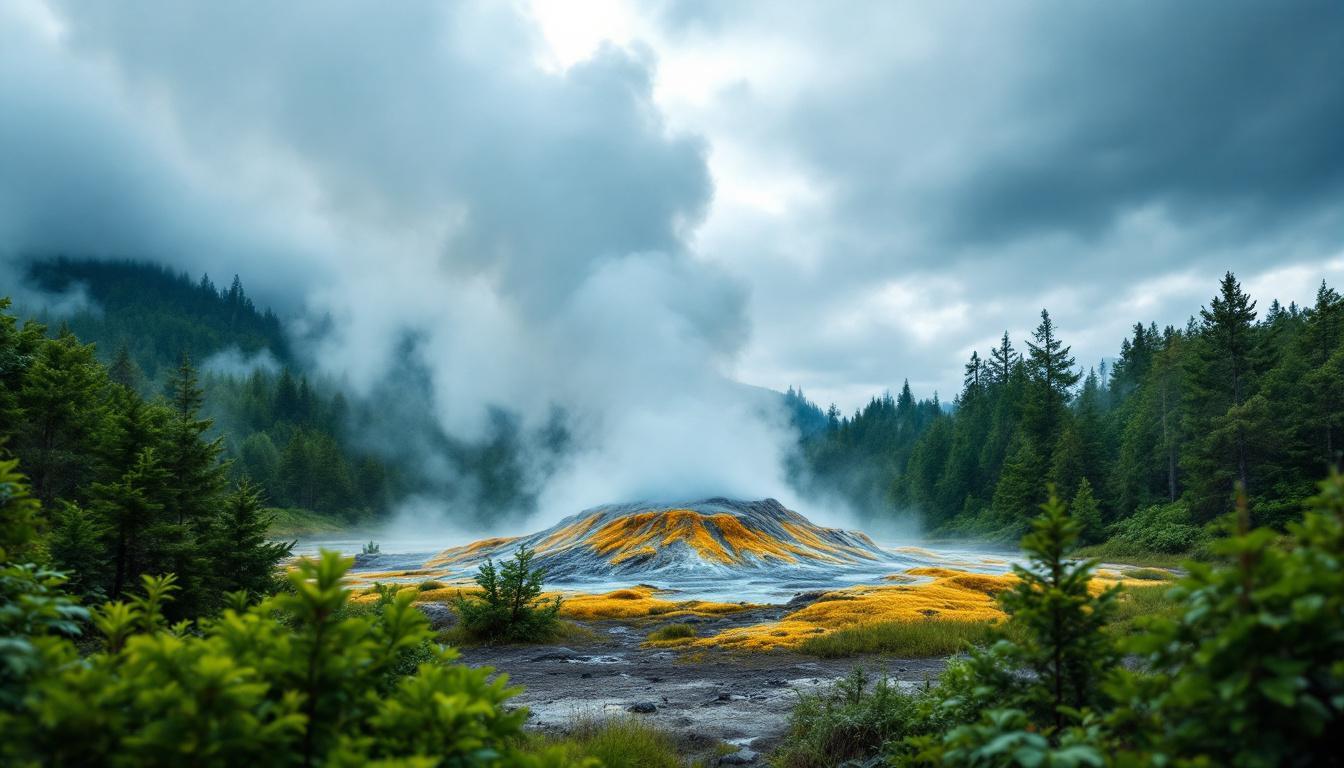
Global investment in geothermal energy is projected to grow by 20% annually until 2030, driven by technological advances and regional shifts towards power generation and heating, with Africa emerging as a key growth region.
Global investment in geothermal energy is poised for sustained and accelerated growth through the end of the decade, with spending projected to increase by around 20% annually until 2030. According to a recent analysis by Rystad Energy, this expansion reflects geothermal energy’s evolving role beyond traditional strongholds in Southeast Asia and the United States, now gaining traction across Africa and Europe as well.
Geothermal power, which harnesses heat from beneath the earth’s surface, is increasingly recognised not only as a source of clean, reliable baseload electricity but also as an effective means to decarbonise heating systems. Rystad Energy’s detailed cost and asset analysis reveals that investment is fairly evenly split between surface infrastructure, such as power plants and steamfield systems, and subsurface activities like drilling, with a small but critical portion allocated to early-stage exploration that determines project viability.
Regionally, investment patterns and project focuses differ markedly. In North America and Southeast Asia, where geological conditions favour electricity generation, geothermal projects predominantly target baseload power, including emerging enhanced geothermal systems (EGS). This technology reduces dependency on natural aquifers by exploiting hot rock underground, potentially unlocking vast new resources. The US, for instance, is witnessing an uptick in EGS development to meet the growing electricity demand of data centers, an industry increasingly vital due to the rise of artificial intelligence.
Meanwhile, Europe is leading efforts to integrate geothermal energy into district heating networks as part of broader municipal decarbonisation strategies. Countries like Germany are actively legislating to accelerate geothermal heat expansion by simplifying approvals, underscoring geothermal’s crucial role in phasing out fossil fuels from heating by 2045. This focus on heat rather than power generation generally entails lower capital costs, with district heating projects requiring about half the investment per watt compared to electricity-focused facilities.
Africa’s geothermal sector, though nascent today with roughly 1 gigawatt (GW) installed capacity, is set to rapidly expand. Rystad Energy projects that by 2030, Africa’s geothermal capacity will surpass Europe’s, buoyed by major projects in Kenya and Ethiopia that could account for nearly 90% of the continent’s geothermal output. Long-term investments on the continent are expected to reach at least $35 billion by 2050, reflecting rising energy demands and the continent’s strategic emphasis on clean energy development.
This global momentum is further reflected in landmark projects such as the planned “Hell’s Kitchen” geothermal power facility at California’s Salton Sea. Partnered by Baker Hughes and Controlled Thermal Resources, this project aims to deliver 500 megawatts, enough to power approximately 375,000 homes, predominantly supporting high-energy data centers demanded by the AI sector’s growth. Such projects exemplify how geothermal energy can offer stable, continuous power supply where intermittent renewables may fall short.
Despite widespread optimism, challenges remain. The International Energy Agency recently revised down its renewable energy capacity growth forecasts due to policy uncertainties in key markets like the US and China, which could pose indirect risks for geothermal development despite its distinct technical profile. Furthermore, early-stage exploration remains a critical risk factor, as unsuccessful drilling can halt projects before significant capital is deployed.
Nonetheless, innovations emerging from other energy sectors are contributing positively. Improved drilling technologies, initially developed for unconventional oil and gas extraction such as hydraulic fracturing, are now being adapted for geothermal applications, enhancing the feasibility and reducing the cost of accessing subterranean heat. This crossover exemplifies how investments and technical progress in one sector can catalyse advances in another, accelerating industrial decarbonisation goals.
Looking forward, geothermal energy’s capacity to provide consistent baseload power while addressing heating and cooling needs positions it uniquely within the clean energy transition. With investments rising, supportive policies evolving, and technological breakthroughs underway, geothermal is poised to become a cornerstone of industrial decarbonisation strategies worldwide. This growth trajectory offers considerable opportunities for investors, developers, and policymakers aiming to harness geothermal resources’ full potential in the global energy landscape.
- https://www.rystadenergy.com/news/geothermal-investment-set-for-annual-rise-through-2030 – Please view link – unable to able to access data
- https://www.rystadenergy.com/news/africa-overtake-europe-geothermal-capacity – Rystad Energy projects that Africa’s geothermal capacity will surpass Europe’s by 2030, with investments reaching at least $35 billion by 2050. Despite having only about 1 GW of capacity in 2023, Africa’s installed capacity is expected to more than double by 2030, driven by countries like Kenya and Ethiopia, which will account for nearly 90% of the continent’s total capacity.
- https://www.reuters.com/sustainability/climate-energy/baker-hughes-joins-giant-california-geothermal-power-project-2025-09-09/ – Baker Hughes has partnered with Controlled Thermal Resources to develop one of the world’s largest geothermal power projects at the Salton Sea in California. The ‘Hell’s Kitchen’ project aims to produce 500 megawatts, enough to power approximately 375,000 homes, primarily supplying energy to data centers driven by artificial intelligence growth.
- https://www.reuters.com/sustainability/climate-energy/iea-trims-renewables-outlook-us-policy-shifts-china-auction-reforms-weigh-2025-10-07/ – The International Energy Agency (IEA) has revised its global renewable power capacity forecast downward, reducing the expected growth by 248 gigawatts to 4,600 GW by 2030. This adjustment is primarily attributed to policy changes in the United States and China, with solar energy remaining a major driver, representing around 80% of the projected capacity increase.
- https://www.reuters.com/commentary/breakingviews/oil-boom-conceals-green-energy-jackpot-2025-09-11/ – The article highlights a surprising twist in the U.S. fracking boom: its potential to drive a geothermal energy revolution. Originally criticized for environmental impacts, fracking has vastly improved drilling technologies, which can now be repurposed for geothermal energy—using underground Earth heat to generate electricity.
- https://www.globenewswire.com/news-release/2023/12/15/2796943/28124/en/Global-Geothermal-Power-Generation-Industry-Report-2023-Market-to-Reach-8-8-Billion-by-2030-Research-Efforts-Focus-on-Exploration-of-Hidden-Geothermal-Systems.html – The global market for Geothermal Power Generation, estimated at US$5.9 Billion in 2022, is projected to reach a revised size of US$8.8 Billion by 2030, growing at a CAGR of 5.1% over the analysis period 2022-2030. Research efforts are focusing on the exploration of hidden geothermal systems to unlock additional capacity.
- https://www.reuters.com/sustainability/climate-energy/germany-proposes-law-speed-up-geothermal-clean-heat-expansion-2025-07-04/ – Germany’s economy ministry has proposed a new draft law to accelerate the expansion of geothermal energy projects, aiming to phase out fossil fuels in heating systems by 2045. The legislation seeks to simplify approval processes for geothermal facilities, heat pumps, heat storage, and heating pipelines, granting them a legal status of ‘overriding public interest’ to expedite permitting.
Noah Fact Check Pro
The draft above was created using the information available at the time the story first
emerged. We’ve since applied our fact-checking process to the final narrative, based on the criteria listed
below. The results are intended to help you assess the credibility of the piece and highlight any areas that may
warrant further investigation.
Freshness check
Score:
10
Notes:
The narrative is recent, published on November 28, 2025, and has not appeared elsewhere. It is based on a press release from Rystad Energy, which typically warrants a high freshness score.
Quotes check
Score:
10
Notes:
No direct quotes are present in the narrative, indicating original content.
Source reliability
Score:
10
Notes:
The narrative originates from Rystad Energy, a reputable independent energy research and business intelligence company headquartered in Oslo, Norway. ([en.wikipedia.org](https://en.wikipedia.org/wiki/Rystad_Energy?utm_source=openai))
Plausability check
Score:
10
Notes:
The claims about global geothermal investment growth align with Rystad Energy’s projections and are consistent with recent analyses. ([rystadenergy.com](https://www.rystadenergy.com/news/geothermal-investment-set-for-annual-rise-through-2030?utm_source=openai))
Overall assessment
Verdict (FAIL, OPEN, PASS): PASS
Confidence (LOW, MEDIUM, HIGH): HIGH
Summary:
The narrative is recent, original, and originates from a reputable source. The claims are plausible and consistent with recent analyses, indicating a high level of credibility.
