


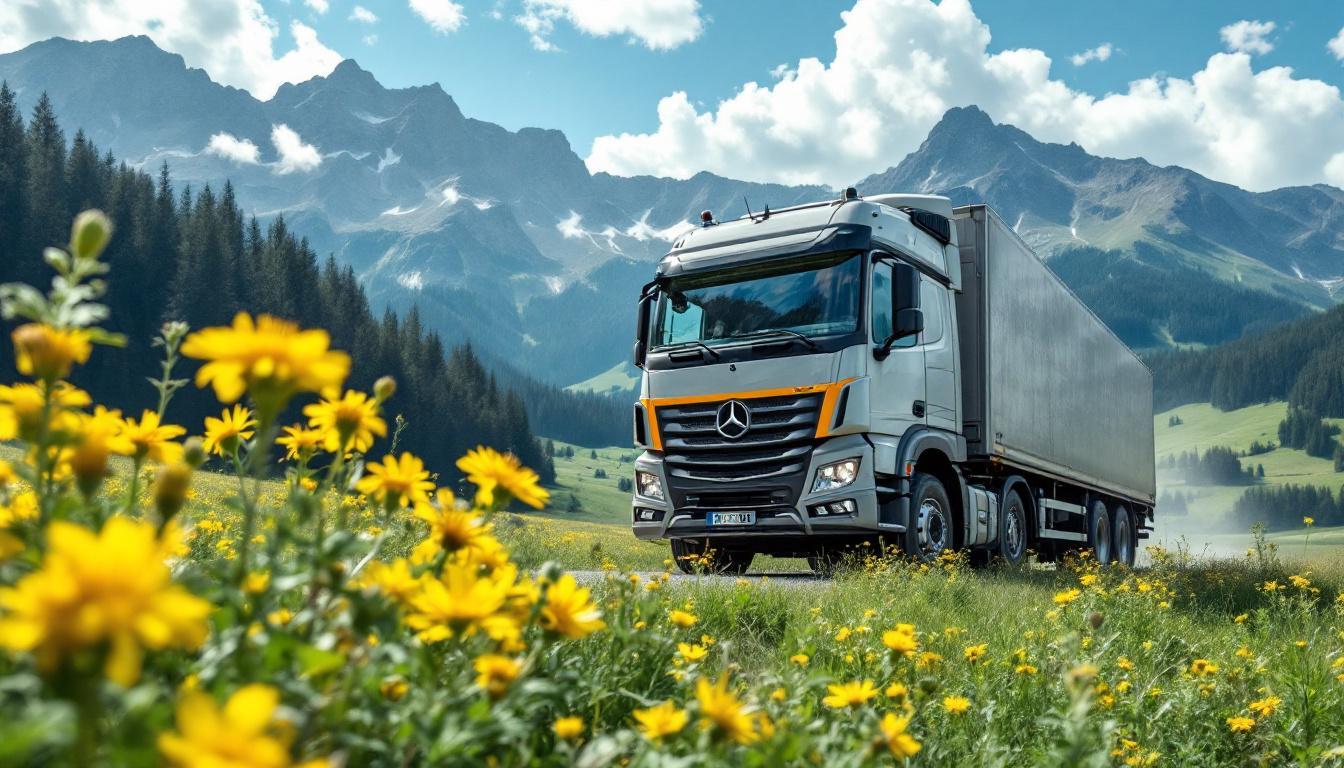
Germany’s federal transport ministry commits €54 million to establish the Wasserstoff Technologie-Anwender‑Zentrum in Bavaria, aiming to fast-track hydrogen powertrains for heavy vehicles and air mobility through regional research, infrastructure, and industry collaborations.
Germany’s federal transport ministry has committed €54 million to create a new hydrogen mobility research centre in Bavaria, a move designed to accelerate the commercial readiness of hydrogen powertrains for heavy vehicles and emerging air mobility use cases. According to H2-View, the Wasserstoff Technologie-Anwender‑Zentrum (WTAZ) will be built in Pfeffenhausen and include laboratories, test benches for storage tanks, combustion engines and complete vehicles, plus a hydrogen liquefier.
The WTAZ will sit adjacent to an electrolyser deployed within the HyBayern project and near the universities of Ingolstadt, Landshut and Regensburg, giving developers ready access to regional green hydrogen and academic research capacity, H2-View reports. Project Management Jülich has been named to implement the programme, but the ministry has not published a construction timetable.
Federal Transport Minister Patrick Schnieder described the hub as a driver to shift hydrogen technologies from the lab into broad deployment. “[It] will decisively advance the powertrain transition in transport and at the same time secure sustainable value creation in Germany”, Schnieder asserted, according to H2-View. The ministry is also leading complementary initiatives: it recently announced a €220 million funding call to trial a network of up to 40 hydrogen refuelling stations as EU policy increasingly requires green hydrogen in transport, targeting 1.2% of transport energy from green hydrogen by 2030, H2-View notes.
The Bavarian announcement sits within a wider regional push to build supply, fuelling and testing infrastructure. MobilityPlaza reports that Tyczka Hydrogen is developing a 5 MW electrolysis plant and a refuelling facility in Schweinfurt, with a planned daily output of up to 2.2 tonnes of green hydrogen for mobility, industry and R&D; construction is due to start later this year with commercial operations expected by the end of 2026. H2.live has confirmed separate regional state funding for public refuelling on the A6 motorway, where a €2 million grant will support a station intended to supply buses, trucks and other commercial vehicles from the first half of 2026.
Bavaria’s industrial and academic strategy underpins these investments. The Hightech Agenda Bavaria , a multi‑billion euro programme detailed on its official site , allocates funds to strengthen university capacity and earmarks €100 million for air mobility and innovative transport solutions, signalling political determination to couple R&D with industry uptake. Bayern Innovativ further details over €300 million of combined federal and state support for hydrogen vehicles, including a €273 million programme for BMW’s HyPowerDrive and €35 million targeted at hydrogen trucks, with the aim of driving series production readiness and lowering the incremental cost of zero‑emission heavy vehicles.
Beyond Bavaria, national laboratories and research platforms are being scaled to close the gap between prototypes and industrial systems. According to the Europe Hydrogen Fuel Cell Summit, a €4.9 million hub in Braunschweig , backed by public funding and built by Technische Universität Braunschweig and the Fraunhofer Institute IST , is focused on testing fuel cells under near‑industrial conditions to improve durability and reduce costs, with activity running through to 2027.
For industrial decarbonisation practitioners, the WTAZ represents both an additional testing resource and a signalling event: it ties public capital to regional hydrogen supply projects, academic networks and vehicle manufacturers, while sitting alongside funding streams for refuelling infrastructure and production electrolysers. That alignment is intended to shorten the route from prototype validation to marketable products for heavy transport and air mobility, but the pace of deployment will depend on the delivery schedules of connected projects, the availability of low‑carbon electricity for electrolysis, and the successful roll‑out of refuelling networks required to scale uptake.
- https://www.h2-view.com/story/germany-invests-e54m-in-new-bavarian-hydrogen-mobility-research-hub/2137475.article/?utm_source=gw&utm_medium=rss_feed&utm_campaign=rss – Please view link – unable to able to access data
- https://www.h2-view.com/story/germany-invests-e54m-in-new-bavarian-hydrogen-mobility-research-hub/2137475.article/?utm_source=gw&utm_medium=rss_feed&utm_campaign=rss – Germany’s Federal Ministry of Transport (BMV) has allocated €54 million to establish a hydrogen mobility research laboratory in Bavaria. This facility, named the Wasserstoff Technologie-Anwender-Zentrum (WTAZ) and located in Pfeffenhausen, will focus on heavy-duty transport and urban air mobility applications. It will feature testing infrastructures, including laboratories, test benches for storage tanks, combustion engines, and completed vehicles, as well as a hydrogen liquefier. The project aims to support the development, testing, and market readiness of hydrogen technologies, with green hydrogen sourced from the region. The BMV has not provided a construction timeline, and the project will be implemented by Project Management Jülich. Federal Transport Minister Patrick Schnieder highlighted WTAZ as a catalyst for advancing hydrogen technologies from research to widespread application, contributing to the powertrain transition in transport and securing sustainable value creation in Germany. The BMV continues to lead efforts for hydrogen mobility in Europe, recently launching a €220 million funding call for establishing a trial network of up to 40 hydrogen refuelling stations, in line with EU mandates for green hydrogen in the mobility sector, requiring its use for 1.2% of transport energy by 2030.
- https://www.mobilityplaza.org/news/40543 – Tyczka Hydrogen is investing in a state-of-the-art electrolysis plant with a capacity of 5 MW, along with a refuelling station for hydrogen trailers, in Schweinfurt, Bavaria. Supported by a €5 million grant from the Bavarian Ministry of Economic Affairs, the facility will complement the hydrogen refuelling station already under development at the same location. The integration of a refuelling location aims to create an ideal hub for emissions-free public transport and heavy-duty vehicles. With a daily production capacity of up to 2.2 tons of green hydrogen, the facility will serve applications in mobility, industry, and research and development. Its proximity to the SuedLink high-voltage direct current transmission line allows access to wind energy from northern Germany and offshore sources. Tyczka Hydrogen plans to begin construction later this year, with operations expected to commence by the end of 2026.
- https://www.hightechagenda.de/en/ – The Hightech Agenda Bavaria is a major initiative comprising approximately €5.5 billion of investment, aiming to create and maintain 3,800 positions across Bavarian universities. This includes establishing 1,000 new professorships in key fields for the future, such as artificial intelligence, cleantech, and aerospace. The agenda also plans to allocate €100 million to air mobility and the development of innovative transport solutions, highlighting Bavaria’s commitment to advancing hydrogen mobility and related technologies.
- https://www.bayern-innovativ.de/en/emagazine/energy-construction/detail/more-funding-for-hydrogen-in-the-tank/ – Bavaria and the federal government are investing over €300 million in hydrogen vehicles, including €273 million for BMW’s ‘HyPowerDrive’ project and a €35 million programme for hydrogen trucks. The funding aims to accelerate the development and market introduction of hydrogen-powered vehicles, with BMW planning to bring a new drive system for hydrogen-powered cars into series production by 2028. The truck programme supports the purchase of hydrogen-powered trucks across all vehicle classes, covering up to 80% of additional investment costs, thereby promoting technological openness and the decarbonisation of transport.
- https://h2.live/en/press/bavaria-h2-mobility-receives-funding-approval-for-new-hydrogen-refuelling-station-on-the-a6-motorway/ – Bavaria’s State Secretary for Economic Affairs and Energy, Tobias Gotthardt, handed over a €2 million funding certificate to H2 MOBILITY for the construction of a public hydrogen refuelling station on the A6 motorway exit Amberg-Ost. The station will serve buses, trucks, light commercial vehicles, waste collectors, and cars, playing a central role in supplying commercial vehicles with green hydrogen and contributing to the decarbonisation of transport in the region. Construction is scheduled to start in the first half of 2026.
- https://www.europe.hydrogen-fuel-cell-summit.com/news/new-german-hub-aims-to-turn-fuel-cells-into-reality – Germany has launched a €4.9 million hydrogen research platform in Braunschweig to accelerate the transition from laboratory development to industrial deployment of fuel cell technologies. The H₂-iNFFra initiative, supported by €4.3 million in public funding, is being developed by Technische Universität Braunschweig and the Fraunhofer Institute for Surface Engineering and Thin Films (IST). The project aims to test hydrogen systems under near-industrial conditions, focusing on durability, performance, and cost reduction in fuel cells, and is scheduled to run until 2027.
Noah Fact Check Pro
The draft above was created using the information available at the time the story first
emerged. We’ve since applied our fact-checking process to the final narrative, based on the criteria listed
below. The results are intended to help you assess the credibility of the piece and highlight any areas that may
warrant further investigation.
Freshness check
Score:
10
Notes:
The article reports on a recent announcement from the German Federal Ministry of Transport (BMV) regarding a €54 million investment in a new hydrogen mobility research laboratory in Bavaria. The funding was announced on February 10, 2026, and the article was published on February 12, 2026, indicating timely reporting. ([bmv.de](https://www.bmv.de/SharedDocs/DE/Pressemitteilungen/2026/011-schnieder-bmv-foerdert-entwicklungsinfrastruktur-fuer-wasserstofftechnologien.html?utm_source=openai))
Quotes check
Score:
8
Notes:
The article includes direct quotes from Federal Transport Minister Patrick Schnieder and Minister-President Dr. Markus Söder. These quotes are consistent with statements made in official press releases from the BMV and the Bavarian State Government. ([bmv.de](https://www.bmv.de/SharedDocs/DE/Pressemitteilungen/2026/011-schnieder-bmv-foerdert-entwicklungsinfrastruktur-fuer-wasserstofftechnologien.html?utm_source=openai)) However, the exact wording of the quotes in the article cannot be independently verified against the original sources, as the article does not provide direct links to the press releases.
Source reliability
Score:
7
Notes:
The article is published on H2 View, a publication focusing on the hydrogen industry. While it appears to be a reputable source within its niche, it is not a major news organisation. The article cites information from the BMV and the Bavarian State Government, which are authoritative sources. However, the lack of direct links to the original press releases raises concerns about source transparency and verification.
Plausibility check
Score:
9
Notes:
The claims in the article align with known developments in Germany’s hydrogen mobility sector. The establishment of the Wasserstoff Technologie-Anwender-Zentrum (WTAZ) in Pfeffenhausen and the €54 million investment are consistent with previous announcements and initiatives in the region. ([bmv.de](https://www.bmv.de/SharedDocs/DE/Pressemitteilungen/2026/011-schnieder-bmv-foerdert-entwicklungsinfrastruktur-fuer-wasserstofftechnologien.html?utm_source=openai))
Overall assessment
Verdict (FAIL, OPEN, PASS): FAIL
Confidence (LOW, MEDIUM, HIGH): MEDIUM
Summary:
While the article reports on a recent and plausible development in Germany’s hydrogen mobility sector, the lack of direct links to original press releases and the absence of independent verification from other news outlets or third-party sources raise concerns about the reliability and independence of the information presented. ([bmv.de](https://www.bmv.de/SharedDocs/DE/Pressemitteilungen/2026/011-schnieder-bmv-foerdert-entwicklungsinfrastruktur-fuer-wasserstofftechnologien.html?utm_source=openai))
