


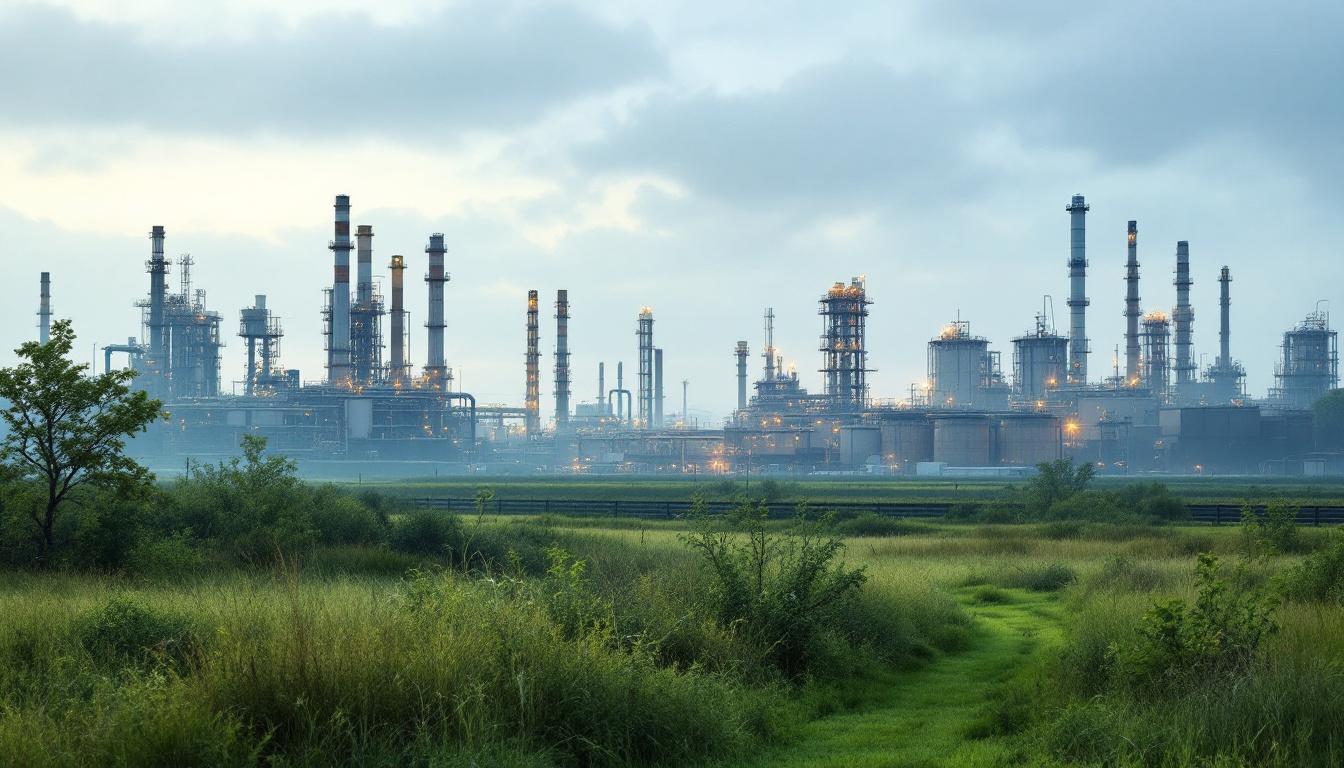
Germany plans to declare hydrogen production projects of “overriding public interest” to fast-track approval processes, broadening the scope to include blue hydrogen amid concerns over slow progress and long-term decarbonisation targets.
Germany is set to declare hydrogen production projects to be of “overriding public interest”, a legal escalation intended to speed approvals as the country confronts a widening gap between ambition and delivery on its hydrogen strategy. According to Tagesspiegel Background, the government has agreed to broaden the scope of the Hydrogen Acceleration Act to bring more projects under fast‑track treatment, a move that acknowledges the original roll‑out has been slower than planned.
The amended framework would extend priority status beyond renewables‑based green hydrogen to include hydrogen produced from natural gas with carbon capture and storage (CCS), commonly described as blue hydrogen. The Bundestag’s economy and energy committee has added CCS‑based production and import infrastructure such as power‑to‑liquid terminals for synthetic aviation fuels to the list of projects that can access shortened permitting deadlines and digitalised approval routes, according to reporting by Argus Media. Infrastructure designated in this way, production plants, storage sites, pipelines and dedicated transmission links, will take precedence in conflicts with other regulatory or planning processes. The International Energy Agency notes the draft acceleration law also limits appeals and simplifies procedures for a wide range of hydrogen‑related assets.
The shift reflects mounting official concern that current policies are unlikely to deliver the capacity and market development the strategy envisaged. A special report by Germany’s Federal Court of Auditors finds that despite billions of euros in support, both supply and demand have lagged well below expectations. Industry data referenced by EnergyNews shows a stark shortfall: the 2030 goal of 10 gigawatts of electrolyser capacity compares with roughly 181 megawatts currently operating, a pace that will not meet the needs of hard‑to‑abate sectors at the required scale. The audit further warns that domestic electrolysis capacity reached less than 0.2 GW by 2025 and that fewer than 5 GW may be achievable by 2030 under current trends, raising the prospect that import volumes and costs would balloon if domestic deployment stalls, as noted by the Federal Audit Office and the International Energy Agency.
Industry bodies have used those shortfalls to press for a more technology‑agnostic, pragmatic approach. The German energy association BDEW and the Chambers of Industry and Commerce argue that opening the fast‑track regime to low‑carbon pathways will enable early infrastructure build‑out, create initial demand and produce learning‑effects that lower costs over time. The Federal Ministry for Economic Affairs and Energy, while regretful over some recent private project cancellations, has reiterated commitment to accelerating the hydrogen economy and to “using all colours of hydrogen” as an interim measure while renewable supply scales up, according to a ministry spokesperson quoted in ICIS.
For corporate decarbonisation planners, the change is significant. Fast‑track status can materially shorten the timeline for interdependent projects, electrolysers, grid reinforcements, pipeline networks and port terminals, reducing regulatory uncertainty that has deterred investment. Legal scholars caution, however, that some existing provisions expire at the end of 2025 and that the planning and environmental impact procedures remain lengthy unless explicitly reformed, underscoring the need for careful drafting to ensure the promised acceleration is realised, as discussed in academic analysis of Germany’s regulatory framework.
Environmental groups have voiced sharp objections to widening eligibility to CCS‑based projects. Their critique centres on the risk that endorsing fossil‑gas feedstocks will entrench gas dependence, divert public and private capital from renewable‑based solutions and expose long‑term climate outcomes to the uncertainties surrounding carbon capture permanence and methane leakage in gas supply chains. The Court of Auditors also raised fiscal concerns, warning that sustained subsidies or large import bills could place heavy burdens on public finances unless demand-side measures and offtake structures are re‑designed.
The debate highlights a difficult policy trade‑off for a country that needs stable industrial energy inputs while simultaneously aiming to cut emissions. For heavy industry and energy‑intensive manufacturers, a pragmatic, staged pathway may preserve competitiveness and enable early pilots of hydrogen‑dependent processes. Yet accelerating projects that rely on CCS risks locking investment into technologies that may face economic and regulatory headwinds as renewables become cheaper and carbon accounting tightens.
Policymakers are attempting to square those tensions by prioritising speed and system build‑out without formally abandoning the long‑term goal of renewables‑based hydrogen. The acceleration law’s supporters argue that bringing pipelines, storage and import terminals online now will lower the cost and logistical barriers for eventual green hydrogen scaling. Critics counter that the most effective response would be to remove bottlenecks to renewable generation and grid expansion, coupled with binding offtake commitments to create reliable early demand.
For industrial decarbonisation professionals, the practical implication is clear: the policy environment is shifting to favour faster permitting and a broader set of technology pathways through the late 2020s, but the long‑run investment case for any hydrogen project will depend on how Germany resolves questions over funding structures, offtake certainty and the transition from low‑carbon to renewable hydrogen. The acceleration measures may ease near‑term project development, yet they do not eliminate the underlying need for cheaper renewables, clarified regulatory timelines and credible demand signals if hydrogen is to play its projected role in decarbonising heavy industry, aviation and shipping.
- https://energynews.biz/germany-elevates-hydrogen-to-overriding-public-interest-status-as-strategy-falters-under-missed-targets/?utm_source=rss&utm_medium=rss&utm_campaign=germany-elevates-hydrogen-to-overriding-public-interest-status-as-strategy-falters-under-missed-targets – Please view link – unable to able to access data
- https://uk.finance.yahoo.com/news/germanys-hydrogen-strategy-requires-overhaul-130518489.html – Germany’s Federal Audit Office has reported that the nation’s hydrogen strategy is falling short of its objectives, calling for a course correction to avoid missing 2030 targets for domestic green hydrogen production. The audit highlights that both supply and demand for hydrogen, particularly in the steel sector, remain far below expectations despite billions of euros in subsidies. Without adjustments, Germany is projected to miss its 2030 targets for domestic green hydrogen production, and imports would be insufficient to bridge the gap. The report also raises concerns over the high cost of green hydrogen, noting that permanent subsidies could place unsustainable pressure on the federal budget. Import-related expenses alone could amount to between 3 billion and 25 billion euros by 2030. Hydrogen, produced through electrolysis of water using renewable electricity, is seen as a key driver in transitioning to a lower-carbon economy.
- https://www.icis.com/explore/resources/news/2025/07/02/11116141/e-on-deprioritises-hydrogen-cancels-20mw-plant-in-essen-amid-spate-of-german-industry-setbacks/?news_id=11118608 – Germany’s Federal Ministry for Economic Affairs and Energy (BMWE) has reaffirmed its commitment to accelerating the hydrogen economy, despite recent industry setbacks, including steel manufacturer ArcelorMittal’s cancellation of its renewable hydrogen-based decarbonisation plans for two steel plants. A ministry spokesperson stated that BMWE regrets ArcelorMittal’s cancellation but stressed that it was a private sector decision and that none of the €1.3 billion government subsidy secured for the project has been disbursed. They reiterated the ministry’s support for other major steel decarbonisation projects by Salzgitter, Thyssenkrupp, and SHS, which have collectively secured €5.6 billion in funding. The spokesperson also highlighted the importance of reducing electricity prices in the short term for companies and welcomed the European Commission’s recent adoption of the Clean Industrial Deal State Aid Framework, which provides the possibility to reduce electricity prices for energy-intensive industries. The BMWE remains committed to the swift implementation of national and European regulations to enable the growth of the hydrogen industry, aiming to accelerate the development of a hydrogen economy and organise it more pragmatically, using all colours of hydrogen, while transitioning to renewable hydrogen in the long term.
- https://www.cambridge.org/core/books/cambridge-handbook-of-hydrogen-and-the-law/accelerating-permission/647CDCAB1A8708EAE1D0C58590894DF1 – This provision stands out as an exception by providing vital support for the rapid scaling up of a hydrogen infrastructure. The broader regulatory landscape, notably article 43l (1) 2 EnWG, which asserts the paramount public interest in hydrogen projects during the balancing process, falls short. Its application ceases as early as 31 December 2025, implying potential invalidity when regional planning or plan approval procedures, which are inherently time-intensive, are required. This limitation, coupled with the recognised protracted nature of the EIA process, presents a palpable impediment to the prompt development of the hydrogen infrastructure envisioned in Germany. Relief will be brought about for projects that will be part of the core network. Article 28r EnWG-E stipulates that these projects are considered to be in the overriding public interest provided they are commissioned by 2030. Considering this, article 43l (4), (5) EnWG emerges as a pivotal regulation significantly facilitating the establishment and expansion of hydrogen networks.
- https://www.iea.org/policies/27968-hydrogen-acceleration-act – The Hydrogen Acceleration Act aims to accelerate the scale-up of hydrogen—especially renewable hydrogen—by streamlining planning, approval, and procurement processes. It introduces faster approval timelines, limits on appeals, digitalisation requirements, and simplified procedures for hydrogen production, storage, transport, import, and related infrastructure like pipelines, port terminals, ammonia cracking, and power lines. Hydrogen infrastructure is designated as being of ‘overriding public interest,’ giving it priority in approvals. As of July 2025, the draft is open for public consultation until the end of the month.
- https://cleantechnica.com/2026/01/25/germanys-audit-court-calls-time-on-hydrogen-inevitability/ – Germany’s Federal Court of Auditors has concluded that the nation’s hydrogen strategy is not meeting its objectives, despite significant financial commitments. The report explicitly calls for a reality check and a plan B, warning that continuing on the current trajectory risks climate goals, industrial competitiveness, and federal finances. The audit highlights that domestic electrolysis capacity was set at 10 GW by 2030, but less than 0.2 GW was operating by 2025, with fewer than 5 GW now expected by 2030. On the import side, the mismatch is more severe, with global green hydrogen production with final investment decisions amounting to about 63 TWh for 2030, while Germany alone projected import demand of 47.5 TWh at the low end and up to 91 TWh at the high end. The audit concludes that without legal offtake obligations, a key driver of hydrogen demand is missing. The financing structure of the hydrogen backbone turns early operation into direct public exposure, with network charges capped during the ramp-up phase, with shortfalls covered through an amortisation account funded by a state-guaranteed loan from KfW, Germany’s state-owned development bank.
- https://www.argusmedia.com/zh/news-and-insights/latest-market-news/2792914-germany-to-include-ccs-based-h2-in-acceleration-law – German projects for production of hydrogen from natural gas with carbon capture and storage (CCS) are set to benefit from faster permitting under the ‘hydrogen acceleration law’ that could be passed on 26 February. The Bundestag’s economy and energy committee has made some additions to the government’s text from late 2025, including a clause that would add CCS-based hydrogen production projects to the infrastructure covered by the law. Only electrolytic hydrogen production and production from biogenic waste were covered in the government’s version. The committee also proposed to add import infrastructure for power-to-liquid fuels, such as synthetic aviation fuels (e-SAF) to the list of eligible infrastructure. Infrastructure covered by the text will be designated as being of ‘overriding public interest’. This status gives them priority in cases of conflict with other rules, for instance those related to environmental disputes or building regulations. Facilities will also benefit from shorter permitting deadlines, partly enabled by increased digitalisation. Besides production plants and import terminals, the law also covers storage sites, pipelines and dedicated electricity transmission assets. Germany’s coalition of conservative CDU/CSU and social-democratic SPD has repeatedly stressed a willingness to also support CCS-based hydrogen, in addition to renewable hydrogen.
Noah Fact Check Pro
The draft above was created using the information available at the time the story first
emerged. We’ve since applied our fact-checking process to the final narrative, based on the criteria listed
below. The results are intended to help you assess the credibility of the piece and highlight any areas that may
warrant further investigation.
Freshness check
Score:
8
Notes:
The article references recent developments, including the passage of the Hydrogen Acceleration Act on 26 February 2026. ([argusmedia.com](https://www.argusmedia.com/en/news-and-insights/latest-market-news/2793478-germany-passes-law-to-speed-up-h2-permitting?utm_source=openai)) However, similar discussions about the Act have been reported since October 2025, indicating that the core information has been in the public domain for several months. ([taylorwessing.com](https://www.taylorwessing.com/-/media/taylor-wessing/files/germany/2025/10/germanys-energy-transitionpolicydriven-trends-in-hydrogen-and-ccs20102025.pdf?utm_source=openai))
Quotes check
Score:
7
Notes:
The article includes direct quotes from various sources. However, without access to the original sources, it’s challenging to verify the accuracy and context of these quotes. ([wasserstoffrat.de](https://www.wasserstoffrat.de/fileadmin/wasserstoffrat/media/Dokumente/EN/2024/2024-06-21_NWR-Statement_Hydrogen_Acceleration_Act.pdf?utm_source=openai))
Source reliability
Score:
6
Notes:
The article cites multiple sources, including Argus Media and the International Energy Agency. ([argusmedia.com](https://www.argusmedia.com/news-and-insights/latest-market-news/2792914-germany-to-include-ccs-based-h2-in-acceleration-law?utm_source=openai)) However, the primary source of the article is EnergyNews, which is a niche publication. ([fnb-gas.de](https://fnb-gas.de/en/news/fnb-gas-on-the-finalization-of-the-hydrogen-acceleration-act/?utm_source=openai))
Plausibility check
Score:
8
Notes:
The claims about the Hydrogen Acceleration Act and its provisions align with known legislative developments in Germany. ([argusmedia.com](https://www.argusmedia.com/en/news-and-insights/latest-market-news/2793478-germany-passes-law-to-speed-up-h2-permitting?utm_source=openai)) However, the article’s assertion that the Act is a response to missed targets is not directly supported by the cited sources.
Overall assessment
Verdict (FAIL, OPEN, PASS): OPEN
Confidence (LOW, MEDIUM, HIGH): MEDIUM
Summary:
The article discusses recent developments regarding Germany’s Hydrogen Acceleration Act, referencing multiple sources. However, the primary source is a niche publication, and without access to the original articles, it’s challenging to fully verify the information. Additionally, some claims in the article are not directly supported by the cited sources. ([fnb-gas.de](https://fnb-gas.de/en/news/fnb-gas-on-the-finalization-of-the-hydrogen-acceleration-act/?utm_source=openai))
